

Rabbana Ighfir Lana Wa Li Ikhwanina Alladhina Dua (Surah Hashr 59:10) – Meaning, Benefits & Tafsir
Rabbana ighfir lana wa li ikhwanina alladhina Dua (Surah Hashr 59:10): Quran dua for clean heart
Dua for believers Surah Hashr: Quran dua for clean heart
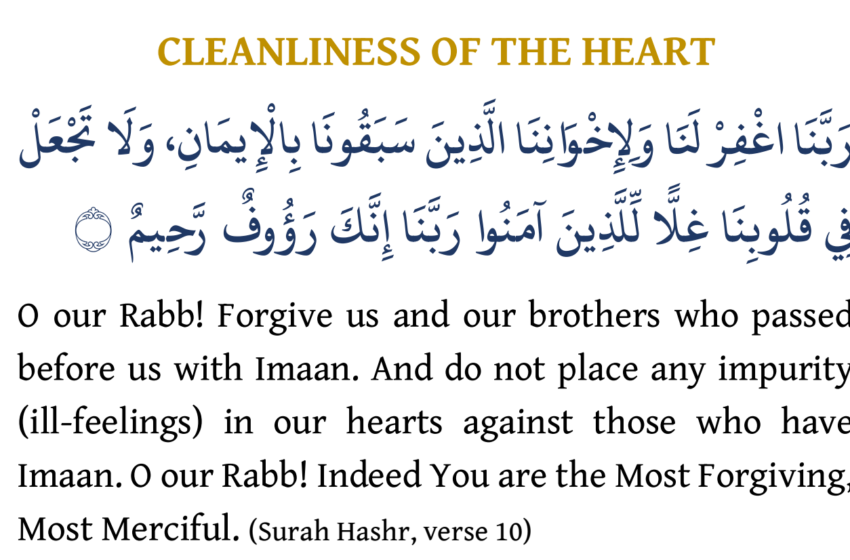
رَبَّنَا ٱغْفِرْ لَنَا وَلِإِخْوَٰنِنَا ٱلَّذِينَ سَبَقُونَا بِٱلْإِيمَـٰنِ وَلَا تَجْعَلْ فِى قُلُوبِنَا غِلًّۭا لِّلَّذِينَ ءَامَنُوا۟ رَبَّنَآ إِنَّكَ رَءُوفٌۭ رَّحِيمٌ ١٠
It’s completely free.
“Our Lord, forgive us and our brothers who preceded us in faith, and do not place in our hearts any resentment toward those who have believed. Our Lord, indeed You are Most Kind, Most Merciful.”
(Surah Al-Hashr, 59:10)
These supplications are of the utmost importance. Allah, Blessed and Exalted, mentioned them for the sincere believers who came after the Companions (may Allah be pleased with them all)—from the Tābiʿīn and those who followed them in righteousness until the Day of Judgment. These prayers reflect love and brotherhood in the hearts of believers. Indeed, the rights of one believer over another are many, and among them is to supplicate for him in his absence—during his life and after his death.
Also read- 3 Dua for forgiveness of Sins
After Allah, the Mighty and Majestic, praised the Muhājirīn:
“Those who were expelled from their homes and their properties, seeking bounty from Allah and His pleasure and supporting Allah and His Messenger—it is they who are the truthful.”
He then praised the Anṣār:
“And those who had settled in the home (Madinah) and adopted the faith before them love those who emigrated to them…”
Check out other useful Dua for studying, Parents, Health, beauty, Success and more.
Then He mentioned the third category of believers who came after them until the Day of Resurrection:
“And those who came after them say: Our Lord, forgive us and our brothers who preceded us in faith, and do not place in our hearts any resentment toward those who have believed. Our Lord, indeed You are Most Kind, Most Merciful.”
These verses encompass all Muslims; there is no one except that he has a share in them.
“Our Lord, forgive us and our brothers who preceded us in faith” — They remembered them with praise, acknowledging their precedence in faith and recognizing their virtue. For them, brotherhood in religion was more precious and nobler than brotherhood of lineage. Thus, they combined in their supplication seeking forgiveness for themselves and for those who came before them. This is among the most complete, beautiful, and beneficial supplications.
The scholar Ibn Saʿdī (may Allah have mercy on him) said:
“This is a supplication that includes all believers—those who preceded from the Companions and others, and those who came after them. Among the virtues of faith is that believers benefit from one another and supplicate for one another because of their shared faith, which necessitates the bond of brotherhood between them. From its branches is that they pray for one another and love one another. Therefore, Allah mentioned in this supplication the removal of resentment from the heart—whether little or much—because when resentment is removed, its opposite is established: love between believers.”
Thus, in this blessed supplication, they combined purity of heart and purity of tongue. Their hearts held no rancor, malice, or belittlement of anyone through speech—demonstrating sincere love for Allah, Lord of the worlds.
Abū Muẓaffar al-Samʿānī (may Allah have mercy on him) said:
“In this verse is proof that asking mercy for the early generations, praying goodness for them, and refraining from speaking ill of them are signs of true believers.”
They then emphasized their plea:
“Our Lord, indeed You are Most Kind, Most Merciful.”
They sought closeness to Allah through two noble Names that indicate the perfection of His mercy—meaning: O our Lord, we only asked You this because You are Most Kind and Most Merciful.
Al-Ra’ūf (The Most Kind) is a Name of Allah that signifies the utmost and most intense form of mercy. It is more specific than general mercy (raḥmah).
Those who possess these qualities—love and goodwill in heart and tongue, praying and praising for their believing brothers—Allah will reward them with the best reward. Allah says:
“And We will remove whatever is in their breasts of resentment; rivers will flow beneath them, and they will say: Praise be to Allah who guided us to this; and we would never have been guided had Allah not guided us.”
The Messenger of Allah ﷺ also gave glad tidings regarding those who pray for their believing brothers:
“Whoever seeks forgiveness for the believing men and women, Allah will record for him one good deed for every believing man and woman.”
O servant of Allah, it is not hidden from you that frequently making this great supplication brings abundant goodness in this world and the Hereafter. It fulfills the command of Allah, multiplies immeasurable rewards for the one who makes it, and plants in the heart love for the believers while removing hatred, envy, and resentment. Thus hearts are purified—one of the greatest objectives of the religion.
Benefits:
- The importance of this blessed supplication, which every Muslim should frequently recite day and night, for its fruits and benefits in this world and the Hereafter are countless.
- Among the greatest rights of one believer over another is supplication.
- The importance of asking Allah for forgiveness, for among its greatest fruits is the removal of sins and hardships, the attainment of blessings and goodness, and success in Paradise.
- A believer should never forget the virtue of those who preceded him in faith; rather, he should remember them with praise and supplication.
- This supplication combines two noble forms of seeking nearness to Allah:
- Seeking nearness through His Lordship, as in the word “Our Lord”, and through two of His beautiful Names: Al-Ra’ūf, Al-Raḥīm.
- Seeking nearness through His favor upon them with faith, and upon those before them—thus appealing through His previous blessings and grace.
Check out : Islamic Courses for Kids
Related
Discover more from Islam Hashtag
Subscribe to get the latest posts sent to your email.