

A Universal Right: Making Education Accessible for Children with Special Needs
Ayesha Mahmood Malik
The importance of education in life remains unquestionable, but the life of education, when its historical roots are traced, is ironic and tells a different story. Before the 20th century, formal education remained heavily class-stratified, a privilege for social, political and religious elites. It was explicitly recognised as a right only in 1948 when the Universal Declaration of Human Rights was drafted following the end of the Second World War, and became an enforceable right under international law as recently as 1966 under the International Covenant on Economic, Social and Cultural Rights.
Recognition of Right in Letter v. Spirit
While on paper these are considered as monumental milestones, throughout the 20th century, grave challenges and inequalities in access to education, including racial segregation, gender and disability exclusion, have marred its development globally. Even today, the full realisation of education remains an aspiration, with UN estimates suggesting some 227 million children worldwide are not enrolled in school. Access to education remains vastly unequal, with developing and underdeveloped nations struggling with a lack of economic and human resources.
Special Challenges in Access to Education: Children with Disabilities
One of the key areas where barriers in access to education become even more pronounced is in the case of children with disabilities, who are far more likely to be excluded. According to World Bank figures, children with disabilities are 2.5 times more likely to never attend school than their peers without disabilities. International reports estimate, where data exists, that children with disabilities account for more than 15% of the out-of-school population.
These numbers reflect the complex realities faced by families of children with special needs, where socio-cultural taboos and marginalisation keep them at the fringes of society. Lack of access is also defined by a lack of adequately trained staff and teachers, and specialised learning materials and equipment in order to deliver a bespoke learning experience for each child.
A Story from Ghana
When my family and I visited Ghana last year, we were able to witness some of these difficulties firsthand. Disability remains a major cultural taboo in the country, and people of determination are often ill-treated, let alone get the care they require. Children with disabilities are disproportionately affected, with at least 25% fewer children with special needs enrolling into school compared to those without disabilities.
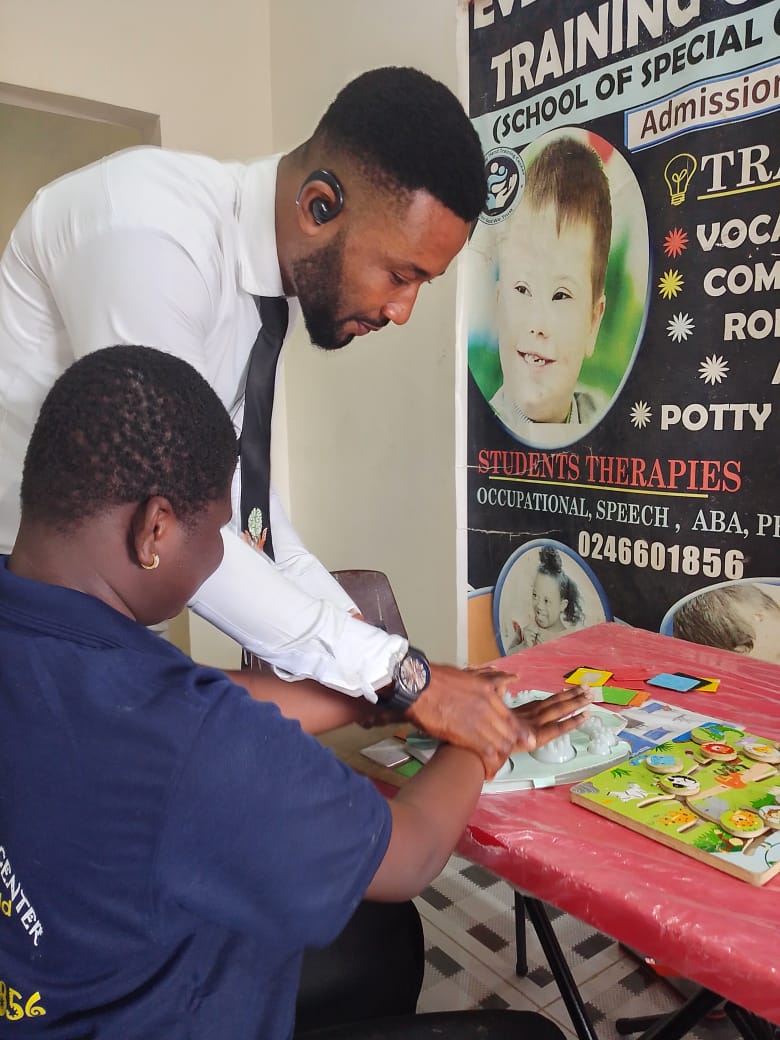
Ghana is also an extremely water-scarce country, with a lack of basic infrastructure and widespread poverty. Proper roads disappear just 20 minutes from the heart of Accra, making access to suburban centres difficult and unsustainable on a daily basis. During our humanitarian visit, we had the opportunity to support a small special needs school and training centre co-founded by a Ghanaian neuropsychologist, Isaac Ahenkorah, in 2023. In the face of all adversities, the dedication, passion and warmth with which Isaac and his team are serving this small community genuinely moved us.
As a tribute to their efforts, we outline a brief account of how Eve Helping Hands Training Centre was formed, its current challenges and the need for ongoing support.
1. What is the story and vision behind the creation of Helping Hand, and what are its main objectives?
The vision behind Wealthmind Psychology and Eve Helping Hand Training Centre was born from early life experiences during my junior high school years. At age 13, I witnessed a close friend, Kissiwaa, who struggled academically despite genuine effort, being constantly punished and eventually dropping out of school. Later, I came to understand that she was an exceptional child whose abilities were misunderstood and unsupported. Her pain and the failure of the system to nurture her strengths planted deep questions in me about learning differences, the human brain, and society’s treatment of those who think differently.
These questions deepened through encounters with marginalised individuals, including a university graduate living with epilepsy who was rejected by employers, and another man labelled “crazy” but surviving through his skill as a cobbler. As I later became a teacher, I met many children facing the same struggles as Kissiwaa. A moment of insight—comparing the human brain to computer hardware and software—sparked my interest in psychology and neuroscience. This journey revealed how limited understanding, stigma, and lack of practical training cause many capable individuals to be excluded rather than supported.
Driven by compassion and conviction, I left regular employment to focus on supporting neurodiverse individuals, despite ridicule, cultural stigma, and financial hardship. With Aunty Evelyn (a business partner), we began humbly with one room and one child, enduring multiple relocations and challenges. These efforts eventually led to the formal registration of Wealthmind Psychology and Eve Helping Hand Training Centre: the institutions were founded to transform pain into purpose—providing care, education, and dignity to minds often ignored, while building a future of empowered individuals and inclusive societies.
2. What are some of the biggest challenges you face in running an establishment of this nature in Ghana?
We have faced and are still facing challenges as an institution, the most pertinent being limited public understanding of special education, psychology, and neurodevelopmental conditions, alongside deep-rooted cultural and spiritual stigma surrounding disability and mental health in Ghana. Financial constraints further affect families’ ability to access services, compounded by limited government funding, inadequate insurance coverage, weak policy support and a wide gap between disability policies and their real-life implementation.
Additionally, there is a shortage of trained and specialised professionals in neuropsychology, therapy and special education, as well as complex regulatory and licensing processes across sectors. Low or inconsistent parental engagement, social exclusion of children with special needs and their families and limited access to standardised assessment tools and assistive technology continue to hinder effective care and inclusive development.
3. Tell us a little about the children you help – their stories, interests and enthusiasm. We were able to witness this firsthand when we visited and saw the positive impact of the wonderful work your team is doing.
I have children with various neurodevelopmental conditions, including autism spectrum disorder (ASD), attention deficit hyperactivity disorder (ADHD), Metachromatic Leukodystrophy (MLD – a rare, inherited disorder caused by a gene mutation resulting in damage to myelin and creating severe developmental challenges) and other conditions, including speech and language impairment, motor deficits and sensory disorders.
While some of these conditions, like MLD, are genetic, others have been triggered by external factors (birthing conditions, deprivation of oxygen at birth, medications after birth and illness after birth).
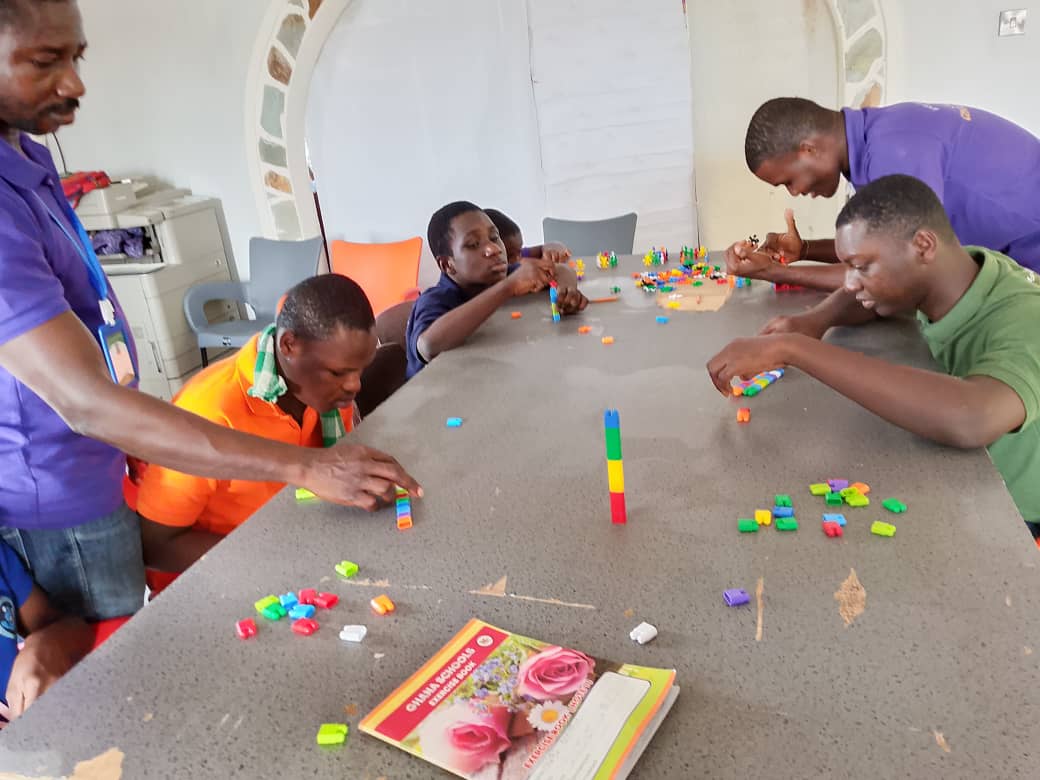
The children come from a variety of different backgrounds; some are coming to us from poverty, and others from lower/middle-income households. Despite their physical and neurodevelopmental challenges, they display a wide variety of interests in extra-curricular activities including, ICT, beading and braiding and music.
4. Disability in Ghana still remains largely taboo. How do you navigate the socio-cultural obstacles in carrying out your work, and how can these be overcome?
I can boldly say that all I know is how to stay focused. If we do not start, others cannot continue. There is an adage in our language which, when explained in English, means: “If you focus on the dirt at the riverbank, you will never drink the water.”
Therefore, my purpose remains the same and will not change. Taboo is a belief, but culture is dynamic. I am intentionally working within these negative beliefs to bring out positive ones. Who knows—maybe I can make the greatest impact!
Today, my students can confidently do graphic design, Excel, braiding, and beading to a very high level.
The story and the question remain the same to me if there is no evidence or proof. What people really want to see is whether something good can come out of a difficult situation, and that is exactly what we are working towards. I believe that when we provide proof by bringing out what is within these children for the world to see, it will help eliminate part of the cultural beliefs and misconceptions.
We pray for support from God Almighty.
To strengthen and expand our impact, there is a critical need to build our own institution equipped with appropriate STEM learning materials, neuropsychological devices and sustainable financial support. Additionally, acquiring a school bus is essential, as many students are unable to attend daily training due to transportation challenges. This will also enable community outreach, education, assessments and psychological training in rural and underserved areas.
6. Is there a message you would like to share with our readership?
First of all, thank you to everyone who continues to support these little ones, especially those who have been rejected by society. I strongly believe that together, we can build a lasting legacy—one that brings smiles and hope that will remain with others forever.
We started with nothing, and today we have 20 students in our institution. Many more families are willing to join us, but due to our rented facility and the costs involved, we are currently limited.
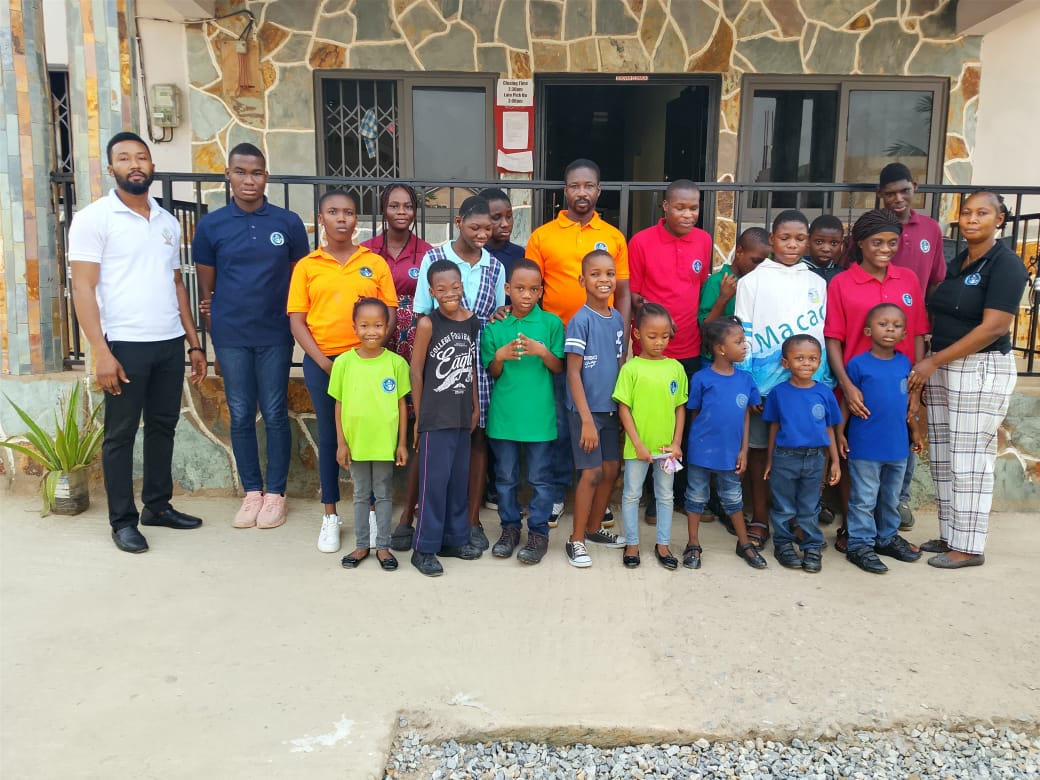
This year, I humbly ask for more of your prayers and every form of support you can offer. We are taking steps to expand our institution to at least two other regions, and the process has already begun. I trust completely that God Almighty will not disappoint us. By His Grace, we will accomplish this vision before our final day on earth.
May God Almighty bless and keep everyone safe, healthy and free from troubles and worries. With faith, unity and continued support, I believe we will move forward and reach many more lives.
About the Author: Ayesha Mahmood Malik is the Editor of the Law and Human Rights Section of the Review of Religions magazine. She is interested in Law and Religion, in particular Islam and Human Rights, the role of media in crisis reporting, International Human Rights and the import of religion on radicalisation. She has spoken frequently on these issues in the national media and various universities in the UK, including the University of Oxford and the London School of Economics. She is a graduate of Harvard Law School.