
Lina Hadid · Muslim Girl
Lina Hadid defines the conscientious it girl.
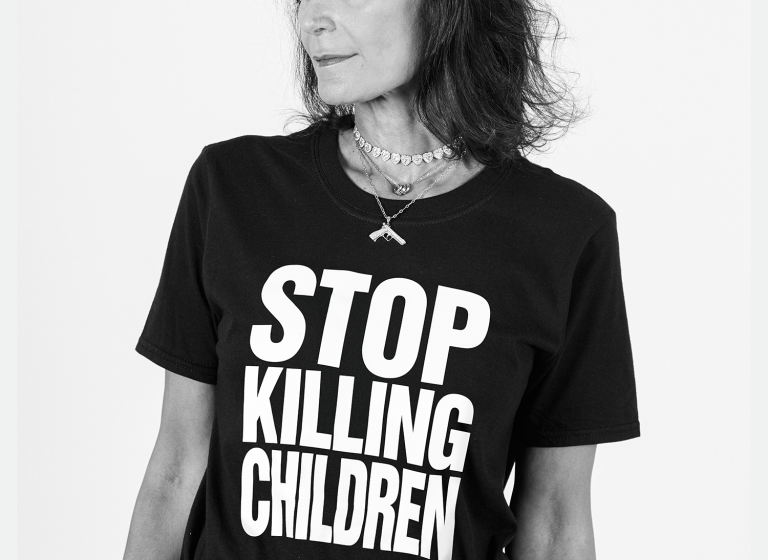
Known for customizing her wardrobe with the “Free Palestine” tag, she is auctioning a closet of luxury fashion pieces at a high-profile fundraiser in London to raise money for Healthcare Workers 4 Palestine.
In 33 Questions, Lina goes on the record about the power of art and fashion to shape narrative and the quiet politics of wearing where you come from.
What inspired you to put Palestine on your sleeve?
When I was 18, I made my first “Free Palestine” t-shirts in black and white block letters.
What was the first fashion item you customized with Palestine?
A Chanel bag.
My uncle Mohamed calls me a “one-woman demonstration.”
When did art first feel beautiful to you?
When I realized the kuffiyeh wasn’t enough.
Art preserves culture and identity when everything else is being destroyed.
When was the first time art felt political to you?
Art has always been political.
Who taught you how to really see art?
Paris (the city).
What part of your identity most informs your curatorial eye?
My femininity and being Palestinian.
What kind of art makes you uneasy?
Nothing really disturbs me anymore.
Palestinians have thick skin.
What does good taste mean to you?
strong in craftsmanship and design.
What did your younger self misunderstand about power?
I underestimated how difficult it would be to be a woman in political spaces.
Being female in this arena is much harder than I anticipated.
What do you refuse to compromise on?
I won’t take money from government officials.
What do you believe is being lost right now in the world?
Humanity.
How do you navigate visibility without spectacle?
Stay humble. Keep your feet on the ground. Remember it’s not about you.
How do you protect your dignity while working in trauma spaces?
I think about the children in Gaza.
We don’t have the luxury of protecting our dignity.
Is there a truth about Palestine you wish people would sit with longer?
That Palestinians experienced a Holocaust in 1948.
The concept of genocide cannot be exclusive to one group.
What does solidarity look like when it’s real?
A united Palestinian front.
What drains you faster than anything else?
Watching children die.
What restores you unexpectedly?
A beautiful piece of art.
What do you say no to more often now?
I’m not really a “no” person.
I believe anything is possible.
What do you no longer explain?
Nothing.
I still feel like I have to explain everything.
What feels heavier than it used to?
Erasure.
Where are you most grounded?
Nowhere.
What emotion do you return to most often?
Positive mental attitude.
What do you notice first when you enter a room?
Everything. I’m extremely detail-oriented.
What do you carry almost every day?
My pride.
What word do people use to describe you that you don’t agree with?
That I don’t believe in resistance.
What sustains you when the work feels endless?
My drive.
What prayer or practice steadies you?
people underestimate My relationship with God.
How do you hope your influence will be remembered?
As someone who tried to liberate Palestine and never gave up.
What is your focus right now?
Lobbying, preserving what’s left of Palestine, advocating for leadership representation, and raising funds for healthcare and orphans.
What role does art play in healing Palestinian children?
Art therapy is powerful.
Even traumatized children draw butterflies and flowers. That resilience is incredible.
What breaks your heart most in negotiations?
The framing of Palestinian orphans as “future terrorists.”
It’s dehumanizing and devastating.
What keeps you going?
The children.
The responsibility to ancestors and future generations.
Why don’t you give up?
Because we don’t have that privilege.
We have to keep fighting, documenting, preserving, and believing that miracles can happen.