

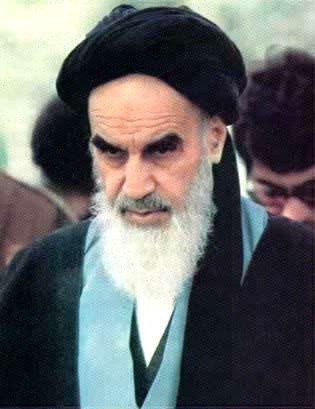
Revolutionary Philosopher And Clerical Prince: The Life And Polarizing Legacy Of Ali Khamenei
The assassination of Iran’s long-ruling leader, Ali Khamenei, at the outset of another treacherous Israeli-incited American attack at the end of winter 2026 casts a long shadow. Not only are prospects of resolution incalculably damaged, but Khamenei’s killing marked the end of one of the most paradoxical and polarizing figures in contemporary history, one who had overseen a paradoxical hybrid parliamentary regime in Iran that yet entrenched a clerical-military nexus at whose apex he stood for nearly fifty years.
A Revolutionary Background
Vilified by Iran’s many enemies, certainly his killers, as a “fanatic” or “tyrant”, Khamenei was also seen by large swathes of the world, including but not exclusively Shias, as a “martyr”, not least for the circumstances in which he was treacherously cut down. Still lucid in his eighties, he defied easy categorization: a vastly read intellectual and a youth activist, he was nonetheless quick to resort to bloody repression at the helm of what was essentially a religious-cum-military clique in power; a proponent of internationalist solidarity, he was nonetheless comfortable with adopting narrow Iranian statism when it suited him; a repeated claimant of cross-sectarian solidarity among Muslims, he oversaw policies that repeatedly pushed other Muslims under the bus; a sharp critic of Western imperialism and advocate of Muslim independence, he proved nonetheless willing to join in imperial misadventures even if at arms’ length, yet was cut down by the same misadventures. What is certain is that Khamenei’s killers, the genocidal Israeli ethnostate and its enablers, and the circumstances in which he was slain were worse than the man.
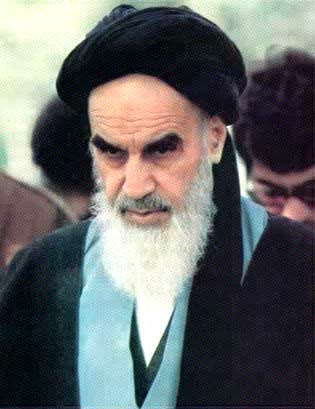
“In the late 1970s, Rouhollah Khomeini was the spearhead of a mass revolt that forced out the monarchy into exile.”
More than anything, Khamenei epitomized the limitations of the revolutionary intellectual as ruler; he was without question a widespread multilingual reader, and engaged over the years with works as varied as those of Malcolm “X” Shabazz, Muhammad Iqbal, Sayed Qutub, Victor Hugo, Jawaharlal Nehru, and Leo Tolstoy. What most of these writers had in common was criticism of the status quo, something that no doubt appealed to a man who had grown up in an Azeri family under a tightly repressive monarchy led by the Pahlavi family. One of Khamenei’s influences was Navab Safavi, an Islamist ideologue who had assassinated the pro-British military prime minister Ali Razmara in 1951. Another prime minister, Hassan Mansour, fell prey to a similarly motivated assassination in 1965. In between, when Khamenei was just a teenager in 1953, the United States and Britain helped the monarchy oust an elected government for blatantly material interests related to Iranian oil.
The Pahlavi regime that lasted until 1979 was not only a monarchy, nor just a Western vassal, nor simply an elitist regime with open and often unconcealed racial disdain for outsiders, but one of the most brutal police states of the day, whose repression comfortably dwarfed that of the regime Khamenei himself would lead. He was repeatedly jailed in his prime years, a period when monarchic repression duelled with underground resistance of various types – Muslim, leftist, liberal, ethnic, and other. The most recognizable opposition leader was Rouhollah Khomeini, a firebrand preacher under whom Khamenei had studied. In the late 1970s, Khomeini was the spearhead of a mass revolt that forced out the monarchy into exile, where its loyalists have since constituted a nostalgic, myopic, and obnoxious segment of the Iranian diaspora.
Revolution, War, and Consolidation
At home, however, the revolution narrowed to a smaller circle. At first expected to be more of a symbolic ruler alongside a prime ministry and presidency, Khomeini became the increasingly powerful leader of a circle increasingly comprising men of his background: clerics, almost invariably Shia clerics, in what was called Vilayet-e-Faqih, or the State of the Jurists. This was Khomeini’s preferred innovation and underpinned the hybrid nature of the regime: while it held regular elections for the presidency and elected officials wielded significant local control, their decisions were subject to largely clerical review while executive power rested with a clerical “supreme leader”.
Around Khomeini were gathered fellow clerics as well as revolutionary activists and military officers: either officers who had been dissidents under the monarchy or revolutionaries-turned-generals during the 1980s Gulf war with Iraq. Indeed, Khamenei’s principal interest in the revolution’s immediate aftermath seems to have been in forming a military and security network: over the war’s years, this would expand into a vast praetorian corps called Pasdaran, or Islamic Revolutionary Guards. He often visited the battlefield and worked closely with rising military stars such as Mohsen Rezai, Bagher Ghalibaf, and – perhaps best-known outside Iran – Ghassem Soleimani.
Their power increased amid crackdowns on rival revolutionaries as well as American-backed monarchists. Similarly, they were strengthened by the 1980s Gulf War. The fact that Iraq, whose dictator Saddam Hussein had formally taken over just after the Iranian revolution, invaded meant that, like its monarchic predecessor, Khomeini’s regime could rally on nationalist sentiment, if with a more religious tenor than before. Iran largely relied on mass attacks – where thousands of fighters might be slain at a time – to offset the Iraqi technological advantage, and this required motivation of the type that clerical warriors like Khamenei could give. Although Tehran formally disavowed sectarianism – cultivating certain Sunni allies abroad and formally reining in some sectarian rhetoric at home – the narrative could also take on sectarian tones, especially with regard to the Gulf, whose rulers were pro-West as a rule and had largely backed Iraq through well-grounded fears of Iranian subversion.
Paroxysms and Promotions
Even as the war raged, in summer 1981, a series of paroxysms struck Iranian politics. These were largely related to the Mojahedin-e Khalgh, a network led by the Rajavi spouses Massoud and Maryam that competed with Khomeini. Though they had played a major role in the 1979 revolution with a mixture of Muslim and Marxist rhetoric, the Rajavis had been frozen out since, and joined Iraq’s side; the rather cultish and freely murderous nature of their organization made them an easy target against which the regime could rally.
Khamenei himself was badly injured and lost the use of an arm when a Khalgh assassin tried to kill him. Only days earlier, the parliament, led by a frequent ally of Khamenei, Akbar Hashmi-Rafsanjani, had impeached the increasingly weak incumbent of the presidency, Abolhassan Banisadr, who was accused of being soft on Khalgh and fled abroad. After a snap election, Banisadr’s prime minister, Mohammad Rajai, replaced him, only to be assassinated along with his own prime minister, Javad Bahonar, by Khalgh before the summer was out. In these circumstances, Khamenei, still only recently recovered from injury, won the election of autumn 1981 to take over the presidency, with Mir-Hossein Mousavi as prime minister. In contrast to Banisadr, Khamenei was fiercely loyal to Khomeini’s policy, and this was a major step in the entrenchment of their clique.
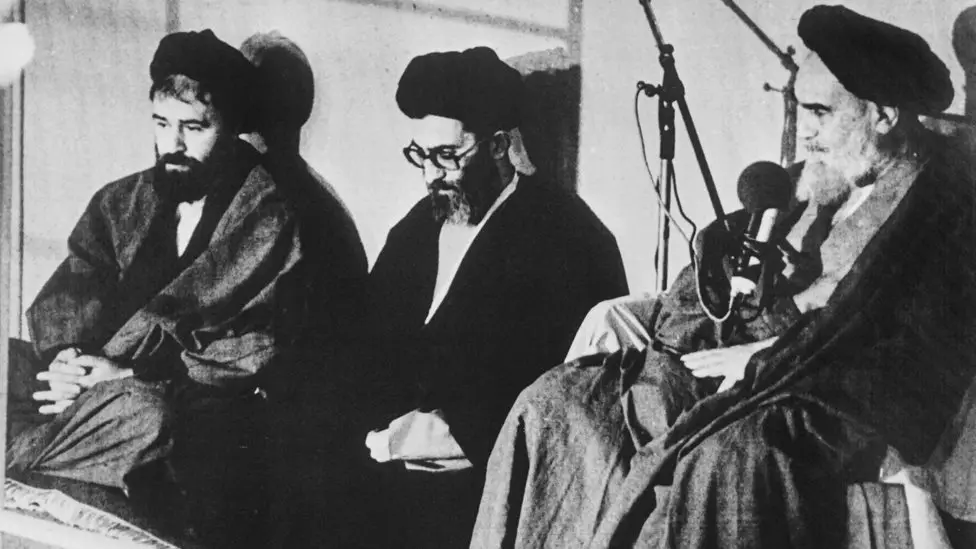
Ali Khamenei served as Iran’s president from 1981 until 1989 [PC: Getty Images]
Foreign observers of Iranian politics often divide camps into “moderates” and “hardliners”, but this is a major oversimplification that overlooks how political camps actually functioned. Khamenei would adopt conciliatory policies at some junctures and uncompromising ones at others: what he prized was the maintenance of an order that he deemed necessary for the “revolutionary” regime’s survival.
One example came when, in 1982, the Iranians spectacularly expelled the Iraqi army. Fearful of Iranian expansion, Saudi Arabia, which generally supported Iraq, offered reparations and conciliation. In the ensuing debate, it was the “hardliner” Khamenei who favoured taking the Saudi deal in order to focus on consolidation; by contrast, Prime Minister Mousavi and Khomeini’s deputy Hossein Montazeri, often seen as “moderates”, favoured “spreading the revolution” by attacking Iraq. Khomeini agreed; for once, Khamenei was overruled, and Iran proceeded to attack Iraq that summer; though Iranian propaganda frequently described the 1980s Gulf War as an “Imposed War” because of Iraq’s initial attack, in fact, most of the remaining six years would see Iran attacking its hitherto beaten neighbour.
Also defying easy definitions, Iran supported Syria’s regime, which brutally crushed an Islamic revolt but shared Iran’s enemy in Iraq. In the Lebanese war, Iran’s beneficiaries, which eventually became known as Hezbollah, fought against both Syrian and Israeli proxies; yet Iran and Israel also shared an enemy in Iraq, which was by the mid-1980s formally backed by the pro-American Gulf states. Even as they were fighting over Lebanon, Iran and Israel secretly cooperated against Iraq in weapons transfers in which neoconservative officials from the American government were also involved. Thus, the Americans found themselves backing both sides in the Gulf: they openly backed Iraq, and even attacked Iranian ships, but also secretly armed Iran.
The 1980s Gulf War ended with the Iraqi reconquest of the peninsula and a failed Khalgh incursion into Iran, after which the Iranian regime mounted a series of mass crackdowns and executions. This outraged deputy ruler Montazeri, who was quickly replaced with the less squeamish Khamenei just months before Khomeini (1979-89) passed away. Khamenei replaced him, and the regime was reorganized to institutionalize his power; the prime ministry, held by Mousavi, was abolished, and the Iranian “Supreme Leader” could rule for life. This position was loosely akin to that of a constitutional monarch, albeit one that had far more active engagement with its establishment than most contemporary monarchs. Hashmi-Rafsanjani, who now took the still-electable presidency, claimed that Khamenei felt suffocated by the new responsibility, but if this was so, Iran’s new ruler certainly didn’t let such feelings interrupt a decades-long rule.
Rhetoric versus Practice: Mixed Relations with the United States
In his new role as paramount leader, Khamenei adopted a position of dignified aloofness from the rough-and-tumble of day-to-day politics and party bickering, but reserved the privilege to occasionally comment if he felt things were going too far. The Iranian regime, by the 1990s, had adopted a longer-term entrenchment, though the political arena was still primarily contestable by either veterans of the early revolution or by allied clergy and technocrats. This led to something of an unofficial oligarchy, with rotating figures emerging as fixtures in the political elite; the fabulously wealthy Hashmi-Rafsanjani, by no means a bloodcurdling revolutionary, was often a favoured target of criticism.
But Khamenei was still flexible enough to work with politicians whose platforms he disapproved, perhaps in part because they shared his social background. Hassan Rouhani, like Khamenei, a cleric with close military links, chaired the security council for years despite a well-known openness to dealing with the West. In 1997, Mohammad Khatami, an openly pro-Western cleric who urged political change, won the election and, despite frequent grumbling from Khamenei and the generals, lasted two successive terms in the presidency.
The Iranian regime had long complained about “Gharbzadegi” or “Westoxification” – the inclination to be culturally awestruck by Western material advantages – but this did not extend to occasional collaboration. In fact, Khamenei and his generals, who still held the whip hand on foreign policy, were less averse to cooperation with the West than rhetoric suggested. A case in point was the 2001 American invasion of Afghanistan, which Iran enthusiastically supported to oust a Taliban regime that Khamenei had castigated as upstarts.
This was doubly the case when, in 2003, the Americans invaded Iraq. Though the neoconservative-dominated American regime had made no secret of its ambitions to soon attack Iran, the prospect of finally ousting Saddam and tapping into Iraq was one that Khamenei could not resist, especially given Iran’s years-long influence with a large number of Iraqi opposition groups, largely though not exclusively Shia exiles. When one such exile oppositionist, the commander Jamal Jafar (Abu Mahdi), objected to working with the Americans, Khamenei personally overruled him in the interest of ousting the Iraqi Baath regime. It was not until their mutual enemy was defeated and Iraq conquered that the United States and Iran resumed their rivalry, with Iran backing militants against the Americans’ British confederates. Yet even in Iraq, they often competed over the same clientele, including Iraqi Kurdish militias and also Jawad Maliki, who was at first promoted in 2006 by the United States, but backed by both Iranian and American support in consolidating his power.
Resistance and Its Limits
One frequent American accusation, first planted and endlessly rehashed by Israel, was that Iran was on the verge of obtaining nuclear weapons, supposedly to annihilate Jews. This was bloodthirsty fantasism for a number of reasons, not least that Khomeini had always opposed nuclear weapons and Khamenei repeatedly abandoned opportunities to cultivate them, for example, with a Pakistani offer of enrichment. In the period of American-Israeli aggression, this failure to adopt a deterrent looks increasingly naive.
Instead, Iran focused on cultivating a network of mostly militia allies in the region, and largely limited alliances with American rivals like Russia. These were grandly dubbed an “Axis of Resistance”, appropriating an American propaganda term that had placed Iran in an “Axis of Evil”. Like the American term, this term itself was largely misleading; in such countries as Iraq, the “Axis of Resistance” chronically cooperated with the same Americans whose empire it was meant to be resisting. It also frequently belied Iranian rhetoric; while Iran had long distanced itself from sectarianism, it frequently relied on thuggish sectarian confederates in Iraq and Syria.
Nonetheless, the United States and especially Israel remained hostile to Iran. One favourite target was Mahmoud Ahmadinejad, the voluble populist who replaced Khatami in the presidency. At first, Khamenei backed Ahmadinejad, notably in a 2009 reelection over the 1980s prime minister, Mousavi. Now an opposition figure calling for reform, Mousavi was imprisoned and the protests in his favour were crushed. However, Ahmadinejad’s populism frequently clashed with the interests and views of Khamenei’s own establishmentarian clerical and military-security networks, and the pair frequently diverged over the ensuing years.
In 2013, Ahmadinejad was replaced with a more familiar figure: unlike the populist, Rouhani was an establishment man, a soldier-cleric like Khamenei himself; also unlike Ahmadinejad, he was eager to reach an accord with the United States, based on shared interests in Syria and Iraq. In Iraq, Maliki’s regime – backed by both the United States and Iran – faced a revolt quickly dominated by the millenarian Daesh organization; in Syria, an Iran-backed regime faced both Daesh as well as a revolt backed by Turkiye. Iran invaded Syria in 2013, and the United States in 2014. In Iraq, both cooperated against Daesh. Ghassem Soleimani rallied such Iraqi lieutenants as Jamal Jafar to hold their noses and cooperate with the American military against an Iraqi rival, as they had done in 2003. This helped facilitate a short-lived deal between the United States and Iran over nuclear enrichment, over voluble Israeli protests, at Vienna in 2015. Khamenei had given Rouhani a long leash for diplomacy with the United States, but his misgivings about this approach were vindicated when, in 2017, the more aggressive American regime of Donald Trump abruptly scrapped the agreement.
With failed diplomacy toward Washington came destructive wars in Iraq and Syria. The cost of these campaigns was enormous; tens of thousands had been killed, and Iran’s particular intervention in Syria in the service of a vicious and fickle dictatorship would come to naught; the Assad family would indeed betray and abandon the “Axis of Resistance” even before their own ouster in 2024, and the fact that Israel immediately attacked their Turkish-backed foes underlined the hollowness of Iran’s claim that the Assad family would be a bulwark against Israel. As with the original support for the 2001 Afghanistan invasion and 2003 Iraq invasion, diverting so many resources for undisguisedly vicious and unprincipled regimes was a policy that Khamenei would have cause to regret.
Confrontation
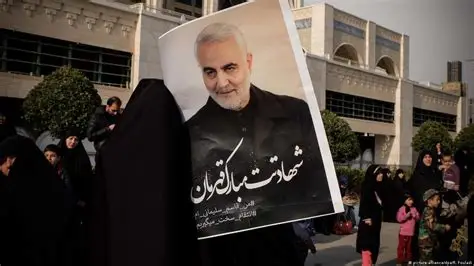
“With Daesh out for the count, America and Iran again diverged, and in 2020, Trump had Ghassem Soleimani and Jamal Jafar assassinated in a standoff in Iraq.”
With Daesh out for the count, America and Iran again diverged, and in 2020, Trump had Ghassem Soleimani and Jamal Jafar assassinated in a standoff in Iraq. An outraged Khamenei’s threats were not matched by repeatedly faltering Iranian reciprocations. Similarly, there was no meaningful Iranian response when, in 2023, the Palestinian Hamas in Gaza, to which Iran was only loosely attached, broke out of a decades-long siege and seized hostages in a bloody raid before a genocidal Israeli assault over the region. Though Israel insisted on treating Hamas as an Iranian proxy, Tehran took care to avoid meaningful confrontation. This continued right until the summer of 2025, when a reinstalled Trump helped Israel attack Iran, in the process wiping out a wide swathe of leaders with whom Khamenei had worked for decades.
Nor were external attacks the only front. Over the 2020s, Iran was beset by internal protests, which contained both organic elements but also, as in the most recent case, disruptive elements clearly linked to Israel. As in the past, Iran resorted to violent repression, whose scale was instantly, shamelessly, and absurdly exaggerated by its enemies. Their most ludicrous yet frequently mulled claimant to replace the clerical regime was the posturing, utterly incompetent heir to the Pahlavi name, Reza Shah, who had grown up in an American exile, was leery of resettling in Iran, and had no credentials for the job beyond his surname and a particularly shameless courtship with Israel.
Given these multivariable threats and a clear track record of the United States and Israel breaking their agreements, it seems incredible that Iran once more resorted to the negotiating table. Clearly, Khamenei’s long-articulated suspicions of the American-Israeli axis had no veto on the matter. It came as no surprise when, at the end of February 2026, with negotiations still underway, another American-Israeli barrage hurtled into Iran. On their occasion, they got Khamenei; perhaps resigned to a revolutionary end, the elderly Iranian leader was reportedly sitting with an infant granddaughter when both were killed.
Khamenei is the latest, but most powerful, of a line of leaders to have been assassinated by the United States and Israel – among others, Yemeni, Palestinian, and Lebanese leaders. But owing in part to his longevity at the helm of an at least independent, if not always, anti-imperial regime; in part to his position as the seniormost Shia politician in the world; and in part to the dishonourable methods of the genocidal enemy that had killed him, Khamenei’s death has already provoked more international outcry than most. The tragedy is not, as his killers’ propaganda has it, that he ran a supposedly millennarian regime bent on regional conquest. The tragedy is that his revolutionary-philosophical background, decades in near-unchallenged power, and proven ability to retain his position, did not equip him to adequately confront his country’s open enemies. He recognized them far better than many other rulers in the region, but his policies, from abjuring nuclear armament to the cultivation of divisive vassals in the Fertile Crescent, did little by way of that recognition and ensured that the revolutionary republic to which he dedicated his career is in as parlous a state at his demise as it has ever been.
[Disclaimer: this article reflects the views of the author, and not necessarily those of MuslimMatters; a non-profit organization that welcomes editorials with diverse political perspectives.]
Related:
– Iranian Leader Khamenei Slain As War Brings Mayhem To The Gulf
– Genocidal Israel Escalates With Assault On Iran
The post Revolutionary Philosopher And Clerical Prince: The Life And Polarizing Legacy Of Ali Khamenei appeared first on MuslimMatters.org.