


The Holy Prophet (sa) – Part VII
The Promised Messiah (as) wrote over 80 books in Arabic, Urdu, and Persian. Excerpts of his collected works have been translated into English and organised by topic.
The Review of Religions is pleased to present these excerpts as part of a monthly feature. In this issue, the Promised Messiah (as) illustrates the humility of the Holy Prophet (sa), as well as his perfect morals, his superiority over all other prophets, and the miracles he performed.
This is the seventh part of a multi-part series.
Extracts from The Essence of Islam – Vol. I. pp. 260-273.
RoR Photos
Majesty and Humility of the Holy Prophet (sa)
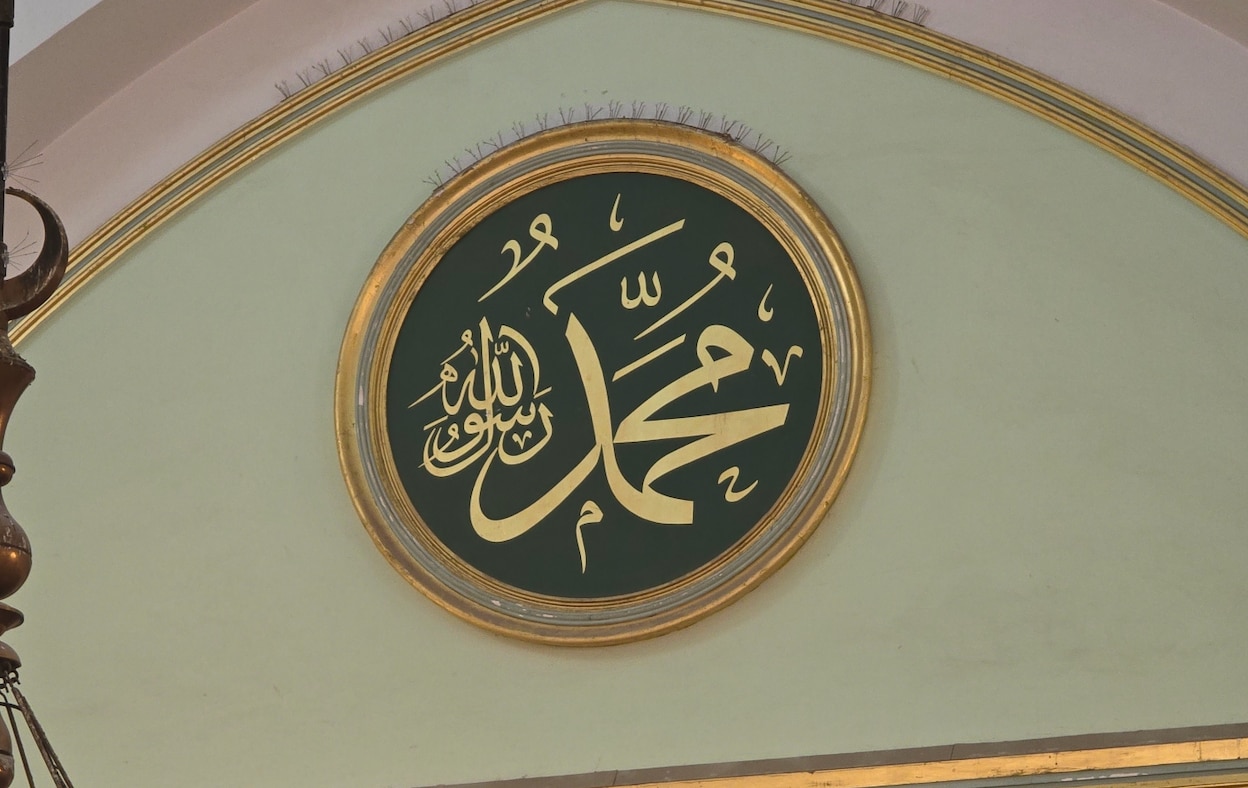
In the two blessed names of the Holy Prophet, Muhammad (sa) and Ahmad (sa), there are two separate excellences. Muhammad (sa), which means greatly praised, signifies majesty and greatness and carries the flavour of being a beloved one, for a beloved one is praised. It is necessary, therefore, that it should signify majesty. But Ahmad (sa) has the flavour of a lover for it is a lover’s part to praise, and he praises the beloved. As Muhammad (sa) signifies majesty and greatness, Ahmad (sa) signifies humility.
His life as a prophet was divided into two parts: one spent in Makkah, which extended over thirteen years, and the other spent in Madinah, extending over ten years. His Makkan life illustrated his name Ahmad. During that period, his time was spent weeping before God, in seeking His help and in supplication. He who is fully informed of his Makkan life knows that no lover could ever equal the tears the Holy Prophet (sa) shed and the supplications he made during that period in search of his Beloved, nor can any lover ever do so in future.
His weeping was not for himself but was on account of his awareness of the condition of the world. The worship of God had disappeared, and God Almighty, having put faith in his soul, had inspired him with joy and delight. He naturally desired to communicate this delight and love to the world, but when he observed the condition of the world and the capacities and natures of the people, he was confronted with great difficulties. He wept over this condition of the world so much that he put his life in danger. This is indicated in the verse:
[1] لَعَلَّكَ بَٰخِعٌ نَّفْسَكَ أَلَّا يَكُونُواْ مُؤْمِنِينَ
This was his life of supplication and was the manifestation of his name Ahmad. At that time, he was concentrating in a grand manner, and the concentration manifested its effect in his life in Madinah at the time when the significance of his name Muhammad was revealed, as is
[2]وَاسْتَفْتَحُواْ وَخَابَ كُلُّ جَبَّارٍ عَنِيدٍ
—Malfuzat, Vol. II, pp. 178-179
He who is familiar with the mode of expression of the Holy Qur’an knows that sometimes the Noble and Merciful One uses an expression for His special servants which is apparently derogatory, but which in its context signifies great praise. As God Almighty said with regard to the Holy Prophet (sa):
[3] وَوَجَدَكَ ضَالًّا فَهَدَىٰ
Did He not find thee Dall and showed thee the right way.
It is quite clear that the well-known and familiar meaning of the term Dall, of which lexicologists are too fond, is ‘misguided’. Thus, the verse would mean that God found you misguided and guided you; whereas, the Holy Prophet (sa) was never misguided, and a Muslim who believes that at any time in his life the Holy Prophet (sa) was misguided is a faithless kafir and guilty of violating the shariah. The verse should be understood by reflecting upon the context in which it is placed, which is that Allah the Exalted first stated about the Holy Prophet (sa):
*أَلَمْ يَجِدْكَ يَتِيمًا فَءَا وَىٰ
* وَوَجَدَكَ ضَآلًّا فَهَدَىٰ
[4]* وَوَجَدَكَ عَآئِلًا فَأَغْنَىٰ
Allah the Exalted found thee an orphan and helpless, and He gave thee shelter by Himself and found thee Dall (in love with Himself) and drew thee towards Him and found thee indigent and enriched thee.
—A’ina-e-Kamalat-e-Islam, Ruhani Khaza’in, Vol. 5, pp. 170-171
Holy Prophet (sa) – the Grand Reformer
Holy Prophet (sa) Brought Morals to Perfection
In meekness and gentleness, Moses stood higher than all the prophets in Israel, and no other prophet in Israel, whether Jesus or anyone else, approached the lofty station of Moses. The Torah bears witness that in meekness and gentleness and in moral qualities, Moses was higher than all the prophets in Israel. The third verse of the twelfth chapter of Numbers says that Moses was very meek, above all the men which were upon the face of the earth.
God has in the Torah praised the meekness of Moses as He has not praised any other prophet in Israel. It is true, however, that the high moral qualities of the Holy Prophet (sa) that are mentioned in the Holy Qur’an are thousands of times more exalted than those of Moses. God has said that the Holy Prophet (sa) combined in his person all the high moral qualities which were found in the different prophets and said with regard to him:
[5] وَإِنَّكَ لَعَلَىٰ خُلُقٍ عَظِيمٍ
Thou dost possess the highest moral qualities.
The word ‘azim in the Arabic idiom is used to denote the highest quality of a thing. For instance, when a big tree is called ‘azim, it would mean that it possesses all the height and width and bulk that is possible for a tree to possess. Thus, this verse means that all the high moral qualities and excellent characteristics which a human being can possess were all present in the fullest degree in the Holy Prophet (sa). Thus, this is the highest possible praise. This is also indicated in another verse:
[6] وَكَانَ فَضْلُ اللَّهِ عَلَيْكَ عَظِيمًا
Meaning that: God has bestowed His grace upon thee in the largest measure and no prophet can be equal in rank with thee.
This praise is mentioned in the Psalms as a prophecy concerning the Holy Prophet (sa), as is said: Therefore, God, thy God, hath anointed thee with the oil of gladness above thy fellows. (Psalms, Ch. 45). [7]
—Brahin-e-Ahmadiyya, Ruhani Khaza’in, Vol. 1 pp. 605-606, sub-footnote 3.
Holy Prophet’s (sa) Superiority over All the Prophets
The Holy Qur’an shows that every Prophet was a follower of the Holy Prophet (sa), as is said:
[8] لَتُؤْمِنُنَّ بِهِ وَلَتَنصُرُنَّهُ
In this way, all Prophets became followers of the Holy Prophet (sa).
—Barahin-e-Ahmadiyya, Part V, Ruhani Khaza’in, Vol. 21, p. 300
The Holy Prophet (sa) combines the names of all the Prophets in himself inasmuch as he possessed all their diverse excellences. So he is Moses and Jesus and Adam and Abraham and Joseph and Jacob. This is indicated in the verse:
[9] فَبِهُدَاهُمُ اقْتَدِهْ
Meaning that the Holy Prophet (sa) should combine in himself all the diverse guidance which other prophets had brought.
This shows that the dignity of all prophets was combined in the Holy Prophet (sa); and his name Muhammad (sa) also points to this, for it means greatly praised, and great praise can only be imagined when all the varied excellences and special qualities of the different prophets are combined in the Holy Prophet (sa). There are many verses in the Holy Qur’an which set forth clearly that the being of the Holy Prophet (sa), on account of his qualities and excellences, was a combination of all the prophets. Every prophet, finding in him an appropriate relationship with himself, imagined that he would come under his name.
At one place, the Holy Qur’an sets forth that this prophet has the closest relationship with Abraham.[10] In a Hadith of Bukhari, the Holy Prophet (sa) says that he has a close relationship with Jesus and that his being is combined with the being of Jesus. This confirms the saying of Jesus that the Holy Prophet (sa) would appear under his name and so it happened that when our Messiah (sa) appeared, he completed the incomplete works of the Messiah of Nazareth and bore witness to his truth and cleared him of the calumnies which the Jews and the Christians had uttered against him, and thus gave pleasure to the soul of Jesus.
—A’ina-e-Kamalat-e-Islam, Ruhani Khaza’in, Vol. 5, p. 343
Divine revelation is a mirror in which the perfect attributes of God Almighty are seen, according to the inner cleanliness of the prophet who is the recipient of the revelation. As the Holy Prophet (sa) was higher than all the other prophets in the purity of his soul, the expansion of his mind, his chastity, modesty, sincerity, trust, fidelity and love of the Divine, God, the Glorious, anointed him with the perfume of special excellence in excess of any other prophet. His bosom and heart which were broader and holier and more innocent and brighter and more loving than the bosom and heart of any who had passed before him, and who were to come after him, were considered worthy that such divine revelation should descend upon him as should be stronger and more perfect, higher and more complete, than the revelation vouchsafed to all those who were before him and all those who were to come after him, and which should serve as a clear, wide and large mirror for reflecting divine attributes. That is why the Holy Qur’an possesses such high excellences that the brightness of all previous books is cast into the shade before its fierce and brilliant rays. No mind can put forth a verity which is not already contained in it, and no reason can present any argument which is not already presented in it. No speech can affect the hearts so powerfully as the strong and full of blessings effect it produces upon millions of hearts. Undoubtedly, it is a clear mirror reflecting the perfect attributes of the Divine in which all is found that is needed by a seeker to arrive at the highest grades of understanding.
—Surmah Chashm Arya, Ruhani Khaza’in, Vol. 2, pp. 71-72, footnote.
It is my belief that if, leaving the Holy Prophet (sa) aside, all the prophets who had preceded him had combined to perform the task and to carry out the reform which the Holy Prophet (sa) performed and carried out, they would not have been able to do so. They had not the heart and the strength which had been bestowed upon the Holy Prophet (sa). If anyone should say that this shows disrespect towards the other prophets, he would be guilty of uttering a calumny against me. It is part of my faith to honour and respect the prophets, but the Holy Prophet’s (sa) superiority to all other prophets is the principal part of my faith and my whole being is saturated with it. It is not within my power to exclude it.
Let my unfortunate opponent, who is sightless, say what he pleases, but our Holy Prophet (sa) performed a task, which all the others combined together, or separately, could not have performed.
[11] ذَٰلِكَ فَضْلُ اللَّهِ يُؤْتِيهِ مَن يَشَاءُ
—Malfuzat, Vol. II, p. 174.
The holy books of the Jews state clearly that a saviour like Moses will be sent for them. This means that he would appear at a time when the Jews would be passing through a state of suffering and humiliation as was imposed upon them in the time of Pharaoh. Then they would be delivered from torment and disgrace by believing in him. There is no doubt that our lord and master Muhammad (sa), the Chosen One, was the personage for whom the Jews had been waiting throughout the ages and in whom the prophecy of the Torah was most clearly fulfilled. When the Jews believed in him, many great kings were raised among them. This is clear proof that God Almighty forgave their sins because of their accepting Islam and had mercy on them as was promised in the Torah.
—Ayyam-us-Sulah, Ruhani Khaza’in, Vol. 14, pp. 302-303
The greatness that was bestowed upon Jesus was on account of his following the Holy Prophet Muhammad (sa) for Jesus was informed of the Holy Prophet (sa) and believed in him and attained salvation through his belief.
—Al-Hakam, 30 June 1901, p. 3.
Now we compare Jesus with the Holy Prophet (sa) in the matter of the treatment accorded to them by the governments of their respective days and how their prestige and divine support were manifested. When we do this, it becomes clear that in contrast with the Holy Prophet (sa) Jesus not only fails to exhibit signs of Godhead, he even fails to demonstrate the signs of a Prophet. When the Holy Prophet (sa) sent his message to the rulers of his time, the Roman Caesar, on receipt of the Holy Prophet’s message, breathed a sigh that he was caught among the Christians and that if he had been free, it would have been a matter of pride for him to present himself to the Holy Prophet (sa) and to wash his feet like a slave. But a wicked and evil-hearted ruler, the Chosroes of Iran, was affronted and sent soldiers to arrest the Holy Prophet (sa). They arrived in Madinah towards the evening and told the Holy Prophet (sa) that they had been sent to arrest him. The Holy Prophet (sa) disregarded what they had said and invited them to accept Islam. At that time, the Holy Prophet (sa) was in the mosque, accompanied only by three or four companions, but the royal emissaries were trembling in awe of him. In the end, they asked what answer they should take back concerning his arrest to their lord. The Holy Prophet (sa) asked them to wait till the next day. The following morning, when they came, the Holy Prophet (sa) said to them: He whom you call lord and god, is no god. God is the Being Who is not subject to death or destruction. Your god was killed last night. My True God set up his son Sherweh over him, and last night he was killed by the hand of his son. This is my reply.
This was a great miracle witnessing which thousands of people of that country believed in the Holy Prophet (sa) because in fact Khusro Pervez, the Chosroes, had been killed that night. This is not a statement like the vague statements of the Gospel, but is supported by historical evidence. Mr Davenport has also mentioned this event in his book.
As against this, the lack of esteem in which Jesus was held by the rulers of his time is well known. Probably the Gospels still contain the record of Herod sending Jesus to Pilate as an accused person. He remained for a time in custody, and his godhead did not come into play. No monarch said that it would be a matter of pride for him to serve Jesus and to wash his feet. Pilate handed him over to the Jews. Was this his godhead? What a contrast there is between the two persons who encountered similar circumstances but with opposite results. In one case, a proud and arrogant monarch was incited by Satan to order the arrest of the claimant to prophethood, but he was overtaken by the divine curse and was murdered with great humiliation at the hands of his own son. In the second case, a person whom – regardless of his real claims – his extravagant followers raised to the heavens, was in fact arrested and sent into the custody of the cruel police as an accused person from one town to another.
—Nur-ul-Qur’an, No. 2, Ruhani Khaza’in, Vol. 9, pp. 384- 386
Miracles of the Holy Prophet (sa)
A time was when the Evangelists proclaimed through the streets and lanes most impertinently and falsely that no prophecy had been made and no miracle had been shown by the Holy Prophet Muhammad (sa), the Chosen One. Now is a time when God Almighty, in addition to the thousands of miracles of the Holy Prophet (sa), which are mentioned in the Holy Qur’an and in the Ahadith, has shown hundreds of signs which no opponent has been able to counter. We have throughout proclaimed gently and meekly to every Christian and other opponent, and we still proclaim, that it is necessary for every religion which claims to be true and from God Almighty, that it should produce men who, as the deputies of their leader, guide and Messenger, should prove that that Prophet is living by virtue of his spiritual blessings and has not died.
It is necessary that the prophet, who is followed and is believed in as an intercessor and saviour, should be ever-living through his spiritual blessings. He should be so obviously seated on the throne of honour and exaltation and glory that his shining face and his sitting on the right hand of the Eternal and Ever-Living, All-Sustaining and All-Powerful God should be established by powerful divine lights. Loving him perfectly and obeying him perfectly should necessarily produce the results that his follower should be bestowed the bounty of the Holy Spirit and heavenly blessings, and obtaining light from the lights of his beloved prophet he should dispel the darkness of his age and should furnish eager people with that firm and perfect and shining faith in the existence of God which burns up all desire of sin and all the passions of a low life. This is the proof that that prophet is living and is in heaven.
So how shall we express our gratitude to our Holy and Glorious God that He bestowed upon us the strength to love and obey His beloved Prophet Muhammad (sa), the Chosen One and then by bestowing upon us a full share of the spiritual grace of that love and obedience, which is true piety and a true heavenly sign, proved to us that our dear and exalted Prophet (sa) has not died, but is sitting on the right hand of his Powerful King on the Throne of Exaltation and Glory in the highest heaven. O Allah, send down Thy blessings, bounties and peace upon him.
[12] إِنَّ اللَّهَ وَمَلَآ ئِكَتَهُ يُصَلُّونَ عَلَى النَّبِيِّ ۚ يَآ أَيُّهَا الَّذِينَ آمَنُوا صَلُّوا عَلَيْهِ وَسَلِّمُوا تَسْلِيمًا
Now let someone tell us: who is proved to possess such spiritual life besides our Holy Prophet (sa)? Does Moses possess it? Certainly not. Does David possess it? Certainly not. Does Jesus possess it? Certainly not. Does Raja Ram Chandra or Raja Krishna possess it? Certainly not. Do those Rishis possess it concerning whom it is said that the Vedas were revealed to their hearts? Certainly not. It is useless to mention physical life, because the real and spiritually beneficent life is the one which, resembling the life of God Almighty, sends down light and certainty.
To attain long physical life is no matter of pride. Some of the Egyptian monuments are thousands of years old, and the ruins of Babylon are still in existence, which are the home of owls. In this country, Ajudhia and Bindraban are all old cities and many old monuments are found in Italy and Greece. Through their long continued existence, do all these monuments partake of the glory and exaltation which is bestowed on the holy ones of God on account of their spiritual life?
It is clear that the proof of such spiritual life is found only in the case of our blessed Prophet (sa). May God’s mercies in their thousands keep him company.
—Tiryaq-ul-Qulub, Ruhani Khaza’in, Vol. 15, pp. 137-139
ENDNOTES
1. ‘Haply thou wilt grieve thyself to death because they believe. not.’ – The Holy Qur’an, 26:4.
2. ‘They prayed for victory, and as a result thereof every haughty enemy of truth came to naught.’ – The Holy Qur’an, 14:16.
3. The Holy Qur’an, 93:8.
4. The Holy Qur’an, 93:7-9.
5. The Holy Qur’an, 68:5.
6. The Holy Qur’an, 4:114.
7. The Bible, Psalm 45:7.
8. ‘You shall believe in him and help him.’ – Al-e-’Imran, 3:82.
9. The Holy Qur’an, 6:91.
10. The Holy Qur’an, 3:69.
11. ‘That is Allah’s grace; He bestows it on whom He pleases.’ – The Holy Qur’an, 62:5.
12. ‘Allah and His angels send blessings on the Prophet. O ye who believe! You also should invoke blessings on him and salute him with the salutations of peace.’ – The Holy Qur’an, 33:57.