


Muslim Capitalism And The Rise of Tech and VC Culture: Are We Going Down The Technological Lizard Hole?
A critique of how tech culture and venture capital are reshaping Muslim priorities, urging a return to spiritually grounded progress.
“You will tread the same path as was trodden by those before you inch by inch and step by step so much so that if they had entered into the hole of the lizard, you would follow them in this also.” – Hadith of the Prophet ﷺ, Sahih Muslim
A subtle shift in how we understand Islam
In a recent book talk I attended by a well-known western academic scholar where he wrote on Global Islam, he made a point that struck me deeply; With the advent of colonisation in Muslim lands across West Asia (the Middle East) and South Asia, many scholars such as Mohammed Abduh, Jamal ud Din Afghani and Rashid Rida often fought back against the different ideologies stemming from the West. In the process of responding to these ideologies, the scholar argued that Islam transformed from a religious worldview with God as the centre, to another ideology in the market of ideologies existing in the world.
Keep supporting MuslimMatters for the sake of Allah
Alhamdulillah, we’re at over 850 supporters. Help us get to 900 supporters this month. All it takes is a small gift from a reader like you to keep us going, for just $2 / month.
The Prophet (SAW) has taught us the best of deeds are those that done consistently, even if they are small.
Click here to support MuslimMatters with a monthly donation of $2 per month. Set it and collect blessings from Allah (swt) for the khayr you’re supporting without thinking about it.
 Powerful as it may be, Muslims have over time engaged with Islam in the same ways that non-Muslims in the West have, often commoditising it and reading into it at a surface level. Among the best and most recent exemplifications of this transformation is the emerging Tech and Venture Capital Startup phase in the Muslim world.
Before I speak about this and possibly elicit some angry voices, let me begin with some preface into this idea that we call modernity which sets the background for why all of this becomes a problem. This will allow me to outline some ideas as to what some possible solutions could be moving forward.
What do we mean by modernity?
We keep hearing the word ‘Modern’ quite often, used to refer to humans, trends, architectural styles and many other different aspects of existence. One could be forgiven for thinking that this refers to the 21st century when the internet, computers and all their derivative products (mobile phones, social media, apps etc.) became pervasive. Etymologically ‘modern’ refers to ‘relating to the present times, as opposed to the past’. In this sense then, modernity could possibly mean the time that we are living in.
However, there is much more depth to this one word over which books upon books have been written over the last century or so. Let me try to break it down a bit keeping in mind that many variations and understandings of this term exist.
In brief, up until the 16th century, the Roman Catholic church was politically powerful across Europe. The Church gatekept knowledge of the Bible in the hands of priests and often brutally repressed anyone who opposed its intellectual or political hegemony – a good example being the Church’s repression of figures like Galileo Galili, who argued for heliocentrism—that the Earth revolves around the sun.
In the late 1500’s, the Church did something that set in motion a series of events that transformed the world as they knew it. It began to sell salvation to anyone who could afford it. In a tradition called the indulgences, it let its followers know that Heaven was for the taking for anyone who paid a small amount towards the church. Proceeds from these indulgences went towards building the St. Peter’s Basilica. Combined, the wealth discriminatory approach towards salvation and the use of this money towards building a cathedral provoked the ire of a few individuals, the most prominent being a priest by the name Martin Luther.
From the Reformation to the modern world
An erudite scholar and professor at Wittenburg University, Germany, Martin Luther wrote a document called the 95 theses. In this document, he criticised the practise of indulgences and also challenged the hegemony of the priests as the sole interpreters of the Bible arguing that even the layman could interpret the bible. This document was also translated to German – the language of the masses (as opposed to Latin which was the language of the clergy). Martin Luther’s work would have gone unnoticed had it not been for the invention of the Gutenberg printing press which helped mass produce (as of those days standards) the 95 Theses and went into the hands of more than just the clergy of the time.
Over the next few decades, this sparked what is known as the Protestant Reformation (those who protested Catholic doctrines) leading to mass uprisings and violent clashes between Protestants and Catholics across Western Europe. While the reasons for these clashes were nuanced and wealth based in some instances (there have been well known records of Protestants and Catholics fighting alongside each other against other Protestants or Catholics), the discourse around these clashes solidified the modern idea (and myth) that ‘religion causes wars’.
Nation-states, capitalism, and the logic of growth
While I skip many details, nuances and differences due to the scope of this article, the Protestant reformation and the ensuing ‘Enlightenment’ from the late 17th century led to various socio-intellectual developments that crystallised in the form of modernity. Let me draw your attention to two interlinked concepts that came out of this era which did not occur in the pre-modern era.
The first is the concept of nation-states and the second is capitalism. In pre-modern times, empires (which were one among the different types of political units) had fluid borders and did not have an over-reaching control of its ‘citizens’ the way modern nation-states do. The concept of sovereignty (where the modern nation – state had the theoretical right to enforce its own laws) was also one that has defined the world order in the centuries to come. This concept of fixed borders and complete dominion of a centralised government with regards to legal matters and military capacity was not a concept that existed before this era.
Capitalism is another such concept which did not exist before the modern era. While people seeking profits and being greedy existed in the pre-modern era, some of the main inventions of capitalism is the Joint stock company (where a company is a separate entity from the persons running it), the transformation of traditional labour (based on energy levels, the sun, the weather etc) to a 9-5 timing (especially in the post industrialisation age of the 19th century) and for the purpose of this article: the doctrine of economic productivity and progress.
Productivity was one of the most important concepts that interlinked with the concept of the nation-state which had to rely on constant productivity to sustain growth. Of course, an over focus on growth set human beings on a path towards environmental destruction (can we really keep producing goods that will get thrown in landfills without expecting huge wastes?). This focus on productivity is what led to the development of various technologies such as the internet, aeroplanes and now Artificial Intelligence mostly with significant amounts of government and military funding to maintain technological superiority over other countries.
Muslims, technology, and the illusion of easy solutions
With the rise of technology and Artificial Intelligence taking over the western world, it is inevitable that the feverishness around these technologies are also impacting Muslim societies. Muslims are now slowly working on building, especially in the post October 23rd landscape. The fact that most companies we engage with including those like Amazon, Microsoft and even Google have now appeared on one version of the Boycott, Divest and Sanctions (BDS) list impressed upon Muslims, the importance of building ethical Muslim alternatives to a lot of these fundamental technologies and platforms.
However, while there have been useful alternatives, it is an incomplete solution to an all-encompassing problem creating internal issues within the Muslim world. The problem we have as Western Muslims is that we are transposing these standards onto everything we try to do borrowing on western notions of progress that are in fact damaging to us.
A stark example of this is the new maxim – ‘the solution to our problems is an app.’ That is a serious mistake we risk falling into. The number of people I spoke to who mentioned an app to learn Islam (across the UK and in Ummah oriented summits) seems to be plentiful. This is an area we need to tread with caution since Islam’s form of learning is meant to be experiential and human based (with Suhba or companionship being a major component of learning). In the West, these can be difficult due to the increasingly atomised modes of living as well as rising costs of travel and meeting outside houses which is why we resort to such apps – a reflection of the wider ecosystem we live in. To be sure, people who are well entrenched in tech are often aware of this issue; it is the enthusiastic new comer (sometimes only tangentially linked to tech) that is often at risk of falling into this trap. A good example is an educational platform that tries to create an app about the ‘basics of Islam’ – a common ambition by many people in such fields.
But we have to remember that these should only be something for us to augment our learning experience and not be a substitute. This is something I feel is lost on many of us living in the West. As someone who engages passionately and conducts sessions around topics related to capitalism and secularism for Muslim professionals, I see how much we have imbibed these concepts ourselves and how much work we have to disentangle ourselves from these intellectual legacies.
Another example, as I heard from one of the participants in a well-known Summit, was that a session on education seemed to be about putting Muslim faces on colonial systems of education which would not do much to address the lack of orientation around Allah and Islam’s teachings. To be clear, this is not meant to say we should avoid tech solutions; rather what I am arguing for is to moderate our expectations and be wary of the traps that established techs have already fallen into. In fact, I do support many spaces that have complete tech gatherings (such as the Muslim Tech Fest that I attended for two years and that I wrote positively about previously).
Startup culture and the problem of endless scaling
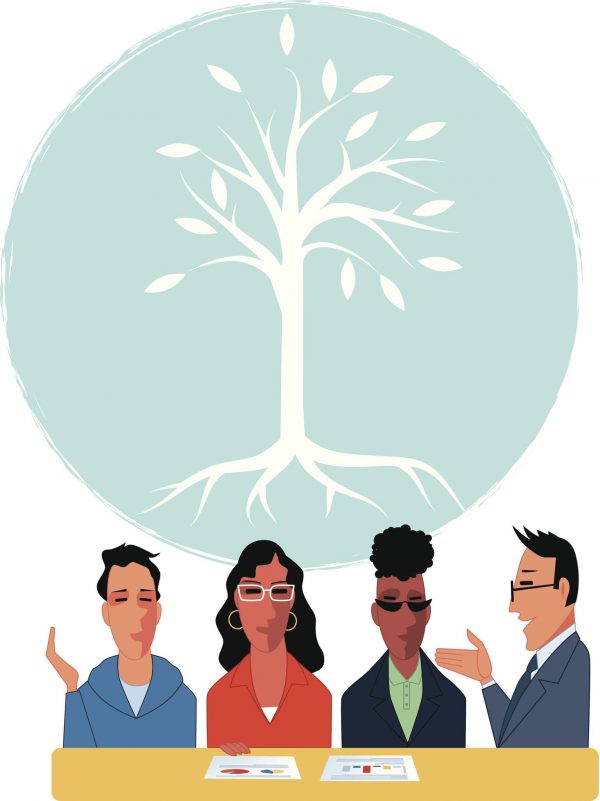 Startup culture and VC Funding: The second aspect I could see throughout the different festivals was the start up culture and the fund raising attitudes. Going back to fundraising and larger Western attitudes – remember that Capitalism’s main bequeath to us is not greed – that is something that existed throughout humanity as we see in the Qur’an. What capitalism gave us is a system that creates profit solely for the sake of more profit, in other words: Growth for the sake of growth. It’s why when I speak to startup founders and business owners, I keep hearing the question ‘How much can we scale this up?’ to which I often think – ‘for what’?
I submit that most people think of building up profits coming in from this scaling for the sake of wealth itself without any thoughts of funding long term community initiatives – as a result of absorbing the ‘growth and scaling up culture’. Moreover, even if the initiative exists, there needs to be a very tight scrutiny on infinite growth ambitions given the often cut throat nature of such growth with immense profits taking place at the cost of oppressing labour. Mega Corporations like Amazon and others have witnessed protests against their work practises at the cost of enriching top management. As the famous adage goes, ‘No one ever makes a billion dollars, they often take a billion dollars’.
When technology is useful—and when it is not
Given the above background, the dominance of VC culture in Muslim educated spaces that are trying to fundraise for causes is a new trend that we see. This is a good thing to an extent, but it has some limitations and dangers. At many conferences and summits that I have attended mainly in the West, the VC culture that we are now seeing is forcing Muslims to think of profitability and equity far beyond what they should be. This is an important component of building Ummatic infrastructure, but it is not the only one and the risk we have is that we are now moving from a model where we donated for the sake of Allah and for alleviating people’s problems to one where we solely expect a return on our investment.
On the other hand, the places where people do give money to causes without expecting a profit often turn out to be relief donations that are surface level despite their importance (such as feeding people and building wells). We don’t allocate much of our funding towards tackling root causes such as the broader political reasons for poverty and corruption as well as the wanton killing of Muslims and many other populations across the world – where part of the answer lies in research, policy and advocacy.
We can wax eloquent about the importance of building narratives, but we have to remember that media companies are largely loss making business entities and yet, billionaires invest in them for much more than just money – they do so to control the narrative. This is something we need to understand and engage with better over time especially when we think of ‘decolonising’ and focusing on Allah, His book and His Messenger’s guidance in improving the standards of humanity.
Most organisations that I see being funded or supported in different fests and conferences are often tech oriented – which serves a purpose. As this article by the Policy Minaret argued, there are three types of usage of tech and Islam, 1) Genuine gap work – where real gaps exist that tech/app creation can help with (a Qibla and prayer timing app in the early days were good examples of this. 2) Infrastructure work – where larger infrastructure such as payment platforms, VPN’s etc are required where they are more ethical (w.r.t. privacy, data protection etc) and 3) Formation-adjacent work – where gaps exist but technology is not always the right option (think of non-contextualised Fiqh apps where works should be done by real scholars instead of an app).
It is the third type of work (formation adjacent work) that I feel are often tech dominated in a way that should not be the case. There are organisations that are upcoming and are filling important gaps in society that should be supported in different ways than building apps or going online. Some may require mentorship, others require exposure, and others may require money. Muslim conferences should be encouraging such organisations with long term impact without any financial profitability to showcase their work in a structured manner.
There was for instance, the Spark Awards which was an initiative by an organisation called Collective Continuum that gave away funding for new startups. While the winner was a non-profit focused on preventing pregnancy related deaths, a majority of the finalists seemed to be tech solutions. Similarly, the Ma’a Awards (from Malaysia) also featured a significant amount of tech related organisations in its 15 finalists.
This is not to say that we should not have tech solutions; it is important. In fact, in aspects like building critical infrastructure like Web Services, VPN’s, payment providers (alternatives to Stripe and Paypal), there should be (and is) some impetus to develop systems that don’t replicate the power and wealth hungry, but there exists many organisations that do not rely on tech and should not rely on tech in some instances. Indeed, a rising prevalence of tech usage and dependency for alleviating societal problems contains a high chance of pushing people into loneliness by forcing them to the screen and also causing neurological dependencies that are akin to drug addictions in some cases. To force organisations to showcase their tech proficiency to help receive funding is a pathway we should not adopt without any introspection whatsoever.
Rethinking progress: beyond the ‘Golden Age’ narrative
The problem of the Islamic Golden Age narrative – This is reminiscent of problematic Muslim narratives of ‘The Islamic Golden Age’. We often love professing the glories of scholars like Al Jaber, Ibn al Haytham and Ibn Rushd and many other scholars who engaged in ‘scientific developments’ that are responsible for the enlightenment of Europe.
Two problems are ensconced within this narrative. First, by scrambling to showcase how we had Muslim scientists (even though it is not the same as modern scientists), we are already operating from a space of inadequacy with tech/scientific development as the pinnacle of mankind. We are trying to show to the western world that we had our own scientists as well who seem to be the only people of value. Second, we ignore the polyglot nature of these scholars who weren’t just scientists but also philosophers, social scientists and most importantly Islamic scholars as well. These realities and especially their orientation towards Allah is what pushed them to engage in scientific and other advancements.
This focus on material realities (translated to sole importance on tech solutions to societal issues) is the trap we need to avoid. We have to think outside of money oriented fields and work to subsidise those organisations and figures who are working outside of the tech space such as in spaces like Social Sciences, Islamic Studies and the humanities (perhaps an article for another time). These will be the thinking leaders of the Ummah if we nurture them and these are the people that the enemies often come to attack in the first instance given the awe-inspiring power that the sincere and God fearing among them hold to influence the masses towards goodness and away from Shaytan.
Policy solutions
I don’t want to be a complainer without giving any sort of solution towards this issue so I want to write down a few practical solutions that we could think of and open a conversation on these ideas. After purifying our intentions and seeking help from Allah (without which none of our actions can make any headway), we can think of a few steps that can work.
First, among the most important aspects to make a significant difference would be to deepen our scholarship especially on foundational Islamic principles and issues on modernity. For example, as some one who engages regularly with topics such as secularism, nationalism and other such ideologies stemming from post reformation, it is clear that we have some level of expertise on political ideologies, but much lesser grasp over issues like capitalism, economics and the likes from a critical Islamic lens. Moreover, it is also important to understand how these issues trickle down to daily Muslim practises and avoid capitalist traps (do we really need to pay influencers millions to raise money for Gaza or does that follow capitalist models that come from outside of our religion?).
Second, it is important to take these conversations on ideologies and the depth involved. This is not done with the expectation of making the masses experts in such subjects. It is practically not possible for people reading topics 1 hour a day to develop deep expertise in the same way as someone who dedicates decades of their life towards studying and engaging with these concepts day in and day out. That said, demonstrating the depth required is something that should ideally push people towards supporting such initiatives. Think of how much the Islamophobia industry spends; Al Jazeera estimated it to be around 200 million USD in the 2014-2016 era alone. Are Muslims spending similar amounts towards deep scholarship and dissemination or are we playing catch up and crying victim?
The third step to keep in mind is that the work towards tech solutions and VC startups must continue, but in a more guided fashion. As prominent voices such as Ibrahim Khan from Islamic Finance Guru and Adil, the founder of the boycott app and now VPN have noted, we don’t need another Qur’an App or even a knowledge learning app because we have enough that exist today. What we need is foundational infrastructure that is of benefit to everyone who doesn’t want to engage with an extractive capitalist system. The Buycat VPN is one such good example. VPN’s which were initially developed to avoid surveillance have now been compromised given that most of these companies are now purchased by Israeli linked firms leading to fears of surveillance.
Similarly, developing payment platforms that empower not just Muslims but any community that is often subject to their bank accounts being blocked due to Islamophobic (and also racist) ideologies operating within banking apps is another such important need. These initiatives must continue but growth should not be for the sake of growth alone but rather for the sake of providing ethical alternatives.
The fourth would be to ensure that funders and established organisations could be connected with social service organisations rather than just tech-oriented startups. Mentorship, social media presence, skills and funding should be among the various ways this could be done. One way of facilitating this could be an award ceremony with finalists being given some small funds to help with their operations and logistics or even sustainability. Oftentimes, even 1000 dollars can be the difference between survival and continuity for such organisation.
This is also something that the organisers of different big conferences can think of – is it possible to set up small funds for different initiatives in the next conference which can help support small organisations to grow and sustain over time? For instance, at the GEM summit in Doha, Qatar that I attended, I proposed a book writing grant off the back of an excellent workshop on writing books – many have great ideas and want to write but don’t have the resources required to do the research or hire editors for such work. A small grants scheme could potentially supercharge some of this important work.
The fifth and likely, one of the most fundamental recommendations would be to orient people – especially community leaders, event organisers and tech founders on the larger spiritual and intellectual underpinnings of what we need to do and how to go about each in our specific fields. For example, as media narratives go, we aren’t here to replicate the nasty practices of the far right. Rather we are invested as Muslims in ensuring that we speak truth because that is our obligation to Allah and that we research and showcase the many social benefits of Islamic practices rather than trying to kowtow to modern liberal narratives (“Brother, the Quran speaks about scientific miracles too”).
Conclusion
In sum, the development of modernity has been long and uneven across the world and has been pervasive in its many ideologies be it Capitalism, Secularism or liberalism (many of which we did not touch upon in this article). These systems are most intensely felt in the West; and while Muslims came over to many parts of the Western world to escape political repression and seek out better economic opportunities, they have not been immune to the many vagaries of modernity that they constantly absorb by dint of being in these lands.
There are a few voices that have tried to speak and make Muslims introspect about these issues, but they are far and few and are often drowned out by loud Muslim influencers and social media celebrities (another major symptom of capitalism – given their hunger to grow audiences by inducing outrage).
There are ways to engage better but it needs to be far more strategic and thoughtful especially when it comes to copying systems that are imported outside of Islamic thought and devoid of any relationship with the creator. May Allah grant baraka to us all, keep us sincere and ensure that we serve him in the best way possible.
Related:
Digital Intimacy: AI Companionship And The Erosion Of Authentic Suhba