


The Holy Prophet (sa) – Part V
The Promised Messiah (as) wrote over 80 books in Arabic, Urdu, and Persian. Excerpts of his collected works have been translated into English and organised by topic. The Review of Religions is pleased to present these excerpts as part of a monthly feature. In this issue, the Promised Messiah (as) continues to describe the close relationship between God Almighty and the Holy Prophet (sa).
This is the fifth part of a multi-part series.
Extracts from The Essence of Islam – Vol. I. pp. 235-248.
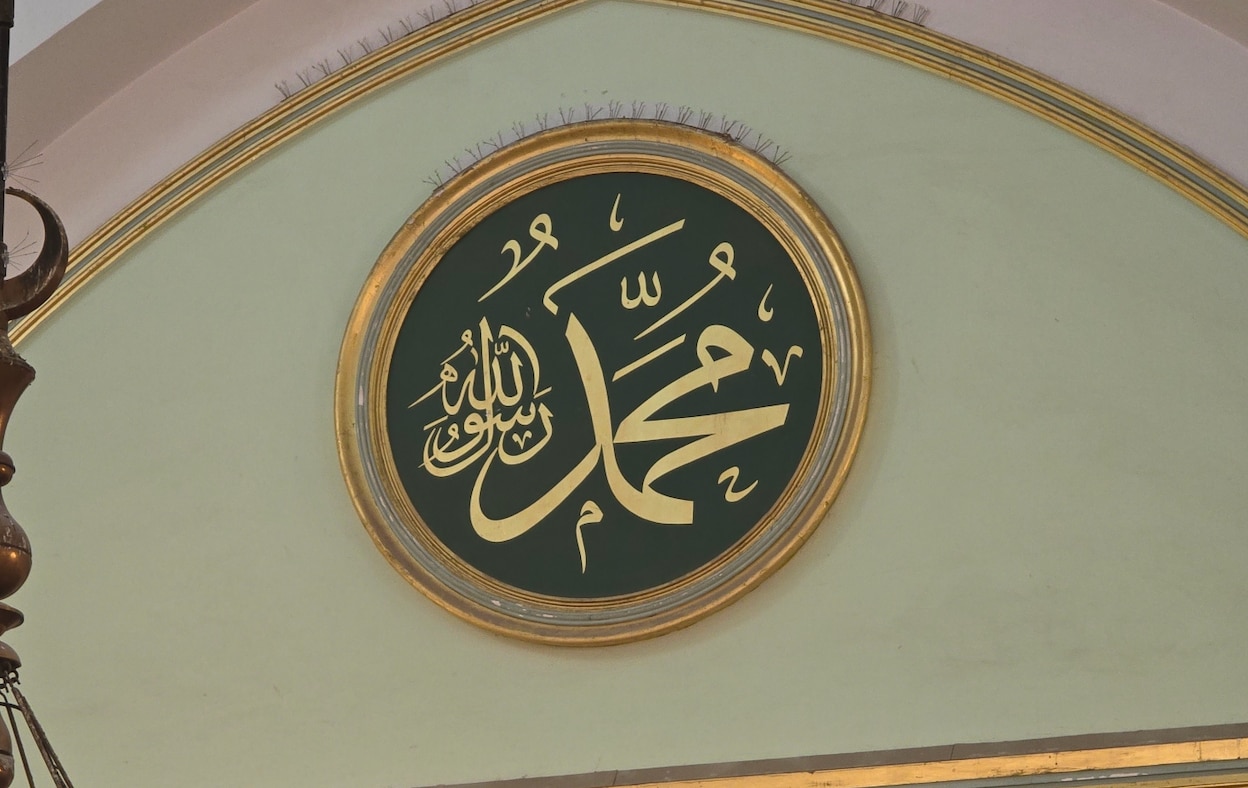
RoR Photos
The Holy Prophet’s (sa) Nearness to God Almighty
God does not create another god like Himself, because His attribute of unity and of being Peerless, which is eternal, prevents Him from doing so…But He does create a sample of His Peerless Being by investing one of His creation, as a reflection, with His attributes, which in reality belong to Him alone.
There is an indication of this in the Holy Qur’an in the verse:
[1] وَرَفَعَ بَعۡضَهُمۡ دَرَجَٰتٖ
Hereby, the possessor of high ranks is meant our Holy Prophet (sa) upon whom were bestowed the highest ranks which are the reflection of divine attributes and he became a mirror reflecting God, thus manifesting in a perfect degree, the vicegerence of God for the perfection of which not only mankind but the whole universe was created. This is a very fine point, and our opponents, who are unaware of these fine points and are not acquainted with these divine mysteries, will wonder how, out of millions of human beings, only one person could achieve the rank of perfect vicegerence of God, which is the reflection of Godhead. This is not the place to enter into a detailed exposition of this matter, but we consider it necessary to point out, in order to make it clear to a seeker after truth, that it is divine law which is in accord with His attribute of unity that, Himself being One, in His manifestations of His attribute of creation, He pays regard to unity. If we reflect deeply over what He has created, we would find that the whole of creation is so adjusted that it is like a straight line, one end of which is raised high and the other end of which is sunk low…On the last point of the highest part is a man, who in his human capacity is above the whole of mankind, and at the lowest end would be the soul possessing a defective capacity, which, due to this extreme loss, is close to senseless animals.
If we look at the planetary system, we find this phenomenon further supported. God Almighty has perfected His creation by starting with the smallest particle and carrying it to the largest body, the sun. In this planetary system, God has doubtless created in the sun so grand, beneficial, and blessed a body that there is no other body which is its equal at the highest end. Thus observing the highest and the lowest ends of this system, which are always present before our eyes, we can understand that the spiritual system, which has also proceeded from Him, is arranged in the same manner. It also has the same high and low points. The works of God Almighty are similar and balanced. He is One, and in the manifestation of His works, He loves unity. Discord and confusion have no place in them. So dear and appropriate is His method that all His works follow a system and are adjusted to each other.
Finding a proof in every direction and having observed ourselves, we accept His law that all His works, spiritual as well as material, are not divergent and confused, but follow a wise system and are part of an arrangement which, beginning with the lowest, proceeds to the highest and that this uniform method is loved by Him. Accepting this, we have to confess that as in the material system, beginning with a particle, God has carried His creation up to the great body, the sun, which combines in itself visible perfection, than which no material body is greater. In the same way, there must be a spiritual sun that is situated at the highest point of the spiritual elevation.
Now the question is, who is the perfect man described as ‘the spiritual sun’ and what is his name? It is not a matter which could be settled by simple reason. Because, except for God Almighty, none else possesses this distinction, and for the matter of that, who can carry out by the exercise of reason alone this tremendous task, that keeping in mind millions of God Almighty’s creatures and comparing their spiritual powers and faculties, he should single out and identify the greatest of all. Without doubt, rationally speaking, no one can make such a claim. True, for investigating such lofty and equally profound phenomena, revealed scriptures do constitute one means to achieving it, in which God Almighty, prior to the coming of the Holy Prophet (sa), indeed thousands of years before him, described fully the address and identity of the perfect man.
The person whose heart is guided by Allah and who believes in revelation and reflects on the prophecies that are mentioned in the Bible, will be bound to confess that the perfect man who is the spiritual sun, by whom the highest point has been filled, and who is the last brick of the wall of prophethood, is Muhammad, the Chosen One (sa)…The point of the highest exaltation of that good personified, who is situated at the highest point of the spiritual line, that is to say, Muhammad, the Chosen One (sa), which had been determined for him by divine decree, has been exhibited palpably in the world of manifestation. As God has said with reference to the high dignity of this great Prophet:
[2] وَرَفَعَ بَعۡضَهُمۡ دَرَجَٰتٖ
By this exaltation in rank is meant the highest point of the spiritual line which has been bestowed upon the Holy Prophet (sa) overtly and covertly. This benign being, who is good personified, is higher and more perfect than the three types of God’s favourites and is called the perfect manifestation of Godhead.
The three types of nearness to the Divine are illustrated by three resemblances; by pondering on these, the reality of the three grades of nearness can be appreciated. The first type of nearness is illustrated by its resemblance to the relationship between servant and master, as God has said:
[3] وَٱلَّذِينَ ءَامَنُوٓاْ أَشَدُّ حُبّٗا لِّلَّهِ
This means that the believers, who in other words can be called obedient servants, love their Lord above everything else.
Just as a sincere and faithful servant, by witnessing the continuous beneficence and many bounties and the personal qualities of his master, advances in his love and sincerity so much so that he acquires a similar temperament and follows the same way as that of his master, on account of the personal love born in his heart. Thus, he desires the fulfilment of his master’s wishes quite like the master himself. The same is the attitude of the faithful servant towards God Almighty. He, too, progressing in his sincerity and fidelity, arrives at a stage where he ceases to be himself and assumes the colour of his Noble Master…
The second type of nearness to God resembles the nearness between father and son, as God Almighty says:
[4] فَٱذۡكُرُواْ ٱللَّهَ كَذِكۡرِكُمۡ ءَابَآءَكُمۡ أَوۡ أَشَدَّ ذِكۡرٗا
This means: Remember Allah the Glorious with such spontaneous love and fervour, as you remember your fathers. It should be remembered that a master begins to resemble a father when love for him becomes extremely intense, and love which is purified of all selfishness settles in the heart as if it were part of it. Then all the eagerness of love and the strong attachment to the beloved is felt as natural and so appropriate to one’s nature and so much a part of it that it does not seem to have originated in any effort. As a son, on thinking of his father, feels a spiritual relationship with him, in the same way a believer feels this relationship; and as a son displays the features of his father and resembles him in his ways and manners, the same is the case with the believer…
The third type of nearness resembles a person’s own reflection. As a person views his own reflection in a large, clear mirror and beholds the whole of his form together with all his features reflected in the mirror; in the same way, in this third type of nearness, all divine attributes become reflected clearly in his being, and this reflection is more complete and perfect than the resemblances which have been mentioned before. It is obvious that a person beholding his own reflection in a mirror finds it in exact accord with himself. That degree of resemblance cannot be acquired by anyone else through any device, nor can it be found in a son. This degree of nearness is achieved by one who is placed so equally between the two chords of divinity and servitude, is so related to both as if he has become the very same, and by removing his own self from between, serves like a mirror. That mirror, being faced in two directions, obtains the impress of the Divine by reflection from one direction and from the other direction it conveys all grace according to the capacity of different temperaments to those who are adjusted to it. This is indicated in the word of God:
[5] ثُمَّ دَنَا فَتَدَلَّىٰ * فَكَانَ قَابَ قَوۡسَيۡنِ أَوۡ أَدۡنَىٰ
This means: He then came close (to Allah Almighty), and then descended (to communicate the divine injunctions to humanity). In ascending high, he arrived at the extreme point of nearness to God, and between him and God, there was left no veil, and then he descended towards mankind and between him and mankind, there was no veil left. As he was complete and perfect in his ascent and descent, his place becomes that of a chord between two bows. He approached close to the chord of divinity and that of servitude, or even closer than can be imagined.
The two bows can be illustrated as under:

The line that divides a circle equally is a chord between two bows. This chord lies between the Benefactor and the beneficiary. At its extreme perfection, which is the ultimate point of all perfections, it resembles the centre of the circle, which is the middle point of the chord. This point is the heart of the perfect man and is equally related to the bow of divinity on one side, and to that of servitude on the other. This is the highest point of the lines that might be drawn from the centre to the circle. Although there are many other points in the chord between the two bows, yet with the exception of the point of the centre, other prophets and messengers and righteous persons can share in those points. The central point represents the perfection which the master of the chord possesses in a high and special and distinctive manner in which no other person can be a sharer with him in the true sense, but by following and obedience, one can become a sharer by way of reflection.
The name of this central point is the reality of Muhammad, which is the source of all verities in the world. In truth, the line of the chord has expanded from this central point, and its spirituality is charged in the whole of the chord, the holy grace of which has been bestowed upon the whole chord. The first and highest manifestation of the world, which the Sufis describe as the names of Allah, is this central point, which in the idiom of men of God is called the personal point of Ahmad Mujtaba and Muhammad Mustafa, and in the idiom of the philosophers, it is named primary reason. This point has the same relationship to the other points of the chord which the Grand Name of God has to the other names of God.
In short, the mirror that reflects the perfect man, and the fountainhead of all hidden verities, and the key to all certainties, is this very point, which is the ultimate cause of all the mysteries of the beginning and the end and the reason for the creation of the low and the high. To visualise it is beyond the power of all reason and understanding. As all life receives grace from the life of God Almighty, and all beings have come into existence through His Being, and all determination is the result of His determination, in the same way, the point of Muhammad, by the command of God, affects all ranks and degrees according to their various capacities and temperaments.
As this point combines, and indeed sums up all divine ranks (by way of reflection) and all dimensions of the universe (as source and reality), it epitomises, therefore, all stages of the universe, namely, souls and intellects – in whole or in part – and all physical stages to the end of their limits. In the same way, being the reflection of divinity, it resembles divine ranks as a reflection in the mirror resembles the original; and the basic divine attributes, that is to say, life, knowledge, will, power, hearing, sight and speech with all their branches, are reflected in it in a complete and perfect manner. The central point which is suspended between God and His creation, that is to say, the personal point of our lord Muhammad, the Chosen One (sa) cannot be confined merely to the word of Allah as the title of Jesus (as) has been so confined, inasmuch as this Muhammadi point combines in itself as a reflection all the divine ranks. That is why Jesus (as) has been likened to a son on account of the deficiency from which he suffered; for the reality of Jesus (as) is not a complete manifestation of divine attributes, but is only one branch out of its many branches. As a contrast, the reality of Muhammad is a complete and perfect manifestation of all divine attributes. For this reason, the Holy Prophet (sa) has been likened in heavenly books to a reflection of God, the Glorious. His station is one of the father rather than that of the son. The imperfect nature of the teaching of Jesus (as) and the perfection of Qur’anic teaching, as compared with all other revealed teachings, is also due to this, for incomplete grace is bestowed upon the incomplete and perfect grace is bestowed upon the perfect.
Of the resemblances to God on the part of the Holy Prophet (sa) which are mentioned in the Holy Qur’an, is the verse:
[6] ثُمَّ دَنَا فَتَدَلَّىٰ * فَكَانَ قَابَ قَوۡسَيۡنِ أَوۡ أَدۡنَىٰ
That is to say: The Holy Prophet [sa] on account of his nearness to God, is like the chord between two bows and even closer. It is obvious that on the higher side of the chord is the bow of divinity, so that when the whole soul of Muhammad, on account of its intense nearness and clearness, advanced from the chord and approached even closer to the ocean of divinity, it fell into that limitless ocean, and his particle of humanness was lost in that ocean. This advance was nothing new or recent, but had been determined in eternity, and it was worthy of being described in heavenly books and revealed writings as the perfect manifestation by way of reflection of divinity and a mirror which reflected God Himself. Another verse of the Holy Qur’an in which this resemblance has been clearly mentioned is:
[7] إِنَّ ٱلَّذِينَ يُبَايِعُونَكَ إِنَّمَا يُبَايِعُونَ ٱللَّهَ يَدُ ٱللَّهِ فَوۡقَ أَيۡدِيهِمۡ
Those who swear allegiance to thee swear allegiance to Allah; Allah’s hand is above their hands.
People who swore allegiance to the Holy Prophet (sa) did so by putting their hands in his hand. In this verse, God Almighty metaphorically referred to the Holy Prophet (sa) as Himself and described his hand as His own hand. This expression has been used concerning the Holy Prophet (sa) on account of his extreme closeness to God. This is indicated also in the verse:
[8] مَا رَمَيۡتَ إِذۡ رَمَيۡتَ وَلَٰكِنَّ ٱللَّهَ رَمَىٰ
And you did not throw when you threw, but it was Allah Who threw.
The same indication is found in the verse:
[9] قُلۡ يَٰعِبَادِيَ ٱلَّذِينَ أَسۡرَفُواْ عَلَىٰٓ أَنفُسِهِمۡ لَا تَقۡنَطُواْ مِن رَّحۡمَةِ ٱللَّهِ ۚ إِنَّ ٱللَّهَ يَغۡفِرُ ٱلذُّنُوبَ جَمِيعًا
Say: O my servants who have committed excesses against your souls, (i.e., committed grave sins) despair not of the mercy of Allah. Allah will forgive all sins.
Now it is obvious that mankind are not the servants of the Holy Prophet (sa) and indeed all prophets and non-prophets are the servants of God Almighty, but as the Holy Prophet (sa) was closest to God, this idiom was employed in his case. In the same way, God Almighty has bestowed names upon the Holy Prophet (sa) which are divine attributes. The Holy Prophet (sa) was named Muhammad, which means greatly praised. Great praise in reality belongs to God Almighty, but was bestowed upon the Holy Prophet (sa) by way of reflection. In the same way, the Holy Prophet (sa) has been named ‘Light’ in the Holy Qur’an, which illumines the world, the mercy which safeguards the universe against decline, and ‘Compassionate’ and ‘Merciful,’ which are the names of God. In many places in the Holy Qur’an, it has been indicated and also expressly mentioned that the Holy Prophet (sa) is the perfect manifestation of the Divine and that his word is the word of God and his advent is the advent of God. In this context, one of the verses of the Holy Qur’an is:
[10] وَقُلۡ جَآءَ ٱلۡحَقُّ وَزَهَقَ ٱلۡبَٰطِلُ ۚ إِنَّ ٱلۡبَٰطِلَ كَانَ زَهُوقٗا
Announce: Truth has come and falsehood has disappeared, falsehood is bound to perish.
In this verse, ‘Truth’ signifies God the Glorious, the Holy Qur’an and the Holy Prophet (sa) and by falsehood are meant Satan and the satanic group and satanic teachings. Here God Almighty included the Holy Prophet (sa) in His own name, and the advent of the Holy Prophet (sa) became the advent of God Almighty, the majestic advent in consequence of which Satan with all his hosts ran away, and his teachings were brought into contempt, and his forces suffered a great defeat.
On account of this perfect resemblance, the Holy Qur’an mentions in Surah Al-e-‘Imran that God took a covenant from all the prophets that it was incumbent upon them to believe in the greatness and majesty of the Holy Prophet (sa) and to help in their propagation. For this reason, beginning with Adam (as) right down to Jesus (as), all prophets and messengers confessed the greatness and majesty of the Holy Prophet (sa). Moses (as), by announcing that: God came from Sinai and arose from Seir and shone forth from Mount Paran, [11] which clearly shows that the manifestation of divine majesty reached its climax at Paran and the sun of righteousness shone in its full glory at Paran. The Torah tells us that Paran is a mountain of Makkah where Isma‘il, the ancestor of the Holy Prophet (sa) made his dwelling. This is confirmed by geographical maps. Even our opponents know that no Prophet has been raised in Makkah except the Holy Prophet (sa). Consider, therefore, how clearly has Moses (as) borne witness that the sun of righteousness that would rise at Paran would shed the fiercest rays and that the progress of the light of truth will arrive at its climax in his blessed person…
The purport of all this is that the grades of nearness to Allah are three and that the third one, which is the perfect manifestation of divinity and is a mirror reflecting God, pertains admittedly to our lord and master Muhammad, the Chosen One (sa) whose rays illumine thousands of hearts and are cleansing numberless bosoms of inner darknesses and are leading them to eternal light. It has been well said that:
Muhammad of Arabia, King of both the worlds;
Whose threshold is safeguarded by the Holy Spirit.
I cannot call him God, but I do say;
To recognise him is to recognise God.
How fortunate is the person who accepts Muhammad, the Chosen One (sa), as his leader and the Holy Qur’an as his guide. O Allah, bless our Lord and Master Muhammad and his people and his companions, all of them. All praise is due to Allah, Who has guided our hearts to His Own love and to the love of His Messenger and the love of His favourite servants.
تا بر دلم نظر شد از مہر ماہِ مارا کردست سیم خالص قلبِ سیاہ مارا
لطف عمیم دلبر ہر دم مرا بخواند ہر چند می زنند ایں اغیار راہِ مارا
[12] درکوئے دلستانم چوں خاک کو شب و روز دیگر نشاں چہ باشد اقبال و جاہِ مارا
—Surmah Chashm Arya, Ruhani Khaza’in, Vol. 2, pp. 232-301, footnote
ENDNOTES
1.‘Some of them He exalted by degrees of rank.’ – The Holy Qur’an, 2:254.
2. Ibid.
3. The Holy Qur’an, 2:166.
4. The Holy Qur’an, 2:201.
5. The Holy Qur’an, 53:9-10.
6. Ibid.
7. The Holy Qur’an, 48:11.
8. The Holy Qur’an, 8:18.
9. The Holy Qur’an, 39:54.
10. The Holy Qur’an, 17:82.
11. The Bible, Deuteronomy 33:2.
12. ‘When our moon cast a glance of love at our heart, Our dark heart was transmuted into pure silver. Every moment the all-encompassing grace of my beloved continues to invite; Although who are not of us continue to bar the way. Day or night, I lie like dust in my beloved’s lane; What other sign could there be of our good fortune and honour!’ [Publisher]