

![15 Things You Didn’t Know About Makkah and the Ka’bah [Part 1]](https://islamicneekah.com/wp-content/uploads/2026/03/desert-oasis-1024x768-850x560.webp)
15 Things You Didn’t Know About Makkah and the Ka’bah [Part 1]
From exile and rebellion to trade, transformation, and mercy, explore surprising facts about Makkah you may never have heard.
A Complex History
Most of us think we know Makkah. It is the holiest city in Islam, the direction of our prayers, and the destination of Hajj. We picture the Ka’bah surrounded by worshippers, the call to prayer echoing through the sacred precinct.
But beneath that familiar image lies a history that is far more complex, and at times surprising. Makkah has been a place of upheaval and renewal, of trade and transformation, of loss, resilience, and immense mercy.
Keep supporting MuslimMatters for the sake of Allah
Alhamdulillah, we’re at over 850 supporters. Help us get to 900 supporters this month. All it takes is a small gift from a reader like you to keep us going, for just $2 / month.
The Prophet (SAW) has taught us the best of deeds are those that done consistently, even if they are small.
Click here to support MuslimMatters with a monthly donation of $2 per month. Set it and collect blessings from Allah (swt) for the khayr you’re supporting without thinking about it.
Here are fifteen things you may not know about Makkah and the Ka’bah.
1. The descendants of Ismail were once driven out of Makkah
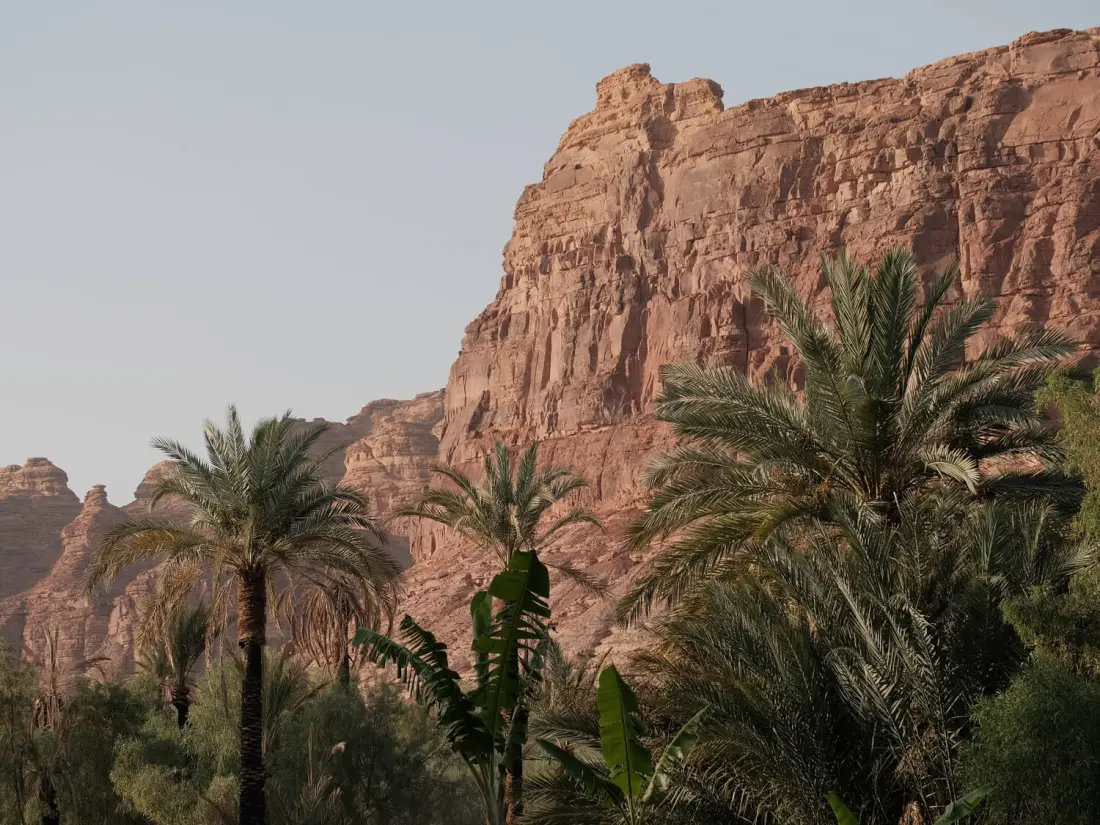
As you may know, after Hajar and Ismail were blessed with the water of zamzam, a passing Yemeni tribe settled in the oasis. This tribe was called Jurhum. Ismail married into Jurhum, and from their descendants came several Arab tribes, including the Quraysh.
You may have thought that the descendants of Prophet Ismail (as) remained in the valley of Bakkah (which became Makkah) continuously until the time of our Prophet Muhammad ﷺ. That is not the case.
Classical sources describe Jurhum’s rule over Makkah as lasting many generations, and possibly centuries, before their decline. As one traditional account states:
“When the misdeeds of Jurhum in the sacred land grew worse… Khuza’a arose against them… and expelled them from the Ka’bah.” (Al Bidaayah Wan Nahaayah, Ibn Kathir).
Their offenses are described in stark terms: mistreatment of pilgrims, misuse of the sanctuary’s wealth, and violations of its sanctity. Another early account notes that they began to ill-treat visitors to the Sacred House and unlawfully appropriate its resources, provoking resentment and ultimately rebellion.
The tribe of Khuzaa’, which had settled nearby after migrating from Yemen, led the uprising. After defeating Jurhum, they expelled them from Makkah and assumed control of the Ka’bah. Some reports state that Jurhum, upon their expulsion, buried treasures in the Zamzam well before departing.
But the transformation did not end there.
During the rule of Khuzaa’, a deeper shift took place – this time in religion. According to Ibn Ishaq and later scholars such as Ibn Kathir, their leader ‘Amr ibn Luhayy traveled to the Levant, where he encountered the idol worship of the powerful Amalkites. Impressed by what he saw, he brought back an idol called Hubal and placed it near the Ka’bah, instructing the people to venerate it. This was the first appearance of idol worship in Arabia.
Ibn Ishaq records that ‘Amr:
“brought back with him an idol called Hubal and set it up in the Ka’bah, commanding the people to worship it.”
Over time, this opened the door to widespread idol worship in Makkah, with idols multiplying in and around the sanctuary.
Khuzaa’s rule lasted for several centuries before the Quraysh rose to prominence and took control of Makkah in the 5th century CE, restoring custodianship of the Ka’bah to the lineage of Ismail.
What makes this episode so striking is not merely the shift in power, but the reason for it. Custodianship of the Sacred House was never guaranteed. It could be lost through corruption, injustice, and the betrayal of the sanctity it was meant to protect. That is something for the current custodians of the holy land to reflect upon.
2. The Ka’bah has been rebuilt and reshaped throughout history
Many people assume that the Ka’bah standing today is exactly the same structure built by Prophet Ibrahim and his son Ismail. In reality, the Ka’bah has been rebuilt multiple times over the centuries.
According to early historians such as Ibn Ishaq, one of the most significant reconstructions occurred when the Quraysh rebuilt the Ka’bah shortly before the prophethood of Prophet Muhammad ﷺ. The structure had been weakened and badly damaged, first by a conflagration that spread from a cooking fire, then by a flood. However, resources – particularly timber – were limited. As a result, they reduced its size and left a portion of the original foundation outside the walls (and, as you likely know, the Prophet ﷺ himself replaced the black stone in its niche).
This area is known today as the Hijr of Ismail.
When the Messenger of Allah ﷺ conquered Makkah, he considered restoring the Ka’bah to the full footprint built by Ibrahim, but decided against it, as he himself explained to Aishah in an authentic narration:
“Were it not that your people are recent converts to Islam, I would have demolished the Ka’bah and rebuilt it on the foundation of Ibrahim, and I would have included the Hijr within it.”
(Sahih al-Bukhari)
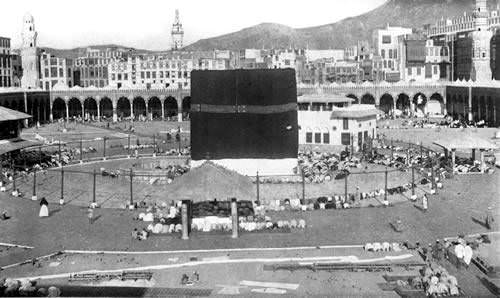
The Ka’bah was rebuilt again in the first Islamic century by Abdullah ibn al-Zubayr after it was damaged during conflict. Aware of the Prophet’s ﷺ statement, he expanded the Ka’bah to include the Hijr and added a second door at ground level.
However, this change did not last. When the Umayyads regained control, the Ka’bah was altered once more and returned to the earlier Quraysh design.
Even after this, the question remained. Should the Ka’bah be restored to the original foundation of Ibrahim?
During the Abbasid period, Khalifah Harun al-Rashid considered doing exactly that. He consulted Imam Malik ibn Anas, one of the great scholars of Madinah.
Imam Malik advised against it, saying:
“I fear that the Ka’bah will become a plaything for the rulers.”
In other words, if each ruler altered the structure according to his own judgment, the Ka’bah would be repeatedly changed, losing its stability and dignity.
The khalifah accepted this advice, and the structure has remained unchanged since.
In the end, it is not the stones and mortar of the Ka’bah that are sacred, but the site itself. It is the first house of Allah on the earth, and Allah is its protector.
3. The Black Stone was stolen and missing for decades
In the year 930 CE, one of the most shocking attacks in Islamic history took place. A radical sect known as the Qarmatians attacked Makkah during the Hajj season.
The Qarmatians were a militant movement based in eastern Arabia, in the region of Bahrain and al-Ahsa. Classical historians such as al-Tabari and Ibn Kathir describe them as a deviant Ismaili Shiah sect that rejected the Abbasid caliphate and held contempt for mainstream Islam. Under their leader Abu Tahir al-Jannabi, they launched a raid on Makkah, overwhelming its defenders and committing atrocities within the Haram itself.
Pilgrims were killed in large numbers, and the sanctity of the Sacred Mosque was violated. Some historical reports state that bodies were left in the precinct and even cast into the well of Zamzam.
Ibn Kathir records:
“They took the Black Stone and carried it away to their land, and the people were prevented from Hajj for many years.”
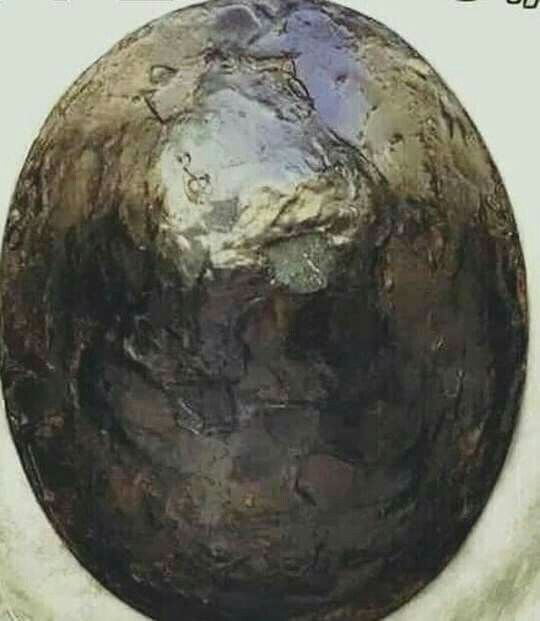
The Black Stone was removed and taken to al-Ahsa. It is said that the Qarmations shattered it – although, to be fair, there are also claims that the damage was done centuries earlier, when the Umayyads catapulted missiles at the Ka’bah to try to kill Abdullah ibn Az-Zubayr. Allah knows best.
For more than twenty years, the Black Stone remained with the Qarmatians.
Eventually, in 951 CE, the Stone was returned to Makkah. The exact circumstances of its return are unclear. Some sources suggest political pressure or negotiations. What is certain is that it was restored to its place after more than two decades.
Today, the Black Stone is no longer a single intact piece. It consists of several fragments, set into the Ka’bah and held together within a silver frame by means of a dark resin. Anyone who has seen it up close can observe that it is composed of multiple joined pieces.
This history, however, should not trouble the believer or shake one’s faith in any way.
The Black Stone, though it is said to be a stone from Jannah, is not an object of worship, nor is it central to the fundamentals of Islam. Touching or kissing it is not a requirement of Hajj or Umrah. It is an act of reverence, not obligation.
Our religion does not depend on the physical state of any object.
If the Messenger of Allah ﷺ himself could pass away and leave this world, and the religion of Islam could continue, intact and growing, then the damage or fragmentation of a stone does not affect the truth or strength of our faith.
What this event shows is something else entirely. Even the most sacred objects in Islam have passed through moments of trial. Yet their meaning, and the devotion they inspire, have endured.
4. Makkah was once a major trading hub
If you have visited Makkah’s modern malls, such as the Abraj Al Bait complex or the shopping centers surrounding the Haram, you may think of it as a city of commerce. And in a sense, it is. Its economy today benefits heavily from serving millions of visitors each year.
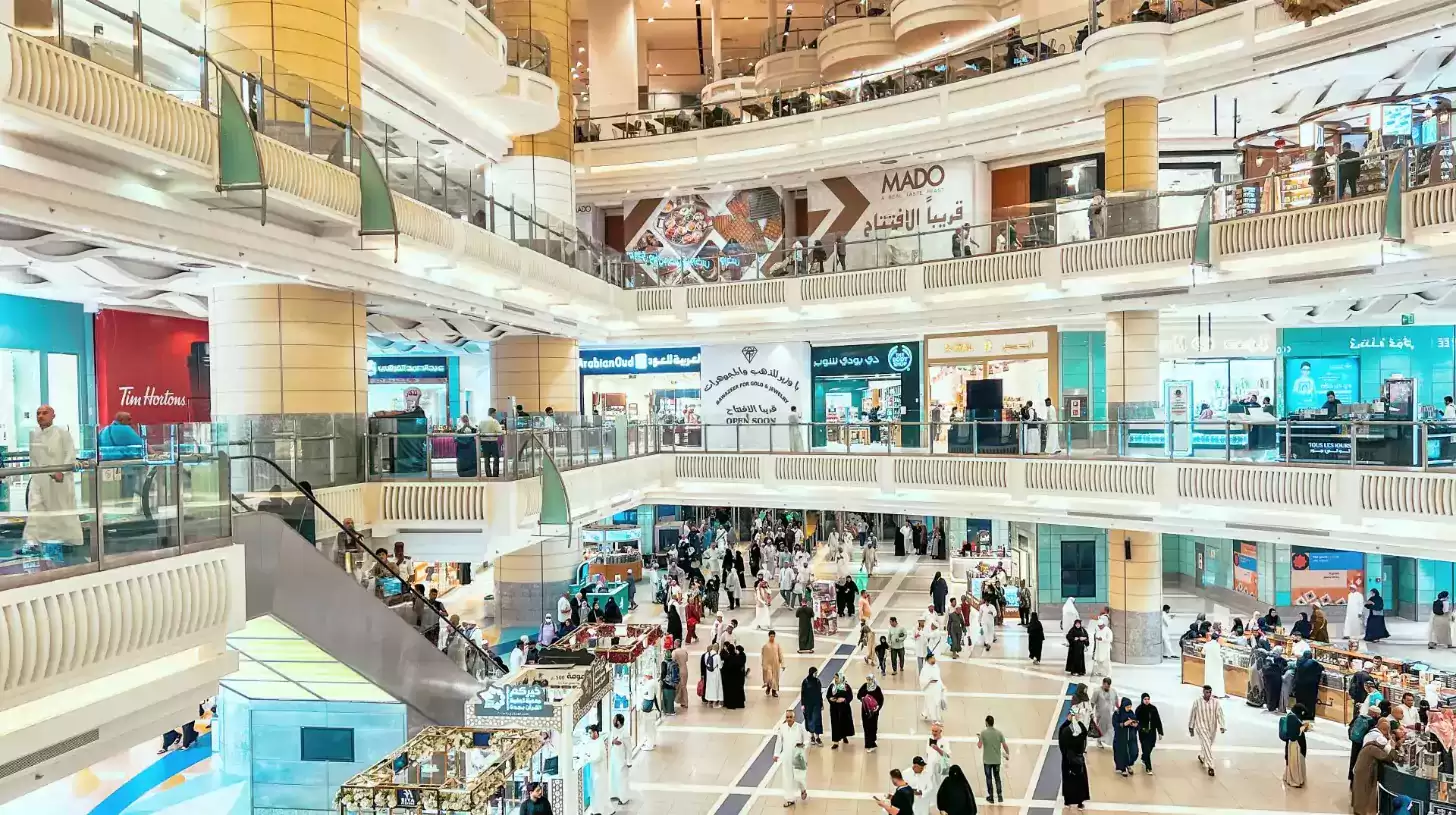
Abraj Al Bait mall in Makkah
But Makkah was once much more than that.
Long before Islam, it was an international trading hub.
Situated along key caravan routes linking southern Arabia with the Levant, the city became a vital stop for merchants transporting spices, leather goods, textiles, and incense. The Quraysh built their wealth and influence through these trade networks.
This commercial role is alluded to in the Qur’an itself:
“For the accustomed security of Quraysh. Their accustomed security in the caravan of winter and summer…”
(Surat Quraysh 106:1–2)
Classical commentators such as Ibn Kathir explain that these verses refer to the regular trade journeys of Quraysh, who traveled north to Syria in the summer and south to Yemen in the winter, establishing economic prosperity and political alliances.
This trade brought immense wealth to certain Makkan families. Among them was Abdullah ibn Jud’an, founder of the Hilf Al-Fudool, who became famous for his generosity and scale of wealth. Historical reports describe him sending thousands of camels laden with food aid to famine-stricken regions such as Syria.
SubhanAllah. Imagine a desert Arab from a small and remote town, sending such vast aid to lands under the Roman Empire.
This also helps explain the immense wealth later possessed by some of the Sahabah, such as Abdurrahman ibn Awf and Uthman ibn Affan (Allah be pleased with them).
Ibn Ishaq and other early historians describe how Makkah’s status as a sanctuary contributed to its success. Because fighting was prohibited within the sacred precinct, the city functioned as a neutral zone where tribes could meet, trade, and negotiate safely.
In this way, religion and commerce became intertwined. The Ka’bah drew pilgrims, and pilgrims brought trade. This was the world into which Prophet Muhammad ﷺ was born. He himself took part in these trade journeys, traveling north on behalf of Khadijah.
5. One prayer in the Haram equals 100,000 elsewhere
The Prophet ﷺ said that prayer in Masjid al-Haram is worth 100,000 prayers elsewhere. It is a number that is easy to hear, and difficult to truly grasp. A single prayer in Makkah is equal to nearly 55 years of prayer anywhere else. Over the course of Hajj, which lasts about six days, the prayers performed there are equal to more than 1,600 years of prayer.
SubhanAllah!
I made my first Umrah when I was 15 years old. I found Makkah beautiful and fascinating. I remember the crowds, the movement, the sense of something special in the air.
But I did not fully understand it.
At that time, I had not studied the seerah. I could look at the Ka’bah, but I could not see what had transpired there. I did not picture the Prophet ﷺ standing atop Safaa, inviting the people to Islam, and being mocked in response. I did not imagine him being attacked by Abu Jahl or Uqba bin Abi Mu’ayt. I did not picture a young Abdullah ibn Masud (ra) standing in front of the Ka’bah, defiantly reciting Surat Ar-Rahman, and the Quraysh nearly beating him to death for it. I did not see the triumphant moment, years later, when the Muslims returned in victory, and Bilal ibn Rabah (ra) climbed onto the Ka’bah to call the adhan, and the Prophet ﷺ forgave all who had harmed him.
And I did not understand what 100,000 prayers really meant.
When you are young, time feels endless. A number like 100,000 sounds impressive, but abstract. It does not carry weight.
When you are older, you begin to understand time differently. You realize how limited it is. You see how quickly days pass, how years slip by, and how little you are able to do within them. Only then do you begin to grasp what it means for a single prayer to carry the weight of a lifetime.
This is a tremendous expression of Allah’s mercy.
There is a reason why Allah describes Himself as Ar-Rahman and Ar-Rahim. His mercy is vast beyond what we can comprehend. A single act of worship, performed in the right place and with sincerity, can outweigh a lifetime of effort.
At the same time, this mercy is not limited to Makkah.
For those who have not had the opportunity to perform Hajj or Umrah, there is no reason for despair. Allah has opened many doors. The Prophet ﷺ taught that fasting Ramadan with faith and seeking reward is a means for all past sins to be forgiven. And Laylat al-Qadr is described in the Qur’an as “better than a thousand months” (Surat al-Qadr 97:3), which is more than eighty years of worship.
Visiting Makkah and praying in the Haram is one of the greatest of these opportunities. But it is not the only one. Allah’s mercy is not confined to a place. It is available to those who seek it, wherever they are, and no matter their spiritual state.
* * *
Reader comments and constructive criticism are important to me, so please comment!
See the Story Index for Wael Abdelgawad’s other stories on this website.

Wael Abdelgawad’s novels – including Pieces of a Dream, The Repeaters and Zaid Karim Private Investigator – are available in ebook and print form on his author page at Amazon.com.
Related: