

A Muslim Cleric From Iran Is One of America’s Bestselling Poets: Jalaluddin Rumi
Shahzad Ahmed, UK
Last year’s huge far-right rally, ‘Unite the Kingdom’ saw thousands flock to the capital city of London. When the march – marred by violent clashes and arrests[1] – came to an end, many of the self-styled ‘patriots’ exhausted from bellowing their chants all day of ‘Send them home’, ‘Whose street? Our street” and ‘We want our country back’ had significantly whet their appetite.
Yet the most striking scene unfolded not during the rally, but upon its conclusion when many of the same far-right, anti-immigration protesters, draped in their Union Jacks and clutching their nationalist placards, were seen forming long queues at South Asian street food stalls such as ‘Curry Shack,’ and ‘Naan Wraps,’, tucking into their onion Bhajis and Briryanis – dishes rooted in the very cultures they had spent the day denouncing.
Though the irony was laughable, at the least, but it also exposed the sheer hypocrisy and selective nationalism that celebrates the benefits of cultural exchange while rejecting the very people who made it possible. The flavours, traditions, and contributions woven into the Western society—many brought by migrant communities—are embraced, even as those communities themselves are cast as outsiders.
But it’s not just the spices and flavours of the Eastern world that the West has developed a palatable taste for, but its embedded far deeper. For centuries, the Western world has been deeply inspired and influenced by its philosophical thoughts, cultural practices and even its literature. And so, when President Trump threatened to destroy the entire civilisation of Iran on the pretext of its ‘threat’ to world peace, the irony was striking once again, as the famous Persian Muslim cleric, Maulana Jalaluddin Rumi, has been one of the best-selling poets in the US for decades, celebrated for bringing peace, comfort and solace to millions through his spiritually rich poetic works[2].
Highlighting the impact of Rumi’s poetic works, Lee Briccetti, a poet herself and long-time Executive Director of Poets House, a national poetry library in New York City, says, ‘Across time, place and culture, Rumi’s poems articulate what it feels like to be alive, and they help us understand our own search for love and the ecstatic in the coil of daily life.’ She even compared Rumi’s work to Shakespeare’s for its ‘resonance and beauty’.[3] The English translation of Rumi’s works have sold over half a million copies in the English-speaking world, and collections of his poems frequently top the bestseller lists in US. His poems have even been performed by pop icons like Madonna, Demi Moore and Cold Play.[4]
Who is Rumi?
Jalaluddin Rumi was a 13th century Persian Muslim scholar and mystic, and is considered one of the finest poets of all time. Born in Balkh (modern-day Afghanistan) in 1207, which at the time was a major cultural centre of the Iranian/Persian empire. Jalaluddin Rumi, or better known simply as ‘Rumi’; is an Arabic name which literally means ‘Roman’. This is because he spent much of his life in the Seljuk Sultanate of Rum in Anatolia, which was previously controlled by the Eastern Roman (Byzantine) Empire.
For much of his early life, until the age of 37, Rumi remained a traditional Islamic scholar, preacher and theologian, just like his father and grandfather. However, it was in 1244 that he met a travelling Sufi (mystic), Shams Tabrizi, who had a transformative impact upon him and it is said that it was from this moment on that he embarked upon a much deeper spiritual journey and went from being a scholar to a mystic. It is said that most of the poetry of Rumi was composed from this point onwards.
His poetry, which comprises over 65,000 verses[5] is a vivid translation of his deep emotions and experiences centred around the love for the Divine. Among his greatest works was his Masnavi, a spiritual epic which he began writing in the latter part of his life. The poem, considered as one of the most influential works in Sufism – a discipline within Islam where Muslims search for Divine love through direct personal communion and experience with God – is written in a series of six books, comprising of around 25,000 verses in rhyming couplets. Described by Rumi as uncovering ‘the roots of the roots of the roots of religion,’[6] it has been translated into more than 20 languages.
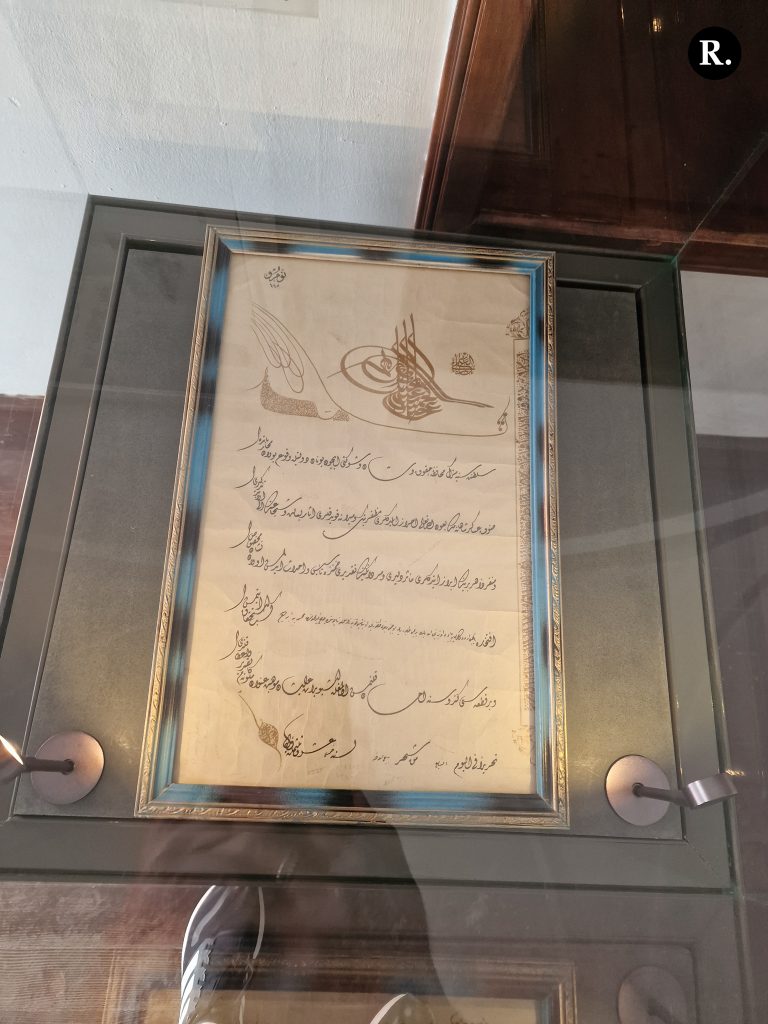
Hazrat Mirza Ghulam Ahmad (as), the Promised Messiah and Founder of the Ahmadiyya Muslim Community, who came for the spiritual revival of Islam in the latter days, and who was conferred the title of Sultan-ul-Qalam[King of the Pen] of this era, also quoted from the Masnavi:
‘What a beautiful principle this is, for the followers of the right path, A legacy of Maulavi [Rumi], stated in his Mathnawi:
Cunningness is contrary to humility and meekness; Give up cunningness and adopt humility,
As a distressed, hungry, and thirsty mother, Wanders, carrying her young child in her lap.’[7]
Rumi’s poetry is said to be intensely spiritual and speaks directly to the soul, with a message of peace, harmony, and compassion. Another famous passage from his Masnavi reads:
‘Come, come, whoever you are. Wanderer, worshiper, lover of leaving. It doesn’t matter. Ours is not a caravan of despair. come, even if you have broken your vows a thousand times. Come, yet again , come , come.’[8]
Rumi of the East or the West?
Although Rumi is renowned globally, and whilst the impact of his poetry and its message transcends borders and cultures, we find that the Rumi of the East is somewhat different to the way Rumi is portrayed in the West. This is largely because the translations produced by Western scholars have, intentionally or unintentionally, stripped him of his Muslim identity. ‘The main issue for decades has been that the Rumi presented to Western readers, including Muslims, is that Rumi is a secular, universalist poet,’[9] explained Zirrar Ali, author of several anthologies of Persian and Urdu poetry and by ‘Removing Rumi’s orthodox Sunni beliefs has led to wrongful translations…that cater to a pseudo-secular image of the man and his work.’[10]
Coleman Barks, one of the foremost and renowned translators of Rumi’s works, perhaps offers an explanation of why this may be the case, when he said, ‘Of course, as I work on these poems, I don’t have the Persian to consult. I literally have nothing to be faithful to, except what the scholars give.’[11]
It was precisely for this reason that recently a new stage production in London aimed to bring to life the story of Rumi and portray him authentically and also challenge the Western stereotypes[12] of not just the man, but also the region and the religion he is inseparable from.
However, for Muslims, Rumi’s work is intrinsically linked to his deep knowledge and love for the Islamic faith and cannot be read or understood without this. Just as the works of John Milton or T.S. Eliot cannot be understood without understanding the deep influence their faith had on them, in the same way, it is not possible to understand the essence of Rumi’s works without understanding his belief system, as explained in the words of Rumi himself:
‘I am the servant of the Quran, for as long as I have a soul.
I am the dust on the road of Muhammad, the Chosen One.
If someone interprets my words in any other way,
That person I deplore, and I deplore his words.’[13]
The Legacy of Rumi
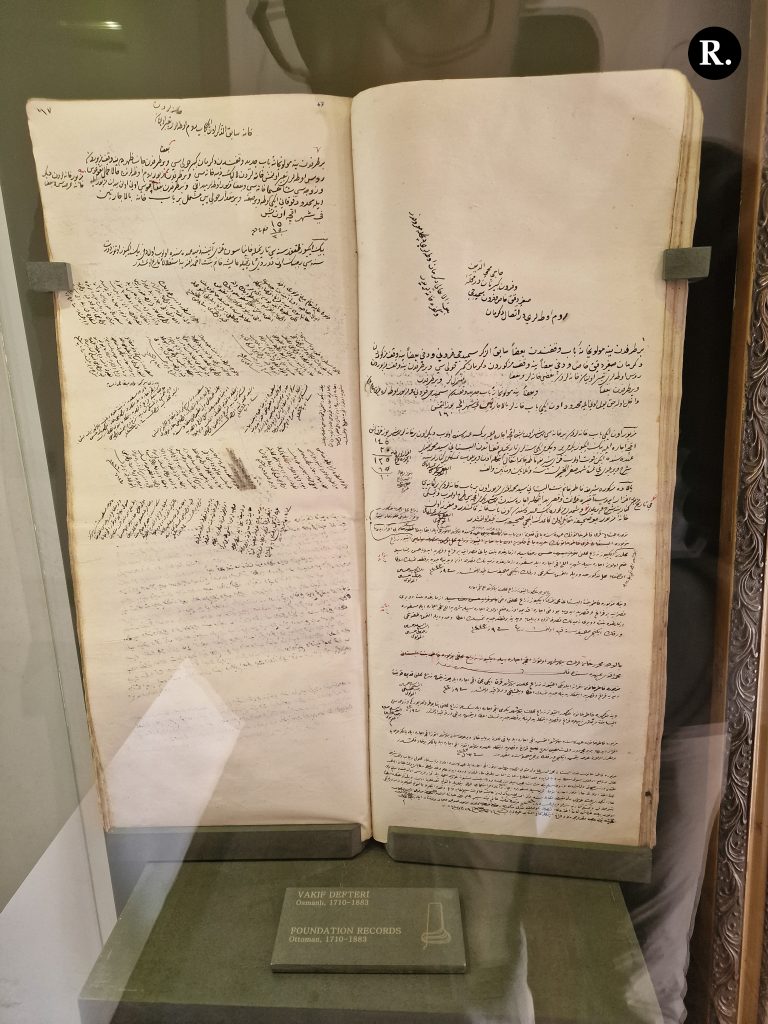
Whether Rumi’s Masnavi is studied as an exegesis of the Holy Qur’an in mosques or madrasas across the Sub-Continent, or a quiet ‘Rumi Night’ in a café in a small town in the US offering readings of love and inner struggle, the famous Muslim Persian poet continues to inspire millions to this day with his powerful message of love and hope.
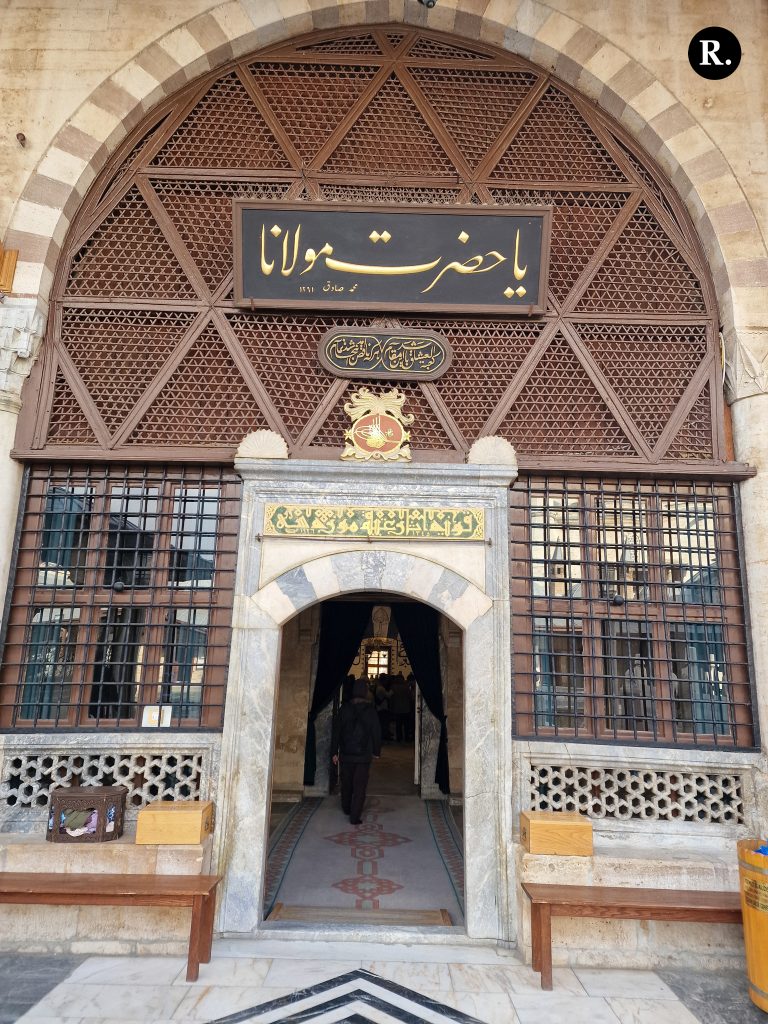
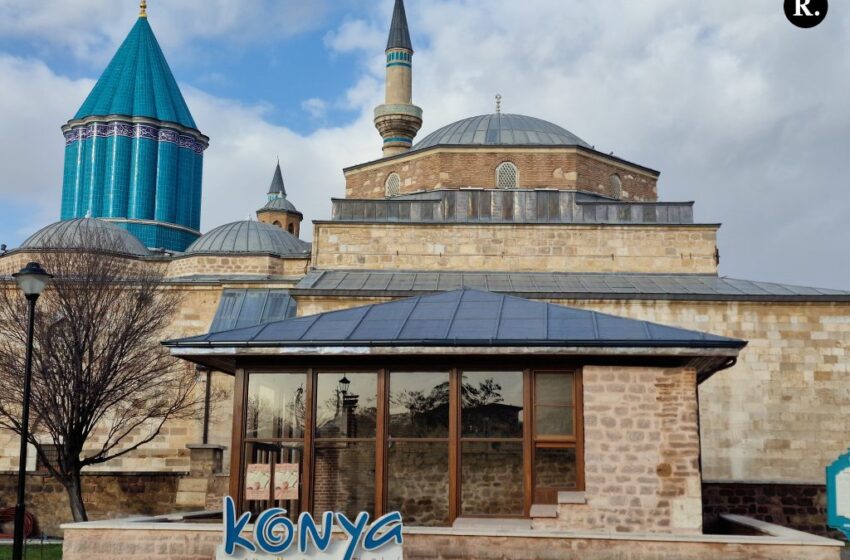
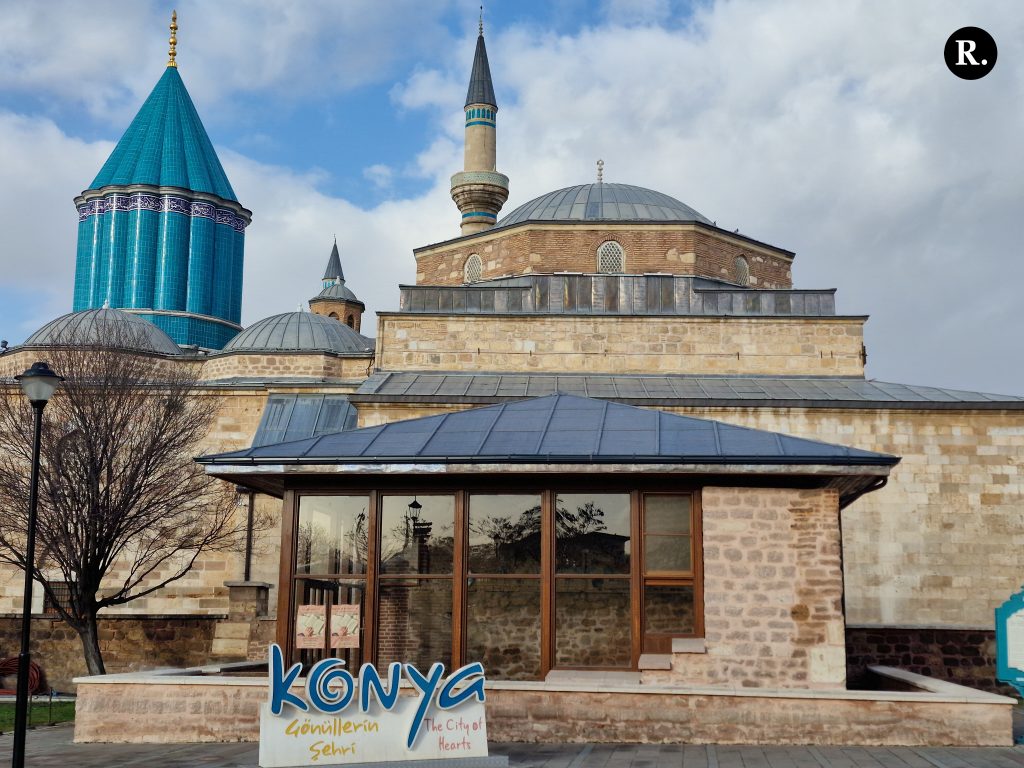
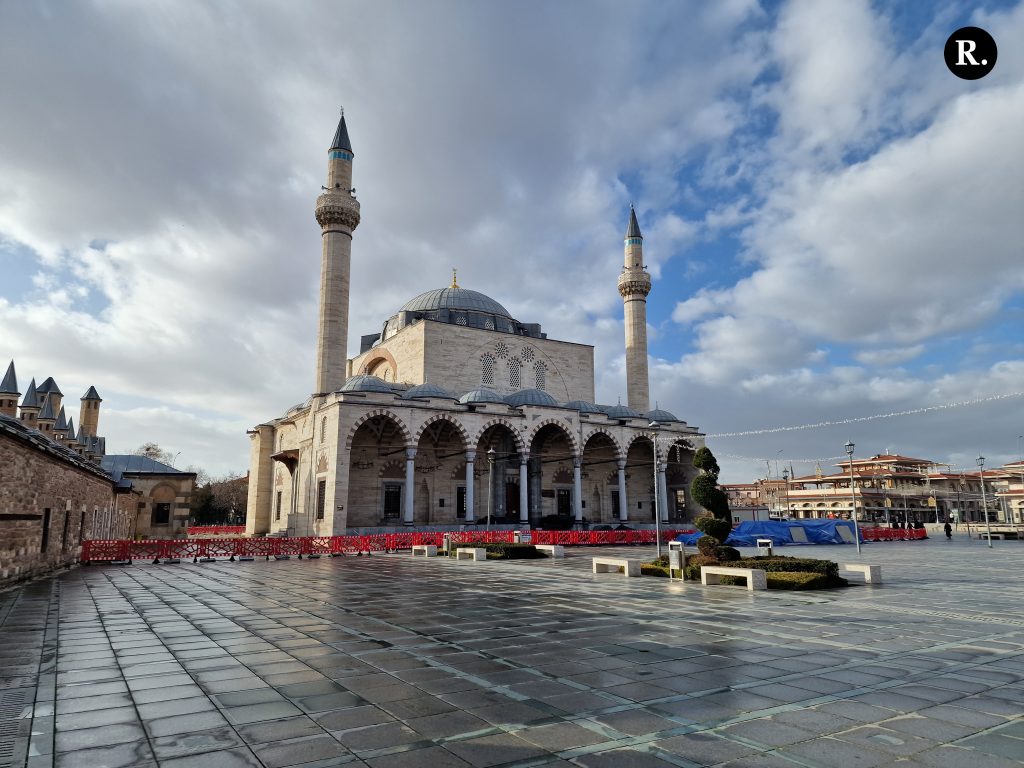
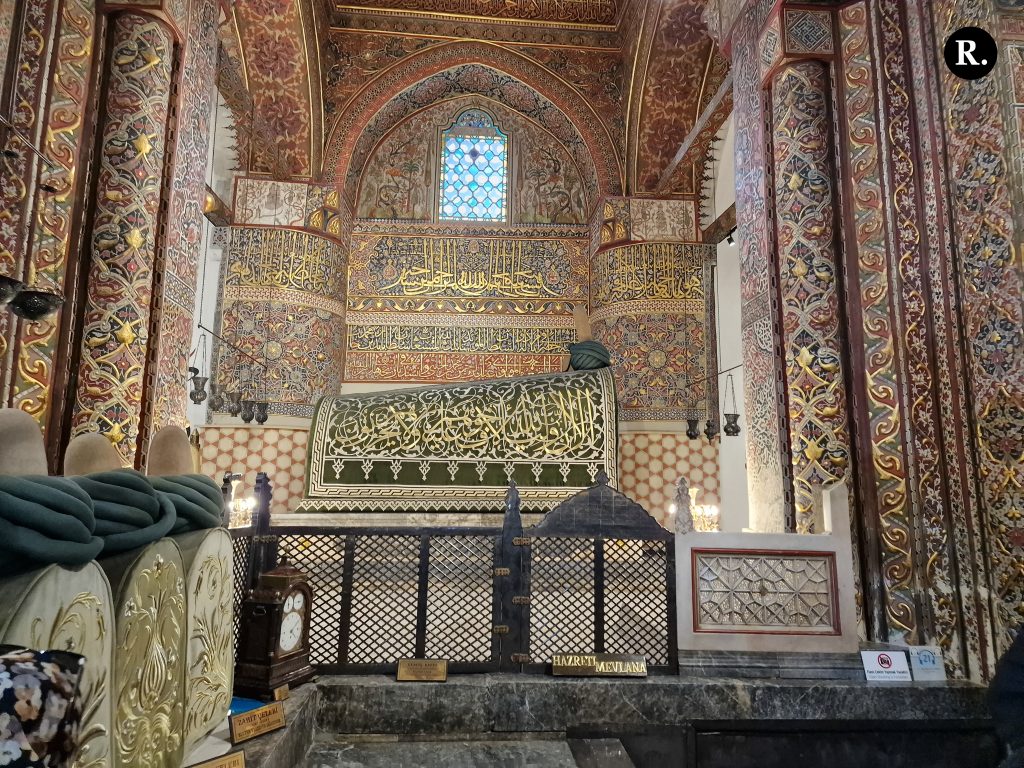
Upon his demise in 1273, mourners flocked to Konya, present-day Turkey, where Rumi spent most of his adult life. Among his mourners were people from all creeds and nations, and more than 700 years later, his tomb in Konya, continues to attract millions each year paying homage to perhaps one of the finest poets in the world.
About the Author: Shahzad Ahmed serves as the Associate Editor of The Review of Religions, having graduated from Jamia Ahmadiyya UK – Institute of Modern Languages and Theology. He is also an Imam of the Ahmadiyya Muslim Community, has a Bachelor’s Degree in English Literature and presents shows on contemporary Islamic issues for MTA International.
ENDNOTES
[2] https://www.huffingtonpost.co.uk/entry/rumi-us_n_5154692
[3] https://www.bbc.co.uk/culture/article/20140414-americas-best-selling-poet
[4] https://www.trtworld.com/article/13083892
[5] https://lithub.com/how-rumi-became-a-poet/
[6] https://www.newyorker.com/books/page-turner/the-erasure-of-islam-from-the-poetry-of-rumi
[7] https://files.alislam.cloud/pdf/Barahin-e-Ahmadiyya-Part3.pdf
[8] https://allpoetry.com/Come,-Come,-Whoever-You-Are
[9] https://www.aljazeera.com/features/2023/12/17/a-tale-of-two-rumis-of-the-east-and-of-the-west
[10] ibid
[11] https://ajammc.com/2015/03/09/rumi-for-the-new-age-soul/