


Beyond Representation: Reclaiming Spiritual Storytelling For Muslim Children
For years, conversations about Muslim children’s books have centred around one word: representation. We’ve been rightly focused on ensuring that Muslim children see themselves on the page – that they recognise their names, their families, their skin tones, and their dress. It was necessary and overdue, and it mattered deeply.
But representation was only ever supposed to be the beginning. What our children need now isn’t just to see themselves reflected. They need stories that speak to their souls – stories that centre faith not as a backdrop, but as the beating heart of their world. And they need the adults around them to actively seek out and find these books.
Diverse books became a publishing movement, and it opened doors. Over the last ten years, we’ve seen a beautiful selection of Muslim-authored picture books enter the market. From Ramadan and Eid books, family and food books, and so many more – representation in books sends a message to children. Whether it is ‘you exist’ or ‘your celebrations are important’, or ‘this is how things are done in your home too’, books that reflect traditionally underrepresented communities, that actually belong to the global majority, are still necessary and needed. What I’ve loved seeing is Muslim authors going a leap further.
Keep supporting MuslimMatters for the sake of Allah
Alhamdulillah, we’re at over 850 supporters. Help us get to 900 supporters this month. All it takes is a small gift from a reader like you to keep us going, for just $2 / month.
The Prophet (SAW) has taught us the best of deeds are those that done consistently, even if they are small.
Click here to support MuslimMatters with a monthly donation of $2 per month. Set it and collect blessings from Allah (swt) for the khayr you’re supporting without thinking about it.
Culturally connected stories tell children they matter. Spiritual storytelling tells them – you are connected to something divine.
The first affirms identity and the second nourishes the soul. Our children need both.
When I wrote my picture book, Zamzam for Everyone, I didn’t just want to explain Hajj. I wanted to invite children into it and to let them feel what faith feels like when it flows through a story. I wanted to represent faith as a living, breathing experience. Hajj is more than a once-in-a-lifetime obligation; it is a symbolic, faith-filled journey. It is community, it is connection – to Allah  and to those we share our world with. I wanted children to sense awe. To understand that when their parents tell them stories of faith, it connects them to something vast and alive – history, belonging, hope.
A Ramadan Night by Nadine Presley does something similar. It evokes deep emotions that are both individual and communal. A little boy’s journey to the masjid for Taraweeh prayer in Damascus, Syria, leads to an evocative exploration of how Ramadan nights feel – this is deeply personal, rich with faith and fondness of a month that is both challenging and rewarding
Ramadan For Everyone by Aya Khalil gently introduces the concept of taqwa, awareness, mindfulness and love for Allah . Ramadan is experienced wholeheartedly and beautifully from within its deep tradition. Family, faith, and fondness fill the pages.
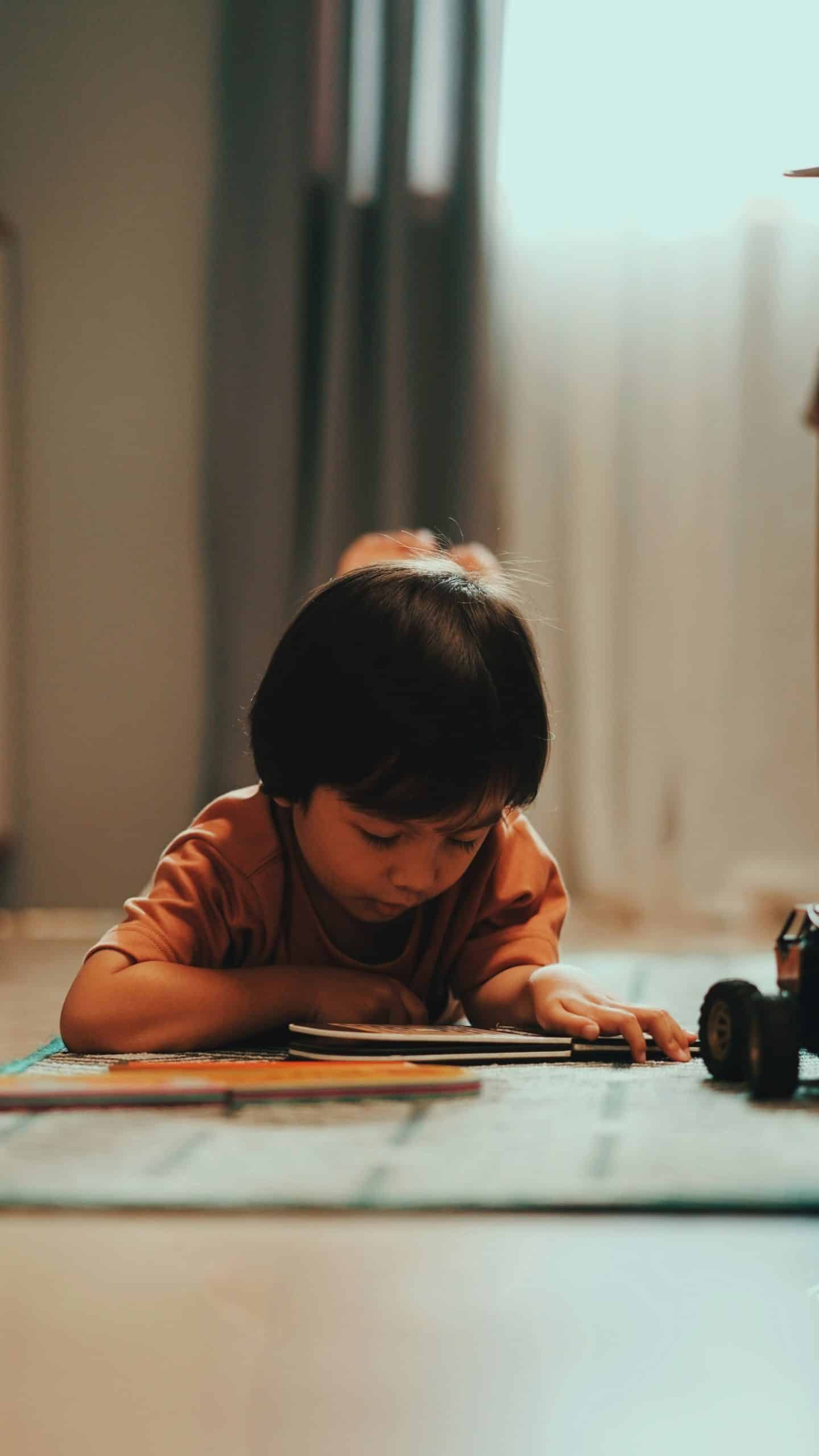
“When children grow up with spiritual representation, they grow up with confidence in what matters most.” (PC: Rendy Novantino)
Ramadan Rain by Jamilah Thompkins Bigelow is lyrical and light in words, but deep and resonant in its message. Layers of meaning fill the pages – du’as accepted at the time of rain, and in Ramadan; the quiet friction between having and not having that is present in communities, and an exploration of what truly makes a gift.
All three Ramadan books mention Taraweeh, the beautiful but long prayer in Ramadan. It is a prayer that seems long and arduous, and yet Muslims worldwide cling to it fervently. Faith shines from and through these books, luminous and lovely.
Stories like these don’t aim to just represent Muslim culture. They aim to awaken recognition of the sacred, the kind that lives deep inside the fitrah of every child.
It’s not just picture books that do this, but books for older readers too. Shifa Safadi Saltagi has written an NBA-winning middle-grade novel in verse, Kareem Between, as well as the chapter book series, Amina Banana.
Graphic novelist Huda Fahmy does a wonderful job of writing from within in all her young adult titles, and of course, SK Ali’s young adult books are a must-read for any young Muslim. And there are so many more.
When children grow up with spiritual representation, they grow up with confidence in what matters most.
What Happens When We Don’t Write Spiritually
The absence of spiritual storytelling leaves a vacuum. Into that vacuum rushes everything else, whether it’s stories that define value by achievement, power, and consumption or stories that elevate the self as the ultimate source of meaning.
Children internalise what stories repeatedly tell them – you are enough, you are powerful, you are in control. These are definitely important and worthy. But faith-based stories offer something radically different – a child learns that they are beloved, that they belong to Allah
This isn’t about moralising. It’s about offering children a spiritual framework for wonder and resilience.
The Need to Write From the Inside
There’s a quiet revolution happening among Muslim storytellers. Writers are no longer just writing about faith, but from within it. This distinction matters.
Writing about faith often seeks translation, whether it is explanation, justification, or softening.
Writing from faith assumes understanding. Trusting the reader to enter the world as it is.
When Muslim writers write from within faith, they reclaim narrative sovereignty. They create stories that aren’t seeking validation but offering vision. They remind children that Islam isn’t a cultural identity, but rather it is a living relationship with Allah that shapes how we see, love, and create.
From Visibility to Vision
We’ve had the era of “mirrors and windows” – the call for diverse books that reflect different faces and experiences. But it’s time to go further. Muslim stories must now offer lamps by way of stories that illuminate the unseen, that help our children make meaning, that show light even in the dark.
Representation was a necessary start. But vision is what will carry us forward.
It’s time to reclaim children’s storytelling as a space of dhikr – remembrance. A space where imagination and iman are not separate pursuits, but twin acts of worship.
The stories we tell our children will either train them to explain their faith or empower them to live it.
If representation is about being seen, then spiritual storytelling is about seeing with the heart.
That is the next frontier of Muslim children’s literature – not books that merely say we belong, but books that whisper we believe.
As Muslim authors, we need the market to now support us. To buy the books, share the books, celebrate the books. Muslim authors are stepping up and writing the stories that speak our truths and fill the gaps that our generation found large and absent. Now, Muslim parents, teachers and communities need to get these stories into the hands of children worldwide.
Spiritual Storytelling Across Media
Children’s literature might be leading the way for other forms of media and storytelling. This deep-seated confidence that picture book writers, their editors, and publishers are showing should be adapted across all forms of media – TV, films, etc.
For storytelling sits at the very heart of Islamic history and tradition. The Qur’an itself teaches through stories. These narratives are not distant tales; they are living lessons. The Prophets of Islam followed this same path, teaching through parables and moments that met people where they were. Storytelling, by its very nature, is light in its touch yet deep in its impact, allowing faith to be absorbed. This is why the Ummah needs Muslim storytellers today, who remain rooted in their faith, who write authentically from within the tradition, and who honour this sacred legacy.
Let’s work together to strengthen our own faith and that of our next generation by doing the work, insisting that our stories are told from within faith, and reigniting the legacy of spiritual storytelling that is a part of our history.
And when our children grow up surrounded by those stories, they’ll know that faith is not something to perform, but something to cherish.
Related:
– On Representation And Intersectionality: What It Means To Be A “Muslim Author”
– Owning Our Stories: The Importance Of Latino Muslim Narratives