

Yaumul Tarwiya, 8th Of Dhul Hijja And Us As Non Hujjaj
Yaumul Tarwiya: What the 8th of Dhul Hijja Is Really Asking of You
The Day the Journey Begins — and What It Means Even If You’re Not There
There is something that happens in the heart on the 8th of Dhul Hijja.
Even if you are thousands of miles from Makkah. Even if you have never worn ihram. Even if the closest you’ve come to Mina is watching a documentary or scrolling through someone’s hajj photos on your phone — something stirs. A longing you can’t quite name. A quiet ache.
That feeling is not nothing. That feeling is everything.
Today is Yaumul Tarwiya, 8th Dhul Hijja. And it has something to say to all of us.
What Does “Tarwiya” Actually Mean?
The Arabic word tarwiya carries layers of meaning that single translations can never fully capture.
On the most literal level, it means “to fetch water and quench one’s thirst.” The plains of Arafah and Muzdalifah — wide open, dry, barren valleys — had no water source. And the journey ahead was long and exhausting. Pilgrims were advised to fill their containers with plenty of water and drink sufficiently to prepare for the lengthy and demanding journey toward Mina from Makkah. Their animals too had to be watered and made fit for travel.
So the 8th is the day of preparation. The day before the day,before the greatest day.
And that is precisely what makes it so profound.
But there is a second layer to this name that moves me even more deeply.
Some scholars say the name Tarwiya refers to deep reflection and pondering — connected to the moment Ibrahim عليه السلام wrestled with the divine command to sacrifice his beloved son Isma’il عليه السلام.
He didn’t know the ending yet. The ram had not yet descended from the unseen. He only had the command, and the unbearable weight of love — for his son, and for his Lord.
And yet he prepared. He walked forward. He told his son. He sharpened the blade.
That is Tarwiya. The preparation of a heart that has chosen trust over certainty.
The Ten Days Allah ﷻ Swore By
We cannot speak of the 8th without speaking of the container it sits inside.
Allah ﷻ swore by these days in His Noble Book: “By the dawn, and by the ten nights.” (Al-Fajr: 1–2) When Allah ﷻ swears by something in the Quran, it is not decoration — it is a signal. Pay attention here. This matters.
The prophet Muhammad ﷺ confirmed it directly. Ibn Abbas رضي الله عنه narrated that he ﷺ said:
“There are no days during which righteous deeds are more beloved to Allah than these ten days.” (Bukhari)
The companions asked: not even jihad in the way of Allah? He ﷺ said: “Not even jihad — except for a man who goes out with his life and wealth and returns with nothing.”
These are not ordinary days. And the 8th — Yaumul Tarwiya — is the hinge point. The moment the sacred machinery begins to turn.
What the Pilgrims Are Doing Right Now
On the 8th of Dhul Hijja, those performing Hajj Tamattu’ enter into the state of ihram once again for Hajj, while those performing Qiran and Ifrad remain in their ihram. The talbiyah rises from their lips — aloud, continuous, a sound that fills the streets of Makkah and the roads toward Mina.
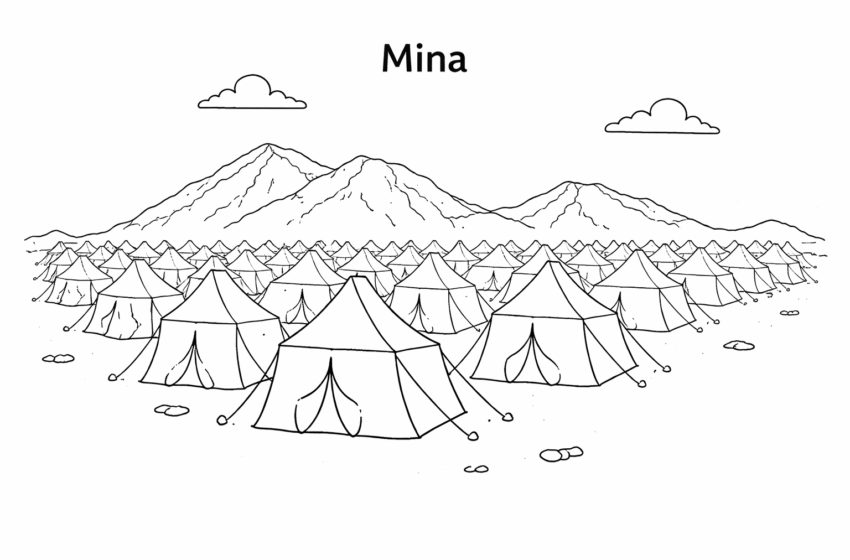
Pilgrims spend five prayers in Mina on this day: Zuhr, Asr, Maghrib, Isha, and the Fajr of the Day of Arafah. The night is spent in prayer, Quran recitation, du’a, and rest.
The scholars recommend using this time in Mina to reflect on the Day of Judgment — the gathering, the waiting, the standing before Allah ﷻ — because the scene mirrors it in striking ways.
Millions of people. Stripped of markers of status. Waiting. Hearts exposed.
Imagine being there. Imagine what runs through the mind when you lie down in that tent in Mina, knowing tomorrow is Arafah — the day Allah ﷻ descends to the lowest heaven and boasts to His angels about His servants gathered below.
Even imagining it brings tears.
For Those of Us Not at Hajj: This Day Still Belongs to You
Here is something that often gets lost in the Hajj-focused coverage of Dhul Hijja: the blessings of these days are not exclusive to the pilgrims.
The Prophet ﷺ didn’t say “there are no days more beloved to Allah except for pilgrims.” He said righteous deeds in these days are more beloved — full stop.
Your dhikr matters today. Your fasting matters today. Your du’a, your Quran, your sincere tawbah — it all lands differently in these ten days, including on the 8th.
So what does Tarwiya look like for someone sitting at home?
It looks like preparation. Intentional, unhurried, internal preparation.
Before Arafah comes tomorrow, what do you want to bring before Allah ﷻ? What needs to be named, confessed, asked for? What old wound are you still carrying that you haven’t placed in His hands?
Today is the day to fill your vessels. Not with water — but with intention, sincerity, and the courage to show up fully tomorrow.
Practical Ways to Honour Yaumul Tarwiya
1. Fast today if you can
The 8th of Dhul Hijja is among the ten virtuous days, and scholars encourage maximising good deeds throughout these days. Fasting on this day — and certainly on the 9th (Arafah) — is one of the most powerful things you can do. The Prophet ﷺ said about fasting on the Day of Arafah that it expiates the sins of two years. But the 8th is your warm-up, your preparation — fast it and arrive at Arafah already spiritually attuned.
2. Fill your home with talbiyah and takbir
Let the words the pilgrims are saying right now fill your home too. Allahu Akbar, Allahu Akbar, La ilaha illAllah, Allahu Akbar, Allahu Akbar, wa lillahil hamd. Play it, say it, teach it to your children. Let the atmosphere of these days be different from the rest of the year.
3. Learn arkan of Hajj — even if you haven’t gone yet
One of the most beautiful ways to honour these days is to understand what is actually happening. When you know what the pilgrims are doing at each moment, you feel a connection that transcends geography. We’ve put together a Hajj Planner at IslamHashtag — a clear, step-by-step guide through the rituals — so you can follow along in real time, understand the acts of worship, and feel like you’re walking this journey even from your prayer mat. [🔗 IslamHashtag Hajj Planner]
4. Bring the children into these days
Children absorb the energy of sacred seasons when we give them a way in. Our Hajj Coloring Activity for Kids is a gentle, beautiful way to introduce even the youngest hearts to the meaning of Hajj — the Ka’bah, the ihram, the mountains, the journey. When a child colors the kaaba with their own hands, something sticks. [🔗 Hajj Coloring Activity — IslamHashtag]
5. Keep du’a cards close
These days call for du’a — specific, intentional, heartfelt du’a. Our Hajj Du’a Cards gather the most important supplications of these sacred days in one place, beautiful enough to keep on your desk or prayer space. Print them. Use them. Don’t let these days pass with only generic asking. [🔗 Hajj Du’a Cards — IslamHashtag]
6. Fill these days with dhikr using the IslamHashtag Tasbih
The Prophet ﷺ recommended abundant dhikr in these ten days. Our digital Tasbih makes it easy to count your SubhanAllah, Alhamdulillah, Allahu Akbar wherever you are — no beads to lose, always in your pocket. Small acts, enormous weight. [🔗 IslamHashtag Tasbih]
7. If you run a Quran school — let HifzIQ serve you this Dhul Hijja
For teachers and administrators of hifz schools: these blessed days are a reminder of why the work of Quran memorization is so sacred. Our newly launched HifzIQ — a dedicated management platform for hifz schools — helps you track student progress, manage Sabaq, Sabqi and Manzil sessions, handle attendance, and keep parents informed. Imagine entering these ten days knowing your school’s system is running smoothly, your students’ progress is tracked, and your teachers are supported. That is an act of service to the Quran that carries its own immense reward. [🔗 HifzIQ — Quran School Management]
Allah ﷻ does not ask for perfection before He accepts. He asks for sincerity and a turning heart.
Tomorrow Is Arafah
The greatest day of the year is tomorrow.
The day when Allah ﷻ draws near. The day the Prophet ﷺ called the best of days. The day about which he ﷺ said:
“There is no day on which Allah frees more people from the Fire than the Day of Arafah.” (Muslim)
But today — today is Yaumul Tarwiya.
Today is for filling your vessels. Clearing the clutter from your heart. Writing the du’as you want to make tomorrow. Preparing your children. Stepping away from the noise for even ten minutes of quiet intention.
The pilgrims are walking toward Mina right now, saying Labbayk — “Here I am, O Allah.”
You can say it too. Wherever you are.
Here I am. I’m preparing. I’m turning toward You.
— Fahmina Jawed (Aafiya) Alimah | Islamic Educator | IslamHashtag.com
What are you asking Allah ﷻ for this Arafah? Leave it in the comments — let’s make du’a together.