

Slam Dunk on the Mogadishu Court: The Islamic Courts Union of Somalia
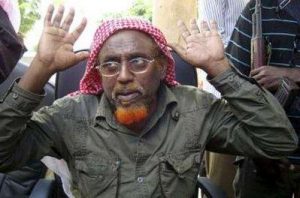
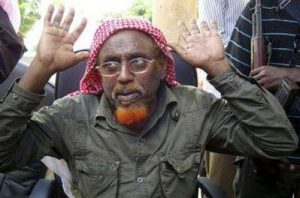
Hassan Aweys, the second-in-command of the Islamic Courts, was a longstanding target of the United States. (Picture: African Arguments)
2026 brings a seminal anniversary to the history of Somalia and East Africa, but also an important and overlooked one in modern American history. It marks twenty years since the United States cooperated with Ethiopia in an invasion of Somalia, overthrowing a short-lived, unrecognized, but effective administration of Islamic courts that had taken over Mogadishu by summer 2006. Not only did this Islamic Courts Union, as it was known, defeat a coalition of longstanding militia commanders, many of whom were on the payroll of American intelligence, but it also briefly established the closest thing to a functional and independent government that Somalia had had in fifteen years.
Keep supporting MuslimMatters for the sake of Allah
Alhamdulillah, we’re at over 850 supporters. Help us get to 900 supporters this month. All it takes is a small gift from a reader like you to keep us going, for just $2 / month.
The Prophet (SAW) has taught us the best of deeds are those that done consistently, even if they are small.
Click here to support MuslimMatters with a monthly donation of $2 per month. Set it and collect blessings from Allah (swt) for the khayr you’re supporting without thinking about it.
State Failure and Societal Resistance
At the turn of the millennium, it was fashionable to describe Somalia as the world’s first “failed state”, one with no functioning government that could reasonably claim to control, let alone govern, more than a fraction of its territory. The downfall of Siad Barre’s longstanding dictatorship in 1991 had reopened rifts that had in large part been exacerbated by the same dictatorship, and militarized by a widespread influx of weaponry during the 1980s. With the partial exception of a largely disparate Somaliland in the north, most of Somalia fragmented as notables from merchants to army officers to chieftains to politicians armed militias from their clans, giving the conflict a clan dimension.
Internationally, Somalia was best-known for the United Nations campaign sent purportedly to bring relief, and the American involvement that soon dominated this campaign. The famine was in fact largely over by the time that the Americans arrived, at the end of 1992, and critics pointed out that the mission seemed less a humanitarian endeavour and more an attempt to impose the new unipolar world order under a thin humanitarian cover. Both the United Nations and the United States played favourites among Somali factions in a way that prevented resolution of the conflict, while supposed peacekeepers frequently proved abusive and trigger-happy. That summer, after a militia commander Abdi Qeybdid ambushed foreign troops, the Americans effectively declared war on his Hawiye clan confederation that dominated the capital Mogadishu.
In total the American mission would kill three thousand Somalis over the course of the year, a third of these in an infamous last battle in October 1993, where Hawiye militants famously shot down a helicopter and killed eighteen soldiers. In a media atmosphere where Somali infringements were frequently amplified and vilified and foreign abuses received scant attention, the resultant and entirely misleading impression, which survives to this day in the United States, was that Somalia’s people had ungratefully bitten the hand that had tried to feed them. In more sophisticated circles, the continuing competition between Somali militias gave the country the moniker of “failed state”.
Even as intermittent conflict and cooperation between militias continued, Somali society independently rebuilt. Private merchants often provided services, setting up their own more disciplined militias for security. Clan resolution, where tribal leaders negotiated and mediated, were a frequent recourse, but these were limited since they rarely went beyond the clan. Islam was a more powerful glue, and at the local level various preachers, scholars, and Islamic activists set up courts at a local level to provide order and justice: one major example was the Ifka Halane court in Mogadishu. Somali businessmen, seeking a secure environment for their business and often hailing from a similar background, frequently collaborated with them: Ahmed Jimale, at one point Somalia’s richest merchant, was close to the Islamists. Militias had a more ambiguous attitude; some collaborated with Islamic networks but others saw them as rivals.
Ethiopian Interference
The Islamic courts’ influence came alongside a related and partly overlapping phenomenon, the war in the Somali-majority region of the Ogaden, adjacent to Somalia and ruled by Somalia’s “Auld Enemy” Ethiopia. During this period Ethiopia was rather a darling for the international community; its ruling government had overthrown their own dictatorial predecessors just months after the Somalis ousted Siad in 1991, but by contrast established a functional regime with nominal autonomy for Ethiopia’s different regions. Yet this autonomy was practically nonexistent in the much-abused Ogaden, where support for union with Somalia had been high for decades and over which the two neighbours had, similarly to India and Pakistan over Kashmir, repeatedly gone to war. In the mid-1990s Ethiopia launched a little-noticed crackdown in the Ogaden, and many of the Somalis who went to fight a jihad there were linked to Islamic networks, either Sufis or more famously the Salafi Itihaad network. Their profile soared when in 1996 Ethiopia launched the first of many raids into Somalia: the Islamists were often at the forefront of resistance.
Some Islamic networks had links with foreign fighters; for example, a young Qaeda network had established a small front in Somalia, applauded the 1993 ouster of the Americans, and returned American focus to the East African region by bloodily bombing American embassies in Kenya and Tanzania during the summer of 1998. This played further into Ethiopia’s securitized role toward Somalia: like Ethiopia, Washington viewed Itihaad-linked Somali Islamists such as Hassans Aweys and “the Turk” Hersi, former army officers who had become Salafi preachers and militant organizers, as enemies.
Ethiopia’s interest was not only in fighting Islamists or Ogaden militants, but also in preventing any single faction from achieving power that might challenge it: in this regard, it played off different commanders and clans, and offered a similarly shallow “federalist” solution, based on a quota of clans, to rule Somalia. Though Egypt and Eritrea contested Ethiopian influence, none matched its intrusiveness or skill at the game and the shadowy but crafty Ethiopian commander Tafasse Mamo repeatedly made the Somali borderlands his stomping ground for a decade.
In the early 2000s Somali delegates in Djibouti elected a government, albeit a weak one that existed more in name than reality. But this marked a challenge for Ethiopia, whose army raided and supported number of Somali commanders to challenge it under the pretext of demanding “federalism”: the most prominent such commander was Abdullahi Yusuf, who ruled the northeast region of Puntland and had longstanding links with the Ethiopians.
After the September 2001 Qaeda attacks on the United States, Ethiopia and its Somali clientele were able to present the government’s links with Islamic networks as a security threat: Somalia was often compared to the recently invaded Afghanistan as a new “haven for terrorists”. In turn, Washington blackballed both political leaders like Aweys and civilians such as Jimale, whose designation was only removed in 2016. Even Abshir Musa, a former inspector-general who had worked with the United Nations mission in 1993 and long lived in the United States, was targeted as a potential extremist because he had been a rival of Yusuf and had a reputation for Islamic rectitude.
American intelligence and military networks in the region threw their support behind Yusuf, who in a token election was selected as Somalia’s new ruler over a federalist regime. Like the preceding government, however, this only controlled patches of Somalia, mostly through commanders who were given ministerial titles. Even parliament speaker Sharif Aden, a merchant with good relations to Islamic networks, dismissed the new order as an Ethiopian method of “divide-and-conquer”.
Meanwhile, in 2003 American security, led by regional spymaster John Bennett and future Falluja commander John Sattler, had begun to pay off various militias to hunt “radical Islamists” on its behalf. These included militiamen affiliated with the government, such as prime minister Ali Gedi’s more powerful cousin Mohamed Dheere and the minister-commander Botan Alin. Even former opponents were paid off by the United States as preferable to “radical Islamists”: Qeybdid, whom the Americans had known as “Mad Abdi” in 1993, was now put on the payroll of American intelligence. Other American clientele included former rivals like Musa Yalahow and Mohamed Qanyare, who had fought on opposite sides of the Ethiopian campaign at Mogadishu in the 1990s. Despite his own links with Sufi networks, Yalahow turned on the Islamic courts; Qanyare, who had hated the Ethiopians, seems to have fondly imagined the United States, whom he admiringly described as “war masters”, as an alternative.
Over the mid-2000s American-funded militias raided Mogadishu in search of suspected “extremists”; in turn, Islamists mobilized. Perhaps the most famous of these was Aden Ayro, a bold but ruthless commander of Itihaad background linked to Aweys’ Ifka Halane court, whose notoriety soared after he excavated an old Italian cemetery in Mogadishu and replaced it with a mosque. A more mainstream figure was the official leader of the courts’ coalition, Sharif Ahmed. This Sufi preacher enjoyed considerable respect but was viewed by the United States as little more than a figurehead for such targets as Aweys and Ayro.

Abdi Qeybdid went from being a target of the United States, whom they attacked as “Mad Abdi” in the 1993 Battle of Mogadishu, to their collaborator in 2006. He has held several senior positions in Somalia since the 1990s. (Picture: HM News Updates, Youtube)
Slam Dunk for the Courts
In February 2006, three years after the militia strategy began, it was formalized as the “Alliance for the Restoration of Peace and Counterterrorism”. One member of this clunkily named coalition was Bashir Shirare, a militia-running merchant who had fallen out with one of Mogadishu’s wealthiest merchants, Abukar Adane. It was Adane, who funded what was probably the capital’s single largest militia but was linked to the Islamists rather than American intelligence, who funded the Islamic Courts’ spectacular backlash. In a dizzying series of counterstrikes that lasted into the early summer, the Islamic Courts routed one militia opponent after another: Shirare, Alin, Yalahow, Qeybdid, and Qanyare were forced to flight, and for the first time in fifteen years the capital came under the control of a single government. If we are to define governments by who controls the national capital, it was the Islamic Courts under Sharif Ahmed that were Somalia’s actual, though unrecognized, government by the summer of 2006.
What accounted for the Islamists’ staggering success? The binding effect of Islam, to which all Somalis paid homage but by whose restraining influences few factions abided, was a major factor: despite the alarm over their supposed radicalism, the Islamic courts were simply more disciplined and restrained in their dealings with wider society: by all accounts Mogadishu was far safer under their rule than it had been for a generation before or since. This gave them the appreciation of Somalia’s large business class for the security they provided: it was no coincidence that Adane, their first finance minister, was a major merchant. There were also links to both local Somali society, particularly in the Mogadishu environs, and the diaspora: the Islamists’ first foreign minister, Ibrahim Addow, was a well-respected scholar who had lived in the United States.
Similarly the courts used their links across political factions: for instance Islamist leader Khalif Adale, an in-law of the merchant Jimale, was also a clansman of Qanyare, who eventually surrendered his arsenal to him to keep resources within their clan. The Islamists were adept at bringing various segments of Somali society and political leadership to their side: their first defence minister was notable militia commander Yusuf Indhaadde, who had lately embraced religiosity. Other commanders, such as Yusuf Makaran in central Somalia and Hassan “the Turk”’s colourfully named Raskamboni militia in the deep south, would spread Islamist influence beyond the Mogadishu region over the next few months, though this brought them into collision with the Ethiopian military. In autumn 2006 Tafasse Mamo, the shadowy commander who had so skilfully manipulated Somali politics for a decade, was killed in a clash.
A self-fulfilling escalation
While the Islamist takeover was popular inside Somalia, it attracted alarm abroad. Abdullahi Yusuf’s coalition retained international recognition and used it. Their argument, advanced as well as an Ethiopian regime alarmed at a stable government in Mogadishu, made was that the Islamic Courts Union were similar to the Afghan Taliban emirate that the United States had overthrown and a magnet for “radical Islamists”; therefore, they must be overthrown.
This was the argument accepted by the United States’ diplomatic head for the region Jendayi Frazer, who overruled a contrary proposal by Sudanese diplomat Attaullah Bashir for a multilateral peacekeeping force and a compromise government; such forces had not worked in the past, but more to the point Ethiopia and the United States wanted to control this new, arbitrarily constructed front in the “war on terror”. Frazer and the United States’ regional commander, John Abizaid, worked secretly with Ethiopian premier Meles Zenawi and military commander Samora Yunis to plan the attack: the ongoing wars in Afghanistan and Iraq meant that it would have to be conducted primarily through Ethiopian soldiers, but with a small contingent of American commandos at key junctions.
The claim, advanced in the United States by neoconservative lobbyists including Israeli spies with longstanding links to Addis Ababa, was that if the United States did not preemptively defang the Islamists, radicalism and associated violence would somehow spread. It need also be remembered, as Somali archivist Abdimalik Warsame has pointed out, that a considerable proportion of the American military and foreign policy elite continued to resent Somalia: the 1993 Battle of Mogadishu had been their first defeat after the Cold War, and many were inclined toward revenge. It was commonplace at the time to point out Usama bin-Ladin’s approval for the 1993 battle, as if this indicated an inherent extremism in Somali society.
As with claims about Taliban support for international terrorism, claims of violent “radicalism” were greatly exaggerated. But during the height of the “war on terror”, exaggeration carried weight. Links with foreign “mujahideen” were subject to hysteria, and the Courts Union had plenty of links in the persons of Aweys, Ayro, Adale, “the Turk”, Indhaadde’s influential deputy Mukhtar Robow, and Mogadishu sheriff Abdullahi Nahar. While internationalist militants were by no means homogenous, by the end of summer 2006 several of them, under the leadership of a certain Abdullahi Arale, secretly formed a clique called Shabaab, linked to Qaeda’s local officials Fazul Haroun, Saleh Nabhan, and Tariq Abdullah. This clique was particularly influential in helping Hassan “the Turk” capture the deep south from Yusuf’s defence minister Barre Hirale and finance minister Abdullahi Farataag.
Yet Shabaab’s influence on Courts overarching policy was negligible. Emir Sharif Ahmed and foreign minister Ibrahim Addow continued to negotiate with the opposition, particularly Sharif Aden, and even more hardline colleagues like Aweys did not challenge them. It was only well after the American-Ethiopian invasion of Somalia, which began at the end of 2006, that Shabaab would grow in influence, eventually becoming the premier Somali militant organization. As with other fronts in the “war on terror”, violence spread through the region in large part as a result of the invasion. Far from a quick decapitation of “radicals”, the American war in Somalia, conducted mainly through airstrikes at this point, saw violence spread through East Africa, and twenty years later is approaching the United States’ longest war in history with no resolution in sight.