
‘Makkah’ vs ‘Bakkah’: The First House of God
Mansoor Dahri, Surrey, UK
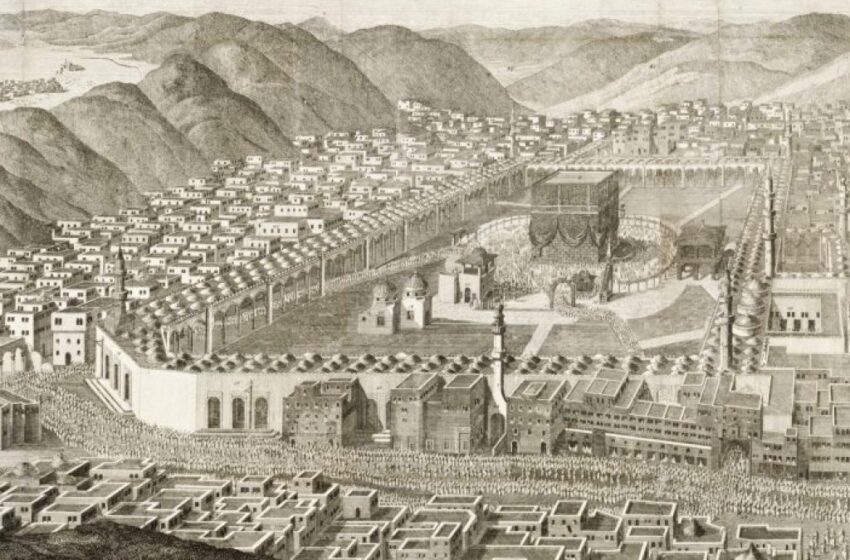
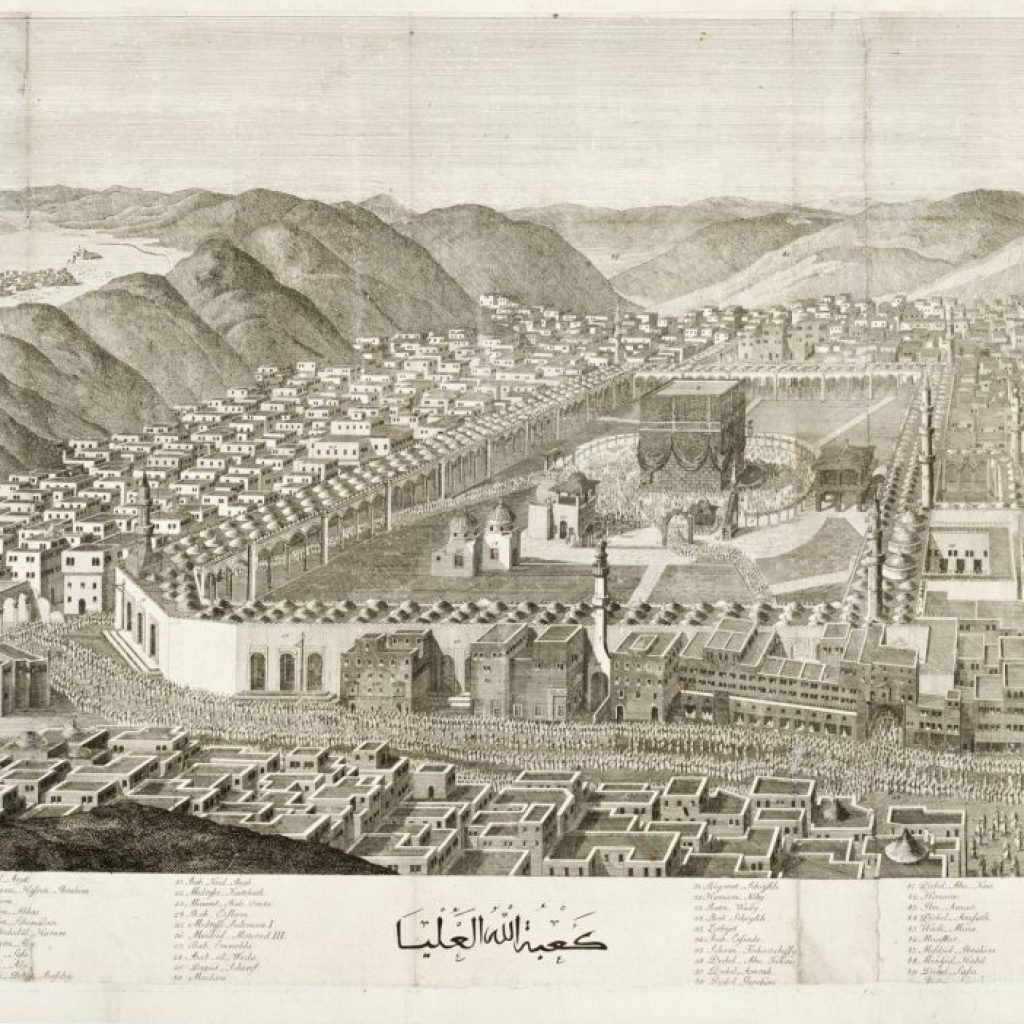
Five times a day the Muslims of the world pray in the direction of the city of Makkah (also spelled ‘Mecca’) in Saudi Arabia. This is because Makkah is home to the Ka’bah, the holiest place in Islam. The Ka’bah is also the site of the Hajj (a pillar of Islam), the annual pilgrimage that all financially able Muslims are obliged to perform at least once in their lives. But Muslims believe that the Ka’bah is not just relevant to Muslims – they believe it is the first house built for the worship of One God, thus making it signficant for those of other faiths as well.
This is based on the following verse of the Holy Qur’an:
‘Surely, the first House founded for mankind is that at Becca, abounding in blessings and a guidance for all peoples.’[1]
In this verse, ‘Makkah’ is referred to as ‘Becca’ (also spelled ‘Bakkah’); Why is a different word used here for Makkah and is there any difference in meaning between the two words?
Let’s start with the basics. If the Ka’bah is the first house of worship, then who built it and when? The Holy Qur’an states that the Ka’bah was rebuilt by the Prophet Abraham (as) at some point:
‘And remember the time when Abraham and Ishmael raised the foundations of the House, praying, “Our Lord, accept this from us; for Thou art the All-Hearing, the All-Knowing.”’[2]
Hazrat Mirza Bashiruddin Mahmud Ahmad (ra), the Second Caliph of the Ahmadiyya Muslim Community, states in his commentary of the above verse:
‘Whether Abraham (as) was the founder or only the rebuilder of the Ka’bah is a point that has given rise to much discussion. Some hold that Abraham (as) was the first builder of the place, others trace the origin of the House to the days of Adam (as) and hold that Abraham (as) only rebuilt it on its old ruins. The Qu’ran and authentic traditions favour the view that even prior to the erection of a building on this site by Abraham (as), some sort of structure did exist. Even in the verse under comment the words ٱلۡقَوَاعِدَ مِنَ ٱلۡبَيۡتِwhich may mean “the foundations that were left of the house,” hint at the fact that a previous structure did exist but it had fallen into ruins and only a trace of the foundations remained. Elsewhere the Qur’an speaks of the Ka’bah, as the first House founded (or built) for (the good of) mankind.[3] Now as people lived even before Abraham (as) and some prophets had also been raised before him, it stands to reason that some place of worship did exist for them and as the Ka’bah is the first house of that nature, it must be taken to have priority over all others.’
In other words, the Ka’bah is so old that it was most likely already in ruins in the time of the Prophet Abraham (as), who had to rebuild it.
Intriguingly, the Bible also mentions this history. In Psalm 84, verses 3-6, it is written: ‘Even the sparrow has found a home, and the swallow a nest for herself, where she may have her young – a place near your altar, Lord Almighty, my King and my God. Blessed are those who dwell in your house; they are ever praising you. Blessed are those whose strength is in you, whose hearts are set on pilgrimage. As they pass through the Valley of Baka, they make it a place of springs; the autumn rains also cover it with pools.’
Here, mention is made of a house of God, where people are ‘ever praising’ Him and which is indeed set in a valley called Baka. This adds additional support to the long history of the Ka’bah from an unexpected source.
The Ka’bah is located in the valley of Makkah, and in the Holy Qur’an the Prophet Abraham (as) also describes it as being located in a valley:
‘Our Lord, I have settled some of my children in an uncultivable valley near Thy Sacred House – our Lord – that they may observe Prayer. So make men’s hearts incline towards them and provide them with fruits, that they may be thankful.’[4]
This is important because it sheds some light on the use of the word ‘Bakkah’ in the Holy Qur’an,[5] regarding which the Five-Volume Commentary states:
‘بكة (Becca) is the name given to the valley of Mecca. The word is probably derived from بك. They say بکه i.e. he pushed him into a narrow and crowded place. بك عنقه means, he dealt blows on his neck and broke it. تباك القوم علی means, the people crowded round the thing. The valley of مکة (Mecca) is called بکة (Becca) probably on account of the crowding of the people there, or because it used to break the necks of the tyrants (Aqrab).’
In other words, Bakkah most probably refers to a specific part of Makkah (i.e. the valley of Makkah) as indicated by its root ‘Bakka’ which carries connotations of crowding. But what was the reason for this specificity?
The Five-Volume Commentary states:
‘In this verse, the Qur’an draws the attention of the People of the Book to the antiquity of the Ka’bah in order to point out that the real and original centre of God’s religion is the Ka’bah, those adopted by Jews and Christians being of later origin.’
Based on this, it makes sense that the Holy Qur’an would use a word that refers specifically to the valley because it was a valley that the Prophet Abraham (as) referenced in his prayer.[6] Therefore, the use of the word ‘Bakkah’ would carry a clear link with Abraham (as) and therefore emphasise the antiquity of the Ka’bah.[7]
About the Author: Mansoor Dahri is an online editor for The Review of Religions. He graduated from UCL with a B.A. in Ancient Languages.
ENDNOTES
1. The Holy Qur’an, 3:97.
2. The Holy Qur’an, 14:38.
3. The Holy Qur’an, 3:97.
4. The Holy Qur’an, 14:38.
5. The Holy Qur’an, 3:97.
6. The Holy Qur’an, 14:38.
7. The Holy Qur’an, 3:97.