

Arabic Text, Translation & Meaning
Durood-e-Tayyab: Arabic Text, English Translation and Transliteration
Download Durood-e-Hazarah .pdf
Durood-e-Tayyab is a devotional prayer that asks Allah to send blessings upon Prophet Muhammad ﷺ and his family. It also includes a supplication asking Allah to grant the Prophet ﷺ the Praiseworthy Station that He has promised him.
Durood-e-Tayyab is also spelled Durood-e-Taiyab or Darood-e-Tayyab. Many readers look for its Arabic text, English transliteration, and English translation to learn the prayer and understand its meaning.
In this guide, you will find the Arabic wording, an easy-to-follow transliteration, an English translation, and an explanation of its main phrases.
Durood-e-Tayyab Arabic Text
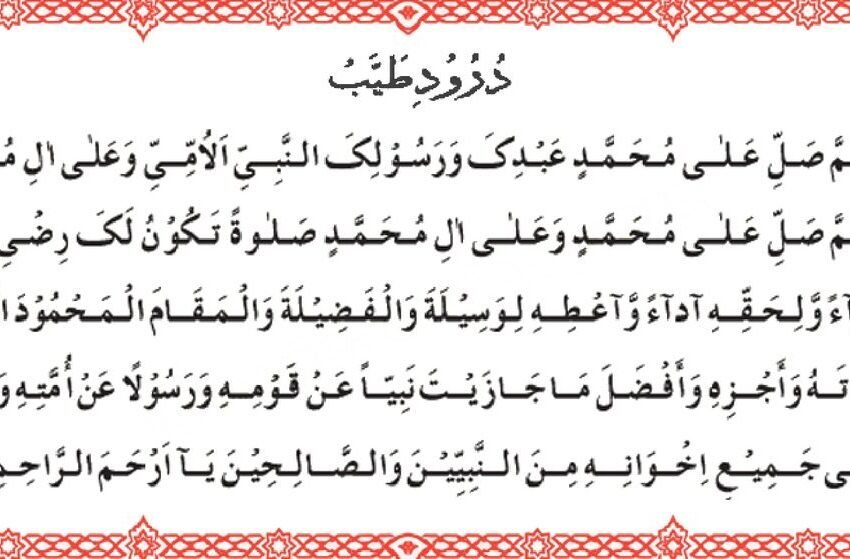
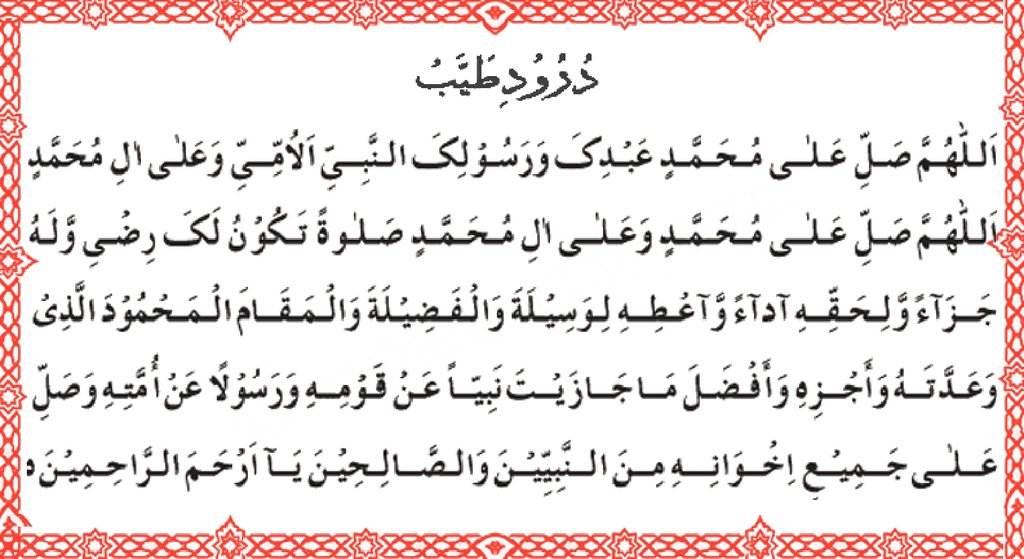
اللَّهُمَّ صَلِّ عَلَى مُحَمَّدٍ عَبْدِكَ وَرَسُولِكَ النَّبِيِّ الْأُمِّيِّ وَعَلَى آلِ مُحَمَّدٍ.
اللَّهُمَّ صَلِّ عَلَى مُحَمَّدٍ وَعَلَى آلِ مُحَمَّدٍ صَلَاةً تَكُونُ لَكَ رِضًا وَلَهُ جَزَاءً وَلِحَقِّهِ أَدَاءً وَآتِهِ الْوَسِيلَةَ وَالْفَضِيلَةَ وَالْمَقَامَ الْمَحْمُودَ الَّذِي وَعَدْتَهُ وَاجْزِهِ أَفْضَلَ مَا جَزَيْتَ نَبِيًّا عَنْ قَوْمِهِ وَرَسُولًا عَنْ أُمَّتِهِ وَصَلِّ عَلَى جَمِيعِ إِخْوَانِهِ مِنَ النَّبِيِّينَ وَالصَّالِحِينَ يَا أَرْحَمَ الرَّاحِمِينَ.
Durood-e-Tayyab Transliteration in English
First part:
Allahumma salli ‘ala Muhammadin ‘abdika wa rasulika an-nabiyyil-ummiyyi wa ‘ala ali Muhammad.
Second part:
Allahumma salli ‘ala Muhammadin wa ‘ala ali Muhammadin, salatan takunu laka ridan wa lahu jaza’an wa li-haqqihi ada’an, wa atihil-wasilata wal-fadilata wal-maqamal-mahmuda alladhi wa’adtahu, wa ajzihi afdalla ma jazayta nabiyyan ‘an qawmihi wa rasulan ‘an ummatihi, wa salli ‘ala jami’i ikhwanihi minan-nabiyyina was-salihin, ya arhamar-rahimin.
Simple Pronunciation Guide
Read the prayer slowly, one part at a time. Pay attention to longer words such as al-wasilah, al-fadilah, and al-maqam al-mahmud.
English transliteration can help you become familiar with the words, but it cannot represent every Arabic sound exactly. For accurate pronunciation, read alongside the original Arabic text or seek guidance from a knowledgeable Arabic reader.
Durood-e-Tayyab English Translation
The following is an approximate English translation of the wording shown in the supplied image.
“O Allah, send blessings upon Muhammad, Your servant and Messenger, the unlettered Prophet, and upon the family of Muhammad.
O Allah, send blessings upon Muhammad and the family of Muhammad with blessings that are pleasing to You, serve as a recompense for him, and fulfil his due. Grant him Al-Wasilah, excellence, and the Praiseworthy Station that You have promised him.
Reward him with the best reward You have given a prophet on behalf of his people and a messenger on behalf of his community. And send blessings upon all his brothers among the prophets and the righteous. O Most Merciful of those who show mercy.”
This translation conveys the general meaning of the Arabic prayer. Some devotional expressions may have slightly different English renderings depending on the translator.
Understanding the Meaning of Durood-e-Tayyab
Understanding the meaning of Durood-e-Tayyab can help readers appreciate the prayer instead of focusing only on memorising its words.
Asking Allah to send blessings: The prayer begins by asking Allah to bless Prophet Muhammad ﷺ, described as His servant, Messenger, and Prophet.
Blessings upon the Prophet’s family: The wording also includes the family of Prophet Muhammad ﷺ in the supplication.
Al-Wasilah and excellence: These words refer to a special rank and excellence requested for the Prophet ﷺ.
The Praiseworthy Station: The phrase Al-Maqam Al-Mahmud means “the Praiseworthy Station.” It refers to the honoured station mentioned in the prayer.
A fitting reward: The supplication asks Allah to reward the Prophet ﷺ generously for his mission and service to his community.
Blessings upon the prophets and righteous: The final part asks Allah to send blessings upon the other prophets and righteous people, ending with an invocation of Allah’s mercy.
Together, these phrases express a request for blessings, honour, and mercy from Allah.
Reciting Durood-e-Tayyab
If you are learning Durood-e-Tayyab for the first time, divide it into smaller sections. This makes the longer wording easier to follow and practise.
Here are some helpful tips:
- Begin by reading the Arabic text carefully.
- Use the English transliteration as a pronunciation guide.
- Read the translation to understand the words.
- Practise unfamiliar phrases separately.
- Ask a qualified Arabic reader for help when needed.
Taking time to understand the wording can make your recitation more meaningful. Avoid rushing through the prayer simply to memorise it quickly.
This guide does not prescribe a particular time or a fixed number of repetitions.
Benefits and Source Notes
Sending blessings upon Prophet Muhammad ﷺ is an important devotional practice in Islam. Muslims recite Durood Sharif to express love and respect for the Prophet ﷺ and ask Allah to send blessings upon him.
Reading Durood-e-Tayyab with its meaning can also help readers reflect on its expressions of praise and supplication.
However, claims about special rewards, guaranteed outcomes, or prescribed recitation counts need reliable religious evidence. A statement published on a website should not automatically be treated as an authenticated Hadith.
The wording in this article matches a commonly published version of Durood-e-Taiyab. For comparison, readers can consult the published Arabic text of Durood-e-Taiyab.
The availability of a devotional prayer in a collection does not, by itself, establish that its exact wording was transmitted from the Prophet ﷺ. Readers who want to verify its historical source or specific virtues should consult reliable Islamic scholarship.
Frequently Asked Questions
What is Durood-e-Tayyab?
Durood-e-Tayyab is a devotional prayer that asks Allah to send blessings upon Prophet Muhammad ﷺ and his family. It also includes supplications concerning the Prophet’s honoured station and blessings upon other prophets and righteous people.
What is the English translation of Durood-e-Tayyab?
Its general meaning is a request to Allah to bless Prophet Muhammad ﷺ and his family, grant him Al-Wasilah and the Praiseworthy Station, reward him generously, and send blessings upon the other prophets and righteous people.
Is Durood-e-Tayyab also called Durood-e-Taiyab?
Yes. Durood-e-Tayyab, Durood-e-Taiyab, and Darood-e-Tayyab are alternative English spellings used for this prayer.
How can I pronounce Durood-e-Tayyab correctly?
Read the Arabic text alongside the English transliteration. For more accurate pronunciation, practise with a knowledgeable Arabic reader because transliteration cannot represent every Arabic sound perfectly.
Is there a fixed recitation count for Durood-e-Tayyab?
This article does not establish a prescribed number of repetitions. Any claim that a specific count is required or guarantees a particular reward should be checked against reliable Islamic references.
Are special benefits of Durood-e-Tayyab guaranteed?
Specific rewards or guaranteed outcomes attributed exclusively to this wording require reliable supporting evidence. It is important to distinguish general devotional practice from claims about particular benefits.