

Durood e Imam Busairi: Arabic, Meaning and Reflection
Durood e Imam Busairi: Understanding Its Words of Love and Devotion
Download Durood e Imam Busairi .pdf
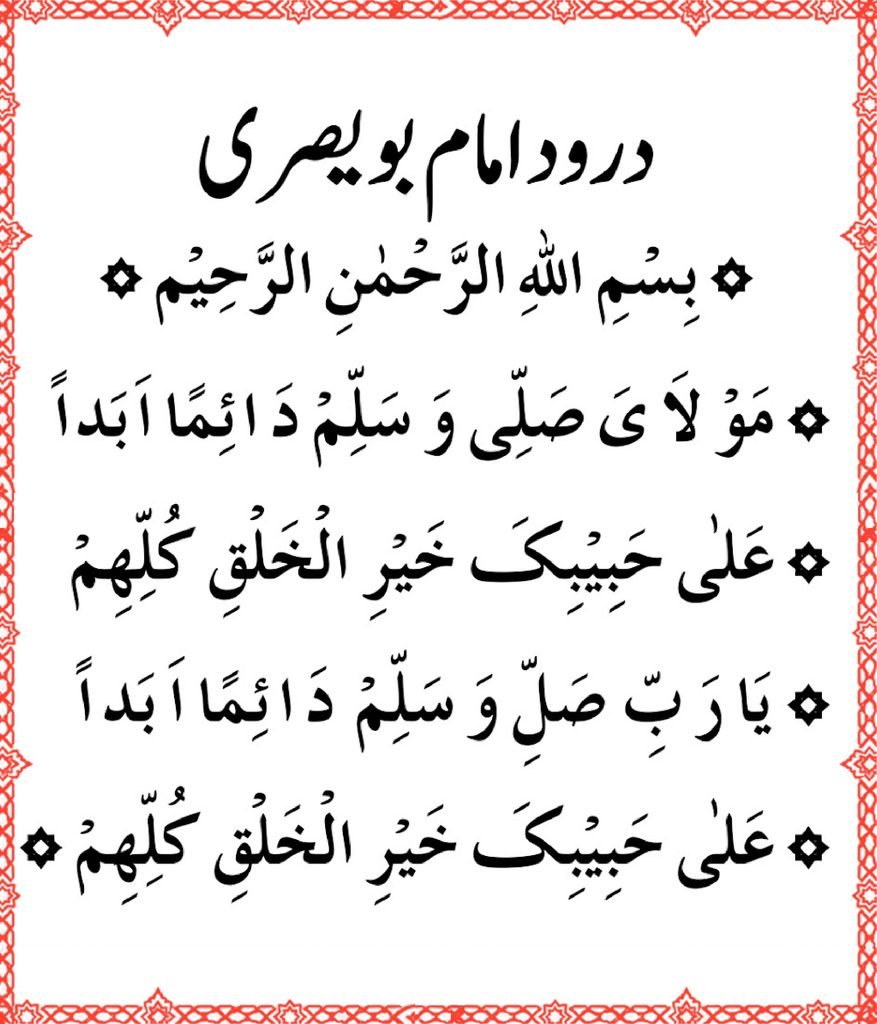
Durood e Imam Busairi, as shown in your supplied image, is a short devotional salutation centred on sending blessings and peace upon Prophet Muhammad ﷺ. Its wording calls him Habib (beloved) and Khair-ul-Khalq (the best of creation), expressing reverence and love through a repeated prayer for blessings and peace.
For readers exploring different forms of Durood Sharif, this text offers a chance to reflect on the meaning of its words and the place of Salawat in Muslim devotional life.
Durood e Imam Busairi in Arabic
The following transcription follows the wording visible in your image:
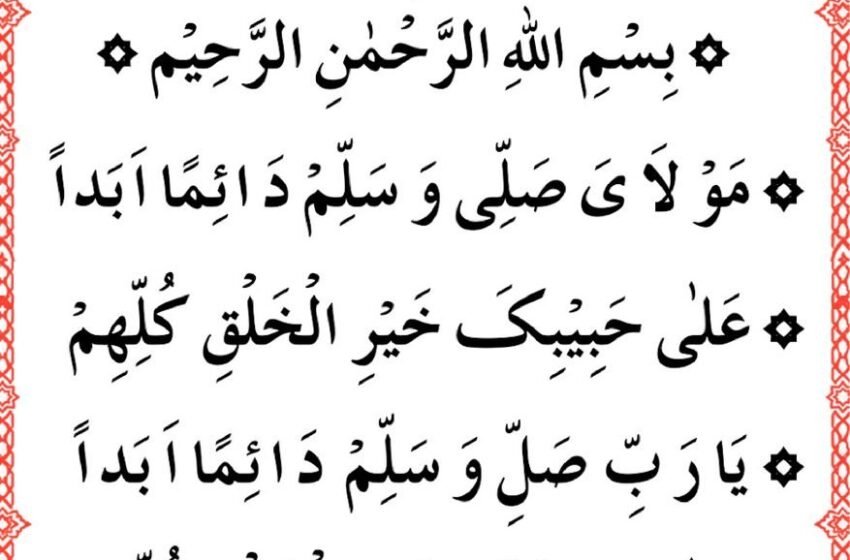
بِسْمِ اللَّهِ الرَّحْمَٰنِ الرَّحِيمِ
مَوْلَايَ صَلِّ وَسَلِّمْ دَائِمًا أَبَدًا
عَلَى حَبِيبِكَ خَيْرِ الْخَلْقِ كُلِّهِمْ
يَا رَبِّ صَلِّ وَسَلِّمْ دَائِمًا أَبَدًا
عَلَى حَبِيبِكَ خَيْرِ الْخَلْقِ كُلِّهِمْ
Note: The image repeats the two-line salutation. The transcription above preserves that repetition.
Transliteration of Durood e Imam Busairi
Bismillahir-Rahmanir-Raheem.
Mawlaaya salli wa sallim daa’iman abadan
‘Ala habibika khayril-khalqi kullihimi
Ya Rabbi salli wa sallim daa’iman abadan
‘Ala habibika khayril-khalqi kullihimi
Pronunciation written in English letters is approximate. If possible, read along with the Arabic text or ask a knowledgeable Arabic reader to help you pronounce it correctly.
English Meaning of Durood e Imam Busairi
A simple, approximate translation of the salutation is:
“O my Master, send blessings and peace, always and forever, upon Your beloved, the best of all creation.
O my Lord, send blessings and peace, always and forever, upon Your beloved, the best of all creation.”
The phrase Mawlaaya addresses the Lord, while Ya Rabbi means “O my Lord.” The expression Habibika means “Your beloved,” and Khayril-khalqi kullihim means “the best of all creation.”
The wording is a repeated prayer for blessings and peace upon Prophet Muhammad ﷺ. Its emphasis is not on a long list of requests, but on the continued expression of love, reverence, and devotion.
What Makes This Durood Distinctive?
Unlike longer forms of Salawat that contain several clauses, this text is brief and repetitive. That makes its central message easy to recognise: the reciter repeatedly asks Allah to send blessings and peace upon His beloved Prophet ﷺ.
1. The Meaning of “Mawlaaya”
The opening word Mawlaaya means “my Master” or “my Lord” in this context. It establishes the prayer as an appeal to Allah to send blessings and peace upon the Prophet ﷺ.
2. The Phrase “Habibika Khayril-Khalq”
This phrase means “Your beloved, the best of all creation.” It expresses the high regard Muslims hold for Prophet Muhammad ﷺ. Reflecting on the phrase can help readers understand why love for the Prophet is an important theme in devotional poetry and Salawat.
3. The Repeated Request for Blessings and Peace
The words salli wa sallim daa’iman abadan ask for blessings and peace continually. Repeating the phrase reinforces the central purpose of the Durood rather than introducing a different request each time.
Why Do Muslims Send Salawat Upon the Prophet ﷺ?
Sending blessings upon Prophet Muhammad ﷺ is an established part of Islamic worship and remembrance. Muslims include Salawat in their prayers and personal devotional routines.
This Durood can be read as an expression of that devotion. Its short wording gives readers an opportunity to focus on what they are saying rather than simply reciting without reflection.
It is also useful to remember that devotion should be accompanied by an effort to understand and follow the Prophet’s teachings. Salawat is not a substitute for fulfilling religious responsibilities or treating others with fairness and kindness.
Is There a Fixed Number for Reciting Durood e Imam Busairi?
The image you supplied does not state a prescribed number of repetitions. For that reason, it would be inaccurate to claim that this particular text must be recited a certain number of times.
If you have received a specific count from a religious teacher or a devotional tradition, ask about its source and whether it is a recommended practice or a requirement. Avoid claims that completing a particular count guarantees a specific result unless reliable evidence supports them.
You can include Salawat in your regular remembrance without treating an unsupported number as compulsory.
How to Read Durood e Imam Busairi With Understanding
A simple approach is to begin with the Arabic text and learn its pronunciation. Then read the translation so you understand the request being made.
Pay particular attention to the two central expressions: Habibika, referring to the Prophet ﷺ as Allah’s beloved, and salli wa sallim, asking for blessings and peace. This makes the repeated lines easier to understand.
You can recite it at a convenient time as part of your devotional routine, while following reliable religious guidance if you have questions about a particular practice.
Frequently Asked Questions
What is Durood e Imam Busairi?
It is the name used here for the short salutation shown in your image, which asks Allah to send blessings and peace upon Prophet Muhammad ﷺ and describes him as the beloved and the best of creation.
What does “Khayril-Khalqi Kullihim” mean?
It means “the best of all creation.” In this Durood, the phrase expresses reverence for Prophet Muhammad ﷺ.
Can I recite this Durood every day?
You can include Salawat in your regular devotional practice. For guidance about a specific prescribed routine, consult a knowledgeable scholar.
Does this Durood have a fixed recitation count?
No count is shown in your image. Do not assume a particular number is compulsory without reliable religious guidance.
Is this the same as Durood Ibrahim?
No. The wording is different. You can read our guide to Durood e Ibrahimi to learn about another widely known form of Salawat.
Conclusion
Durood e Imam Busairi, as presented in your image, uses a short and repeated prayer to express love and reverence for Prophet Muhammad ﷺ. Its main phrases ask Allah for continual blessings and peace and describe the Prophet as His beloved and the best of creation.
Understanding these words gives the recitation greater meaning. Read the Arabic carefully, use the translation as a guide, and avoid unsupported claims about guaranteed benefits or fixed counts. The focus remains on sincere devotion and sending blessings and peace upon the Prophet ﷺ.