

Arabic, Meaning and Health Benefits
Durood e Shifa: Arabic Text, Meaning and Its Connection With Health and Wellbeing
When someone is unwell or worried about their health, they often look for comfort through prayer and remembrance of Allah. Durood e Shifa is a well-known devotional salutation that connects the remembrance of Prophet Muhammad ﷺ with words about the healing of hearts, the wellbeing of bodies, and the light of eyesight.
The wording of this Durood is particularly meaningful because it describes the Prophet ﷺ with expressions such as Tibb al-Quloob (the healing or remedy of hearts) and Aafiyat al-Abdan (the wellbeing of bodies). These phrases give the recitation its distinctive connection with health and spiritual comfort.
In this guide, you can read the Arabic text provided in your PDF, its transliteration, an English explanation, and answers to common questions about Durood e Shifa.
Durood e Shifa in Arabic
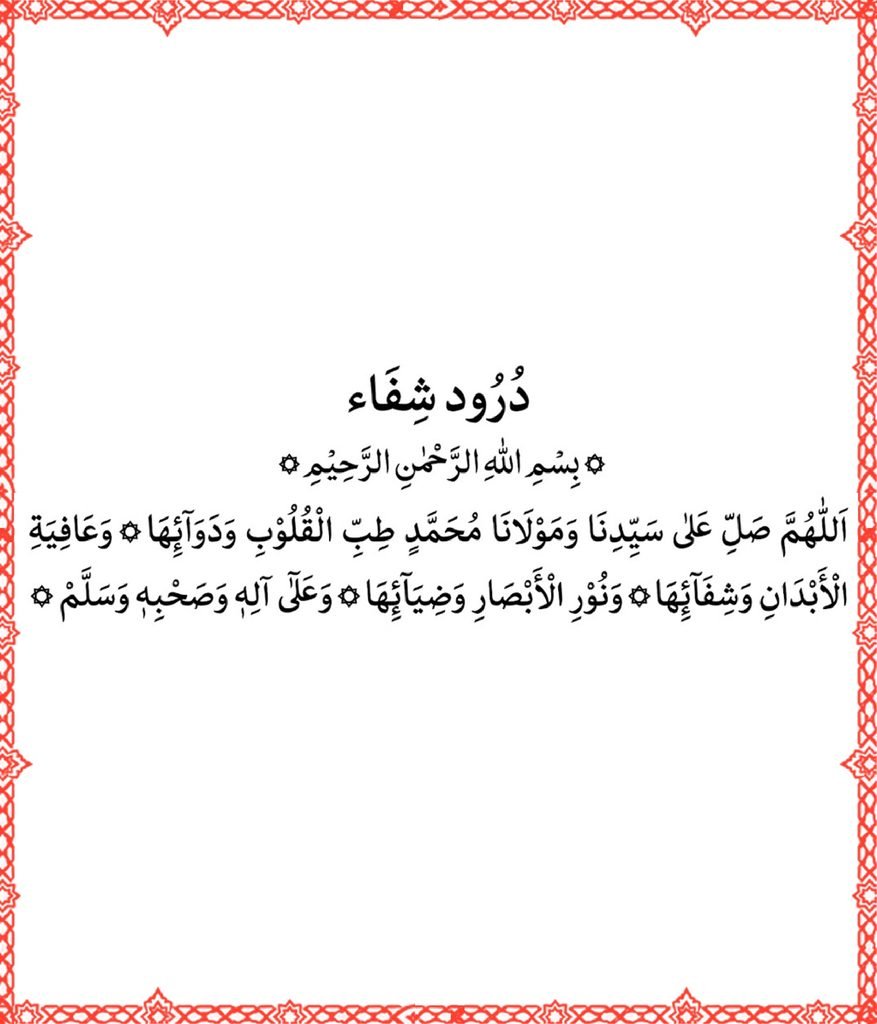
The following Arabic wording is transcribed from your uploaded PDF:
بِسْمِ اللَّهِ الرَّحْمَٰنِ الرَّحِيمِ
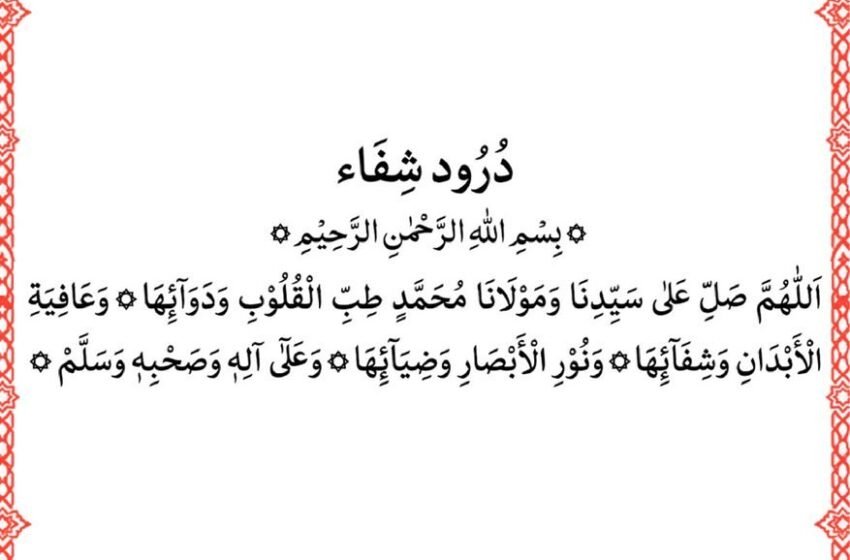
اللَّهُمَّ صَلِّ عَلَى سَيِّدِنَا وَمَوْلَانَا مُحَمَّدٍ طِبِّ الْقُلُوبِ وَدَوَائِهَا وَعَافِيَةِ الْأَبْدَانِ وَشِفَائِهَا وَنُورِ الْأَبْصَارِ وَضِيَائِهَا وَعَلَى آلِهِ وَصَحْبِهِ وَسَلِّمْ
Durood e Shifa Transliteration
Bismillahir-Rahmanir-Raheem.
Allahumma salli ‘ala sayyidina wa mawlana Muhammadin tibbil-quloobi wa dawa’iha, wa ‘afiyatil-abdani wa shifa’iha, wa nooril-absari wa diya’iha, wa ‘ala aalihi wa sahbihi wa sallim.
The English transliteration is an approximate pronunciation guide. Arabic sounds cannot always be represented perfectly through English letters, so reading the original Arabic is preferable when possible.
Durood e Shifa Meaning in English
The wording can be translated approximately as:
“O Allah, send blessings upon our master and leader Muhammad, the remedy of hearts and their healing, the wellbeing of bodies and their recovery, and the light and brightness of eyesight. And send peace and blessings upon his family and companions.”
This translation explains the main expressions in the Durood. Some words have a deeper devotional meaning, so a short English translation may not capture every nuance.
Understanding the Health-Related Words in Durood e Shifa
What makes Durood e Shifa different from many other forms of Salawat is its specific wording about hearts, bodies, and eyesight. These three expressions are central to understanding the text.
1. Tibb al-Quloob – The Remedy of Hearts
The phrase طِبِّ الْقُلُوبِ وَدَوَائِهَا refers to the remedy of hearts and their healing.
The heart has an important place in Islamic teachings. Its condition is connected with a person’s faith, intentions, character, and spiritual wellbeing. This phrase encourages reflection on the importance of keeping the heart connected with remembrance of Allah and following the teachings of Prophet Muhammad ﷺ.
2. Aafiyat al-Abdan – Wellbeing of Bodies
The next expression, عَافِيَةِ الْأَبْدَانِ وَشِفَائِهَا, refers to the wellbeing and healing of bodies.
It gives this Durood its association with physical health. When someone recites it, they may reflect on the importance of good health and ask Allah for wellbeing and recovery.
However, the wording should not be understood as a promise that reciting this Durood alone will cure an illness. Medical treatment and professional healthcare remain important.
3. Noor al-Absar – Light of Eyesight
The phrase نُورِ الْأَبْصَارِ وَضِيَائِهَا refers to the light and brightness of eyesight.
It adds another dimension to the text, moving from the heart and body to the sense of sight. Together, these expressions make Durood e Shifa a distinctive form of Salawat that readers can study and reflect upon.
Why Do People Recite Durood e Shifa?
Many Muslims include Salawat in their daily remembrance, during personal dua, or when seeking comfort in difficult circumstances. Durood e Shifa is especially recognised for its wording about health and healing.
People may recite it for different personal and spiritual reasons:
- To ask Allah for wellbeing: A person may recite Salawat and make dua for good health and protection from illness.
- To seek spiritual comfort: Remembering Allah and sending blessings upon the Prophet ﷺ can provide comfort during stressful periods.
- To remember the importance of inner wellbeing: The reference to hearts encourages reflection on faith, intentions, and character.
- To include Salawat in daily worship: Some people make this Durood part of their regular devotional routine.
It is important to understand that these are reasons people may include it in their worship, not guaranteed medical outcomes.
Can Durood e Shifa Be Recited for Someone Who Is Ill?
A Muslim may send Salawat upon Prophet Muhammad ﷺ and make dua to Allah for someone who is sick. You can also pray for a person’s patience, comfort, recovery, and wellbeing.
If you are reciting Durood e Shifa for a family member or someone close to you, you can make a sincere dua to Allah after recitation. Ask Him to grant what is best and make the person’s circumstances easier.
At the same time, do not delay medical care or stop prescribed treatment because of a devotional practice. Recitation and medical treatment can be part of a person’s wider approach to facing illness.
Is There a Fixed Recitation Count for Durood e Shifa?
The version in your uploaded PDF does not mention a specific number of repetitions.
Different devotional traditions may recommend particular counts, but these should not automatically be treated as compulsory or universally established. If a religious teacher has recommended a specific routine, ask about its source and the guidance behind it.
You can recite Durood e Shifa as part of your regular remembrance without assuming that a particular number guarantees recovery or a specific result.
How to Include Durood e Shifa in Your Daily Routine
If you would like to make Durood e Shifa part of your daily worship, begin by learning its Arabic pronunciation. Read the meaning as well, especially the three expressions about the heart, body, and eyesight.
Choose a convenient time when you can recite without rushing. You may include it in your personal remembrance and make dua to Allah for your own wellbeing or for someone who is unwell.
Most importantly, keep your intention sincere. Avoid turning the recitation into a medical formula or believing that a particular number of repetitions replaces treatment.
Frequently Asked Questions About Durood e Shifa
What is Durood e Shifa?
Durood e Shifa is a form of Salawat upon Prophet Muhammad ﷺ. Its wording refers to the remedy of hearts, the wellbeing of bodies, and the light of eyesight.
What does Durood e Shifa mean in English?
It is a prayer asking Allah to send blessings upon Prophet Muhammad ﷺ, using expressions that describe him as connected with the healing of hearts, the wellbeing of bodies, and the light of eyesight. It also asks for blessings and peace upon his family and companions.
Can I recite Durood e Shifa for good health?
You may recite Salawat and make dua to Allah for good health and wellbeing. However, it should not be presented as a guaranteed cure or a replacement for medical treatment.
Can I recite Durood e Shifa for a sick family member?
Yes, you can send Salawat and make dua to Allah for a sick family member. Ask Allah to grant them ease, patience, and recovery while also encouraging appropriate medical care.
Does Durood e Shifa have a fixed number of repetitions?
The version provided in your PDF does not specify a count. Follow reliable religious guidance if you have questions about a particular devotional routine.
Is Durood e Shifa the same as Durood e Ibrahimi?
No. They have different Arabic wording and structure. Durood e Ibrahimi is a well-known form of Salawat recited in salah, while Durood e Shifa contains expressions about the heart, physical wellbeing, and eyesight.
You can also read our guide to Durood e Ibrahimi to learn about another form of Salawat.
Conclusion
Durood e Shifa is distinctive because its wording brings together three important themes: the heart, the body, and eyesight. These expressions explain why many readers associate it with health, healing, and personal wellbeing.
When reciting it, take time to understand the Arabic words and their meaning. You can include Salawat in your devotional routine and ask Allah for health and recovery for yourself and others. Remember that healing ultimately comes from Allah, and spiritual remembrance should go alongside appropriate medical care and reliable professional advice.