
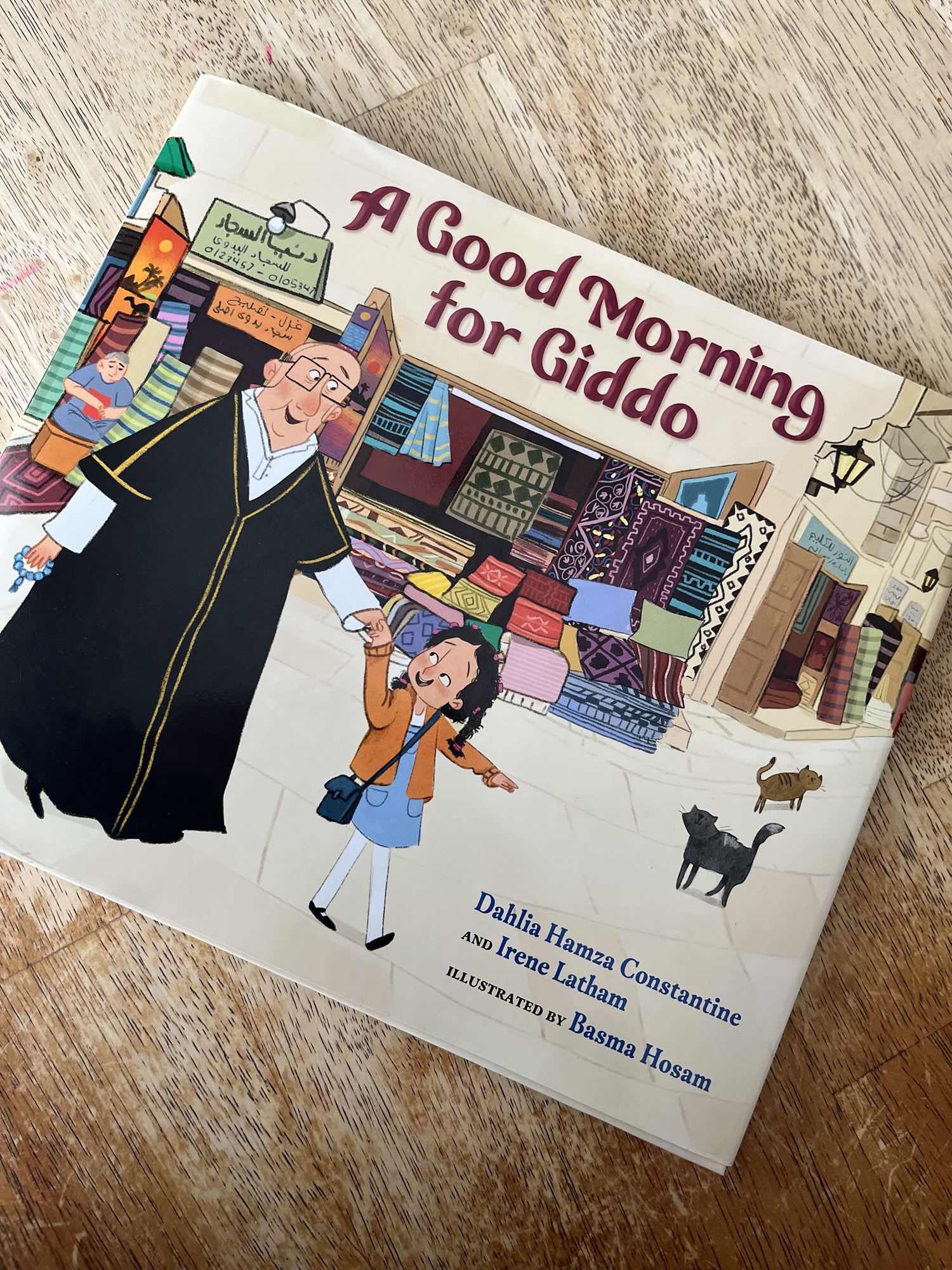
A Good Morning for Giddo by Dahlia Hamza Constantine and Irene Latham illustrated by Basma Hosam
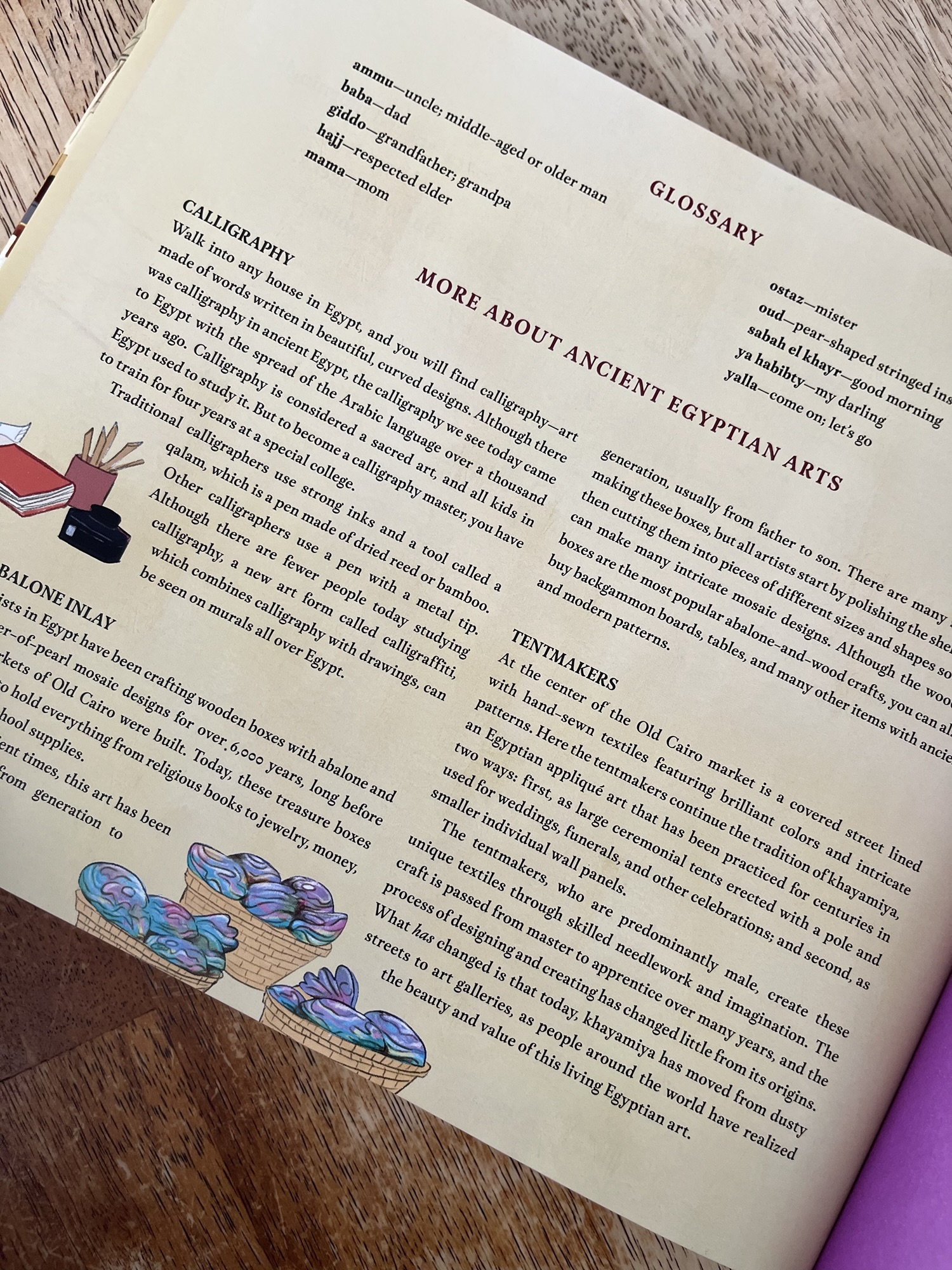
Hold on, it is Friday morning, not super early, the sun is up, Giddo and Somaya stop in to visit a friend and when the athan is called from multiple minarets, the men pause to pray in his shop? At the end of the book, it is still morning, the parents are in their pajamas, so um, WHAT SALAT WAS THAT? Why mention that it is Friday if they are not going to salatul Jummah? Yeah, I review from an Islamic perspective, I know this is not the point or plot or theme of the book, but it is an early detail in a 32 page picture book, and I’m having a hard time getting past it, clearly. The book is beautifully illustrated by a Muslim, and the cultural story is by one Egyptian and one author who has visited Egypt, so I have no reason to question the OWN voice accuracy, but none-the-less, it doesn’t make sense and makes me wonder why we can’t get basic Islamic rep correct in a picture book. The story itself is a shout out to Egyptian culture showing calligraphy, tourism, mosaic handicrafts, tentmaking, friendships amongst people of different religions, a sweet grandfather and grand daughter relationship, all in their morning quest to get to the tentmakers at the market. The plot unravels though at the end for me, I think it sounds good to have SPOILER Somaya need a little help with her surprise birthday gift for her Giddo, but it seemed rushed in its conclusion for as flowy as the build up was. And that she needed help with a final knot, seemed a little weak of a premise for the urgency to get to the tentmakers at all. I know I’m being picky, but sensitivity readers exist precisely for these details, and it should not go unchecked. The end has a “Glossary” and a “More About Ancient Egyptian Arts” section, but I really was hoping for something about the one upping thread of greeting that is present throughout the book, “good morning,” “good morning with roses,” good morning with roses and jasmine,” etc. as I think that is a tidbit of Arab culture that readers will wonder about while reading, but maybe not quite fully grasp.
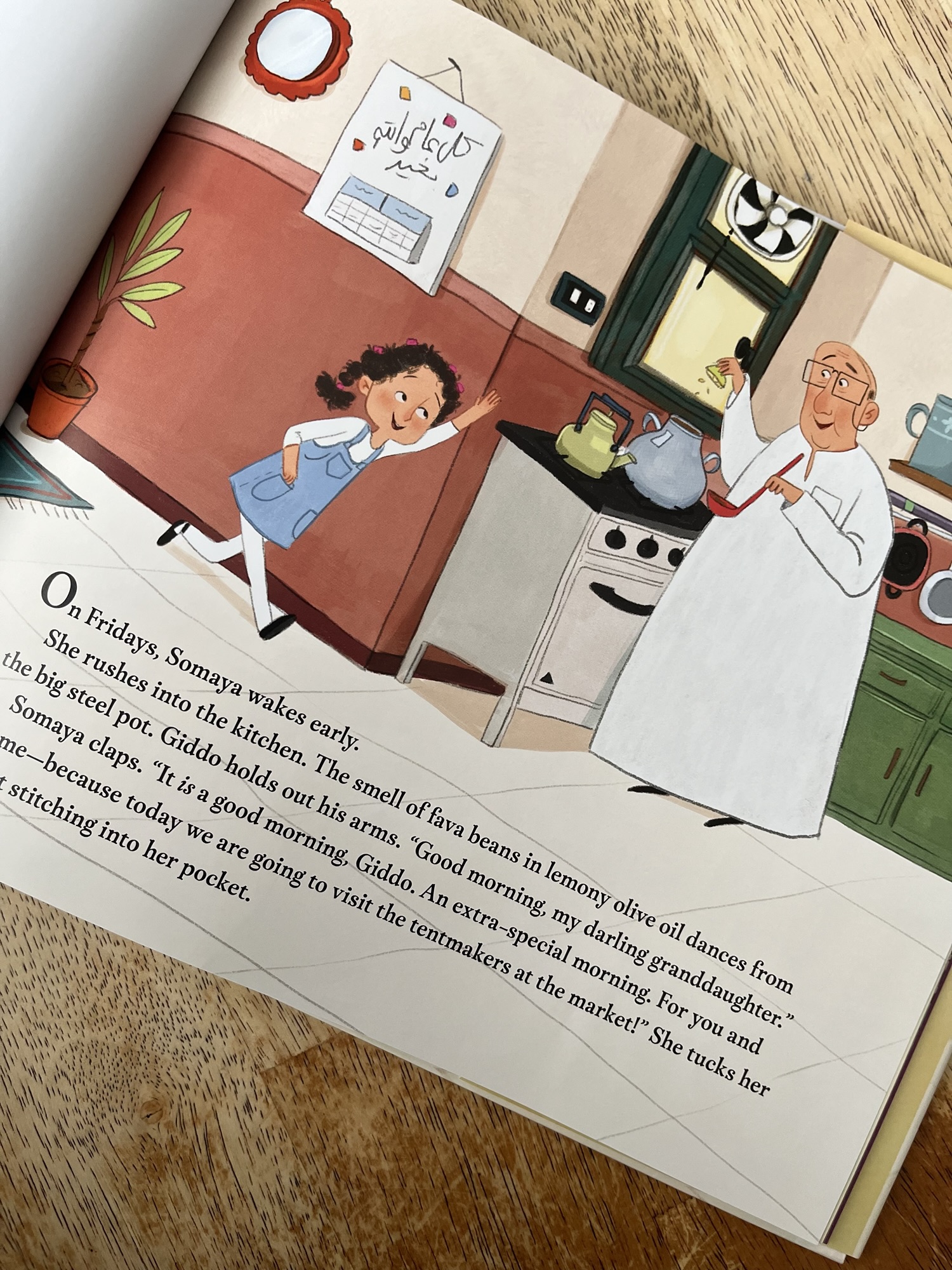
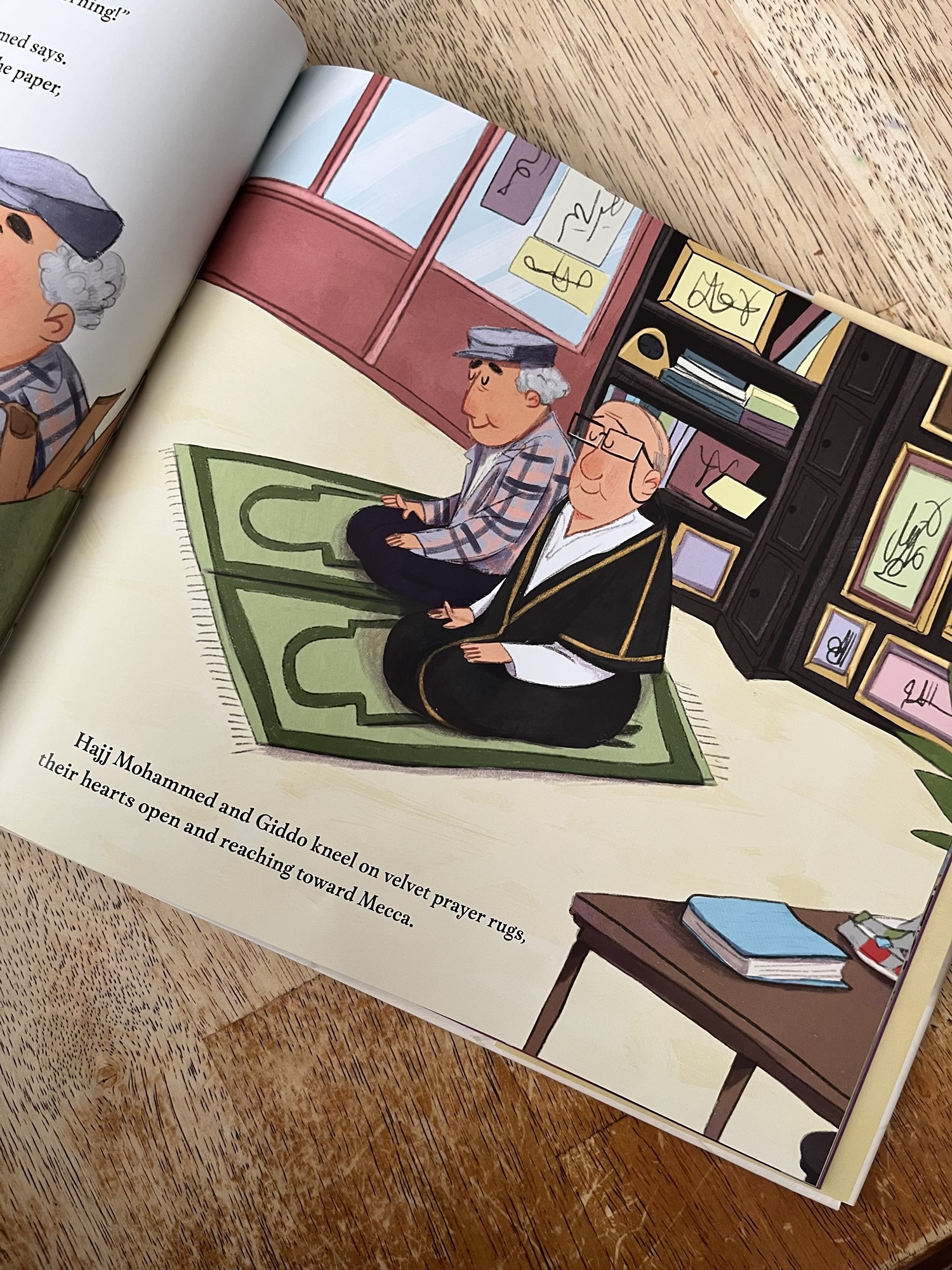
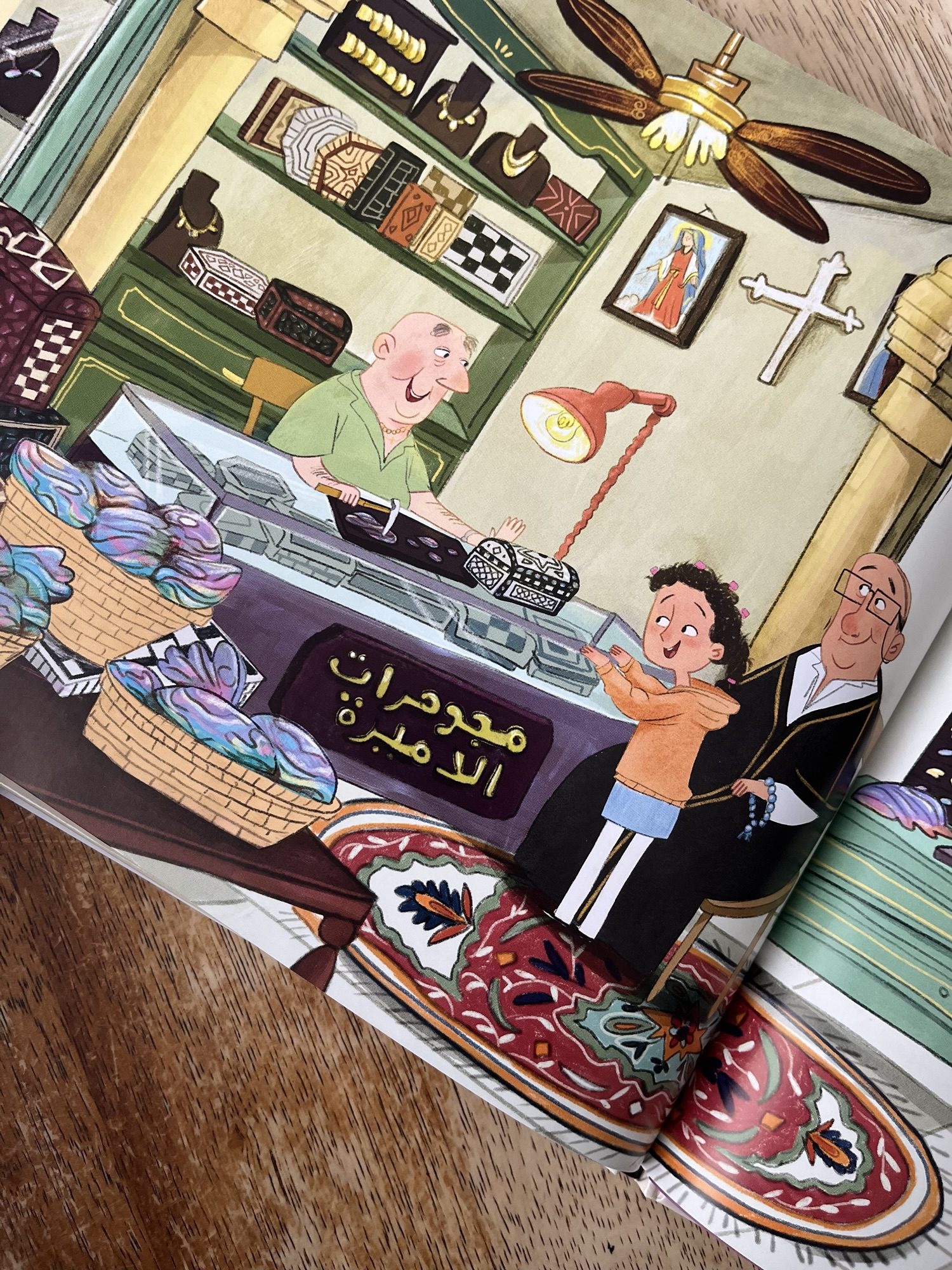
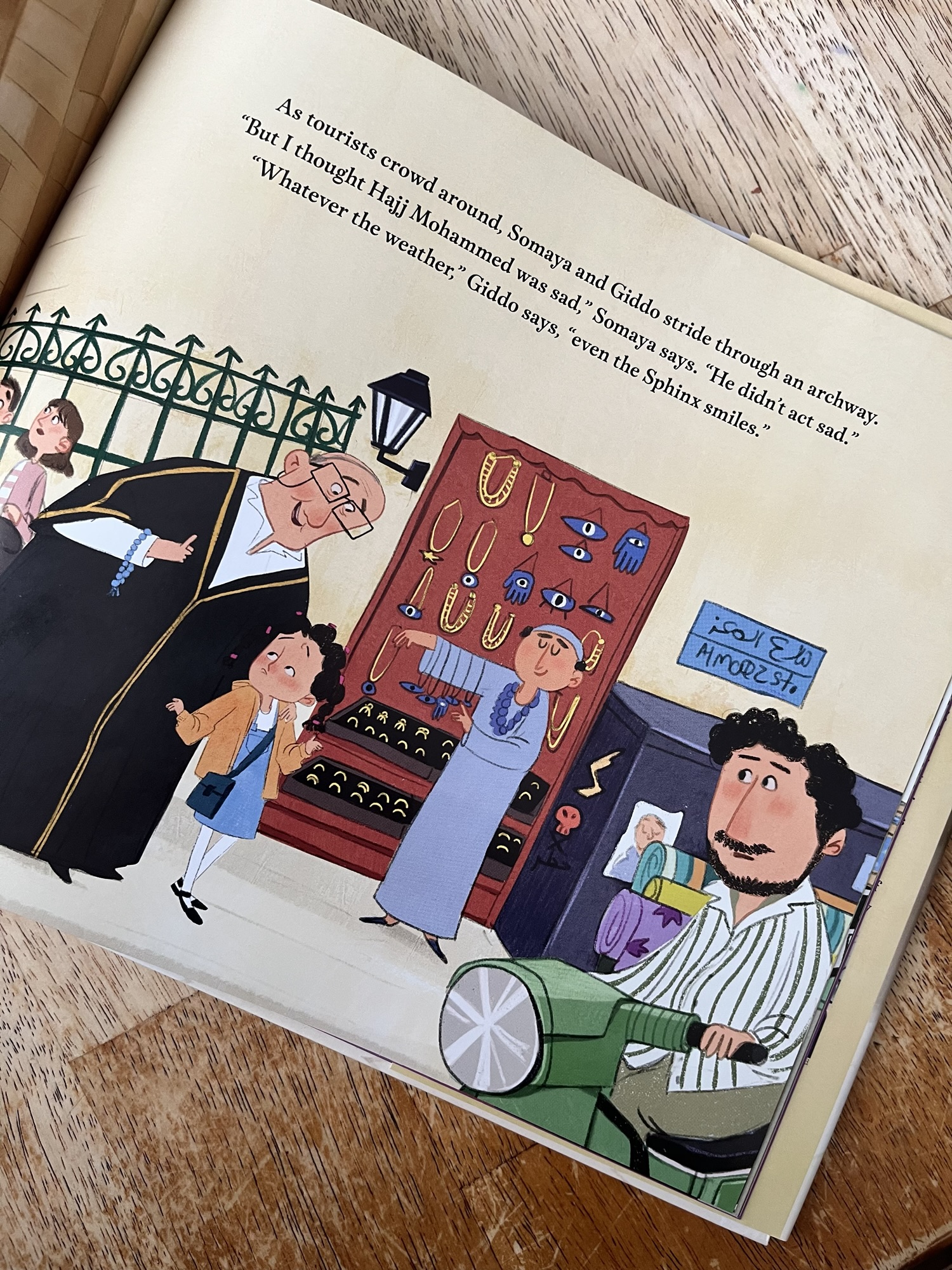
The book starts with Somaya rushing into the kitchen to great her Giddo and get to the tentmakers with him. Her grandfather though is not in any real hurry. They head in to the old market, taking in the sights an sounds and then head in to Hajj Mohammed’s shop. He has been sad since his son moved, and after he encourages her to write, and he and Giddo pray (not sure why Somaya does not join them), they are back in the market heading toward the tentmakers. But first they wave to Ismail on his bike, and then stop in “for only one minute” to have tea with Ostaz Gergis and Mariam and see their abalone inlays.
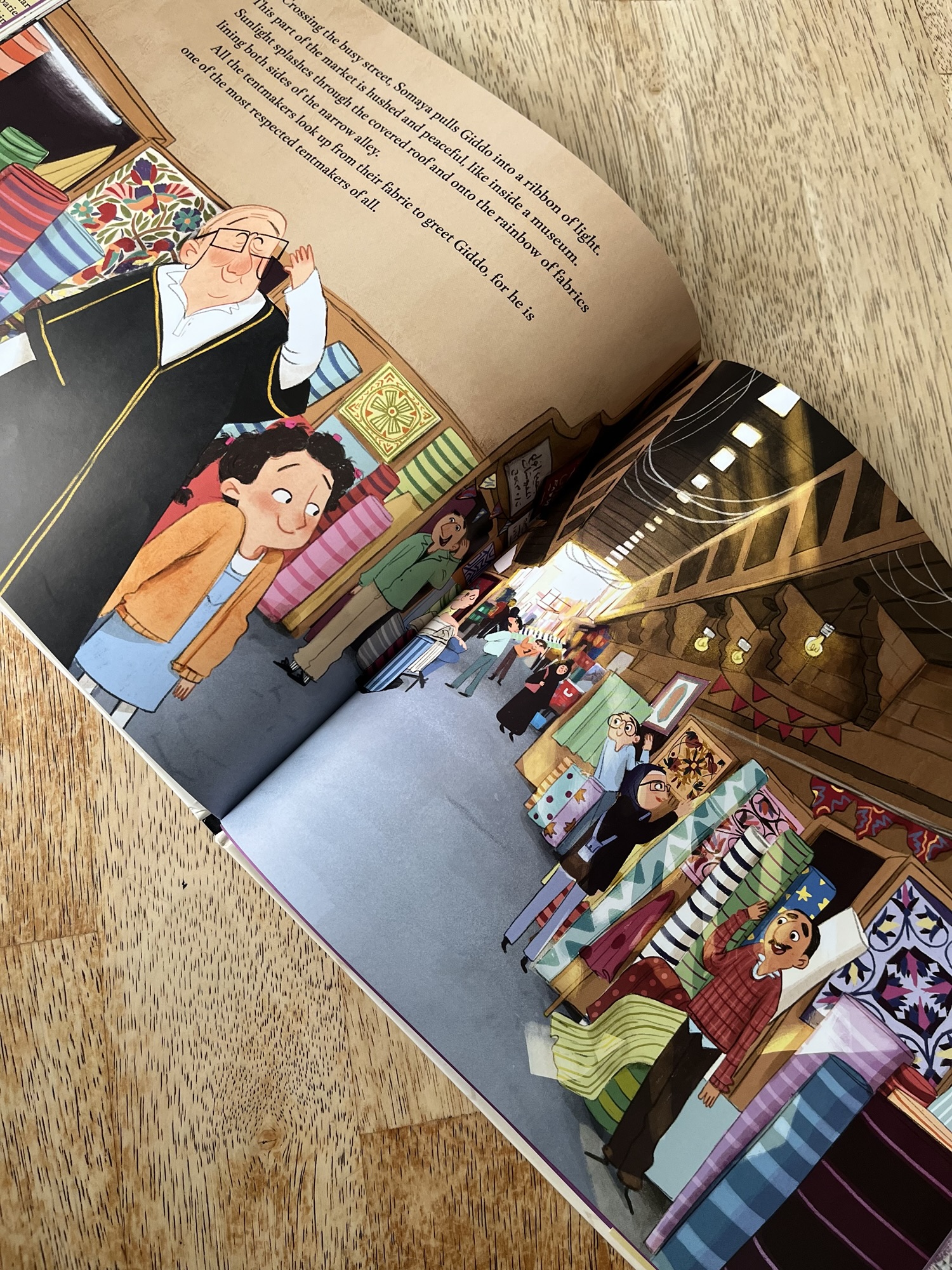
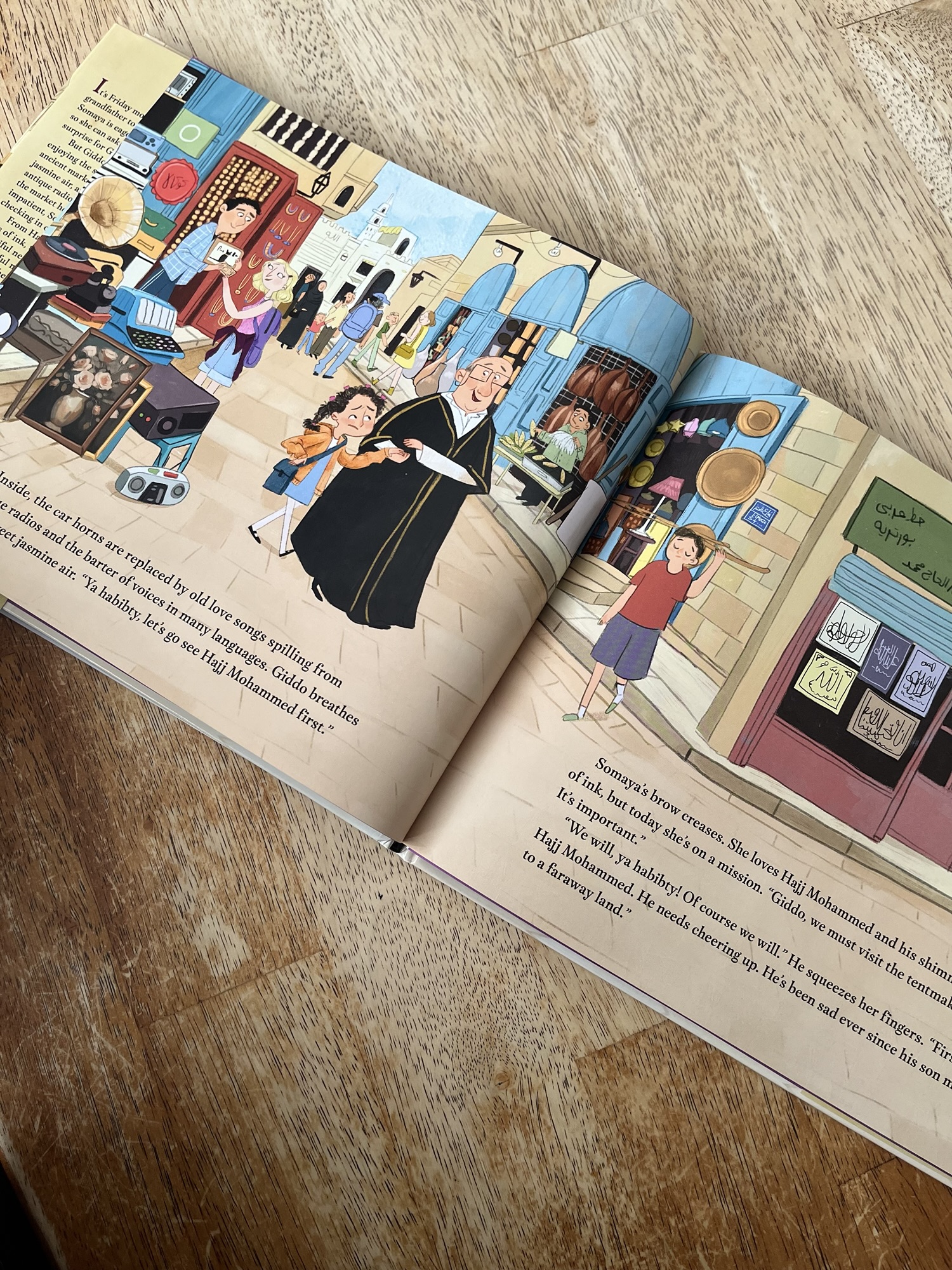
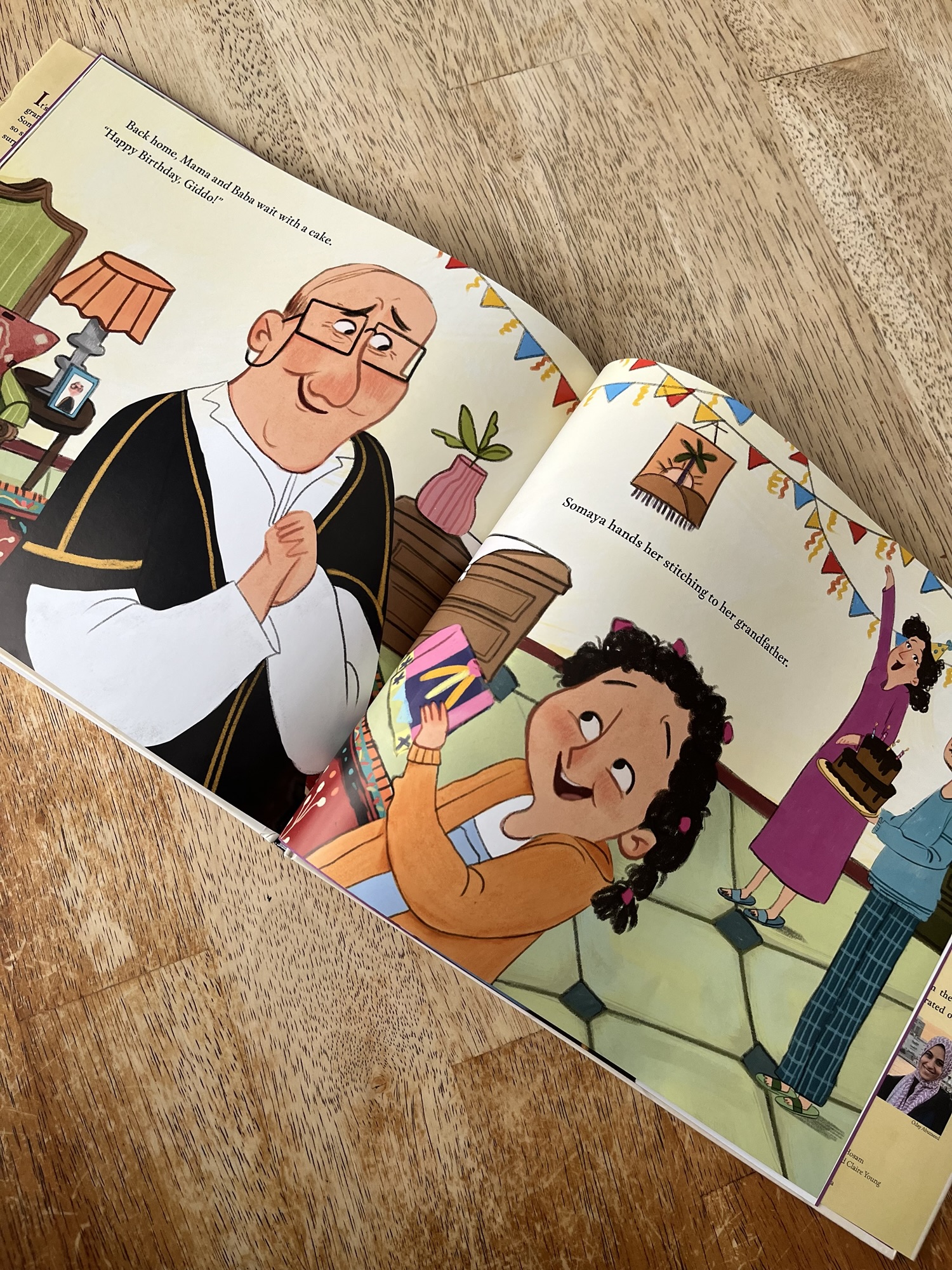
When they finally reach the tentmakers in the market, it is revealed that Giddo is a most respected tentmaker, and when someone asks him a question, Somaya uses the distraction to get help with a final knot on a piece she has been working on. The pair head home and are greeted with Mama and Baba holding a cake and wishing Giddo a happy birthday. Somaya gifts her piece to her grandfather and proclaims that she too is now a tentmaker.
The story is sweet, the illustrations adorable, it just needed a lit more polishing, some tweaking to get the Islam right, and more fleshing out of the ending, so that it felt satisfying and not rushed.