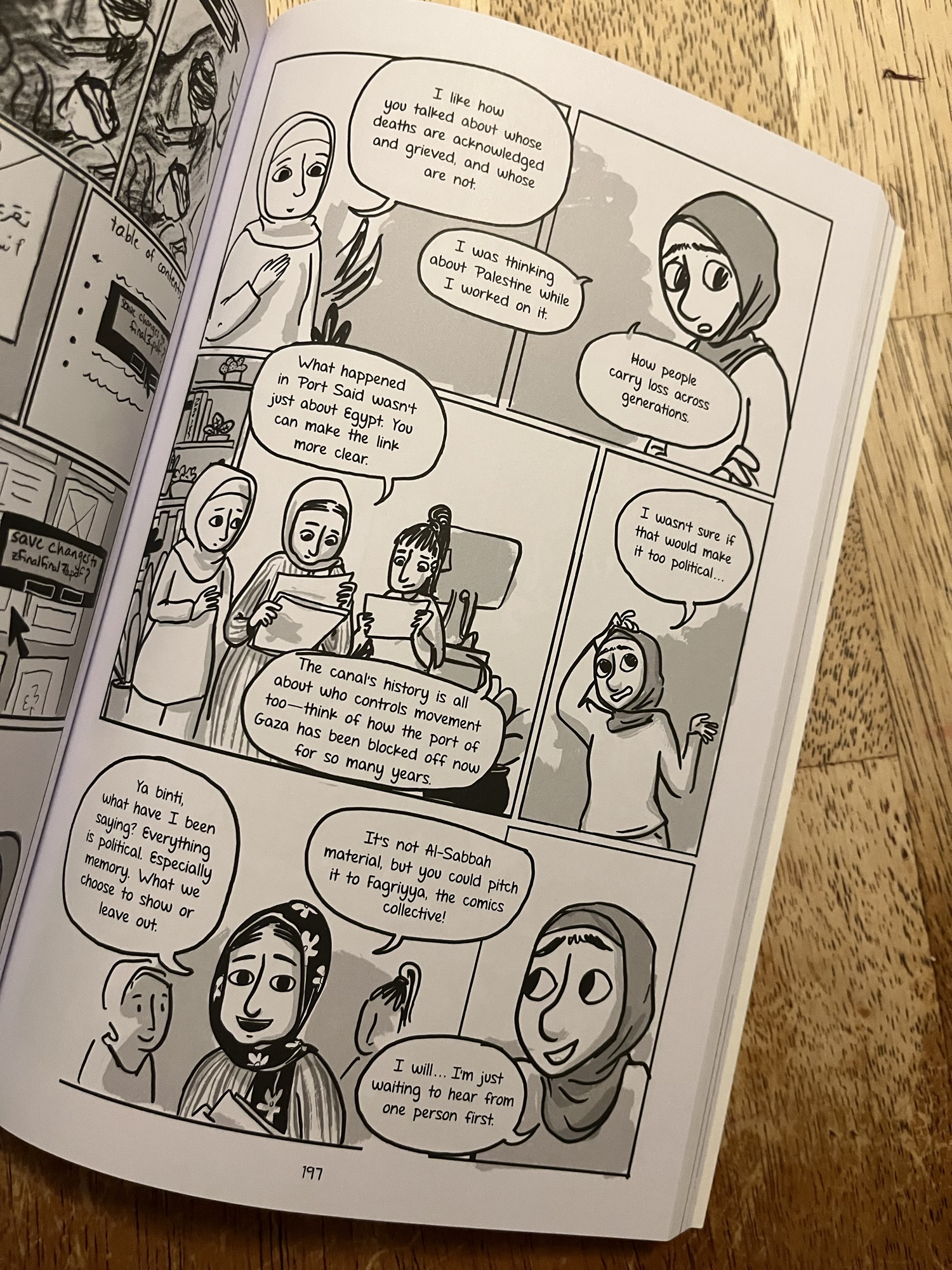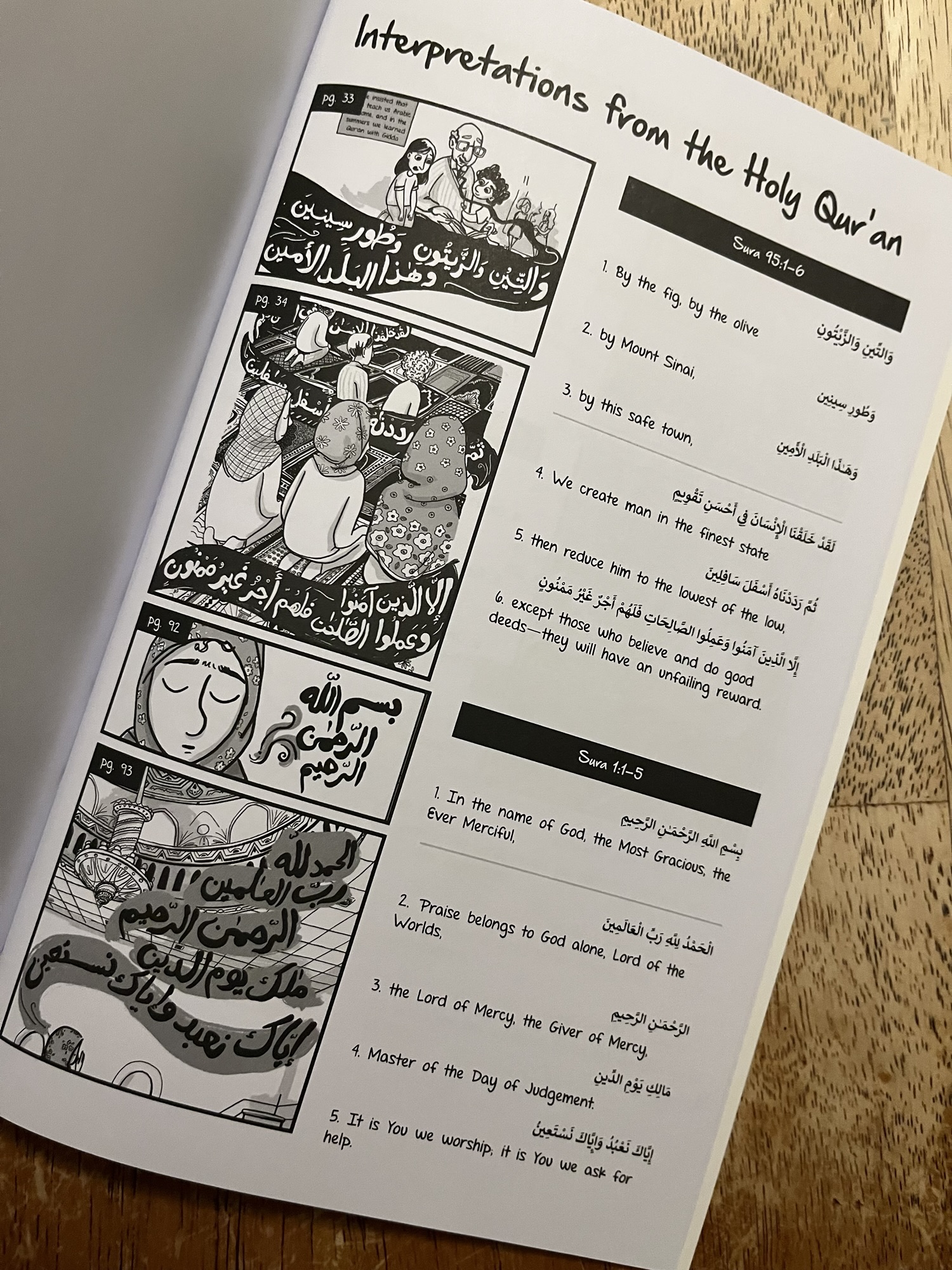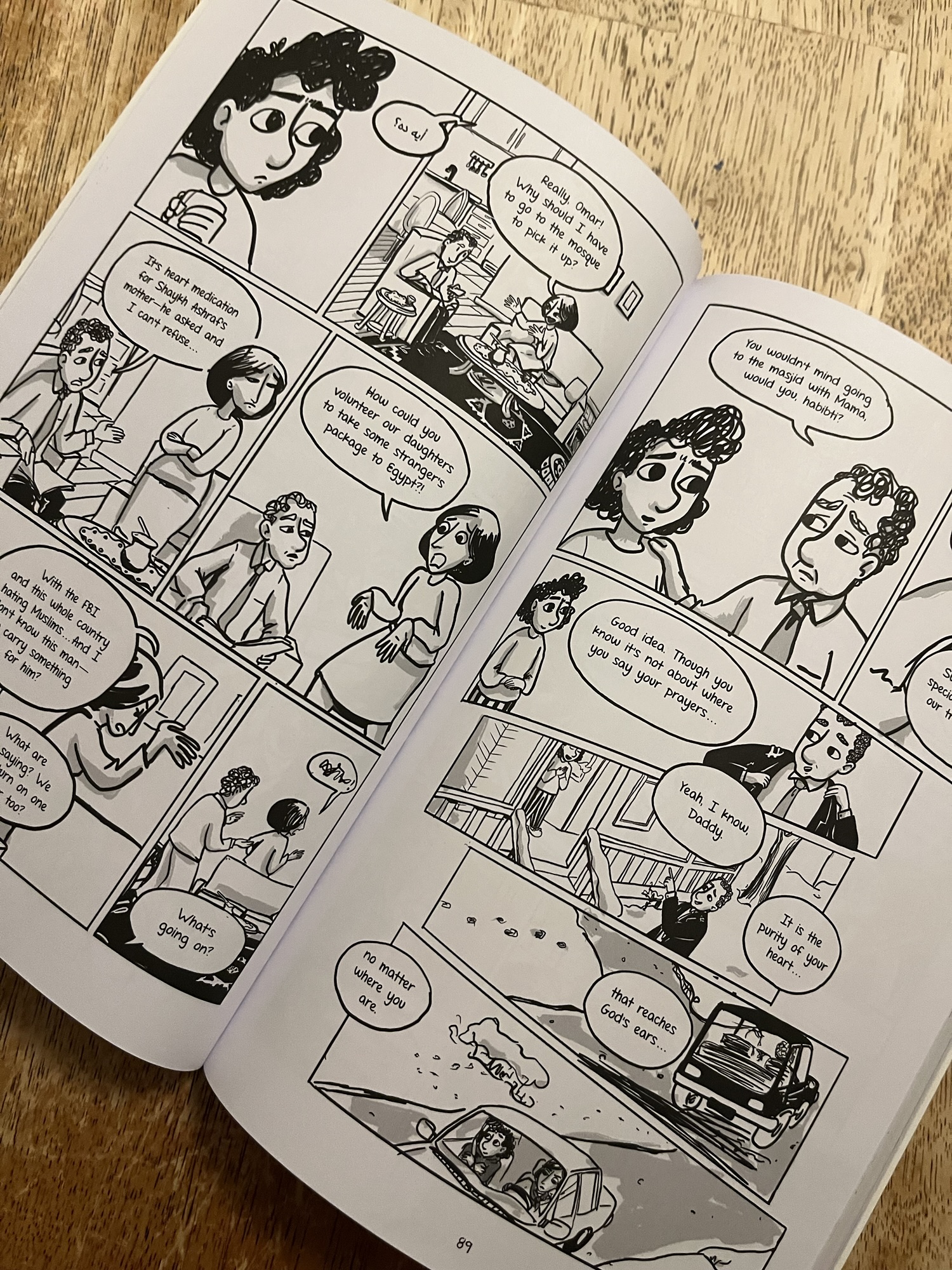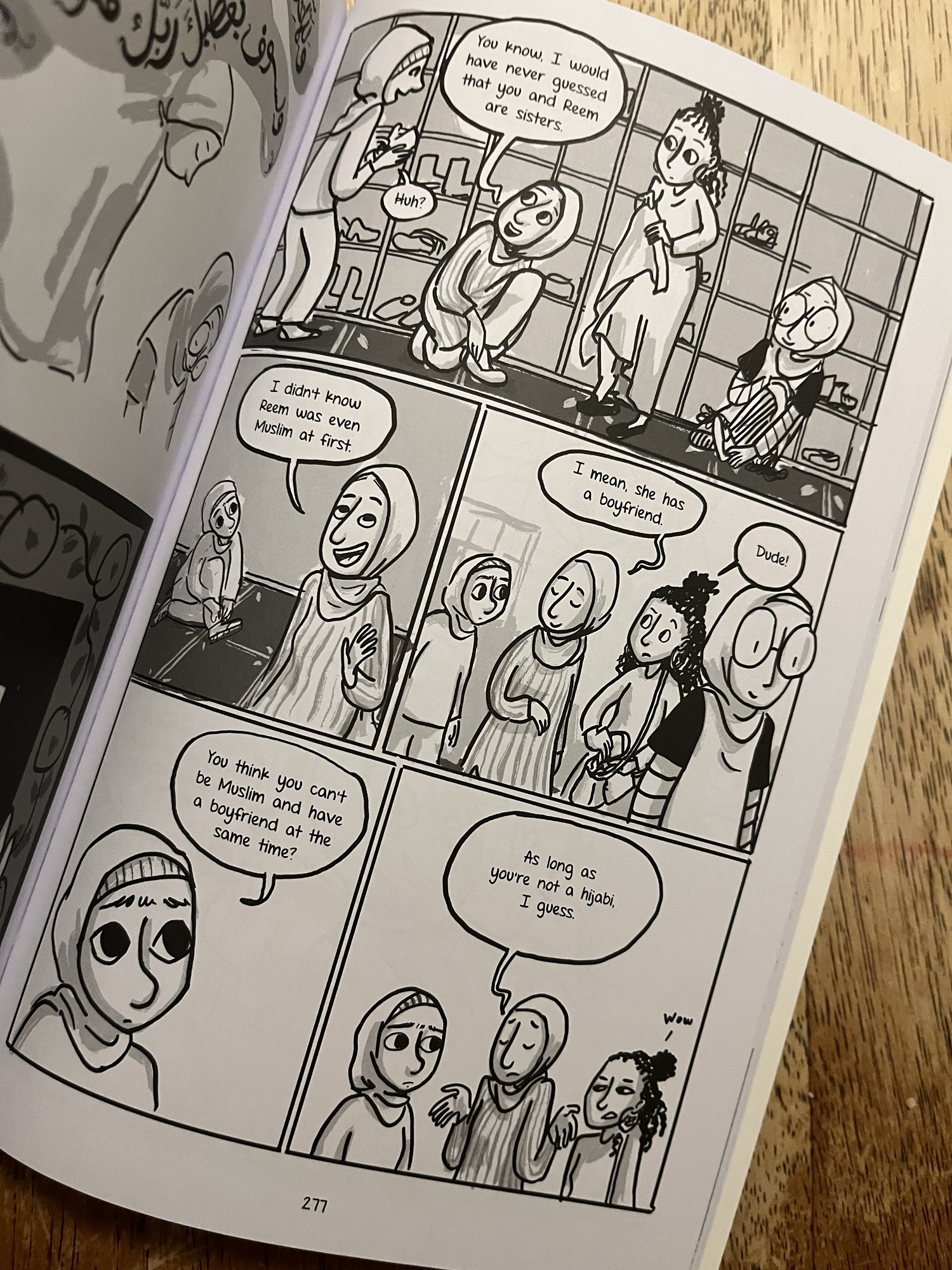

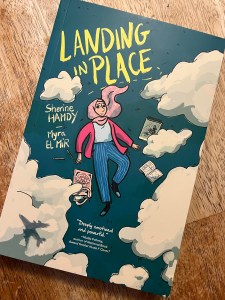
Landing in Place by Sherine Hamdy illustrated by Myra El Mir
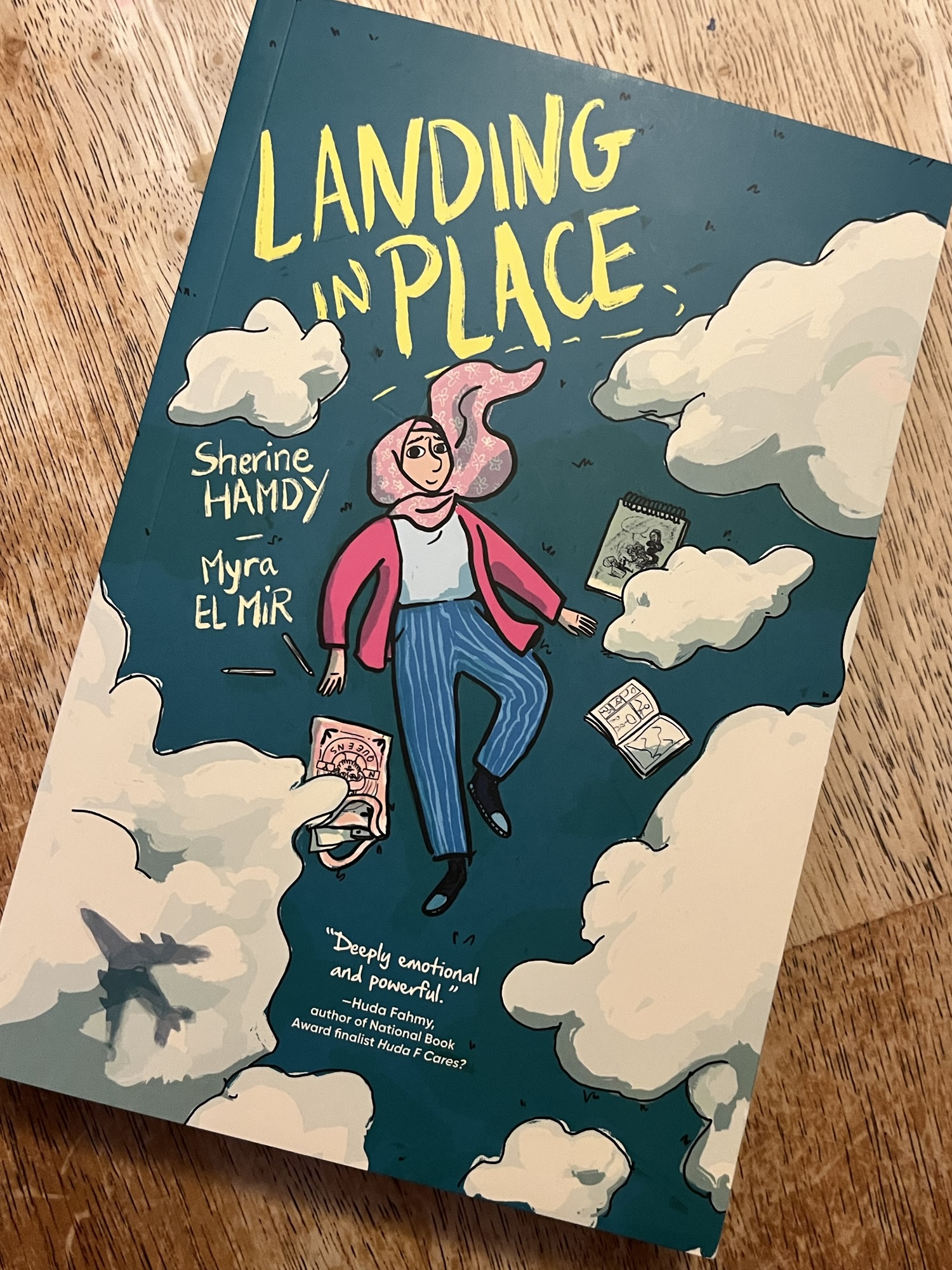
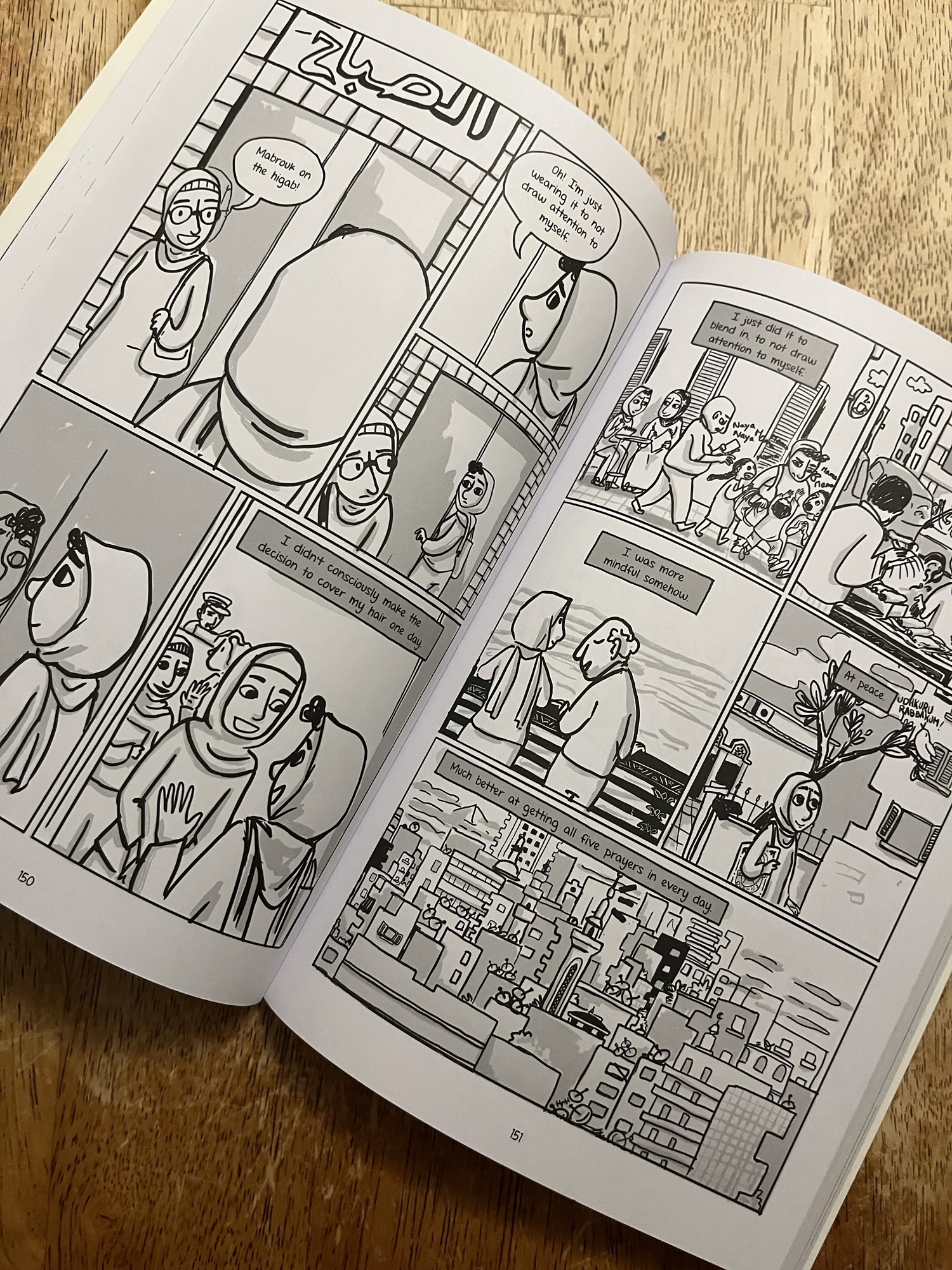
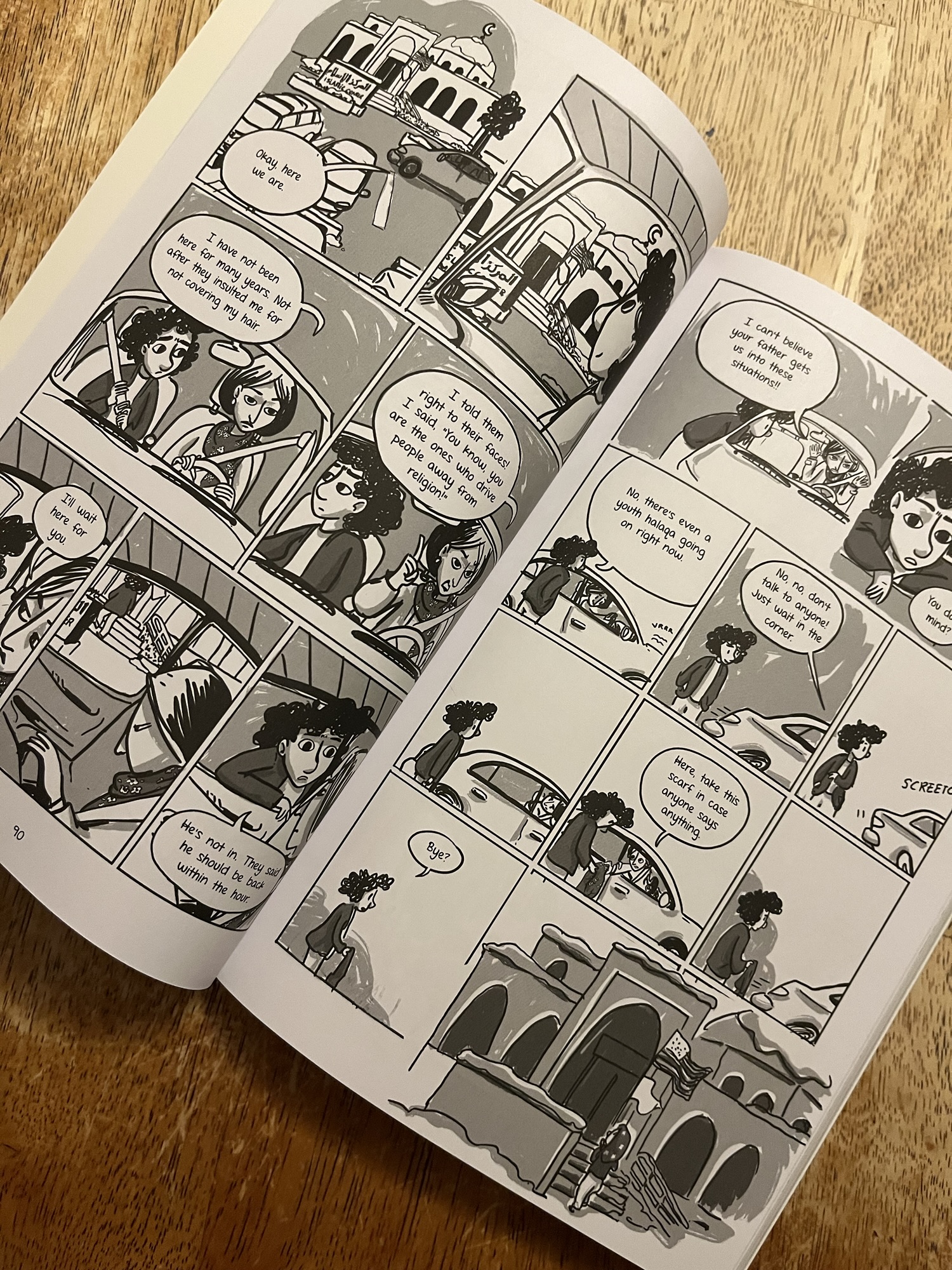
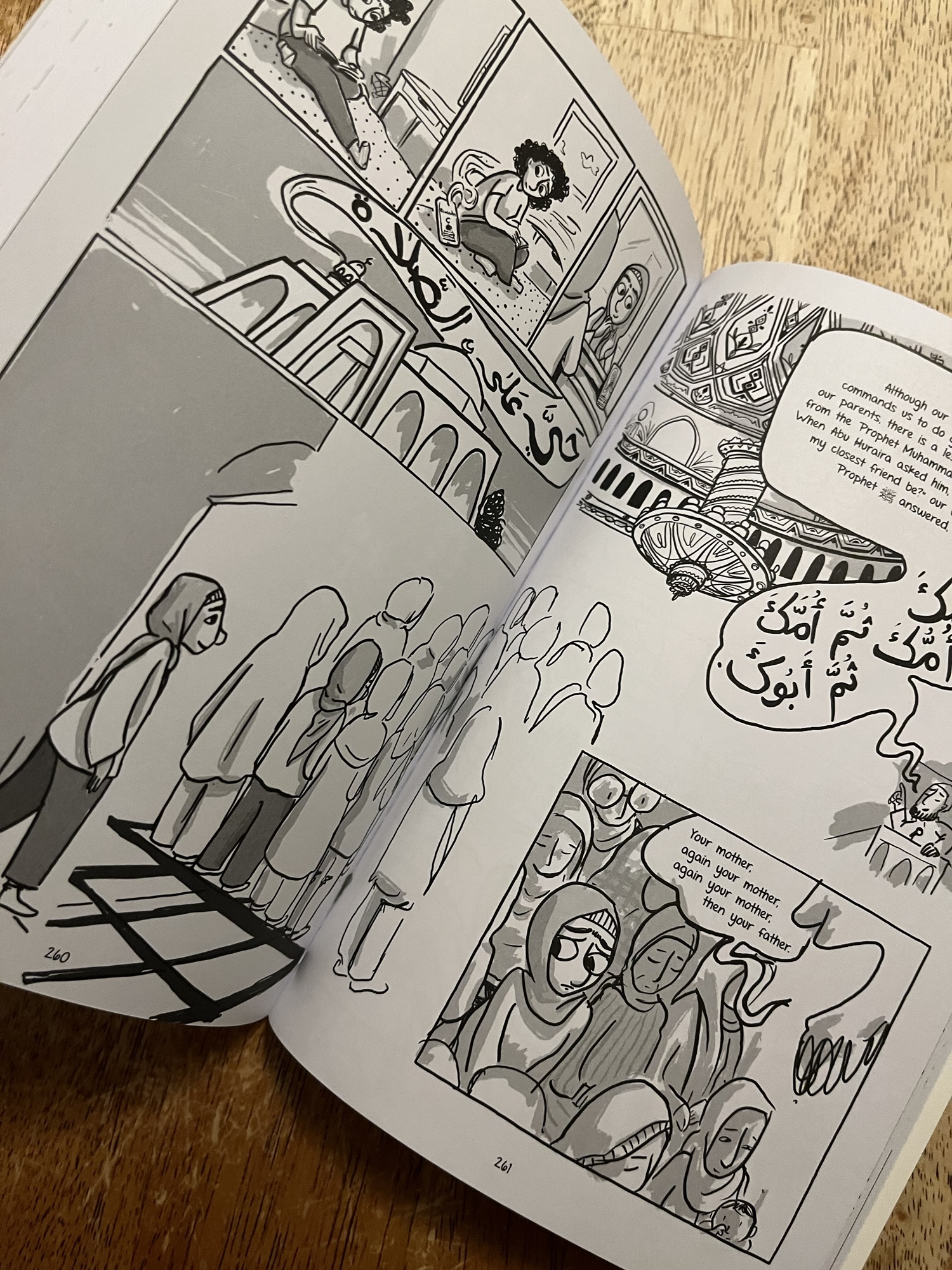
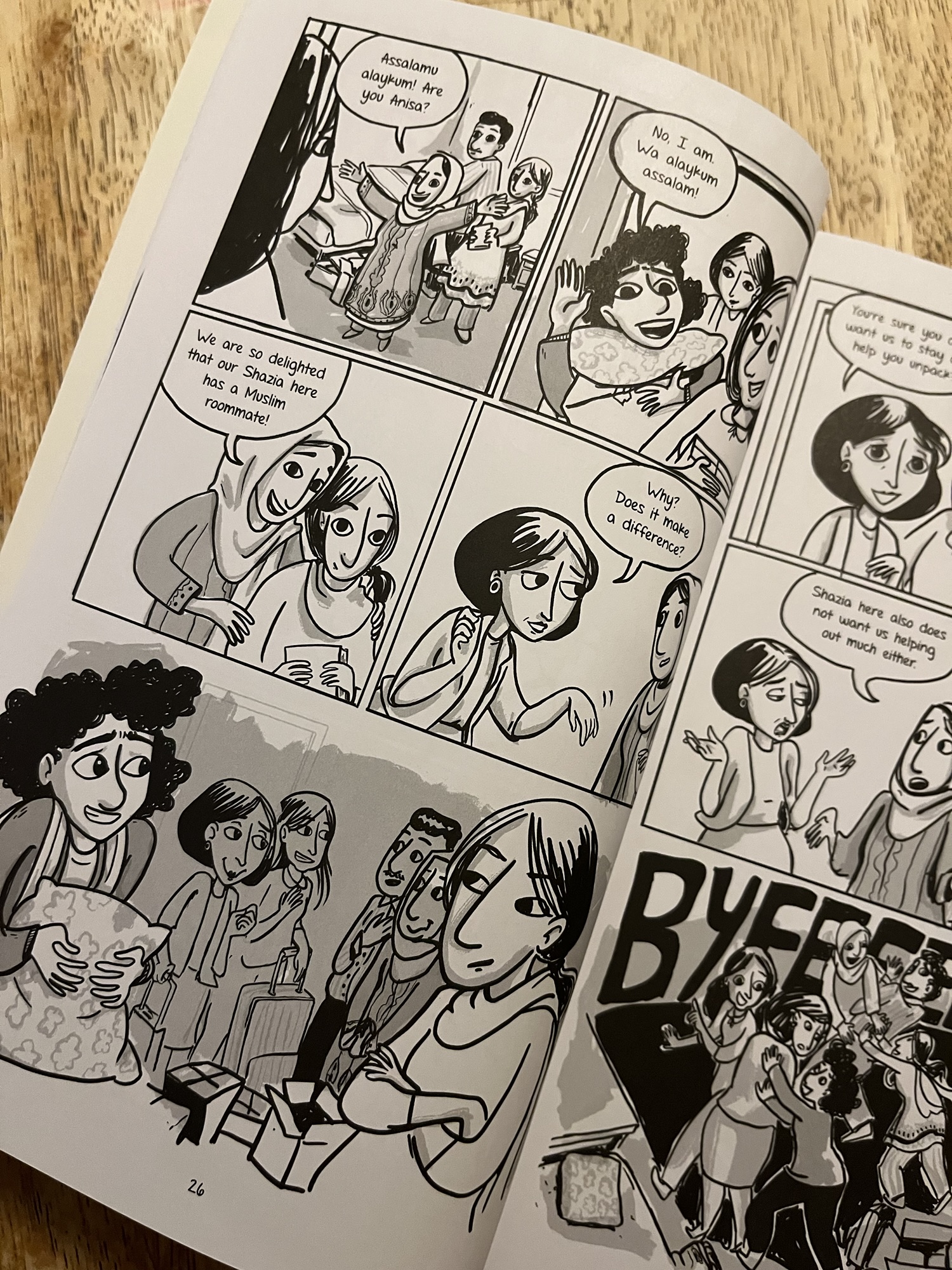
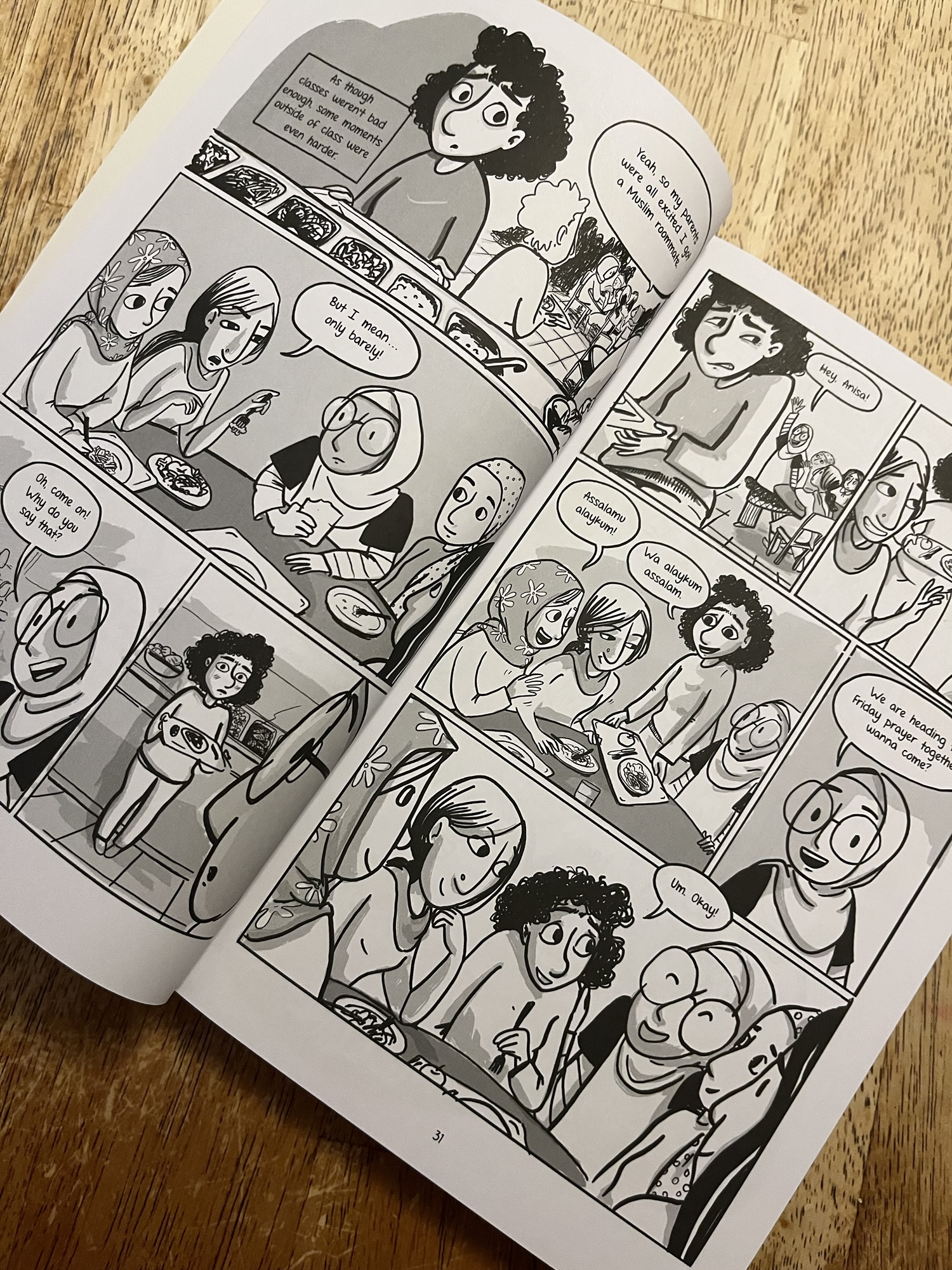
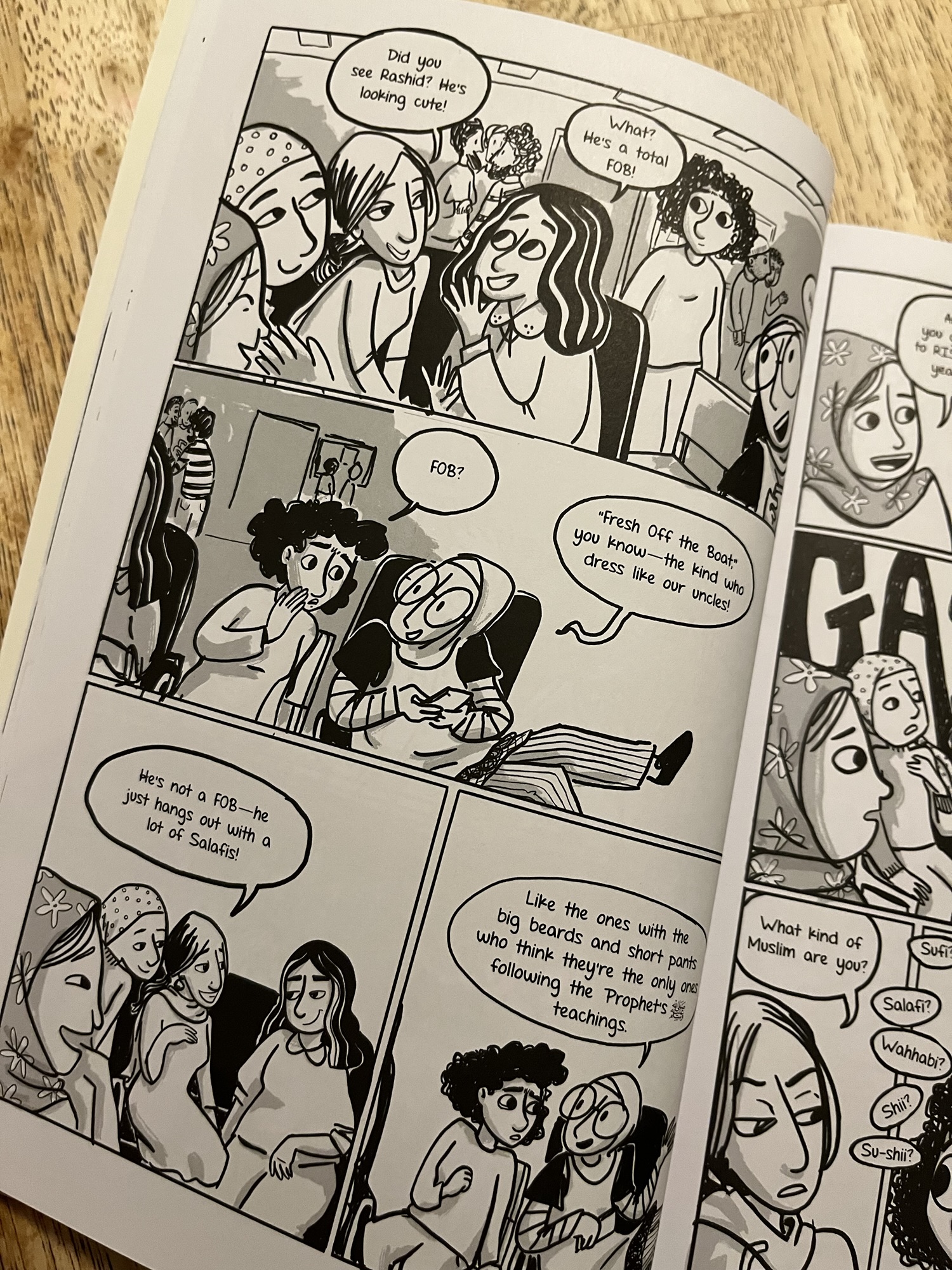
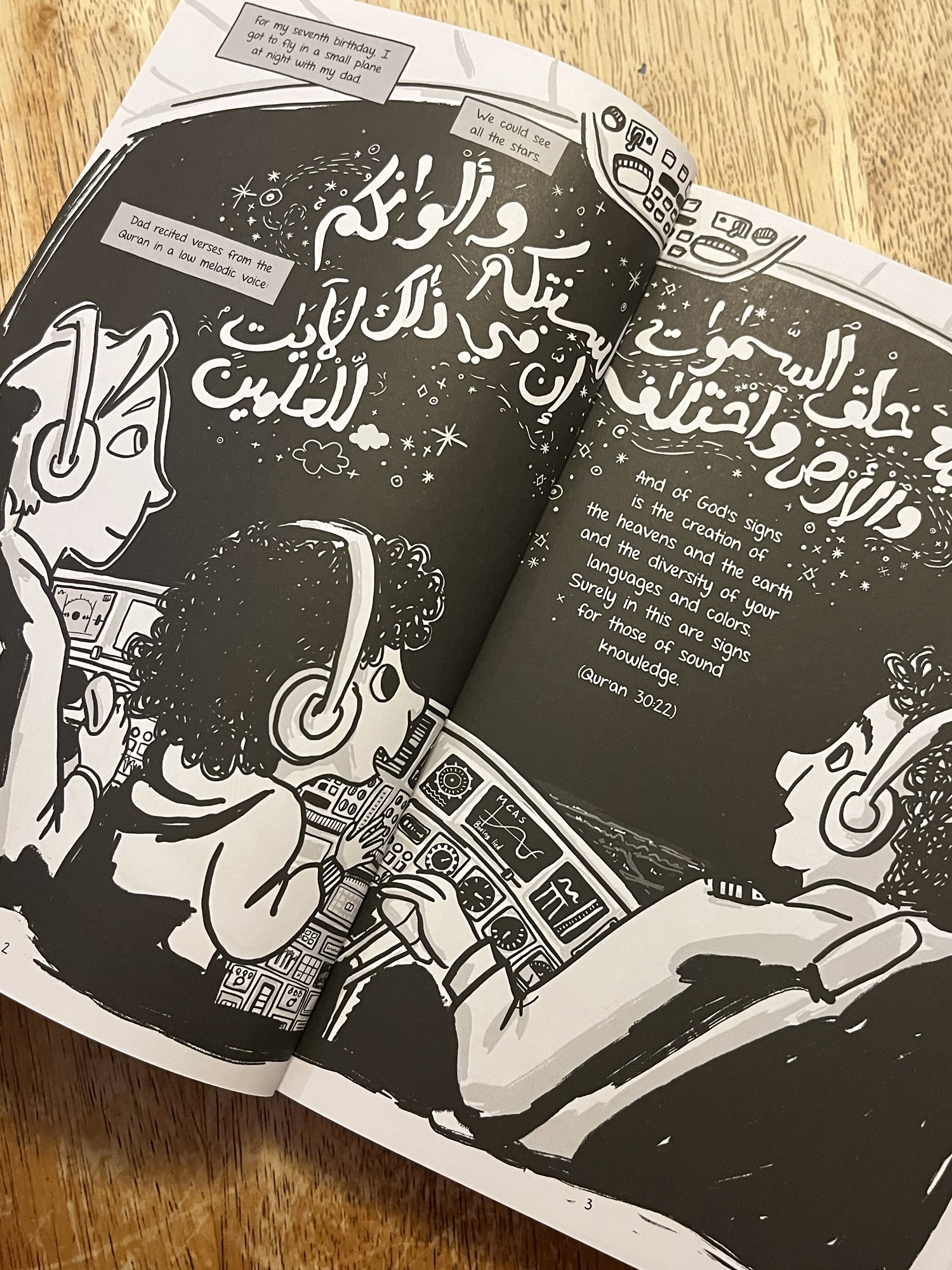
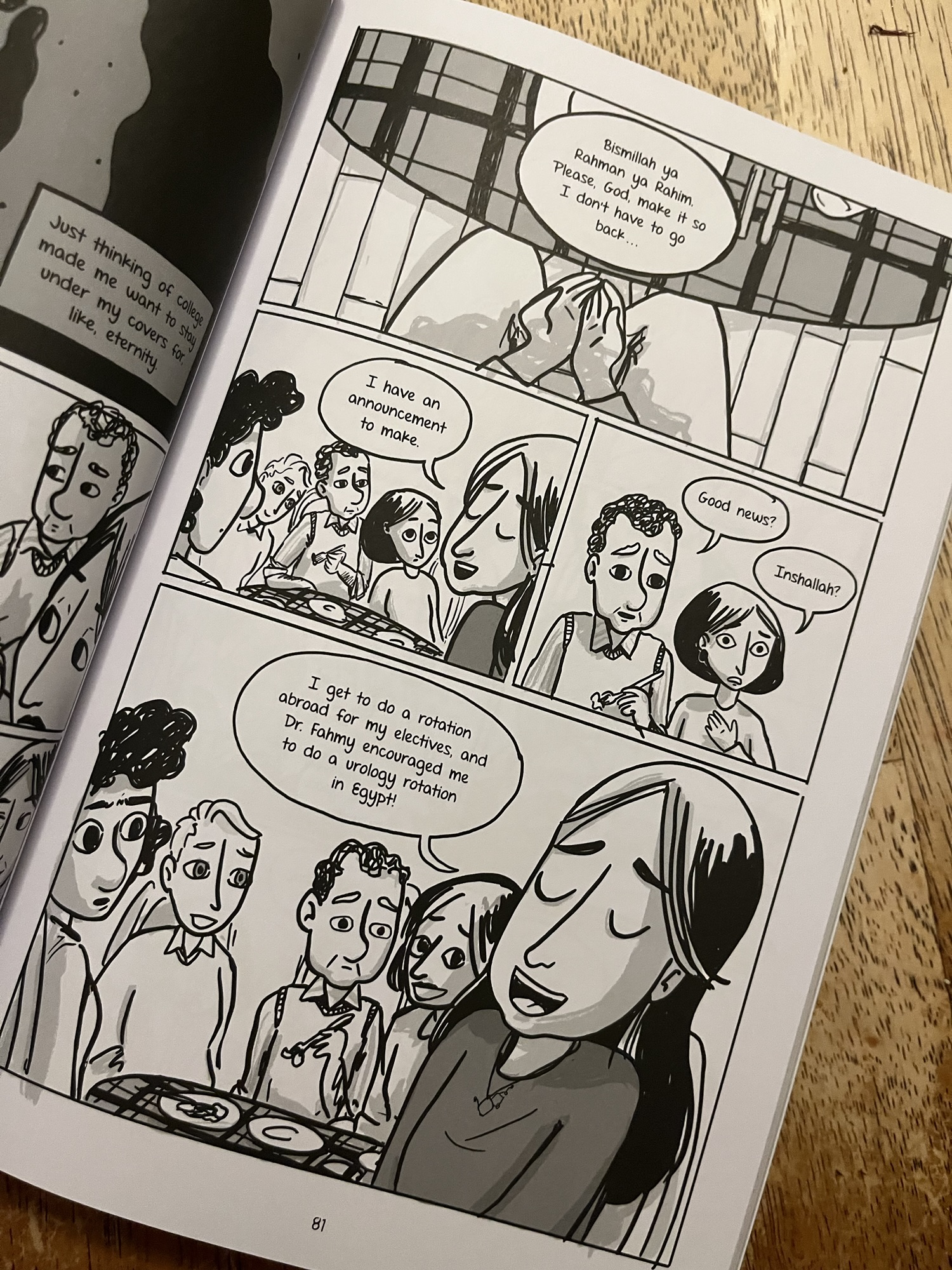
I think first and foremost I want to stress that this is a mature YA read. The majority of the book takes place after the protagonist has graduated high school, it involves a toxic mother who smokes, politics, romantic relationships, generational trauma, death, commentary on Islamic practices, relationships with opposite genders including when they are LGBTQ+, lying, and some profanity. YA is classified as 12 and up, which given the graphic novel format, and the plot of her coming of age, I entered the book viewing it from an Islamic school librarian lens of handing or shelving the book for middle school and up, and thus it is not appropriate in my opinion. If you read it from a more adult lens, please share your impressions, as the book has a TON of Islam, and I would love to discuss. It has Quranic ayats, it has Hadith, it has a girl fighting her family to wear hijab, it has incredible points, unfortunately I just couldn’t quite support how the points were connected. If the book were a memoir, or I met someone and this was their lived experience, I wouldn’t find it concerning, it would be one person’s journey and them simply doing the best they can, Allahualam. BUT, somehow the tone seems to extend beyond just Anisa living her life and growing as a result, and reads more of the author opining that this is how Islam is or this is how Muslims should or should do things, or view things, or not feel constrained by things, and by its end I just couldn’t support the character’s choices and the justifying framing, perhaps because it is fiction.


SYNOPSIS:
Because I want to spend more time on the Islam and why I struggled with how it was connected, I’m simply going to copy and paste the publisher provided summary of the book:
A poignant coming-of-age graphic novel about an Egyptian American girl grappling with college, her family, and the political realities of her wider world.
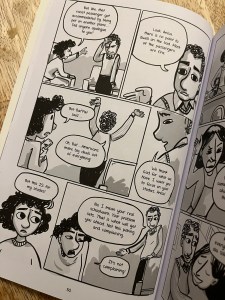
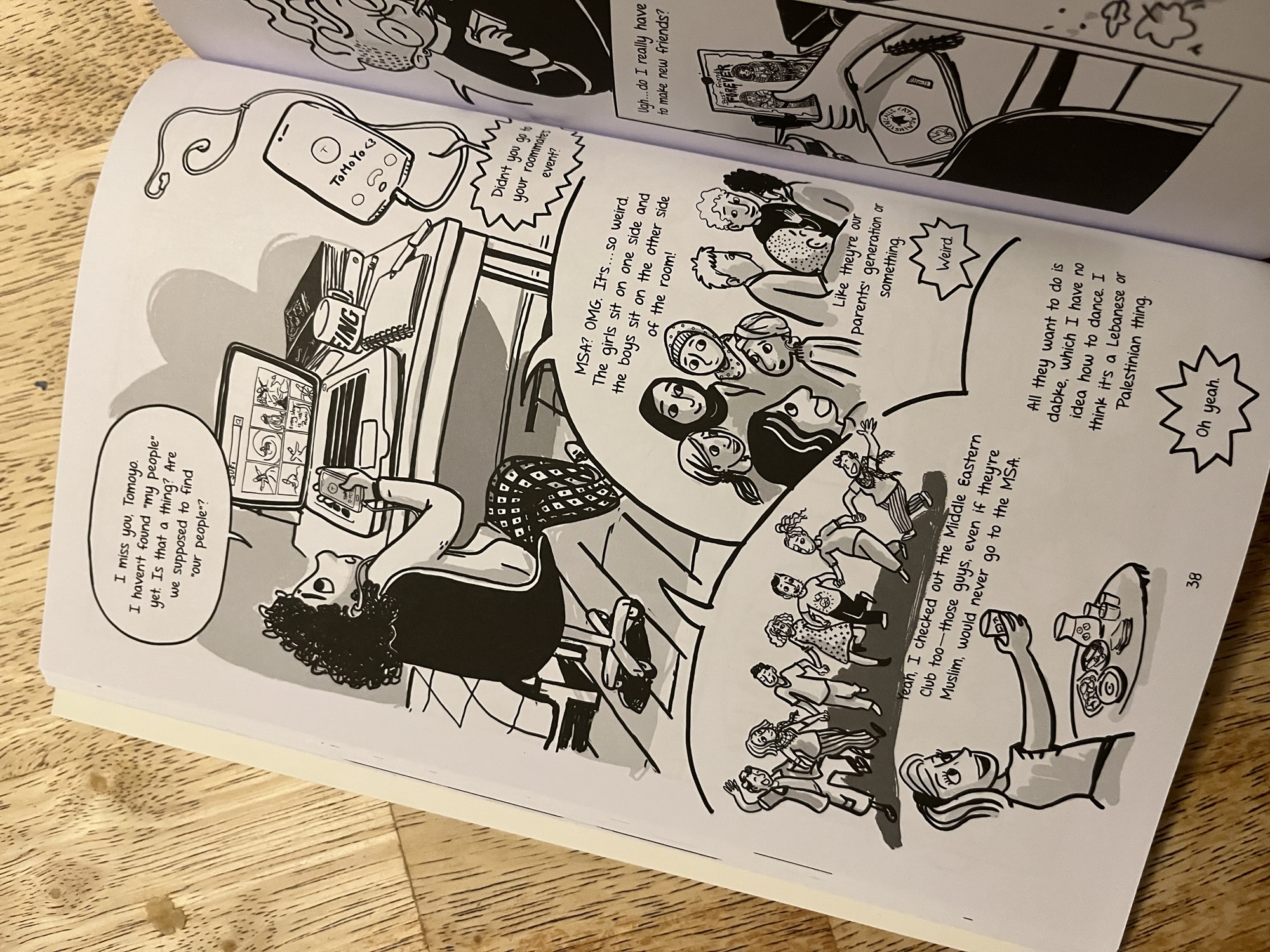
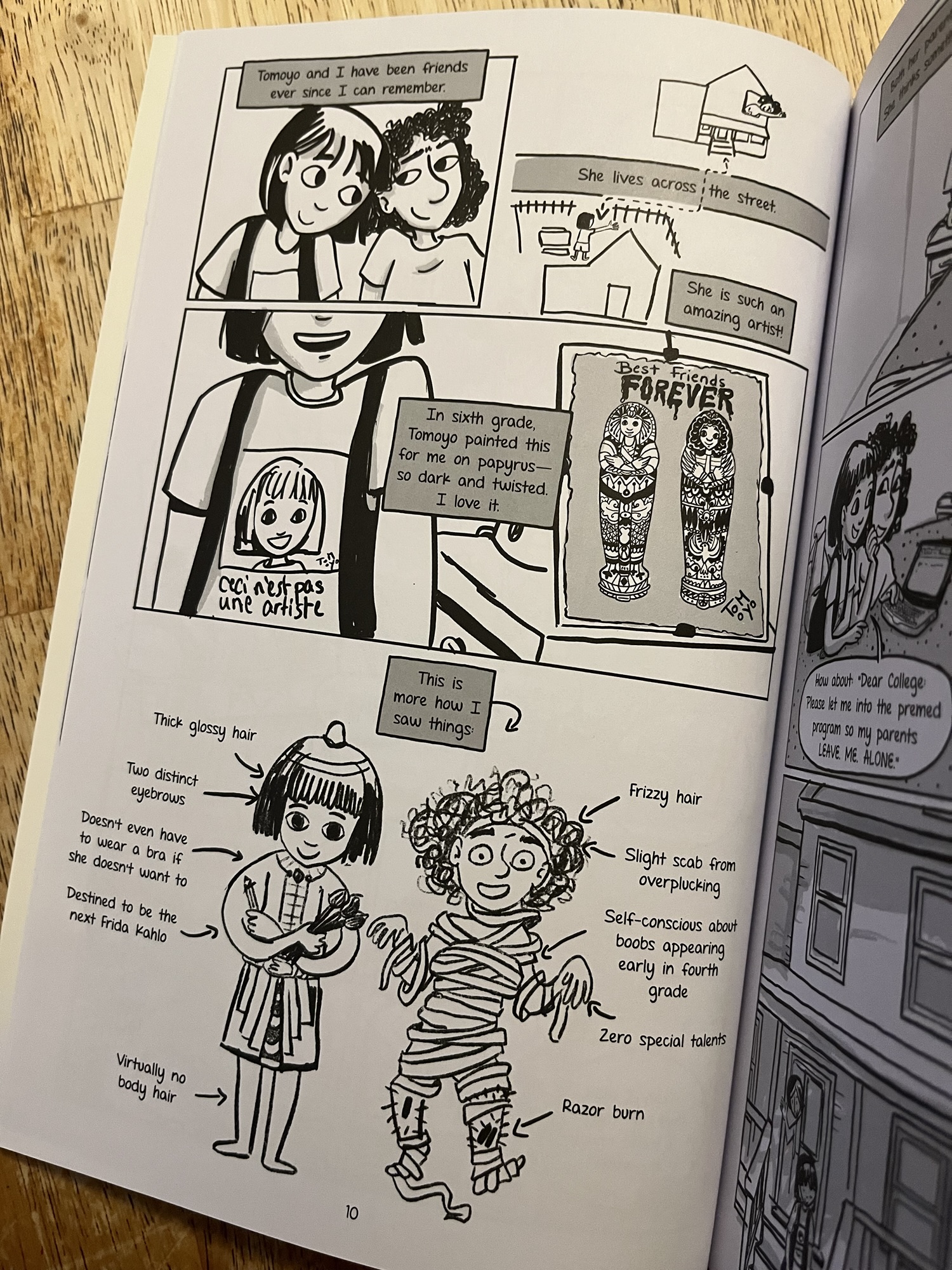
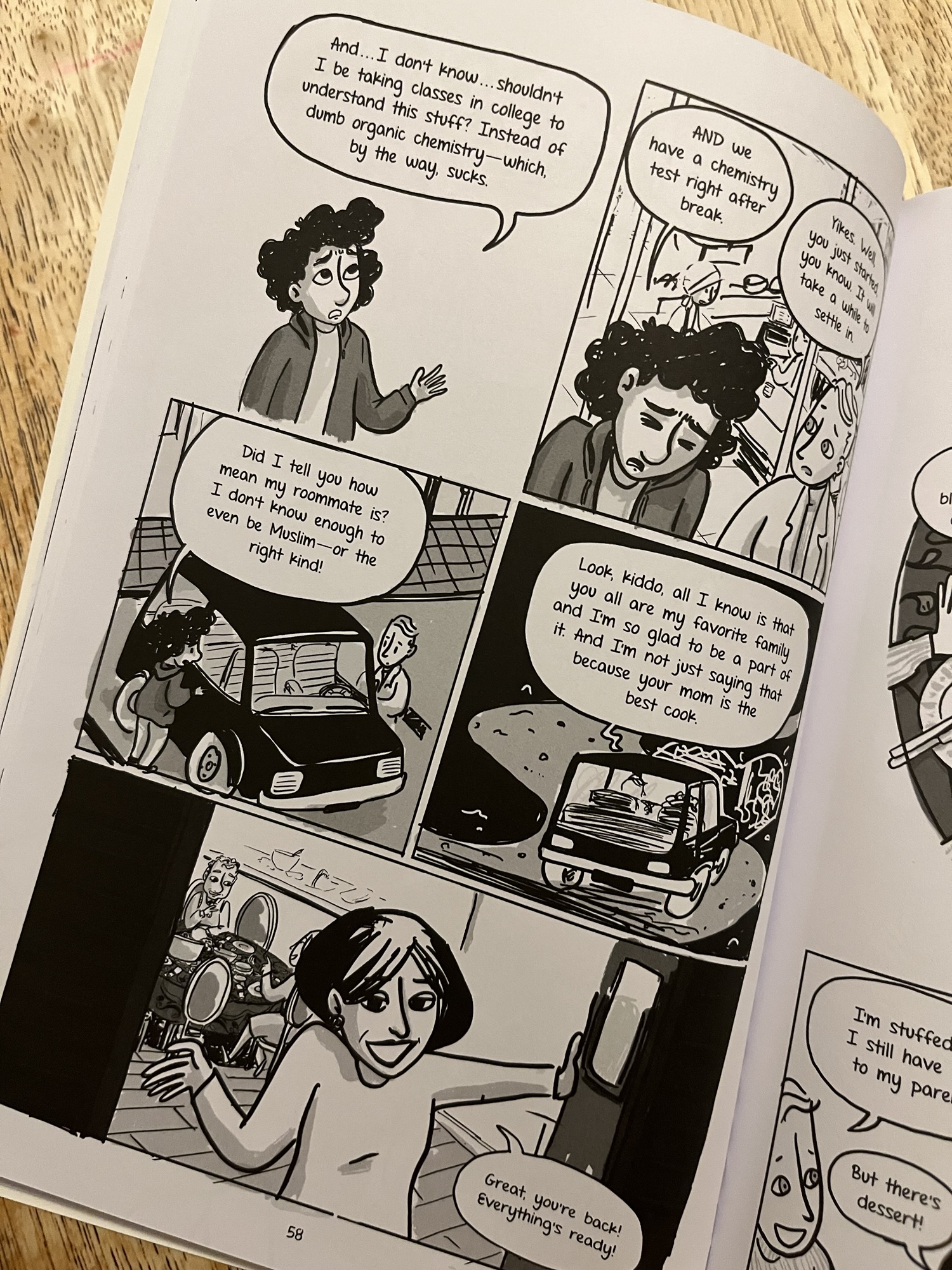
Anisa is following in her sister Reem’s footsteps: She’s a freshman at her sister’s alma mater, she’s on the same premed track, and she’s inherited Reem’s old hotpot, mini-fridge, and textbooks. Even though Anisa would prefer to study art, her parents discount that as a valid career choice. The path laid out before her starts to crumble as Anisa feels she doesn’t belong—either in her organic chemistry class or among the other Muslim students on campus.
When Anisa fails her first semester, she begs her parents to let her take time off to visit Cairo and stay with her beloved grandfather. Finally free to have her own experiences, Anisa begins a journey of self-discovery and, as she bumps up against familial, societal, and religious expectations, she starts to develop her own artistic voice. When Anisa returns to the United States, many of these expectations shift, but she learns to draw on the love of friends and family—including those she’s often at odds with—in order to stay true to herself.


WHY I LIKE IT:
I like that the book feels very real, that the character arc and growth, challenges and setbacks, struggles and character’s voice, radiate authenticity and seeks to shed light on what not only shapes us and our view of the world, but understanding the politics, culture, religious, and lived experiences of what our parents also have been shaped by in a manner that is neither overly naive or harsh.
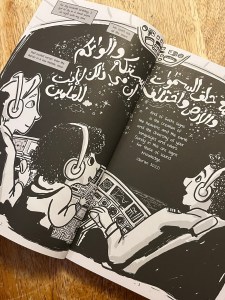
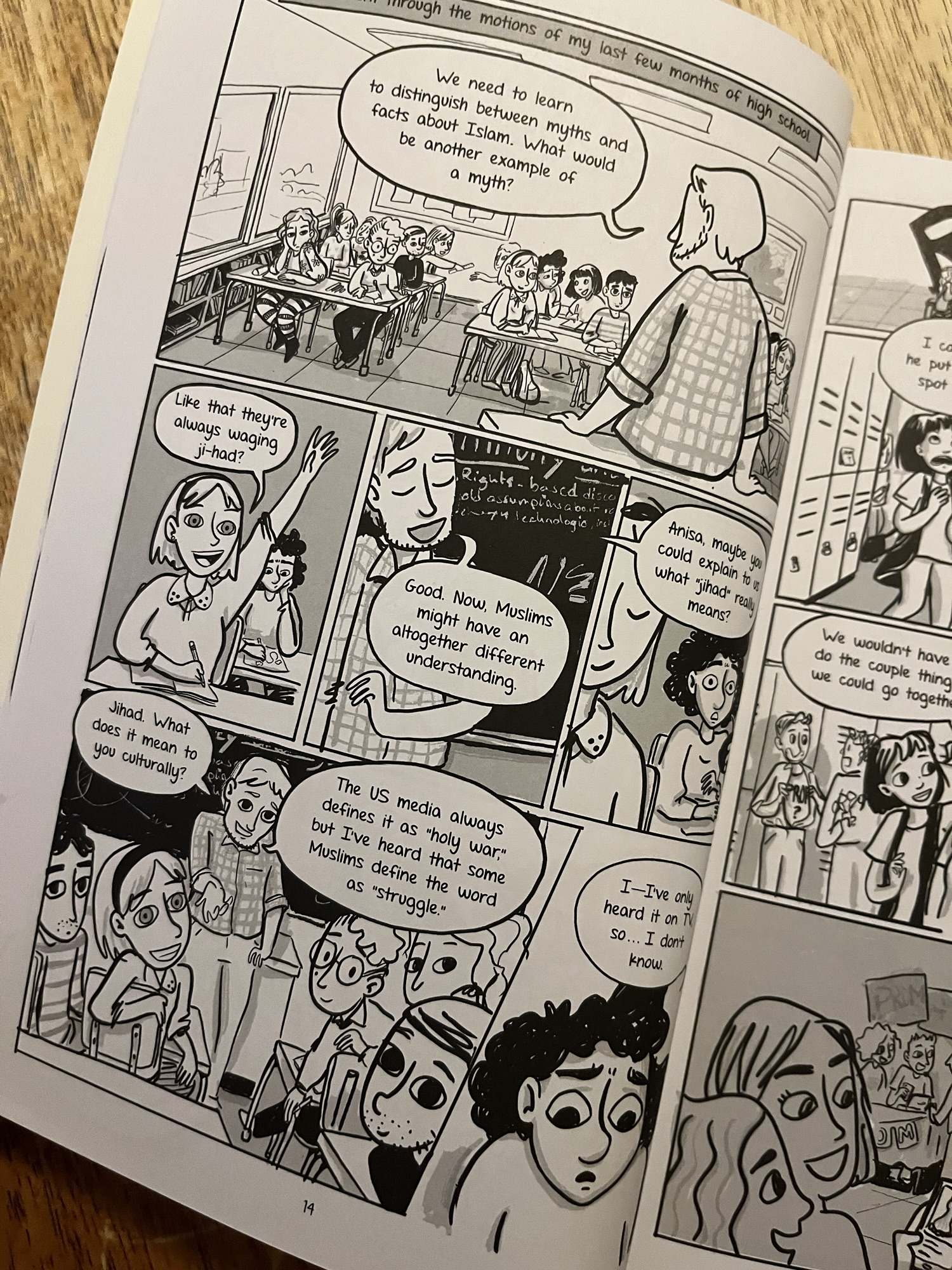
I appreciated the political commentary, the internal reflections of faith and her closeness with her grandfather in Egypt which often centers Islam. And as a work of fiction I understand in the broad sense that the book does not want to get didactic in its sharing of the deen, but it seems to want to have it both ways. It shares the Quranic Arabic in the pages with meaning of the translation in the backmatter, quotes uncited hadith and references Islamic customs, yet I feel by staying gray in how the character interpreted Islamic teachings and failing to commit to her showing her own rationale for the choices and understanding driving those choices, the book leaves holes in the plot and a lot of questions. For example, why is kissing her Sikh boyfriend considered a “mistake,” only because she wears hijab? She commits to him by getting her mom and Muslim friends on board with their relationship with the book sharing that different opinions are good according to Prophet Muhammad (saw). She starts to wear hijab and says she is doing it for the right reasons, but those reasons are never shared. She develops a relationship with Allah swt which is beautiful, but what is the messaging for the reader, with her justifying her actions in light of that relationship?
Yes, I realize that that makes me the very hypocrite the characters push back against in the book: not being able to be human and error, and struggle, and inshaAllah come back to Allah, swt, I know that, but I also know that our youth are impressionable and we want to inspire them, not give them a “pass” through a fictional story to do haram because Allah swt is forgiving. I also know that a 13 year old reading this and a 19 year old reading this will view it very differently (see opening paragraph why my mindset going in was a disservice that I struggled to overcome, and why I mentioned that this is a mature read). I also know that life, real life, is never linear and clear, and yeah people fall in love with people that are not Muslim, I’m the daughter of a convert, and my parents met in college, I get the hypocrisy, I own it, I really do.
I can’t reiterate enough how many of the points I loved about her finding herself, understanding and connecting to her deen and extended family, laughing in the relatability the book has in its commentary on Islamophobia, expectations, politics, but none-the-less, I ultimately cannot support the normalized conclusions and justifications of many of the threads.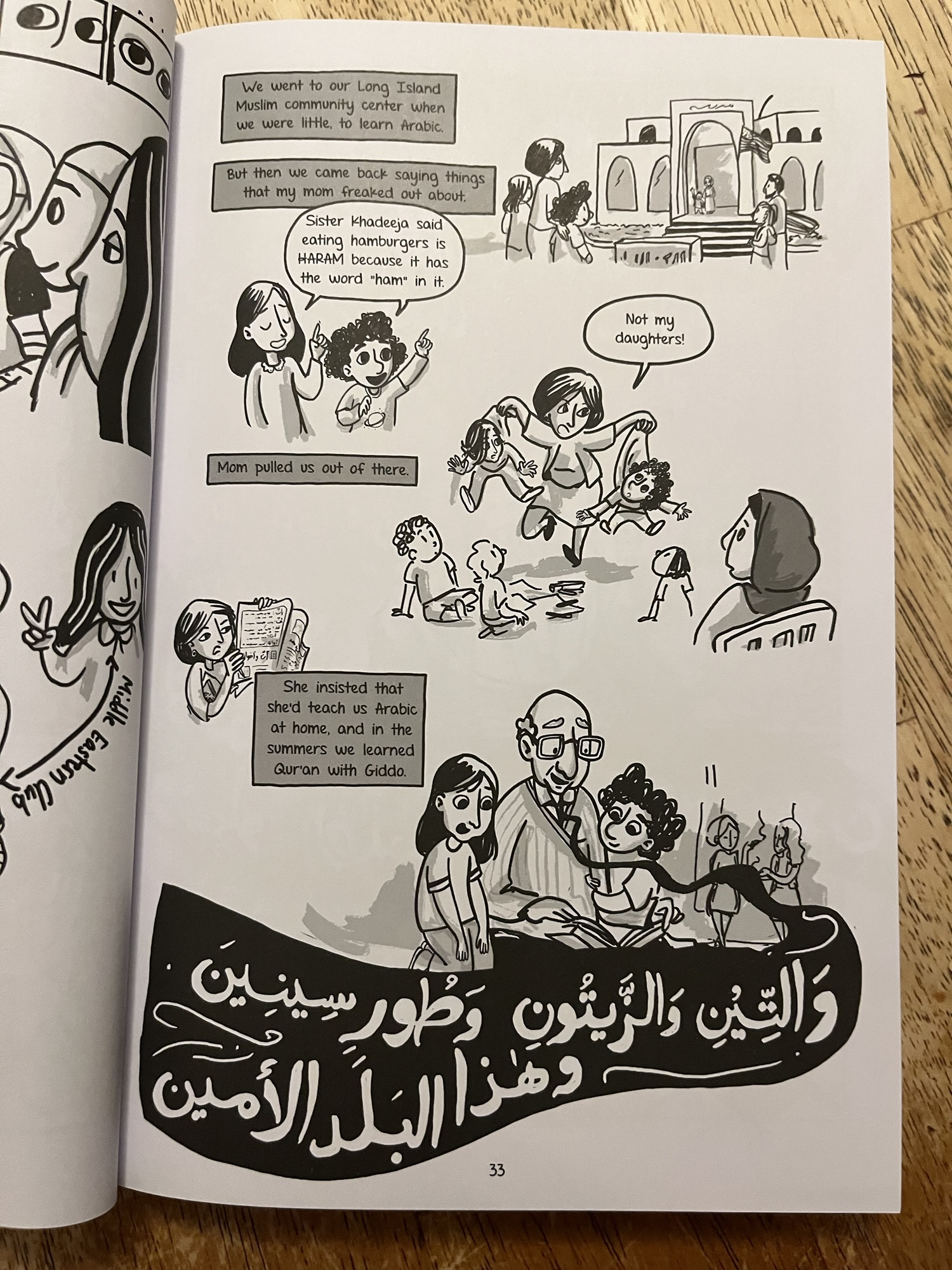
FLAGS:
See opening paragraph


TOOLS FOR LEADING THE DISCUSSION:
Not appropriate for Islamic school book clubs, I can see perhaps college or University MSAs reading it for fun and then offering up their thoughts as being an incredible pulse on how our “New Adult” Muslims view the themes and topics the book tackles, but I take handing a book to a person as an amanah, and I don’t think I could hand this to a middle or high school student.