

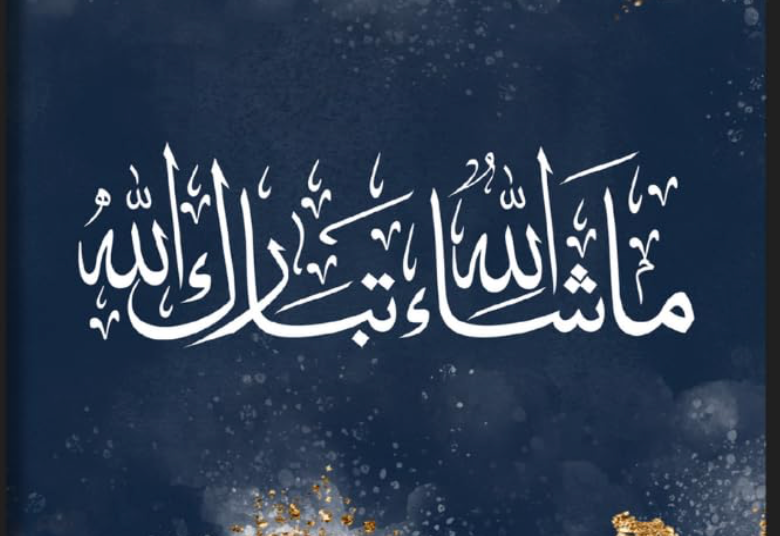
Tabarakallah Meaning -When To Say It, And How To Respond
Tabarakallah Meaning : When to Say It, and How to Respond
Assalamu Alaikum wa Rahmatullahi wa Barakatuh, dear brothers and sisters.
A few weeks ago, my younger sister sent me a message and I typed: “TabarakAllah.”
She replied: “What does tabarakallah mean exactly? I always say it but I am not sure if I am using it right.”
It’s completely free.
That question stayed with me. Because so many of us say tabarakallah every single day — when we see a beautiful baby, when a friend shares good news, when we witness something that takes our breath away — but very few of us have stopped to really understand what this word means, where it comes from, and why it carries the weight that it does.
So today I want to sit with you and go through this beautiful phrase properly. As a teacher, these are the kinds of words I love most — short, everyday phrases that turn out to have oceans of meaning inside them.
The Arabic Text
تَبَارَكَ اللَّهُ
Tabārakallāh
Pronounced: Ta-BAA-ra-kal-LAAH
What Does Tabarakallah Mean?
The word tabarakallah comes from the Arabic root ب ر ك — ba-ra-ka — which is the same root as the word barakah(blessing).
But tabarak is not just any form of this root. It is a special intensified form in Arabic grammar that means something like “He is abundantly, continuously, and permanently blessed.”
So Tabarakallah means: “Blessed is allah” — or more fully, “Allah is the source of all blessing and His blessings are infinite and everlasting.”
When you say it, you are not just commenting on something beautiful in front of you. You are making a declaration about Allah subhanahu wa ta’ala Himself — that He alone is the origin of every good thing you are looking at.
That child’s smile? Tabarakallah. From Allah. That achievement? Tabarakallah. From Allah. That moment of unexpected beauty? Tabarakallah. From Allah.
Tabarakallah in the Quran — It Is a Quranic Word
This is what truly makes my heart full when I teach this phrase: Tabarakallah is not just a cultural habit. The word tabarak appears in the Quran itself — nine times — always describing Allah subhanahu wa ta’ala.
Here are some of the most powerful:
Surah Al-Mulk (67:1) — the very first verse:
تَبَارَكَ الَّذِي بِيَدِهِ الْمُلْكُ وَهُوَ عَلَىٰ كُلِّ شَيْءٍ قَدِيرٌ
“Blessed is He in Whose Hand is the dominion, and He is Able to do all things.”
This is why Surah Al-Mulk is also called Surah Tabarak — it opens with this word that can only ever describe Allah.
Surah Al-Furqan (25:1):
تَبَارَكَ الَّذِي نَزَّلَ الْفُرْقَانَ عَلَىٰ عَبْدِهِ لِيَكُونَ لِلْعَالَمِينَ نَذِيرًا
“Blessed is He who sent down the Criterion upon His servant that he may be a warner to the worlds.”
Surah Al-A’raf (7:54):
تَبَارَكَ اللَّهُ رَبُّ الْعَالَمِينَ
“Blessed is Allah, Lord of all the worlds.”
Nine times in the Quran. Always tabarak. Always Allah. This word belongs to Him alone.
So when you say tabarakallah looking at your child, or your friend’s new home, or a sunset that made you stop walking — you are using the very language of the Quran to point everything beautiful back to its source.
Word by Word Breakdown
| Arabic | Transliteration | Meaning |
|---|---|---|
| تَبَارَكَ | Tabāraka | Blessed is / Abundantly blessed |
| اللَّهُ | Allāhu | Allah |
Together: “Blessed is Allah” — He is the ever-flowing, infinite source of all barakah in existence.
Tabarakallah vs MashaAllah — What Is the Difference?
This is the question I get asked most often, so let me answer it clearly.
MashaAllah (ما شاء الله) means “What Allah has willed.” It is an acknowledgement — you are saying that what you see happened because Allah willed it. It is an expression of wonder at Allah’s decree.
Tabarakallah (تبارك الله) means “Blessed is Allah.” It is a declaration — you are pointing to Allah as the source of all blessings and praising His greatness directly.
Both are beautiful. Both are correct. And you will often hear them said together:
MashaAllah Tabarakallah — “What Allah has willed — blessed is Allah.”
This combination is particularly beloved because it does two things at once: it acknowledges Allah’s will (MashaAllah) and praises His blessed nature (Tabarakallah). Many scholars and families say them together, especially when admiring children or blessings, as a more complete form of praise.
There is no hadith that says you must say one and not the other, or that one is more rewarded. They are both expressions of tawakkul (trust in Allah) and hamd (praise). You can use either, or both together, as your heart feels.
When Do You Say Tabarakallah?
This is where many people feel uncertain — “Do I say it right? Am I using it in the wrong situation?”
Here is the simple answer: you say tabarakallah whenever you see, hear, or experience something that fills you with admiration and you want to attribute that beauty, that goodness, back to Allah.
Some of the most common situations:
When you see a beautiful baby or child. This is perhaps the most common use. When someone shares a photo of their newborn, or you hold a child for the first time and feel that particular sweetness that only new life carries — tabarakallah. You are saying: this beauty is from Allah, and blessed is He.
When someone shares good news. A friend gets married. Someone passes their exams. A family is blessed with a new home. A person recovers from illness. Tabarakallah — blessed is Allah who brought this good.
When you witness something beautiful in creation. A sky so orange it looks painted. A mountain that makes you feel small in the best possible way. The sea at a moment of stillness. These are moments made for tabarakallah.
When admiring someone’s achievement or blessing. A friend has raised wonderful children. Someone has built something remarkable with their hands. A person has memorised the Quran. Tabarakallah — it is from Allah.
When someone compliments you. If a person says something kind about you or something you have done, you can say tabarakallah in return — meaning, do not praise me, praise Allah, for all good that I have is from Him.
Tabarakallah and the Evil Eye — An Important Connection
Our prophet ﷺ said:
“The evil eye is real. If anything were to precede the divine decree, it would be the evil eye.” [Sahih Muslim 2188]
The scholars of Islam — including Ibn al-Qayyim and Ibn Uthaymeen rahimahumallah — have explained that when a person sees something they admire, they should make dua for blessing upon it, to protect it from any harm that might come through envy, even unintended envy.
This is one of the wisdoms behind saying tabarakallah and mashaAllah when we see something beautiful. We are not just expressing admiration — we are making a small dua. We are asking Allah to place His barakah upon what we are looking at, and to protect it.
I want to be honest with you here: there is no single hadith that says “say tabarakallah to protect from the evil eye.” But the principle — that we should attribute blessings to Allah and make dua when we see good — is deeply rooted in the Sunnah. And tabarakallah is a beautiful, sincere way of doing exactly that.
So the next time you admire a friend’s home, or hold someone’s baby, or feel a rush of admiration for anyone’s blessing — say it from your heart. Tabarakallah. Ask Allah to keep His blessings flowing upon them.
How to Respond When Someone Says Tabarakallah to You
If someone says tabarakallah about you — your children, your work, your home, your recitation — you do not have to say anything specific in return. It is a praise of Allah, not a greeting that requires a formal reply.
But if you want to respond warmly, here are some beautiful options:
BarakAllahu feek (بارك الله فيك) — “May Allah bless you.” (Say feeki if speaking to a woman, feekum to a group)
JazakAllahu Khairan (جزاك الله خيرا) — “May Allah reward you with good.”
Alhamdulillah (الحمد لله) — “All praise is for Allah.”
Ameen — if they have made dua alongside the phrase.
All of these are warm, appropriate responses. The spirit of your reply matters more than the exact words — you are continuing the acknowledgement that everything good is from Allah alone.
MashaAllah Tabarakallah — Using Them Together
As I mentioned earlier, you will often hear MashaAllah Tabarakallah said as one phrase. Let me tell you where this combination comes from.
In Surah Al-Kahf (18:39), Allah subhanahu wa ta’ala tells us the story of two men — one of whom had been blessed with gardens and wealth and became arrogant. The other man, the believer, says to him:
وَلَوْلَا إِذْ دَخَلْتَ جَنَّتَكَ قُلْتَ مَا شَاءَ اللَّهُ لَا قُوَّةَ إِلَّا بِاللَّهِ
“Why, when you entered your garden, did you not say: MashaAllah, la quwwata illa billah — What Allah wills, there is no power except with Allah.”
This verse is the Quranic root of the practice of saying MashaAllah when we see our blessings. Many scholars teach that combining it with Tabarakallah makes the expression even more complete — you are acknowledging both Allah’s will and His infinite blessedness.
There is no compulsion to say them together. But if it comes naturally to your tongue, then MashaAllah Tabarakallah is a beautiful, wholehearted expression of Islamic gratitude.
A Personal Memory — The Power of This Word
I want to share something with you.
When I was a student of Islamic studies, one of my teachers — a woman of such gentleness that even her silence felt like a lesson — had a habit of saying tabarakallah at the most unexpected moments.
Not when something grand happened. But when one of us students finally understood a difficult concept. When she watched us help each other. When she looked at us reciting together and something in her face would soften.
Tabarakallah, she would say quietly. Blessed is Allah.
I did not understand it fully then. But now, years later, I think I do. She was not just commenting on what she saw. She was actively, consciously returning every good moment back to its source. She was practising what the Quran teaches — that every beautiful thing in this world is a reflection of Allah’s barakah.
I think about her whenever I say it now. And I try to say it the way she did — not as a casual word, but as a real acknowledgement. This — whatever this is — is from You, Ya Allah. Blessed are You.
Common Questions
Q: Is tabarakallah and masha allah tabarakallah the same?
MashaAllah and Tabarakallah are two separate phrases with related but different meanings. MashaAllah means “what Allah has willed” and Tabarakallah means “blessed is Allah.” They are often said together as MashaAllah Tabarakallah, which combines both meanings into a more complete expression of praise and gratitude.
Q: Can I say tabarakallah to a non-Muslim?
The phrase itself is purely a praise of Allah, so saying it is always appropriate for you as a Muslim. Whether a non-Muslim understands it or not is a separate matter. You can explain what it means — it is a beautiful way to share your deen.
Q: Is tabarakallah a dua?
It is primarily a phrase of praise and glorification (hamd) of Allah. However, when said with the intention of asking Allah to place His barakah upon something — for example, a child or a new blessing — it also takes on the spirit of a dua. Many scholars say it functions as both.
Q: What is the difference between tabarakallah and barakallahu feek?
Tabarakallah (تبارك الله) means “Blessed is Allah” — it praises Allah directly. Barakallahu feek (بارك الله فيك) means “May Allah bless you” — it is a dua made for another person. Both come from the same root b-r-k but are used differently.
Q: How do you write tabarakallah in Arabic?
تَبَارَكَ اللَّهُ
Q: Is it correct to say tabarakallah for a baby?
Yes — this is one of the most common and beautiful uses of the phrase. When you see a new baby and say tabarakallah, you are praising Allah for this precious new life and asking His blessings upon the child. It is a gentle, loving expression that Muslim parents and families have always used.
A Summary Table
| Details | |
|---|---|
| Arabic text | تَبَارَكَ اللَّهُ |
| Transliteration | Tabārakallāh |
| Meaning | Blessed is Allah |
| Root | ب ر ك (ba-ra-ka) — blessing |
| Appears in Quran | 9 times (as tabarak) |
| When to say | When witnessing beauty, blessings, achievement, good news |
| How to respond | BarakAllahu feek / Alhamdulillah / JazakAllahu Khairan |
| Related phrase | MashaAllah Tabarakallah |
Make It a Habit Starting Today
Dear reader, here is my gentle challenge to you.
For the next week, every time you find yourself saying “wow” — out loud or even just in your heart — replace it with tabarakallah.
A beautiful view: tabarakallah. Your child laughing: tabarakallah. A friend’s good news: tabarakallah. A meal that smells like home: tabarakallah.
You will be surprised how quickly it changes the way you see things. When you habitually return every beauty to its Source, you stop taking blessings for granted. Your heart becomes more present. More grateful. More connected to Allah in the small, ordinary moments that make up most of our lives.
The scholars say that dhikr — the remembrance of Allah — polishes the heart the way water cleans a glass. Tabarakallahis one of the most natural, everyday forms of dhikr we have. Use it freely. Use it often. Use it from the heart.
May Allah put barakah in your time, your health, your family, and every blessing He has given you.
Tabarakallah.
Wassalamu Alaikum wa Rahmatullahi wa Barakatuh,
Aafiya (Fahmina Jawed) Alimah — Islam Hashtag
Related articles:
Editor note: Add author bio box with Alimah qualification. Target URL slug: /tabarakallah-meaning/ — Internal links to mashallah page and barakallahu feek page. Add FAQ schema to all Q&A. Embed Digital Tasbih widget. Primary keyword: tabarakallah meaning (KD 2, 720 vol). Secondary: masha allah tabarakallah meaning, tabarakallah in arabic, tabarakallah vs mashallah, how to respond to tabarakallah.