

Untold Stories: A Gathering in Ghana – A New Yorker’s Experience in Africa
© Shutterstock
A Gathering in Ghana – A New Yorker’s Experience in Africa
Aliya Latif, USA
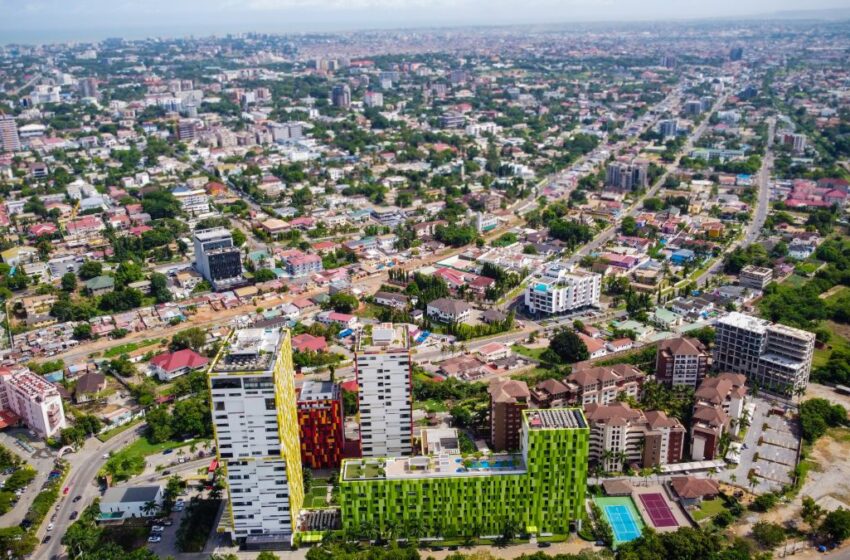
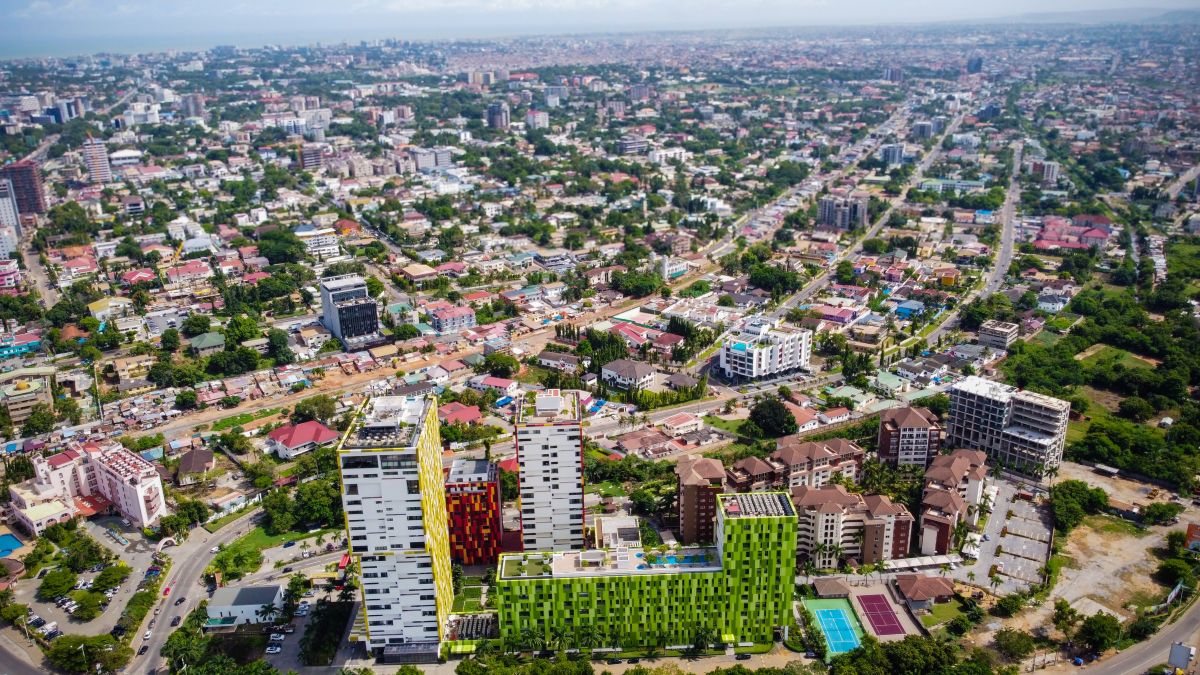
Leaving New York City and New Jersey (places I’ve called home for most of my life) and travelling to my marital home in Ghana has had its notable differences. On the other side of the Atlantic Ocean, there is tropical weather, varying levels of infrastructure, and cultural shifts. Gone is the fast-walking-and-talking New York Minute; what were once snow boots and puffer coats are replaced with sandals and perpetual sunshine.
There is a politeness and gentleness in the speech here in Ghana that I haven’t experienced before. ‘No, please.’ ‘Yes, please.’ ‘Please, I’m coming,’ to say that you need to be patient. The level of courtesy extends to conduct, giving Ghana its own special charm. There is a proclivity to laugh, smile and joke, to roast and rib one another playfully, but listen closely and you will hear life lessons being shared between the humour. A drive down any main road in Accra will boast countless billboards encouraging prayer services, prayer vigils, fasting, and revivals. You will also see Adinkra symbols [1] woven into patterns of clothing, architecture, and all manner of household wares and items. It’s a country alive with culture and spirit.
In 2008, during his last visit to this West African nation, the Worldwide Head of the Ahmadiyya Muslim Community, Hazrat Mirza Masroor Ahmad (aba), affectionately known as ‘Huzoor’ among members, addressed attendees of Ghana’s Annual National Gathering (called Jalsa Salana) numbering over 100,000 people, and said lovingly that he considers himself a Ghanaian.
What could it be that His Holiness (aba) loves so much? On the surface, Ghana may appear rustic and underdeveloped in some areas, while sleek and modern in others. As I travelled in Ghana, I sought what lay behind the sights and sounds.
My Travels
The Central region of Ghana, where His Holiness (aba) lived and worked for eight years, is particularly beautiful, with sugarloaf pineapple, roasted red snapper, and miles of sandy seashores. It was extremely humbling to see the birthplace of the Ahmadiyya Community in Ghana and the very first Jalsa site, a far cry from the 450+ acres of land used for today’s gatherings. The original site was open-air, with no budget for tents or canopies. Those Jalsas, all those many years ago, took place on the beach beneath a grove of coconut trees that still stand today. It’s easy to imagine the salty sea breeze mixed with stirring speeches and beautiful recitations of the Holy Qur’an.
However, the most moving experience is, and will always be, the congregational tahajjud prayer. This prayer is offered before Fajr, the pre-dawn prayer, and as such, is offered in the middle of the night. Before attending my very first Jalsa Salana Ghana at Bagh-e-Ahmad (where Ghana hosts its annual convention today), I had heard stories about it from African-Americans who had had the opportunity to experience it. The Missionary-in-Charge of the Ahmadiyya Muslim Community in the USA, Azhar Haneef, once remarked, ‘Wait till you see tahajjud.’
The Tahajjud Prayer
My father, Jalaluddin Abdul Latif, described praying tahajjud and Fajr prayers alongside two young boys who were without parents – just their rugs and their sincerity. When prayer was over, they rolled up their prayer mats and walked off into the darkness. No parent to watch them or call to collect them. Despite these recollections and reminders, I was not prepared for what I witnessed and experienced firsthand.
The peace, the respect for prayer, the cool morning air, and the quiet orderly rows, with only temporary lamp posts to illuminate the dark, all are unforgettable.
Women with infants on their backs are praying, and the children, sometimes awake and sometimes asleep, hold on quietly along for the ride. Toddlers are trying to complete the full tahajjud prayer, and if they become overly tired, they lie very respectfully (taking up as little space as possible) and rest on their prayer mats. Primary school children perform the prayer fully along with their parents, and then listened to dars – an exposition of verses of the Holy Qur’an.
You then listen to a small speech which is then translated into Twi, offer the pre-dawn prayer, and then sit through announcements. Everyone (particularly the children) exhibited a beautiful level of patience as they sat quietly and listened. A dear friend visiting from Europe noticed it immediately and remarked, ‘It’s weird, isn’t it? The children are so quiet!’ ‘No’, I gently challenged, ‘They aren’t weird. We are the weird ones (having grown accustomed to disturbances throughout prayer). This is the respect owed to salat [prayer], this is the standard.’
And in fact, every day of the Ghana Jalsa begins with a program at dawn, with thousands of people attending these tahajjud prayers. People plan to arrive a day early just so that they be ready for tahajjud on time and some attendees have special prayer outfits just for tahajjud.
The formal programme of this annual gathering concludes with the midday (Zuhr) and afternoon (Asr) prayers, followed by lunch. People can gather on site for Maghrib and Isha (prayers after sunset and at night) and listen to a speech right after, or pray at their respective hotel and prepare for tahajjud the next day. I love that open-ended schedule and the ample time it provides to meet family and friends, and for volunteers to debrief without sacrificing parts of the programme.
Critics of the Ahmadiyya Muslim Community claim that when an African chief converts, the whole village joins him, therefore they cannot truly know what they are joining or believe sincerely in the teachings. However, nothing except deep faith and righteous conviction could cause a woman to rise in the middle of the night, ready herself and her children, and journey to offer tahajjud prayers in congregation.
This prayer is not even obligatory, and need not be done together in congregation; these women simply wanted to be there! They were dressed suitably for prayer, not wearing rumpled sleeping attire, and stayed along with their children until the entire programme was over each day. Only sincerity and passion could make that possible.
Unity
In our global community, there is the concept of an open kitchen called the langar, a trademark of our annual gatherings the world over. Ahmadis feed all their guests for three days (and even after if they require it). This is the hospitality taught by the Community’s founder, Hazrat Mirza Ghulam Ahmad (as). In addition to the open kitchen, people also cook their own food, gather to meet their relatives and friends in the car park, and have what could be the equivalent of a tailgating party (in the United States) at meal times. There are so many opportunities to bond and connect throughout the Jalsa weekend, to strengthen ties of unity and kinship.
During the Jalsa proceedings, there was only one stage, one field, one message, and one community. It was electrifying and unifying. No one was holding a ‘Be Quiet/No Talking’ sign; only some members politely reminded the attendees with non-verbal signals from time to time. Children were not running up and down, disrupting the programme or prayers; they were sitting as they were expected to do, trained to be present alongside the rest of the Jalsa community. Parents shared the responsibility of watching very small children, and fathers would pass a baby to its mother. In the odd chance that the sound system stopped working, no one seemed interested in using this as an opportunity to talk to each other – they just sat and simply waited. It was the most dignified and Islamic gathering I have seen, aside from the International Bai’at (initiation) in the UK with His Holiness (aba). I realised that this is my third Jalsa Salana Ghana, and at no time have I been pushed, shoved, or stepped on in a crowd, as would be expected in such large gatherings. Women walked at a quick pace, but no one crowded each other’s personal space. This is remarkable. With a gathering of about 50,000 people, you would expect some logistical challenges, but discipline, respect, and unity were exemplary.
During His Holiness’ (aba) 2024 address to the Ghana Jalsa, canopies were removed so that he could see the expanse of the crowd in attendance. Out under the sun, side by side, with no canopy to provide shade or to obscure vision, people waited patiently for the address to begin. I didn’t see anyone looking over at the women inappropriately or the women looking back. People seemed to self-organise around boundaries and respect.
Songs & Language
There were songs to mark the arrival of the President of the Ahmadiyya Muslim Community in Ghana. There were songs of praise between each speech. There were white handkerchiefs that women would wave on beat with the songs being sung, there was rhythm, call and response, and song, culturally familiar and endearing parts of African (and African-American) culture. Even with a language barrier of Twi, I felt joyous and very much at home and at ease. The President of the Ghanaian Ahmadis addresses members as Brethren and Sistren, terms familiar to me from years living among Jamaican culture in Brooklyn, New York. It was amazing to see diasporic connectivity and roots leading back to West Africa. I felt so very at ease. The programme was primarily in the English language, and even His Holiness’ (aba) live Friday sermon was televised in English. Translations were made available in Twi, Hausa, Yoruba, Swahili, Urdu, French and Arabic, among others.
Freedom
With more free time in the Jalsa Ghana programme, people were able to visit nearby historic sites of the Community in Saltpond and Central. I saw the charming school where His Holiness (aba) served as principal, the river where he collected water, and the flat where he lived. I saw the Saltpond mission house, which had served as headquarters for the Ghana Jama’at. I was given a tour of the seminary where missionaries are prepared. At this seminary, called Jamia Ahmadiyya International, there are Afghani, Syrian, Russian, Malaysian, Argentinian, and German students, alongside fellow African students from Uganda, Mozambique, Mauritius, and others, all attending together. It is truly a global community. Taken in totality, I felt as if I stepped into the spiritual future of our Community. It was as if I were witnessing how our gatherings could be with a high level of unity, discipline, love, and joy.
Beach Encounters
One day after Fajr, we went to the oceanside and saw a man sitting on a large piece of driftwood, facing the ocean, with a Palestinian Keffiyeh around his neck. He, too, was enjoying the ocean after having travelled from the UK to attend the Jalsa. He shared stories of his father, a renowned architect known as Rashid the Architect, who supervised the construction of Jamia Ahmadiyya in Ghana. He shared about the early days of MTA when audio had to be flown from London to Moscow for conversion and formatting. I asked him if he had ever experienced a prayer like tahajjud and Fajr prayer here at the Ghana Jalsa. He agreed that he had not experienced anything like this anywhere in the world. I made it a point to ask because I wanted the local members to understand how rare and special it was.
Another day, I encountered a young man from Tamale (northern Ghana) taking photos of seashells and the ocean. I was walking along with friends visiting from London, and we made our introductions. When I introduced Dr Sarah Waseem, a senior editorial board member of The Review of Religions, you could see the shock and excitement on the young man’s face.
He shared that he loves The Review of Religions magazine, especially the print edition. He said he waits each month for the paper copy to arrive, and even likes opening the package and the smell of it! I have never in my life met any young person so excited to read any religious material. He was sincerely excited to talk about it.
The Review of Religions Ghana is led by a young missionary named Umar Gyasi.
He takes a Trotro [2] and an Okada [3] to carry as many copies of the magazine as he can, transporting them all over the country. He is making a wonderful effort to get the magazine to the people, and it was so beautiful to hear firsthand how these efforts are appreciated. I think about how much we take these resources for granted in the West, and sometimes don’t subscribe or even open the copies once they arrive. It’s both sobering and inspiring to see faith so alive and tangible.
The Future is Bright
Another unique feature of the Ghana community is the prevalence of members who have memorised the Qur’an in its entirety, earning the title ‘Hafiz’. The love of the Holy Qur’an is apparent, and I even met a young, self-taught Hafiz. Seeing young people volunteer, serve, and lead in various capacities was deeply moving. Elders encouraged them and were proud of their efforts. These qualities of unmatched patience and perseverance have inspired me to follow their example. I now see why His Holiness (aba) remarked, ‘I love Ghana’.
About the Author: Aliya Latif Wahab works in restorative justice and is a member of the editorial board of The Review of Religions.
ENDNOTES
1.These are symbols that represent an entire message, such as ‘go back to your roots’. It can also represent broad themes such as strength, authority, unity and versatility.
2. Shared mini-bus transportation.
3. Motorbike taxi.