

The Town That Almost Changed the World: The Miracle of Wörgl
Tariq Mahmood, Canada
We’ve all heard the success stories – people who changed the world.
The astronauts who did land on the moon, forever shaping our history; the mathematicians who did invent algebra to solve complex problems; the inventors who did create technology to make our lives easier.
But what about the did-nots? What about those who were stopped short of their brilliance, impeded by the forces at hand, thwarted by evil machinations and selfish interests?
This is one of those stories, and it’s one you’ve probably never heard of. But you almost did.
The Backdrop
The Great Depression (1920s-1930s) was an economic downturn that completely devastated the entire world economy. For example, in the United States, the unemployment rate skyrocketed to 25%. For context, in the 2008 recession (likely the most devastating economic downturn you’ve experienced) the unemployment rate hit just 10%.[1]
In the 2008 recession, entire neighbourhoods were abandoned – during the Great Depression, entire cities were created, but out of boxes, crates and whatever else could be found, due to rising homelessness. These ‘Hooverville’ towns especially sprung up in drought-ridden areas. In the 2008 recession, the real GDP fell 4.3%; in the Great Depression, it fell 30%. Germany and the United States – both enemies during World War I – ironically dropped almost equally in their industrial production.[2]
If the 2008 recession was your version of ‘I had to walk for miles to get to school every day’, the Great Depression was essentially your grandparents telling you they had to ‘climb a mountain every day to fetch water’.
Wörgl Enters the Scene
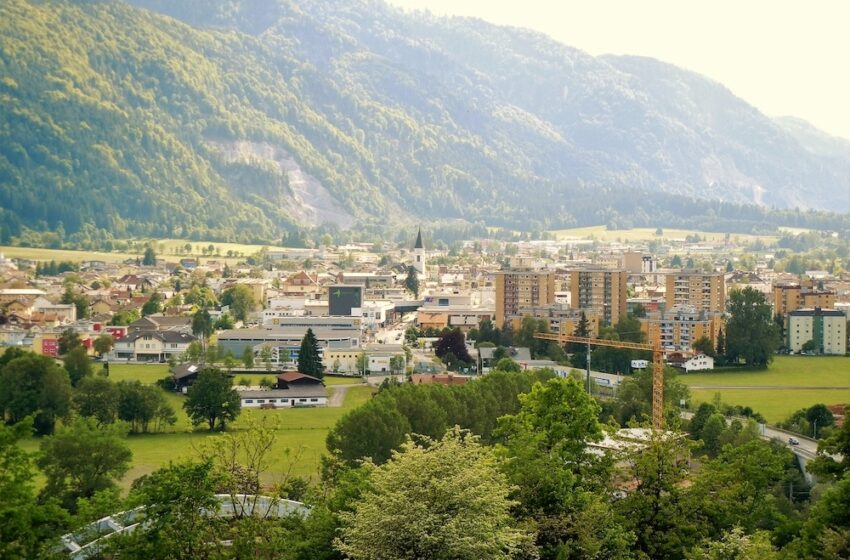
At this time, a small town of 4300 in Austria named Wörgl (pronounced vurgul) is entrenched in the throes and woes of this Great Depression. More than 80% of the population relies on financial assistance, nearly 35% are unemployed.
There’s a reality behind these numbers: factories shutting down, with hundreds of breadwinners becoming unemployed overnight. Parents at a loss for how they’ll pay their taxes.[3] Children lining up for food on the street. The situation is dire, and everyone can see it.
Enter: the mayor of Wörgl, a man named Michael Unterguggenberger, who tackled his town’s growing problems with an ingenious and robust plan. He was going to save Wörgl, and in the following years, hundreds of towns would try to implement what he proposed.
But, it wasn’t actually his idea. Here’s who the mayor copied it from.
The Man Who Really Saved Wörgl
John Maynard Keynes (the father of Macroeconomics) wrote that you and I could learn more from Silvio Gesell than we could from Karl Marx – and yet many wouldn’t even have heard of Gesell until now.
What did Gesell say? In his 1916 work The Natural Economic Order, Gesell went against the grain, and ‘condemned interest’ because its ‘sales were more often related to the “price” of money (i.e. interest) than people’s needs or the quality of his products.’[4]
Gesell himself simplified it for the lay man: ‘Only money that goes out of date like a newspaper, rots like potatoes, rusts like iron, [and] evaporates like ether is capable of standing the test as an instrument for the exchange of potatoes, newspapers, iron and ether.’[5] Gesell didn’t think of money as an immutable, unchangeable property of our society. He wanted money to behave like the things it buys.
So, Gesell invented a new form of money, calling it ‘Free Currency’, because it was free from the economic methods that propelled this unfair system. He believed that hoarding or collecting wealth was bad for the economy, because it stops the flow of money. Money was the blood of the economy, and hoarding it was like a clogged artery.
His idea was simple: all ‘Free Currency’ would depreciate 0.1% per week, which totalled 5.2% per year. To keep your 1000 pounds worth its full value, you’d need to buy 52 pounds worth of stamps over the year, otherwise the money would quietly lose value on its own.
What does this accomplish? The consumer is essentially encouraged to spend that money as fast as they can, so that they get rid of it before it depreciates.
In real terms, it means that if you have 10,000 pounds stored away in the bank, you’re losing 10 pounds a week by not spending it. It also means that banks and big corporations can’t keep putting away and hoarding money – the depreciation would be a greatly negative consequence to storing wealth. Essentially, everyone with money is playing hot potato, getting rid of the money before it ‘blows’ (i.e. depreciates).[6]
Fast forward 30 years to Wörgl, ready to collapse under the weight of the Great Depression. Mayor Unterguggenberger creates an emergency programme using Gesell’s theory. He goes to the Public Welfare Committee and declares:
‘Slow money circulation is the main reason for the current economic crisis. Money as a means of exchange slips from the hands of the working population. It ends up in the interest canals and in the hands of a small minority who is not interested in introducing it to the market, but much rather retains it as means for speculation.’
What’s his solution? He tells the committee that he wants to substitute the ‘lazy and slow’ money of the National Bank of Austria with a ‘currency medium’. In July of 1932, he finally does it: he distributes what he calls ‘work certificates’ (essentially a different form of shilling currency) to the public for use, which would depreciate [lose value] at a rate of 1% per month.[7]
Did his experiment fail? Did it implode into the abyss of absurdity like many people thought? No, it wildly exceeded everyone’s expectations.
Here’s What Happened
If I get a paycheque and use that money to buy groceries, and then the grocer uses it to buy more produce, each dollar or pound would have changed hands three times. That’s called circulation.
When Wörgl handed out the certificates, the regular shillings still existed. These old shillings circulated a total of 21 times in one year – meaning the old money switched hands 21 times.
The ‘free shillings’ that the mayor introduced? They circulated 463 times. The money was going to lose value at the end of the month anyway, so no one wanted to hoard it!
To illustrate this, imagine the factory worker who gets his paycheque, and buys what he needs quickly so that he doesn’t lose the value of his earnings (remember, every shilling depreciates 1% per month).
The shop owner who sells to the factory worker, wants to buy his stock back quickly from a wholesaler so that his money doesn’t lose value. The wholesaler wants to go to the factory where he gets his product, before that money loses value. The factory owner wants to buy the resources quickly from the local mine, before his money depreciates. The mine owner who produced the resource wants to put the money into use by hiring more workers, before that money depreciates.
The new workers get their paycheques and – you guessed it – want to buy what they need quickly. The cycle goes on, and the currency becomes hot potato.
In Wörgl, that meant 32,000 free shillings turned into 14,816,000 shillings within one year.
What did this mean for Wörgl?
In one year, the town reduced its unemployment by 25%. The cellulose factory hired 350 workers. The cement factory hired 400. The entire town began healing. Everyone wanted to pay their taxes back as quickly as they could, before the money depreciated. Tax receipts increased by 28,000 shillings in one year – people even began paying their taxes in advance. The money made from the stamps was 3840 shillings, which was used to put more people to work for the city.
A cycle of circulation was created. The system was brilliant, and Gesell’s idea worked – but what if I told you that 1300 years before Silvio Gesell’s concept of free currency, another system proposed the exact same idea?
The Man Who Changed the World
Many regard the Prophet Muhammad (sa) as the single most important person in history, but everyone has a different take on why he’s so important. Some like to tout his military success, while Muslims point to the fact that two billion people ardently follow him, making him humanity’s greatest spiritual leader.
I’m here to give you another perspective: the advent of the Prophet Muhammad also ushered in an entirely new economic system.
Islam’s economic system believes that the welfare of the people is both necessary and mandatory. However, Islam shouldn’t be misconstrued to be communist in any way – in fact, Islam encourages a free-market economy. For more on this, I encourage people to read The Economic System of Islam by a man named Hazrat Mirza Bashiruddin Mahmud Ahmad (ra) and Islam’s Response to Contemporary Issues by his son, Hazrat Mirza Tahir Ahmad (rh), both of whom were Caliphs of the Ahmadiyya Muslim Community.
Islam’s economic system posits a unique reform called Zakat (which translates to ‘that which purifies’). Zakat does not tax you on your income, nor on any transfer of wealth; Zakat only taxes a person on the wealth that has been stored or hoarded for more than one year, without use. Any wealth that falls under this rule would be taxed at 2.5% yearly.
This isn’t to say Islam will tax you on your mattress or fridge – no, it taxes a person on certain goods or wealth. For instance, if you had stored 10,000 pounds in the bank and not used it for one year, Zakat would levy 250 pounds on it.
Now, this doesn’t seem like a lot, but consider what mayor Unterguggenberger said, that the wealth of Wörgl wasn’t being circulated because some were hoarding the wealth; money was accumulating in the hands of the few.
You might respond that a 2.5% tax isn’t enough money, but you might be thinking like an average taxpayer. In a country like the United States, the bottom 50% of taxpayers contribute only 3% of the annual federal tax – the top 10% of taxpayers constitute 70-75% of it. The rich and wealthy pay more when it comes to taxes.
In fact, Senator Bernie Sanders and others in the United States recently introduced a bill that would tax 5% of the wealth from those worth over one billion. That’s only 938 people, but they’re worth 8.2 trillion. This one wealth tax, according to the legislation put forth, would garner a whopping 4.4 trillion dollars over the next decade – enough money to put 3000 dollars per year in the pocket of every American (including children) who earns less than 150,000 dollars.[8]
Islam proposed these exact same rules over 1400 years ago. What Gesell intended to do, and what Bernie Sanders is trying to do, Zakat actually implemented in the 7th century through the religion of Islam.
The best example of the Zakat system is found during the life of the Prophet Muhammad (sa) himself, who widely instituted this system with tremendous success over the entirety of Arabia. Hundreds of thousands of people accepted this method of taxation, which was free of the usually arbitrary increase from leaders, or
Zakat, similar to the outcome of the Wörgl experiment, doesn’t primarily wish to collect the wealth – it primarily wants those who are affluent to spend their money and keep circulating it. That might mean that a billionaire needs to invest much more heavily into other companies or assets, so that his wealth doesn’t depreciate. It also means that his wealth – which would’ve otherwise been hoarded – is instead being circulated back into the economy.
Those who decide to store their money, give a portion of it to Zakat, which Islam then uses to help eight specific groups of people: the poor, the needy, employees of the State, wealth which reconciles hearts (for example, to prevent war), for the freeing of those locked in servitude, for those in debt, for the cause of God, and for the traveller.[9] In reality, this system is a capitalistic welfare scheme, designed to help both the economy, and the most vulnerable factions of society. This illustrates why Zakat isn’t a tax in the conventional sense that we might be accustomed to – the opposite, it seeks to combat poverty and move toward a just and fair economy.
What Happened to Wörgl?
Wörgl gave hope to the world. In Austria alone, over 300 communities became interested in adopting this model. Then, the Austrian National Bank stepped in.
The monopoly of money was threatened. In January 1933, the bank prohibited the printing of this local currency. By the fall of the same year, the Austrian Supreme Court prohibited circulation of any such currency.[10]
This concept of depreciating money became popular, and many towns and cities tried to adopt it, only to be stopped in their tracks. In 1933, the state of Oregon [in the United States] tried to print 80 million dollars of stamp scrip (essentially the same process as Wörgl), but was stopped by the U.S treasury. Dozens of towns in the US successfully adopted it, but when Irving Fisher – an economist and student of Gesell – pitched it to the US government, it was rejected and called radical. Certain ‘Gesellian’ principles did live on, and President Franklin Roosevelt did adopt some of Gesell’s methods, which is perhaps why he is attributed with pulling America out of the Great Depression.
Nonetheless, most federal banks and countries have now banned this idea. Wörgl itself had to shut down the very scheme that released them from the grips of the Great Depression.
The powers that be – did.
Now, this isn’t to say that Gesell’s idea for depreciating money was perfect. John Maynard Keynes called it ‘half an idea’ because he felt that money was only one medium of wealth – the rich would simply put their wealth into gold or silver.[11] This is where Islam corrects the scheme and provides the second half that Keynes was perhaps searching for: it taxes gold and silver as well (if they remains idle) forcing the rich to buy other assets. If they buy yatchts, they will require maintenance, crews, and fuel, and will depreciate over time. Gesell’s idea of money rotting like a potato thus comes into play when the yacht rusts.
Still, one cannot spend billions upon billions of dollars on material things alone, and they’d instead need to invest it back into the economy. When the wealthy are forced to invest their money back into the economy, the richest corporations get saturated quickly, which compels them to invest in small companies; thus, the money flows downward.
Conclusion
Towns like Wörgl almost changed the world, and geniuses like Gesell almost prompted global change, but they were stopped. Sometimes, the execution was flawed; other times, the ideas were too good to be allowed to exist.
But the system of Zakat offers perhaps the most powerful economic revolution that humanity could fathom, if it is adopted: it gives a perfect plan and creates a strong economy, all without interest, and driven by the welfare of the people.
If countries – especially Muslim nations – paid attention to the merits of this Zakat system for the sake of their citizens’ welfare, then perhaps Wörgl’s efforts weren’t in vain. Islam’s Economic system offers hope and prosperity to those who adopt it.
With such a revolution, perhaps we could live in a world where the top 1% didn’t hold nearly 50% of the world’s wealth, and the bottom 50% of people didn’t account for only 2% of global wealth.
Wörgl did almost change the world, but it’s now our job to learn and study our history, so that we are actually able to change it. We must possess the desire to better humanity, and to care for the weakest members of our community – on a political and social level, but also on an economic level. If there exist enough people who understand why everything must change, then there is still hope to change it.
ENDNOTES
[1] https://www.fdrlibrary.org/great-depression-facts
[2] https://www.britannica.com/event/Great-Depression
[3] Lemaitre, A. (1951), « Le miracle de Wörgl au Tyrol », in Silence – SEL : Pour changer, échangeons, Hors-série, p. 8-9., taken from Ahmed Danyal Arif, The Monetary Original Sin (Maple Publishers, 2022), 34.
[4] Ahmed Danyal Arif, The Monetary Original Sin (Maple Publishers, 2022), 34.
[5] https://www.noemamag.com/what-if-money-expired/.
[6] Ahmed Danyal Arif, The Monetary Original Sin (Maple Publishers, 2022), 34.
[7] https://unterguggenberger.org/the-free-economy-experiment-of-woergl-1932-1933/
[9] The Holy Qur’an, 9:60.
[10] Ahmed Danyal Arif, The Monetary Original Sin (Maple Publishers, 2022), 81.
[11] https://www.noemamag.com/what-if-money-expired/