

Undecided Nation: How A Mosque In Kamagasaki Fills Japan’s Immigration Gap – A Photo Story
A Photo Essay by Tomohiro Oshima
Japan has never declared itself a country of immigration.
Keep supporting MuslimMatters for the sake of Allah
Alhamdulillah, we’re at over 850 supporters. Help us get to 900 supporters this month. All it takes is a small gift from a reader like you to keep us going, for just $2 / month.
The Prophet (SAW) has taught us the best of deeds are those that done consistently, even if they are small.
Click here to support MuslimMatters with a monthly donation of $2 per month. Set it and collect blessings from Allah (swt) for the khayr you’re supporting without thinking about it.
Through successive revisions of its immigration laws, the government has maintained that it “does not adopt an immigration policy.” It has absorbed foreign workers through the Technical Intern Training Program, drawn international students into its labor market, and refused to call any of it immigration. By the end of 2023, the number of registered foreign residents reached approximately 3.4 million1. Yet the majority remain institutionally precarious — suspended between economic necessity and legal exclusion.
Scholar Hidenori Sakanaka, a former director of the Tokyo Immigration Bureau, has long argued that Japan operates as a de facto country of immigration while refusing to officially call it one — absorbing foreign labor through side-door channels even as it denies any shift in national policy. The vacuum this creates is filled by religious communities, ethnic networks, and mosques.
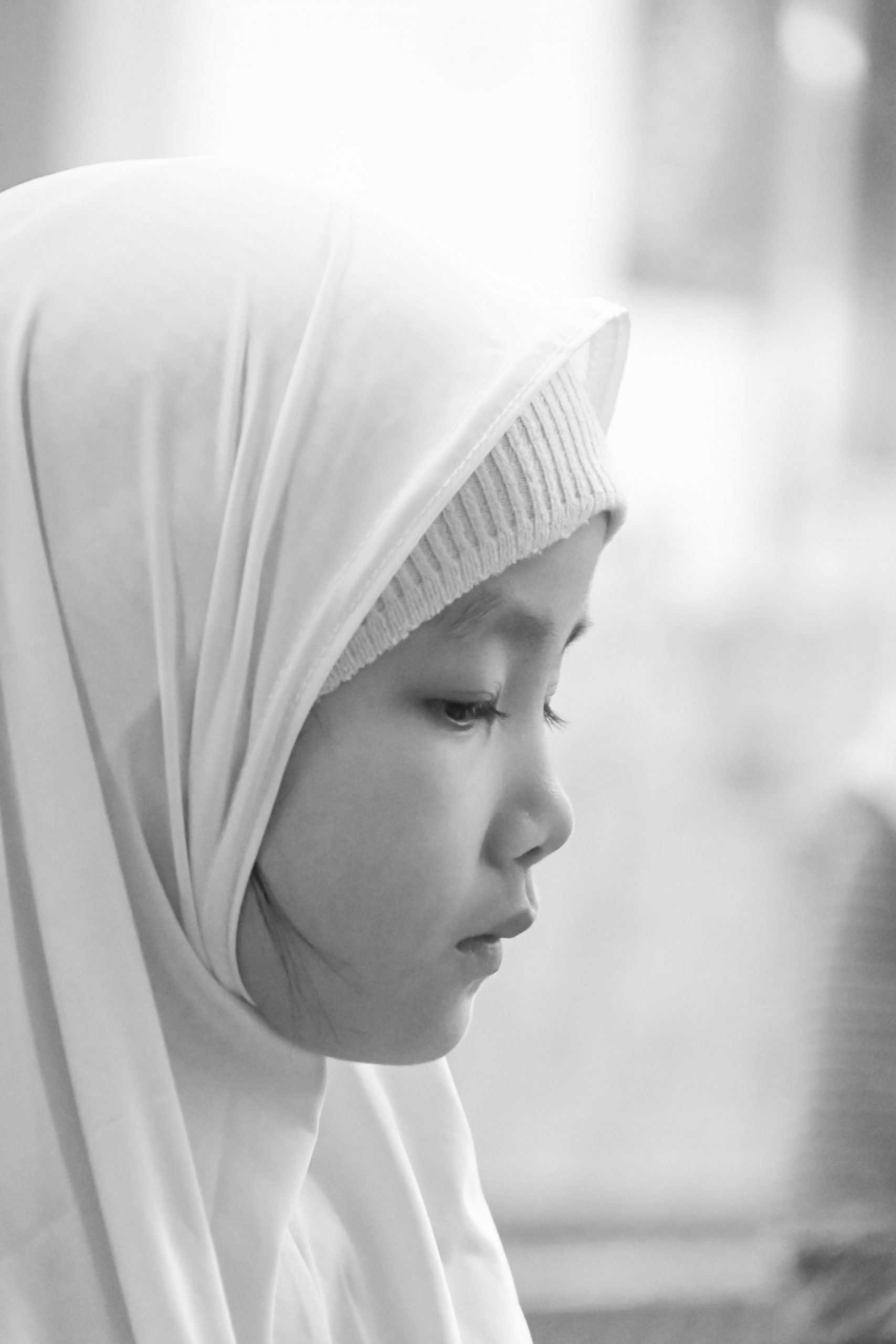
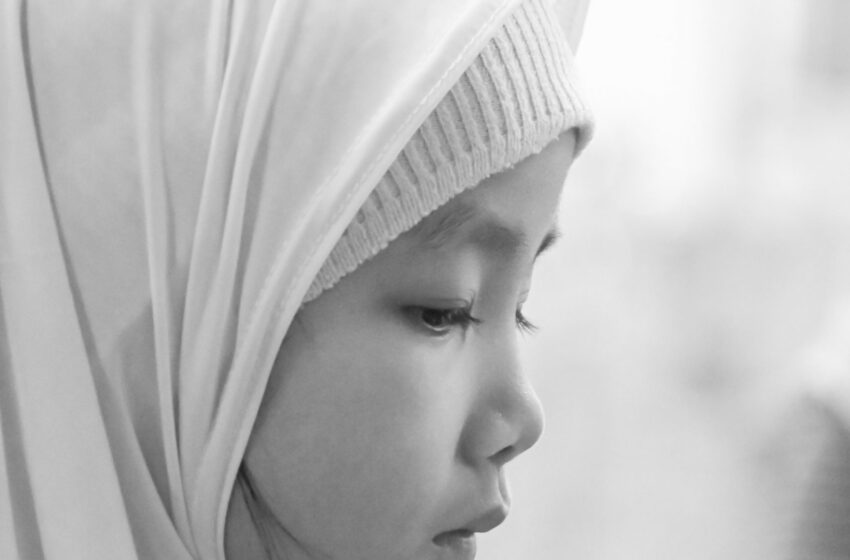
A young girl pauses during Quran study at Masjid Istiqlal Osaka, in Nishinari Ward’s Kamagasaki district.
In Nishinari Ward, Osaka — in the district known as Kamagasaki — stands Masjid Istiqlal Osaka. “Istiqlal” means independence in Indonesian. True to its name, this mosque has built a network of mutual aid that operates independently of state institutions. Muslims from Indonesia, Malaysia, Bangladesh, Pakistan, and elsewhere gather here to pray, study, celebrate, and sustain one another. Children learn the Quran alongside their Japanese homework; young couples marry under Islamic rites; newborns are held in aging hands.
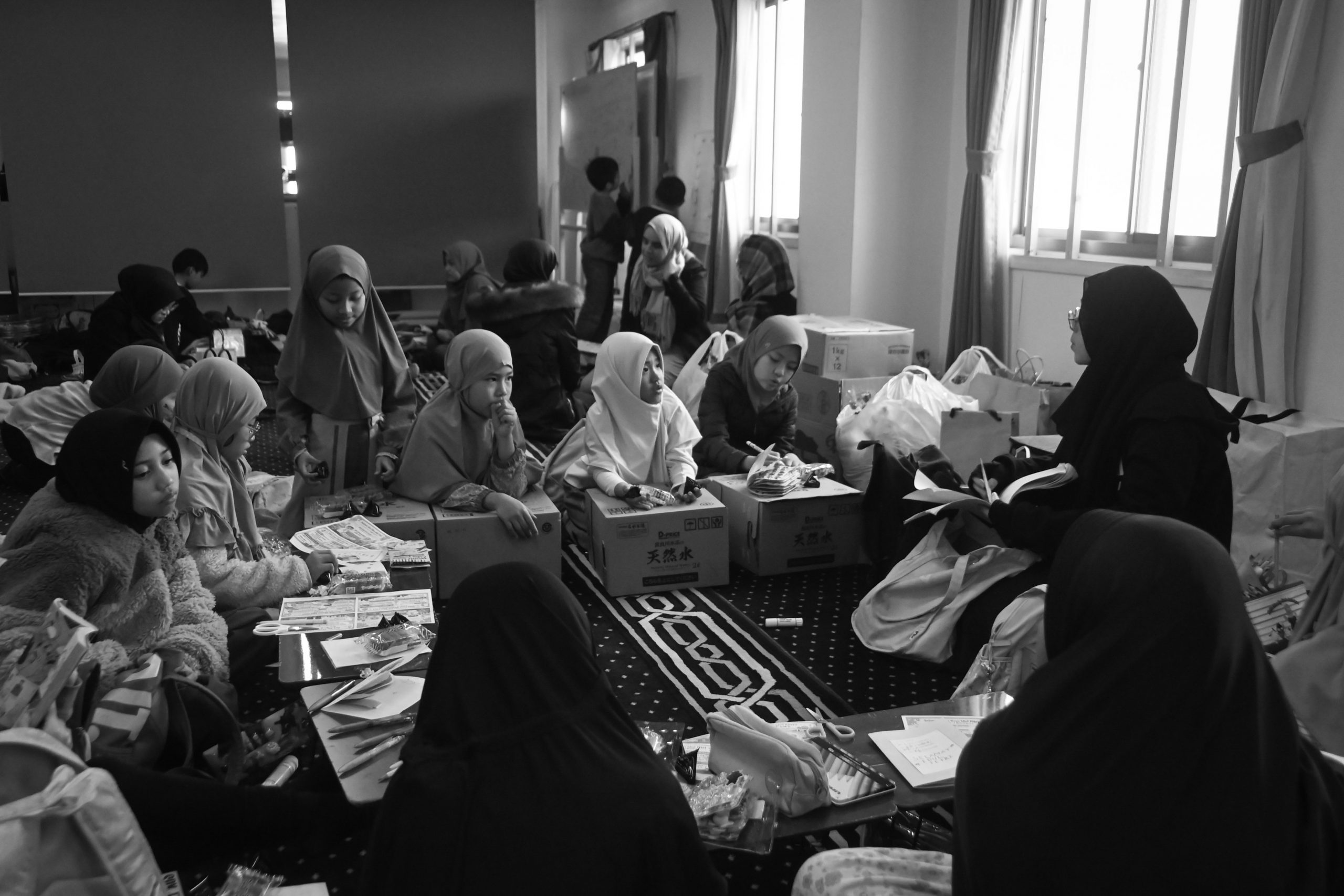
Children sit on the floor of the mosque’s community hall during a weekend lesson.
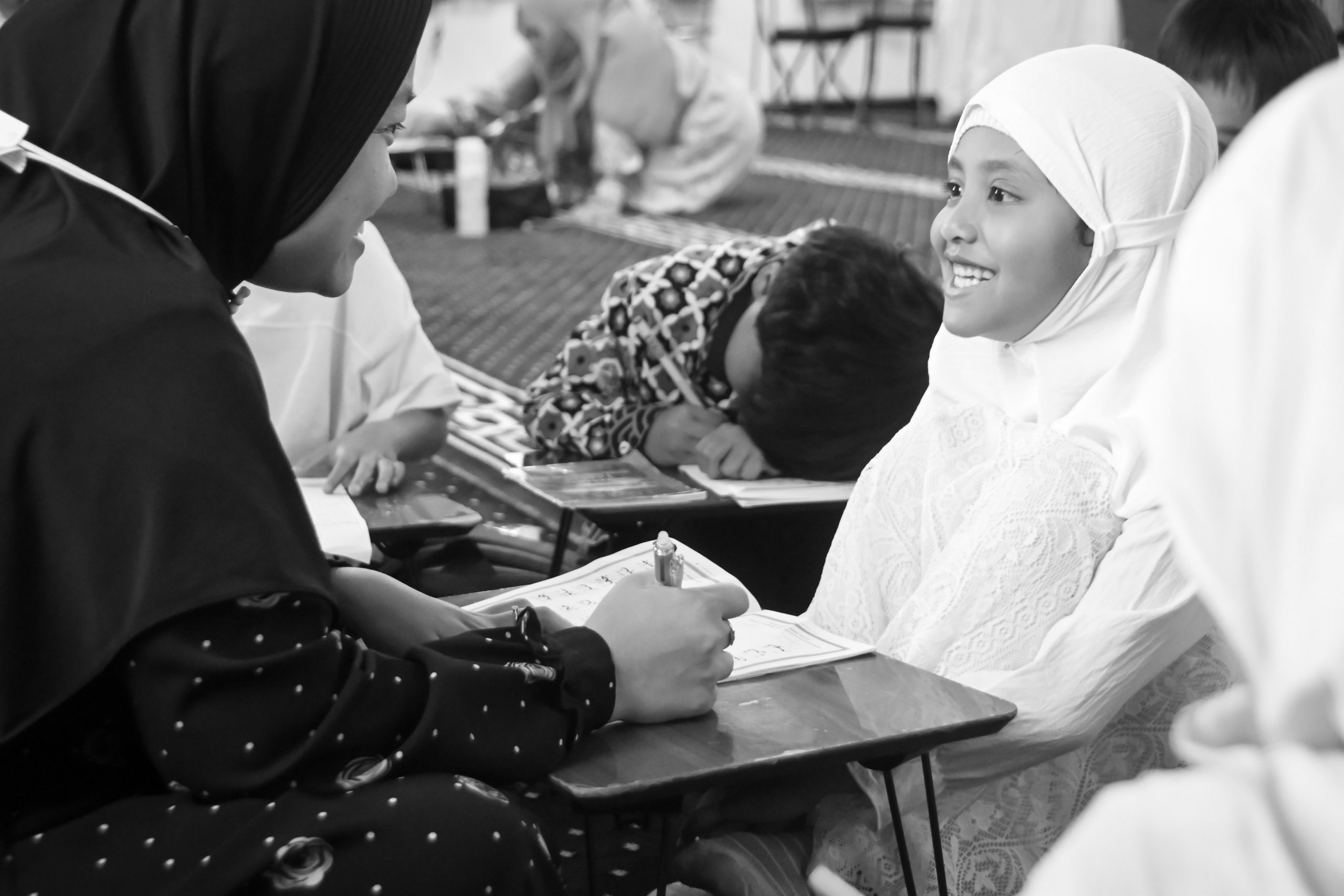
A teacher guides a student through her Quran writing exercises, sharing a smile mid-lesson.
One of those newborns is called Minami — “south” in Japanese — because she was born in the south of Osaka. Her father is a diplomat, and the family will soon leave again. “She was born here,” her mother said quietly. “So this is part of her.”
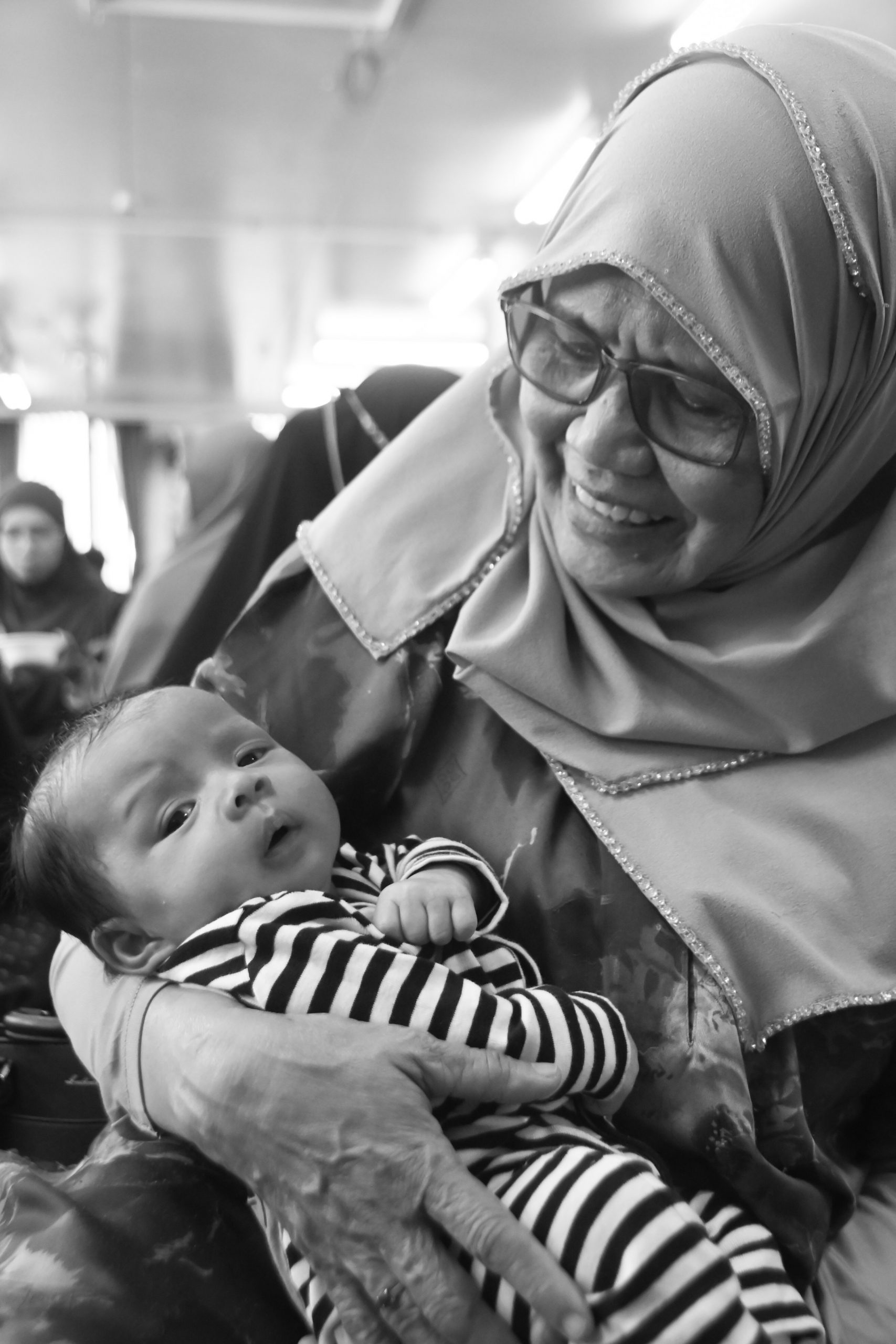
A grandmother holds her grandchild at the mosque — the newest generation of a family built far from home.
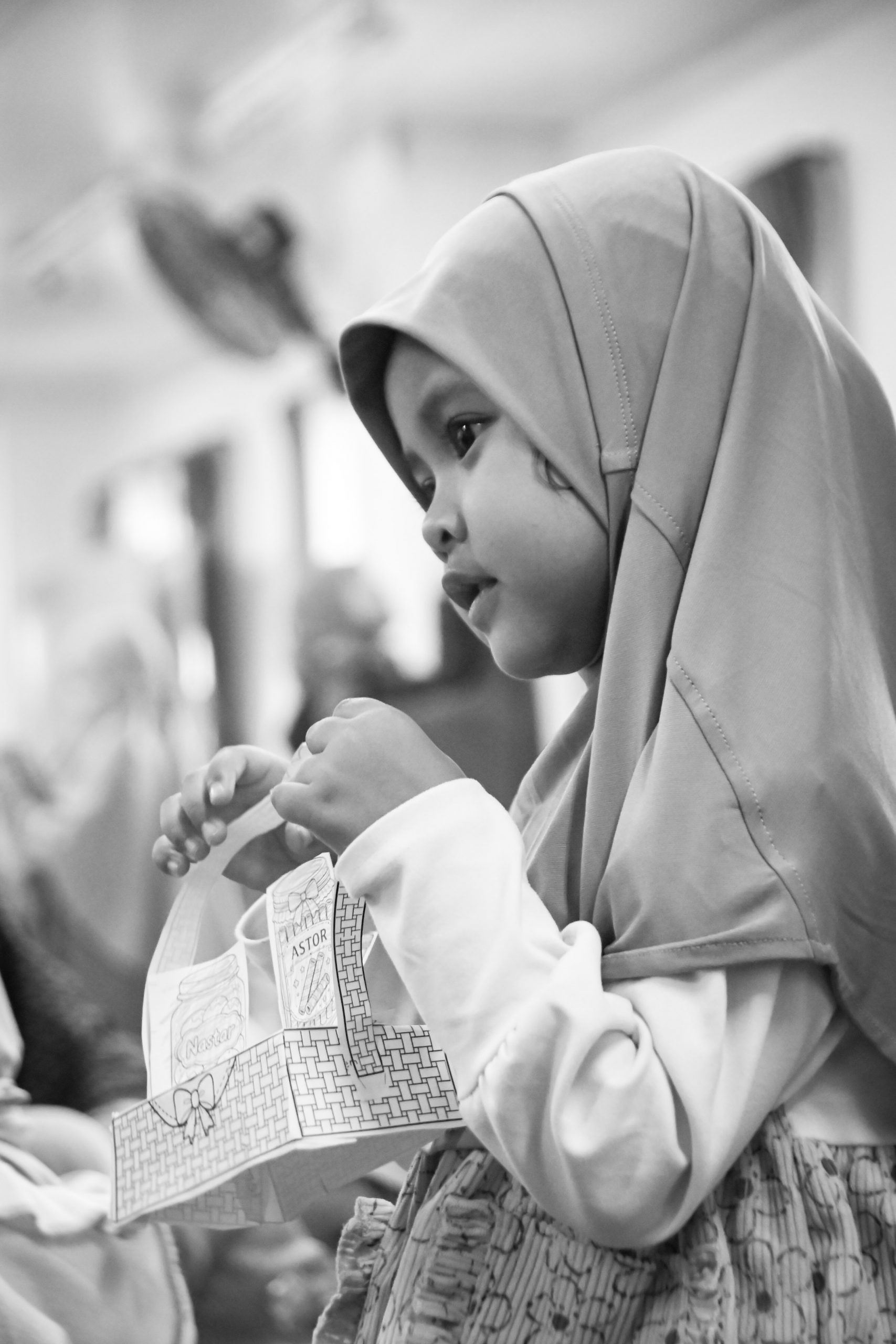
A child holds a handmade paper basket, decorated with drawings of Indonesian sweets, during a community gathering.
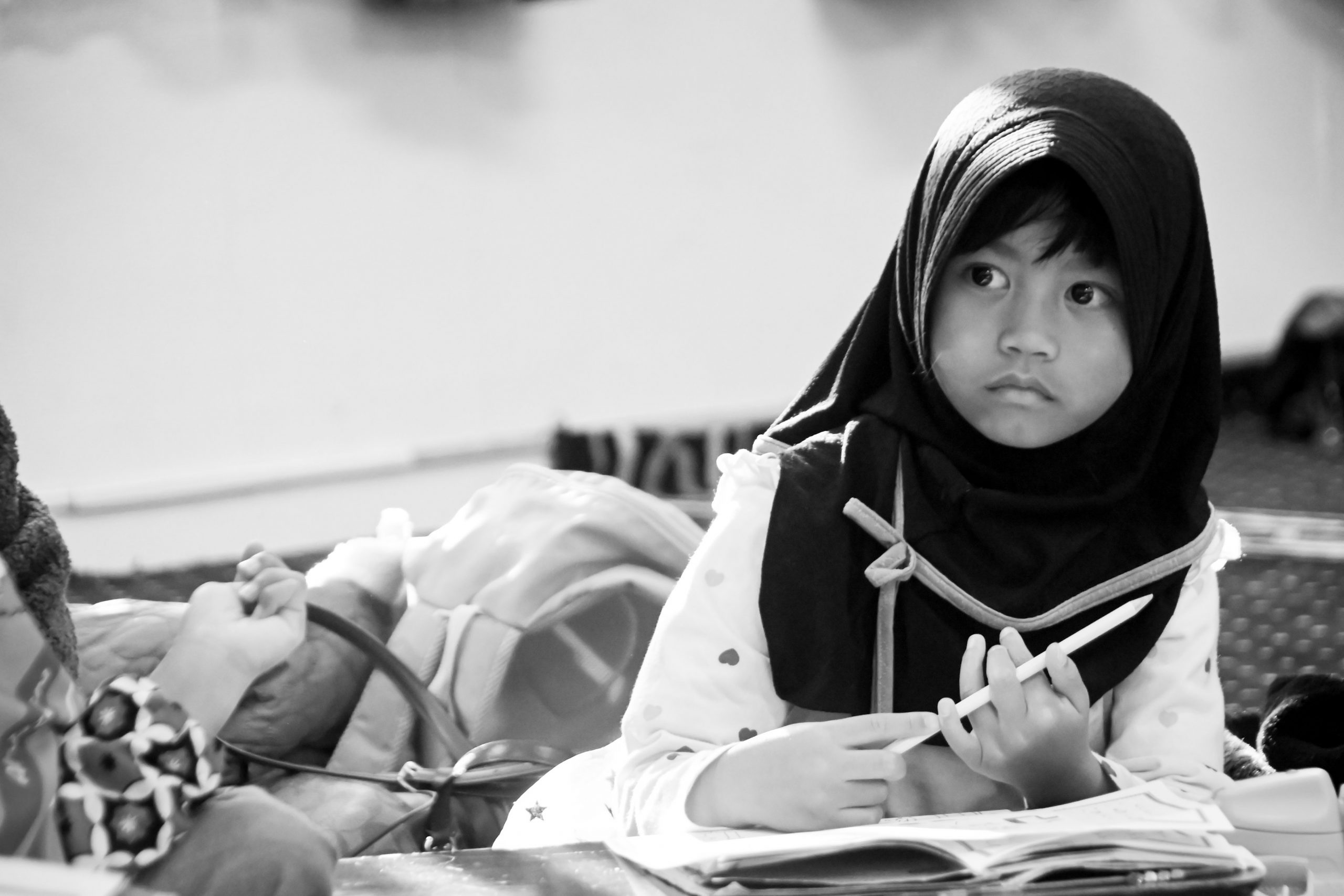
A student looks up from her notebook during Quran study.
But the mosque’s function extends far beyond the rhythms of ordinary life. When the 2011 Great East Japan Earthquake struck, Masjid Istiqlal opened its doors to displaced people — stocking halal food, opening its prayer space, and providing bedding. Japan’s official evacuation plans had made no provision for halal dietary requirements, prayer schedules, or language barriers. During COVID-19, the mosque distributed food to those who had lost income and facilitated vaccination for foreign nationals facing linguistic barriers to public health services. These are not acts of charity. They are acts of infrastructure.
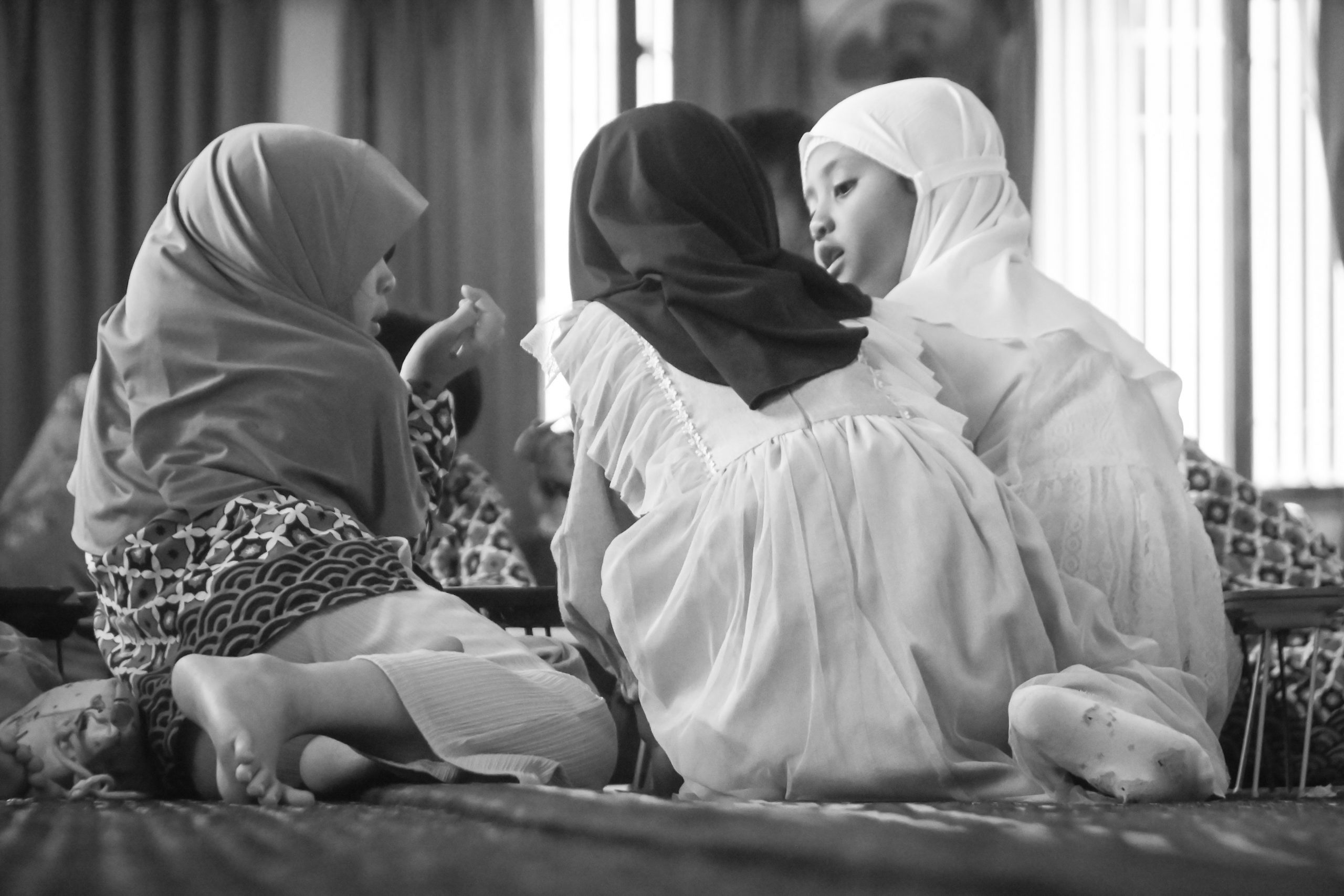
Children sit together on the prayer hall floor between lessons.
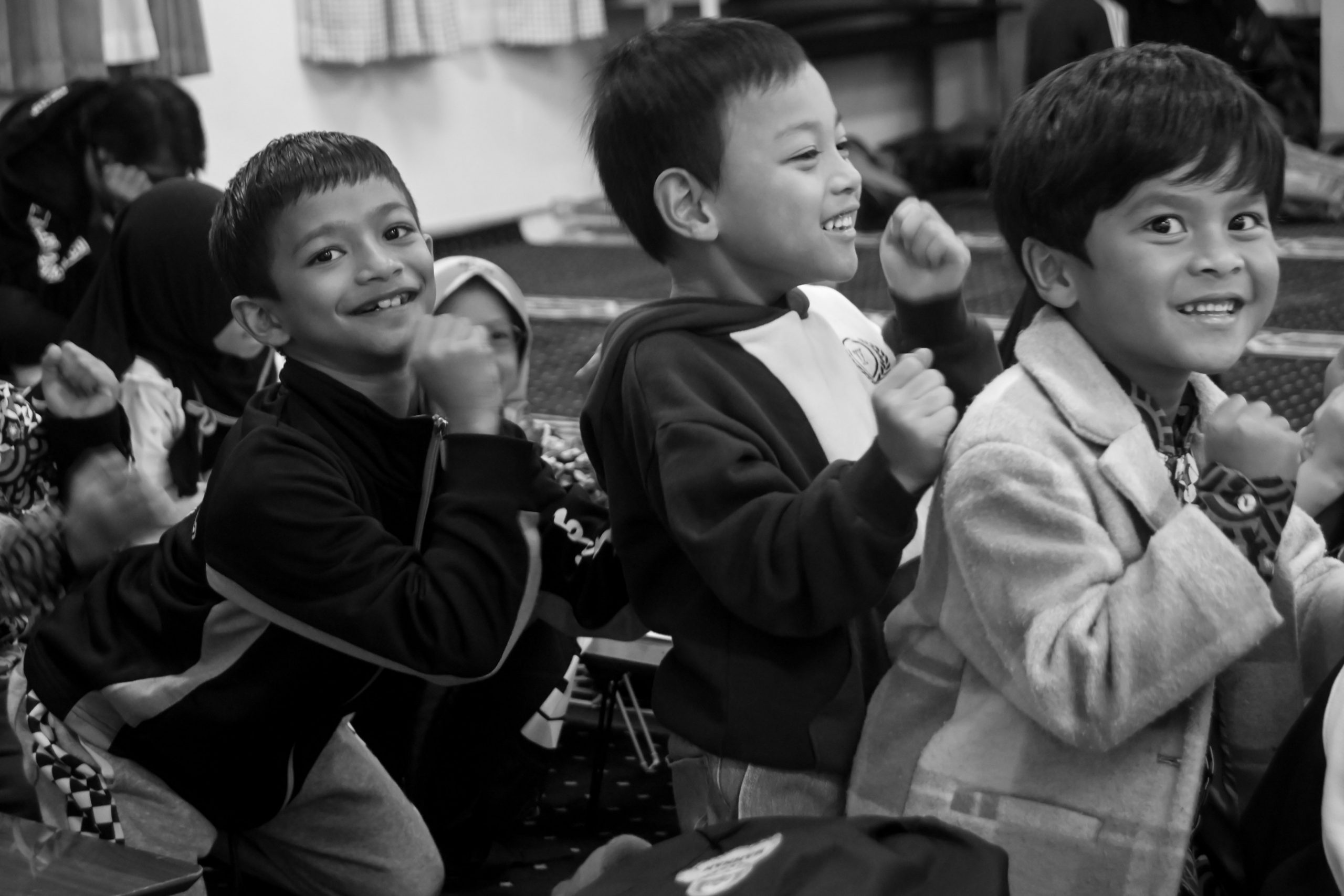
Boys laugh together at the mosque — the next generation growing up in Kamagasaki.
Kamagasaki was built by Japan’s postwar economic miracle as a reservoir of day labor. As that generation disappears, young Muslim migrants are putting down roots in the same streets. Among them: a man from Indonesia who works at an elderly care facility in rural Wakayama, who recently brought his bride from home. “When we have children,” he said, “we will have to move — somewhere outside Osaka, where the schools are better.”
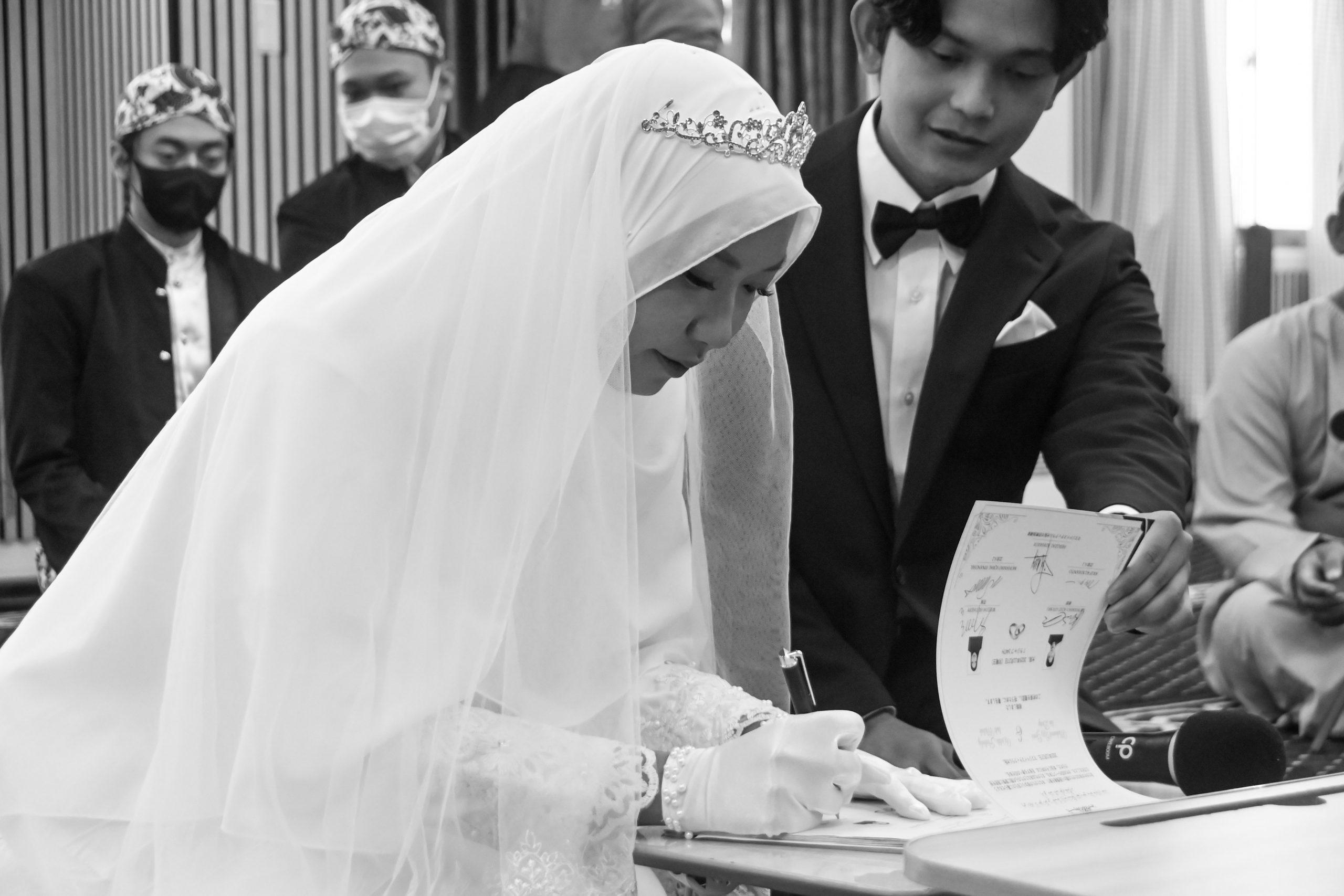
A bride signs the marriage certificate at Masjid Istiqlal Osaka, witnesses looking on.
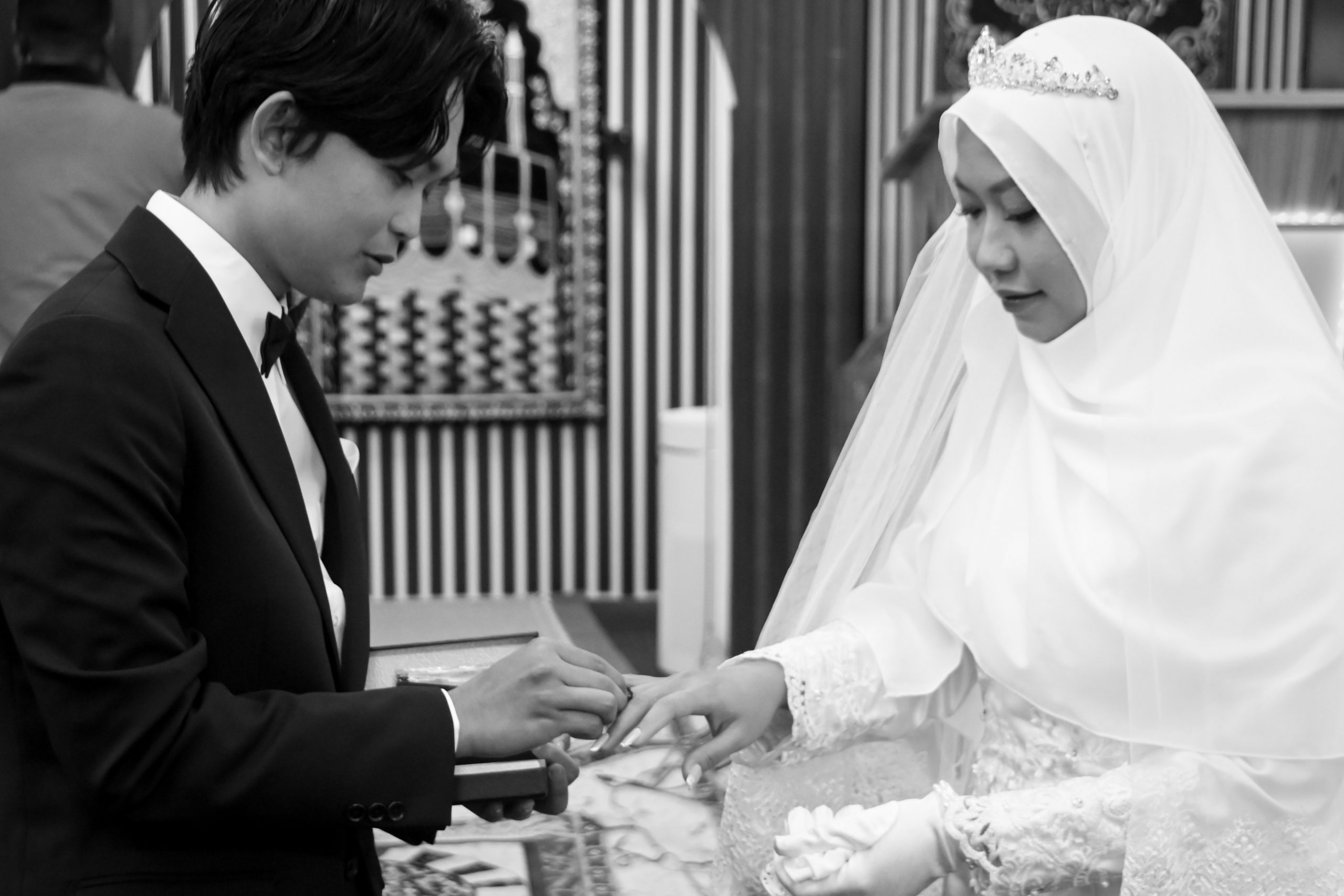
A groom places a ring on his bride’s finger during their Islamic wedding ceremony at the mosque.
Japan did not decide to receive these people. Yet they are already here — raising the next generation, building community, putting down roots. The country is changing without having decided to change.
Related:
– Ramadan In India’s Capital: A Photo Essay
– Ramadan At The Uyghur Mosque: Community, Prayers, And Grief