

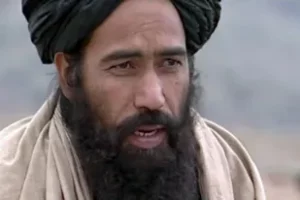
Taliban Tale: How Afghan Militants Survived Campaigns in 2006-16
Perhaps no country is as identified with the American war on terror that began twenty-five years ago than Afghanistan, its launchpad and the site of what is still the longest war in American history at the time of writing. September 2026 marks not only a quarter-century since the war on terror began, but a landmark of several types for Afghanistan: thirty years since the Taliban movement that now rules the country first captured Kabul, five years since their second emirate was established following the American defeat, and ten and twenty years respectively since some of the war’s most strategic campaigns. Having written a history of the movement, Emirate and Insurgency, I will here condense Taliban history into an article with a specific focus on the period between 2006 and 2016, the strategic height of the war.
Built off a politicized and militarized sector of talib networks that have long linked Islamic students in Afghanistan, the Taliban movement emerged as an organized force during the civil war that followed the Soviet occupation. Talibs were found across and beyond the various “mujahideen” factions, but what distinguished them from others was a combination of reputation for Islamic integrity compared to some of the more unruly factions; social roots in the countryside; and a type of informal discipline not shared by most other armed groups. Consequently, the Taliban movement rapidly expanded in the mid-1990s, and despite a near-isolation on the international scene controlled the vast majority of Afghanistan by the time that it was overthrown. This occurred at the hands of an American invasion, principally geared toward the Qaeda network that the emirate protected, in 2001. A frequently abusive American occupation, whose obsession with “counterterrorism” manhunts often empowered the most notorious militias, pushed not only Taliban veterans into the maquis but many others who had little link with the original Taliban emirate.
Keep supporting MuslimMatters for the sake of Allah
Alhamdulillah, we’re at over 850 supporters. Help us get to 900 supporters this month. All it takes is a small gift from a reader like you to keep us going, for just $2 / month.
The Prophet (SAW) has taught us the best of deeds are those that done consistently, even if they are small.
Click here to support MuslimMatters with a monthly donation of $2 per month. Set it and collect blessings from Allah (swt) for the khayr you’re supporting without thinking about it.
This was most obvious in mountainous eastern Afghanistan, a politically fragmented region where the emirate had always had trouble but where the United States, in pursuit of Usama bin-Ladin, launched a number of disruptive manhunts. Former Afghan prime minister Gulbadin Hikmatyar and his lieutenant “Kashmir Khan” Rahmatyar, leading veterans of the 1980s war against the Soviets, now joined their former Taliban rivals in opposition to another foreign invader. A number of largely autonomous Salafi networks, some linked to Qaeda and some quite the reverse, also took up arms; one well-known example was timber merchant Haji Mateen, who had been attacked on mistaken grounds by a trigger-happy American expedition. Many Taliban leaders in the east either had experience in Hizb and/or Salafi networks: notable examples included Munibullah Sadiq, Sheikh Abdul-Rahim, and the particularly enterprising Ihsanullah Baryal.
Strictly Taliban activity was at first confined to their heartland in southern Afghanistan, where it benefited off networks of pre-Taliban “mujahideen” commanders who had joined the emirate in the 1990s, such as Shafiqullah Mohammadi. Taliban veterans established fronts both within the Afghan countryside and just across the border in Pakistan, often assisted by sympathetic Pakistani Pashtuns. Executive control, at least in paper, lay with a council at Quetta established by emirate defence minister Ubaidullah Akhund and his second-in-command Abdul-Ghani Baradar; emirate interior minister Abdul-Razzaq Akhundzada; emirate aviation minister Akhtar Mansur; corps commanders Daddullah Lang and Akhtar Usmani, among others. Based in the Afghan countryside and exercising an important but indirect symbolic control was the eye-patched emir Umar Mujahid.
A more autonomous but nonetheless loyal set of councils were established in northern Pakistan’s Pashtun-majority regions by “mujahideen” veterans who had joined the emirate in the 1990s, including the families of former minister Abdul-Latif Mansur and most notably former justice minister Jalaluddin Haqqani, one of the most outstanding veterans of the 1980s jihad, whose son Sirajuddin now took on his mantle. These councils largely handled relations in the east alongside the likes of Baryal, but also the delicate matter of relations with Pashtuns in adjacent Pakistan’s mountainous and traditionally autonomous northwest Waziristan. It was Pashtun clans in this region who had welcomed Afghan fugitives, but the fact that these included a handful of Qaeda refugees that the United States was eager to root out meant that the region was targeted by American bombardment and, under American pressure, initially reluctant but increasingly disruptive Pakistani military campaigns.
The Haqqanis used their longstanding ties with both sides of this Pakistani civil war to mediate, but with only mixed success, particularly as several mediation attempts were systematically sabotaged by American bombardment. The Pakistani military, which had initially hastily abandoned its former Taliban support to join the United States at the war’s outset, was by 2006 having second thoughts given the new Afghan government’s links with India; in addition, Taliban mediation with its insurgency prompted Pakistan to take a more permissive attitude toward the Taliban by 2006, a stance that retired officers who had fought in the 1980s jihad had long advocated.
At this time warfare in Afghanistan largely involved peremptory manhunts into the mountains on the part of the occupation, and hit-and-run attacks on the part of the insurgency. The most imposing Taliban commander was the one-legged Daddullah, who controversially borrowed the “suicide attack” tactic from Iraq and deployed it with increasing alacrity by the mid-2000s. With their main focus on Iraq, American involvement relied Sheavily on a mixture of bombardment and outsourcing ground warfare to local militias and allied armies, especially the North Atlantic Treaty Organization (NATO) that had hastily mobilized to support the American war. By 2006 many of this coalition’s members such as Canada, Germany, and the Netherlands took up the charge in Afghanistan, hoping to bolster their standing with Washington after having avoided its more notorious war in Iraq.
However it was a more familiar foe, Britain, whose formerly globetrotting empire had been beaten several times in Afghanistan, that suffered the first sting of Taliban insurgency. In Helmand, a sleepy southern province next to Kandahar widely known for opium cultivation, aristocratic British commandant Ed Butler found his garrison overstretched against a sudden Taliban surge, led in the province’s north by Abdul-Mannan Abdul-Rahim and in its south by former emirate minister Naeem Baraikh.
By spring an even larger mobilization was taking place against David Fraser’s Canadian forces in Kandahar. Here Daddullah and Abdul-Majeed steadily closed in on Afghanistan’s second city, and the Taliban’s historic stronghold, from the south and west while another former minister Matiullah Nanai and veteran maquisard Abdul-Hannan Jihadwal closed in from the north. Monthly of fierce combat followed, in which Daddullah’s principal lieutenant Abdul-Baqi Taluqani was killed. As throughout the rest of the south, the reliance on unsavoury militias hurt the foreign armies; the invitation of the bloodthirsty young adventurer Abdul-Raziq Khan, leading a border militia that had oppressed rival clans since the Soviet period, played into the hands of Taliban leaders Matiullah and Abdul-Majeed, whose Nurzai clan had been Abdul-Raziq’s major target and now mobilized in the thousands.
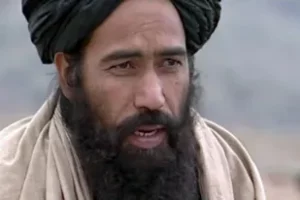
The ferocious one-legged Daddullah Lang launched the insurgency’s first major campaigns until he was killed in 2007.
Coupled with the campaign in Helmand and, between Shafiqullah and Dutch-Australian forces, in Uruzgan, a bloody summer unfolded. It was not until September 2006, however, that the Taliban in Kandahar erred by committing a large force in the plains south of Kandahar city, which had been fertile ground for warfare against Soviet tanks but were much more exposed to the airpower of this new, Western occupation. Hundreds, perhaps close to a thousand, were killed in bombardment as the Taliban campaign for Kandahar was momentarily broken. Over the next few years Hamid Karzai’s powerful brother Ahmad Wali would increasingly wield power in the city alongside foreign forces, but the province was never free of smaller Taliban raids.
In the meantime, Abdul-Mannan and Baraikh had advanced sufficiently in Helmand to force British theatre commander David Richards to adopt a tentative ceasefire at the town Musa Qala. This so irritated the American commander Daniel McNeill that he promptly reasserted American control over the entire Afghan campaign in 2007. A remorseless veteran of the manhunts at the war’s start, McNeill’s stint saw the killings in combat or by bombardment of Taliban leaders Usmani, Daddullah, Jihadwal, and others. Combined with the imprisonment in Pakistan of Taliban second-in-command, the insurgency’s strategy was increased taken over by Baradar, flanked in Kandahar by former ministers Akhtar Mansur and Isa Akhundzada.
A more cautious but methodical strategist, Baradar tended to favour hit-and-run attacks, the employment of explosives given the macabre euphemism of “flowers”, and the implementation of a more orderly, disciplined “shadow government” that in practice governed much of the Afghan countryside and earned a reputation for superior efficiency. Backed by the endorsement of their close friend emir Umar, Baradar and Akhtar brushed aside a challenge by Daddullah’s unruly brother Mansur Bakht. By 2009 they were joined by another of Umar’s old friends, Gul-Agha Hidayatullah, who had been released from a gruelling prison and became treasurer. He replaced Abdul-Wasai Mutasim, who had been accused of financial misconduct after being approached by Pakistani intelligence.
In the battlefield, McNeill’s airstrikes had promptly sabotaged the ceasefire in Musa Qala, only for Abdul-Mannan to promptly take over the town. It wasn’t until December 2007, almost a full year later, that British forces, led with a small Afghan unit under communist veteran Mohiuddin Ghauri, were able to retake the town. Ironically given that the early occupation had jailed many people under cases of mistaken identity, a reverse case of mistaken identity saw the release of two of the Taliban’s most notable field commanders captured in Guantanamo Bay: former corps commander Abdul-Rauf Khadim and Abdul-Qayum Zakir. They might have been released through the influence of former Helmand governor Sher Akhundzada, who despite a close friendship with Afghanistan’s ruler Hamid Karzai resented Britain for sacking him and had gone to school with Zakir. Within a year the daring Zakir was in particular carving up slices of Helmand, reaching the British garrison’s gates at Lashkargah in October 2008.
Similarly American forces ran into a hornet’s nest of resistance in the eastern highlands, against veteran fighters like Hizb veteran Kashmir and Taliban commanders Sadiq, Abdul-Rahim, and Sheikh Dost-Mohammad who relished the prospect of battle. American focus hinged around a certain Qaeda commander called Abu Ikhlas Masri, but he seems to have been just one of many characters about whom the Americans had little intelligence and against whom they had less success. Led by high-profile commanders such as Mick Nicholson, descendant of a British imperial general who had fought in Afghanistan, and David Rodriguez, who had fought in Iraq, the largely specialized American forces prided their “warrior” tradition as commandos and mountaineering specialists. But in the highlands of eastern Afghanistan they met their match in years of battles over far-flung outposts that lacked a particular purpose. The Korengal valley in Kunar became a particularly dreaded site of contestation, called the “valley of death”.
Combat in southeast Afghanistan, where the Haqqanis and Mansurs enjoyed widespread influence from the days of the anti-Soviet jihad, was more sporadic; every now and then the insurgents would take over a county to make a point, but their most notable role was in their control of the routes around and increasingly into Kabul. The Mansurs’ lieutenant Ismail Nasir extracted funds from the strategic road in Ghazni that joined Kabul with Kandahar, while the Haqqanis’ lieutenant Sangin Fatih notably captured an American soldier, Bowe Bergdahl, that gave the network valuable leverage.
Partly because of longstanding assumptions that the Taliban problem was a primarily Pashtun phenomenon, the United States and other foreign states had long assumed that they should prioritize fighting in the south and east. But by the late 2000s insurgency had spread into the politically fragmented west and, perhaps most alarmingly given that this region had always been presumed as hostile to Taliban, the north. In the west Taliban veterans such as emirate governors Rasul Mujahid, Abdul-Rahman Haqqani, and Abdul-Mannan Niazi joined with younger commanders like Baz-Mohammad Haris, Javid Nangialai, and Maulawi Dastagir. Each of them came from the large Nurzai Pashtun clan; Nangialai was a clan leader whose family had fallen out with Kabul. But there were also non-Pashtun insurgents:“mujahideen” veteran Yahya Akbari had actually fought against the Taliban in the 1990s, but now supported their insurgency until he was killed by the Americans. While rarely covered abroad, combat in the west, mostly against American and Italian forces, was quite fierce by the late 2000s.
Northern Afghanistan was largely the preserve of rival federalist militias, linked to the Junbish and Jamiat parties, that had opposed the 1990s emirate. But the Taliban always had a sizeable non-Pashtun element: in the northwest Uzbeks such as Salahuddin Ayubi and Abdul-Rahman Rashid in the northwest were especially successful in mobilizing insurgent fronts. By the mid-2010s these were joined by Tajiks such as Fasihuddin Fitrat and Amanuddin Mansur in the northeast. Baryal, the insurgency’s most active strategist in the north and himself an ethnic minority, tried to assemble a specifically non-Pashtun network, but this rapidly escaped his control.
Kunduz had been the Taliban emirate’s most reliable northern redoubt, and it was here that Taliban commanders Abdul-Salam Baryalai and Abdul-Rahman Muslim managed to advance by 2009 against a largely complacent German garrison. The Germans had termed the province “bad Kunduz”, meaning the Kunduz bath in German, under assumption that their NATO assignment here would be a relaxed break; instead it became “bad Kunduz” in the English sense of the word. Governor Umar Sulaimani and his brother sheriff Nur led one of a number of militia networks that often competed to the benefit of Taliban advances; by the early 2010s both had been assassinated, as had Jamiat’s provincial and regional commanders, Abdul-Rahman Sayedkhail and Daud Daud.
The 2007-12 period saw a major intensification of the war, both at the end of George Bush’s term in Washington and especially under his successor Barack Obama, who framed Afghanistan as the necessary “good war” in contrast to Iraq. Building off experiences in Somalia and especially Iraq, the United States tried to politically split the insurgency through promises of negotiation while building coercive pressure through a series of large campaigns, assassinations, and airstrikes: indeed this period featured a large number of massacres, often conducted by airstrike, that were rarely officially acknowledged.
Karzai’s objections to these abuses attracted increasing American ire, partly because he had won a controversial election over foreign minister Abdullah Abdullah and partly because he was seen as moving closer to a Pakistan of whom the United States was increasingly mistrustful. When Baradar was captured at Pakistan in 2010 Karzai objected loudly, claiming that he could have worked out an inter-Afghan deal, while the Pakistanis refused to turn him over to the United States. In fact Afghan leaders who independently negotiated with Taliban were soon killed: Jamiat leader Burhanuddin Rabbani, whose government had been ousted in the 1990s Taliban takeover, and his former prime minister Arsala-Rahmani Daulat, who had joined the Taliban during the same period, were both assassinated after beginning talks.
Baradar’s replacement, Akhtar Mansur, had a running rivalry with the hardy field commander Zakir that the United States tried vainly to exploit; however, Akhtar resisted their attempts to coopt him and the campaign was soon abandoned. There was a major rift when Zakir and Abdul-Majeed accused Nasir, the prolific fundraiser whose taxation had irritated the powerful Nurzai clan as well as his own Andar clan in Ghazni, of financial misconduct. Akhtar was able to salvage Nasir’s life, but he was replaced at Ghazni by the more trusted Abu Yousaf Idris, who stemmed an American-backed militia there.
Successive Iraq veterans such as the skilful assassin Stanley McChrystal and the politically powerful patrimonialist David Petraeus, who had been credited with winning the Iraq war, arrived in Afghanistan with high reputations that were dented by their experience there. Petraeus’ attempt at dividing the insurgency failed in part because the Taliban had much more experience as a cohesive group, indeed as a government, than most Iraqi and Somali insurgents. In addition, the early 2010s mistrust between Washington, Islamabad, and Kabul during undercut a unified strategy of the type that had typified Iraq.
In the battlefield, American firepower during the 2009-11 “surge” inflicted massive casualties, both on Taliban troops and on civilians: many of the latter were retrospectively counted as militants as men of fighting age, while notorious militia commanders like Abdul-Raziq enjoyed a free hand. But the results were scant: a massive southern campaign in 2010, against Akhtar and Zakir at Helmand, and against Isa, Abdul-Majeed, and Abdul-Razzaq at Kandahar, had yielded only minor and tenuous territorial gains.
Campaigns at Kunduz and Farah, at opposite ends of Afghanistan, were similarly indecisive and in the east Dost-Mohammad and Sadiq actually managed to expel the Americans from the Nuristan highlands. Killings continued: Dost-Mohammad, Mateen, Sangin, emirate ministers Abdul-Raqib Abdullah and Rustum Hanafi, and former corps commander Abdul-Salam Majruh had been killed in either the battlefield or by assassination, while many government figures included Karzai’s brother Wali were also assassinated. Taliban emir Umar himself met a quieter death in 2013, but the news was kept an internal secret within the insurgency until 2015.
Though most foreign forces had departed by 2011, the United States set 2014 as their exit deadline. Much was made of this, and yet as the deadline approached it was clear that the Americans would remain in Afghanistan beyond. This despite the refusal of Karzai, finding perhaps his finest hour in the last months of his reign, to sign an agreement for an open-ended American deployment of the sort that had been made in Iraq. While large numbers of American soldiery did leave, thousands remained and the employment of mercenaries, who had actually long outnumbered formal soldiers, and airstrikes meant that Afghanistan remained under occupation.
Obama’s negotiations, initially intended as a divide-and-rule mechanism but increasingly gaining the whiff of desperation, had hit repeated walls and he became convinced that a solution lay in wedging Taliban from Pakistan. In 2013 he thus encouraged Qatar to set up a Taliban “foreign office”, where its longstanding chief negotiator Tayeb Agha soon set up shop. The price that Tayeb demanded for this concession was the release of Taliban captives. With so many leaders having been captured or killed, these returning fighters injected new energy into the insurgency: they included Abdul-Salam Baryalai from Kunduz, Abdul-Mannan Abdul-Rahim from Helmand, and Qasim Samim from Ghazni, who immediately returned to their battlefields; as well as Ibrahim Sadar, a veteran field commander whom Akhtar promoted to replace Zakir. In 2014, Sirajuddin secured, in return from Bergdahl, the release of more senior Taliban leaders first captured early in the war from the American prison at Guantanamo.
A crisis around Karzai’s succession once more weakened the American campaign; once more runner-up Abdullah Abdullah cried foul after losing to former finance minister Ashraf Ghani, a Pashtun technocrat close to the United States who had allied with the powerful northern Uzbek Abdul-Rasheed Dostum, a brutish but cunning militiaman whose career included support by both Soviet and American occupations. It took American foreign minister John Kerry the entirety of summer 2014 to work out a power-sharing deal.
By that time, the insurgency had not only weathered the storm but actively rebounded. Northeast Badakhshan, the only province that the 1990s emirate had never captured, now found a groundswell of largely Tajik recruits led by Fasihuddin Fitrat and Amanuddin Mansur. Southwest Helmand, a longstanding Taliban stronghold, saw the veteran commanders Abdul-Mannan and Baraikh speedily and repeatedly overrun much larger, but poorly organized, militias. Even the formidable Dostum had his hands full against Turkic Taliban like Ayubi and Rashid in the north. While Kandahar remained under the control of the brutal regime commander Abdul-Raziq to hold onto Kandahar, the overall pattern was discouraging enough to give the United States a pretext to extend their stay, operate through airstrikes and mercenaries as they did. Nicholson, the British general’s descendant who had fought in the eastern highlands, soon took over the campaign and contrived one pretext after another for staying in country.
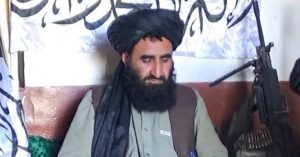
Abdul-Mannan Abdul-Rahim led the Helmand insurgency that became a Taliban mainstay.
It was the newly minted Daesh organization based in the Fertile Crescent, a rival to the Taliban’s Qaeda confederates, that now challenged the insurgency. Its claims to caliphal title and speedy conquests in Iraq convinced many militants, particularly in the politically fragmented east, to join its franchise. Many Daesh recruits in Afghanistan had been either expelled from Taliban or, conversely, worked for their opponents: the seniormost Taliban defector was former corps commander Khadim, a seasoned fighter who nursed a grudge against his Taliban comrades and was eventually assassinated by the United States. In eastern Afghanistan, however, Daesh would remain a territorial force until its eventual defeat by Taliban in 2020, though it remains an irritant even today.
Meanwhile talks brokered by Pakistan were interrupted when news of Umar’s death was leaked two years after the fact; immediately Akhtar moved to assert himself as official successor, with a haste that made practical sense but deeply annoyed many of his colleagues. Many initially proposed Umar’s son Yaqub Mujahid as a successor, but Sirajuddin moved in and worked out a compromise where he, Yaqub, and preacher Hibatullah Akhundzada would deputize for Akhtar. The most explosive reaction came from Mansur Bakht, brother of Daddullah, and a number of the western Nurzai leaders such as Rasul, Nangialai, Haris, and Niazi, who broke away in a mutiny.
Fortunately for Akhtar, this coincided with perhaps the Taliban insurgency’s most spectacular blitz in September 2015. Baraikh and in particular Abdul-Mannan proceeded on a provincial blitz in Helmand that soon left its capital Lashkargah isolated. Ghazni city came under serious threat, and was momentarily breached, by Samim and Idris. And most spectacularly, in the northeast Baryal organized a major assault that peaked when Abdul-Salam Baryalai swept aside regime militias to take Kunduz city: the first provincial capital to fall into insurgent hands for years, and one where Abdul-Salam publicly confirmed Akhtar’s leadership after a prostration in thanks to Allah.
American commander Nicholson reacted swiftly: he dispatched Ghauri, a veteran of both Soviet and American occupation, to march on Kunduz, which he mercilessly bombarded. Most notoriously, and in a pattern that has since been repeated in Syria, Ukraine, and Palestine, the city’s hospital, run by an international health organization, was bombed. Nonetheless it took weeks, until October 2015, for Taliban forces to withdraw. American airpower once more assumed primacy as the occupation’s major weapon and perhaps the major factor in keeping out Taliban encroachment. On the ground the United States continued to rely on Soviet-turned-American vassals such as the militias of Dostum, Abdul-Raziq, and Helmand’s Abdul-Jabbar Qaharman of Helmand as well as officers like Ghauri.
Meanwhile Akhtar Mansur sprang to assert his leadership, dispatching a decisive lieutenant called Abdul-Rahman Pir to the task. Pir crushed Bakht, who was killed, and then fought the Nurzai mutineers in the west to a standstill. This was achieved partly through Akhtar and Sadar’s outreach to neighbouring Iran, and partly through Pakistan’s imprisonment of Rasul, the mutiny’s figurehead. But Akhtar’s outreach to Iran had ruffled feathers; as he returned to Quetta, an American airstrike, the only one in that part of Pakistan over twenty years of war, killed him.
In one sense Akhtar’s elimination removed a bone of Taliban contention; he was replaced seamlessly with Hibatullah, a Nurzai compromise candidate, and many Nurzai mutineers such as Haris reconciled while Sirajuddin, Yaqub, and a number of Taliban veterans remained in practical control. On the other hand Akhtar’s skill had stood the insurgency in good stead during its 2010s trials, and the system in whose setup he had played a major role outlasted him. Despite major regime attempts, under the technocratic Ghani’s beady gaze, that were meant to similarly organize its forces into line, Kabul never managed the same reform: by the end of 2016 Ghani’s centralization had alienated Dostum, who joined the political opposition after being accused of various crimes.
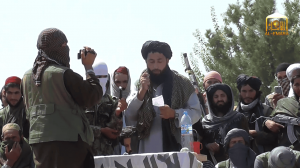
Abdul-Salam Baryalai’s captures of Kunduz in the autumns of 2015 and 2016 confirmed the Taliban as a long-haul contender in Afghanistan fifteen years into the war.
In autumn 2016, a year after its most impressive blitz, the insurgency launched another blitz around Afghanistan. For the second autumn running, Abdul-Salam Baryalai captured Kunduz and was only expelled by American bombardment, which only narrowly managed to save Helmand capital Lashkargah from the same pattern. From 2015-16, though the blitz that snapped up Afghanistan in 2021 could hardly have been predicted, it was clear that the United States’ greatest efforts had failed to eradicate the insurgency. For better or worse, the Taliban insurgency had absorbed the most sustained assault that the world’s most powerful nation could throw at it, and dug in for the long haul.