

Arabic Text, Translation and Meaning
Durood e Naqshbandiyah: Arabic Text, English Translation and Transliteration
Download Durood e Naqshbandiyah .pdf
Durood e Naqshbandiyah is a devotional salawat asking Allah to send blessings upon Prophet Muhammad ﷺ. The wording praises the Prophet ﷺ with expressions such as the lamp of the prophets, the light of the saints, and the light of the two realms.
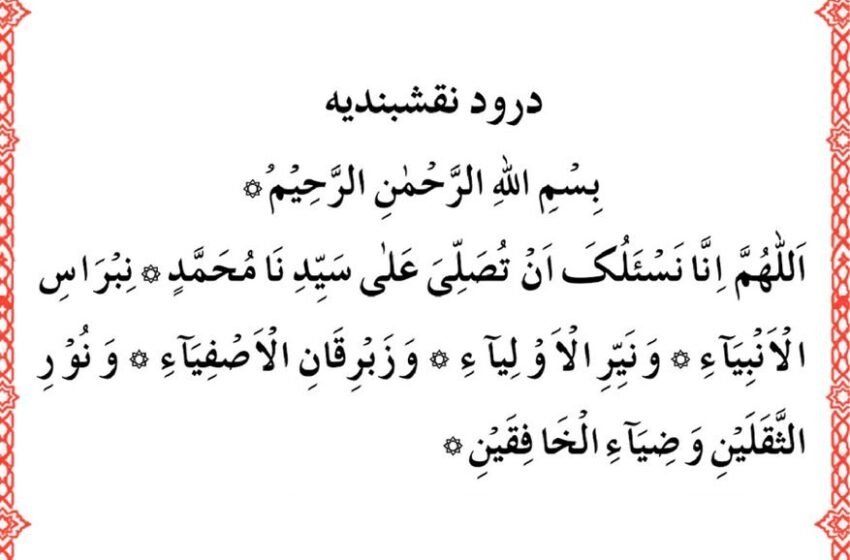
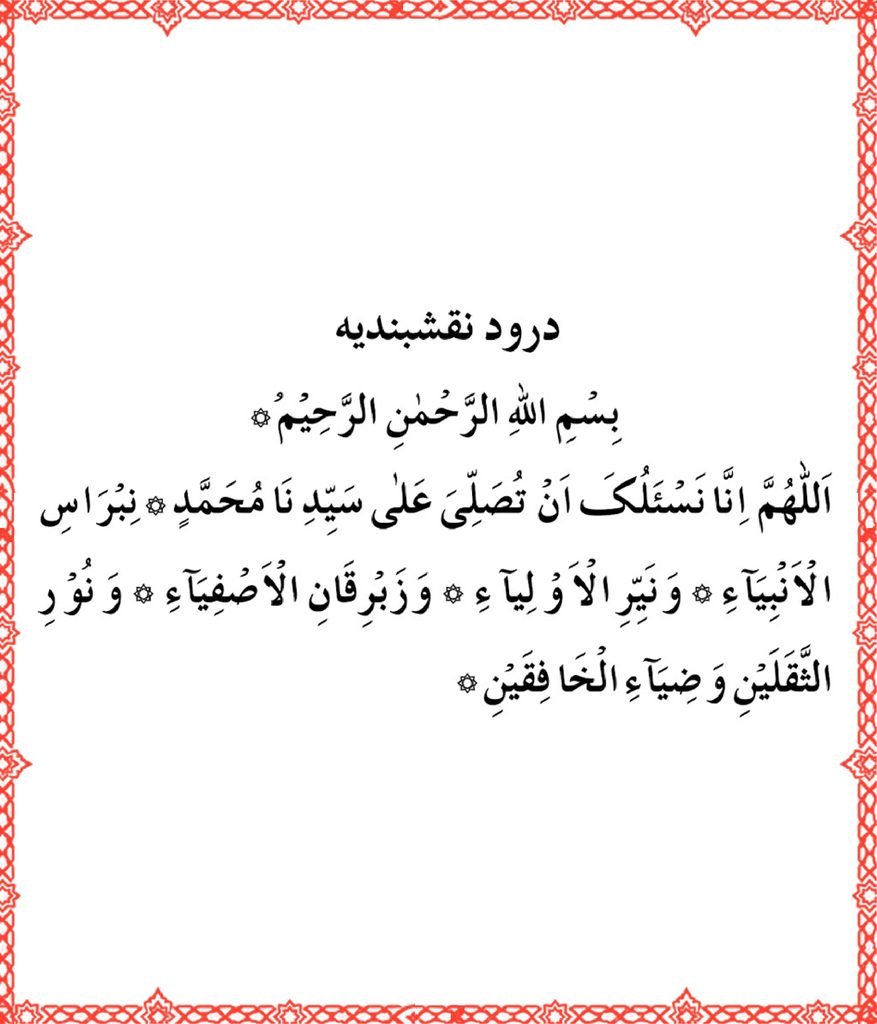
In this guide, you can read Durood e Naqshbandiyah in Arabic, follow its English transliteration, and understand its approximate English meaning. The Arabic text below follows the version shown in your image.
Durood e Naqshbandiyah Arabic Text
بِسْمِ اللَّهِ الرَّحْمَٰنِ الرَّحِيمِ
اللَّهُمَّ إِنَّا نَسْأَلُكَ أَنْ تُصَلِّيَ عَلَى سَيِّدِنَا مُحَمَّدٍ نِبْرَاسَ الْأَنْبِيَاءِ وَنَيِّرَ الْأَوْلِيَاءِ وَزَبَرْقَانَ الْأَصْفِيَاءِ وَنُورَ الثَّقَلَيْنِ وَضِيَاءَ الْخَافِقَيْنِ
Durood e Naqshbandiyah Transliteration in English
Bismillahir Rahmanir Raheem.
Allahumma inna nas’aluka an tusalliya ‘ala Sayyidina Muhammadin, nibras al-anbiya’i, wa nayyir al-awliya’i, wa zabarqan al-asfiya’i, wa nur al-thaqalayn, wa diya’a al-khafiqayn.
Simple Pronunciation Guide
Read the Arabic slowly, phrase by phrase. Some words in this prayer are less common, so it may take a little practice to pronounce them comfortably.
The English transliteration is a guide rather than an exact representation of Arabic sounds. Reading it alongside the Arabic text, or learning from a knowledgeable Arabic reader, can help with pronunciation.
Durood e Naqshbandiyah English Translation
The following is an approximate English translation of the wording shown in your image:
“In the name of Allah, the Most Compassionate, the Most Merciful.
O Allah, we ask You to send blessings upon our master Muhammad, the lamp of the prophets, the light of the saints, the radiant one among the pure, the light of the two realms, and the illumination of the two horizons.”
Some expressions in the prayer are poetic titles of praise. Their exact English wording may vary depending on how the Arabic phrases are interpreted.
Understanding the Meaning of Durood e Naqshbandiyah
The prayer uses several descriptive expressions to praise Prophet Muhammad ﷺ. Here is a simple explanation of the main phrases.
Allahumma inna nas’aluka: This means “O Allah, we ask You.” It opens the prayer as a direct supplication to Allah.
An tusalliya ala Sayyidina Muhammad: This means “to send blessings upon our master Muhammad.” It expresses the central request of the prayer.
Nibras al-Anbiya: This expression means “the lamp of the prophets.” It uses the image of a lamp to convey guidance and light.
Nayyir al-Awliya: This can be understood as “the light of the saints” or “the one who illuminates the saints.” It is a devotional expression of praise.
Zabarqan al-Asfiya: This is a poetic expression associated with the pure or chosen people. Its precise English rendering is uncertain without a reliable commentary on this specific wording.
Nur al-Thaqalayn: This means “the light of the two weighty realms.” In Islamic terminology, al-thaqalayn commonly refers to humans and jinn.
Diya al-Khafiqayn: This can be rendered as “the illumination of the two horizons,” understood poetically as the eastern and western horizons.
These phrases give the prayer its distinctive language. They express reverence through imagery of light, guidance, and honour.
Reciting Durood e Naqshbandiyah
If you are learning Durood e Naqshbandiyah, start by becoming familiar with the Arabic words and their meaning. There is no need to rush through the wording.
You can make the process easier by reading a short phrase at a time, using the transliteration as a guide, and then checking the English meaning. Practising the less familiar words separately may also help.
For accurate pronunciation, seek guidance from a knowledgeable Arabic reader. The transliteration is useful, but it cannot capture every Arabic sound perfectly.
This article does not prescribe a particular time or a fixed number of repetitions.
Benefits and Source Notes
Sending blessings upon Prophet Muhammad ﷺ is an important devotional practice in Islam. Muslims recite Durood Sharif to express love and respect for the Prophet ﷺ and to ask Allah to bestow blessings upon him.
Durood e Naqshbandiyah includes poetic expressions of praise that readers may wish to understand before reciting the prayer. Reading the translation alongside the Arabic can help explain these expressions.
However, specific claims about guaranteed results, special rewards, or required recitation counts should be supported by reliable Islamic references. A devotional text should not automatically be described as an authenticated Hadith simply because it appears in a collection or on a website.
The supplied image identifies this wording as Durood e Naqshbandiyah, but it does not establish its historical source or prove a particular reward for reciting it. Anyone seeking verification of its origin or specific virtues should consult reliable Islamic scholarship.
Frequently Asked Questions
What is Durood e Naqshbandiyah?
Durood e Naqshbandiyah is a devotional salawat asking Allah to send blessings upon Prophet Muhammad ﷺ. The version shown in this article uses poetic expressions associated with light, guidance, and honour.
What is the English meaning of Durood e Naqshbandiyah?
Its approximate meaning is a request to Allah to send blessings upon the Prophet ﷺ, described through expressions such as the lamp of the prophets and the light of the saints.
What does Nibras al-Anbiya mean?
Nibras al-Anbiya can be translated as “the lamp of the prophets.” It uses the image of a lamp to express light and guidance.
What does al-Thaqalayn mean?
Al-Thaqalayn literally refers to “the two weighty ones” and is commonly used in Islamic terminology to refer to humans and jinn.
Does Durood e Naqshbandiyah have a fixed recitation count?
This article does not prescribe a specific number of repetitions. Any claim that a particular count guarantees a special reward should be checked against reliable Islamic references.
Is Durood e Naqshbandiyah an authenticated Hadith?
The image provided for this article does not establish the wording as an authenticated Hadith. Its attribution and any special virtues should be checked against reliable Islamic sources before being presented as established facts.