


Secular Books that Helped Me as a Muslim
Check out other Book Recommendations HERE!
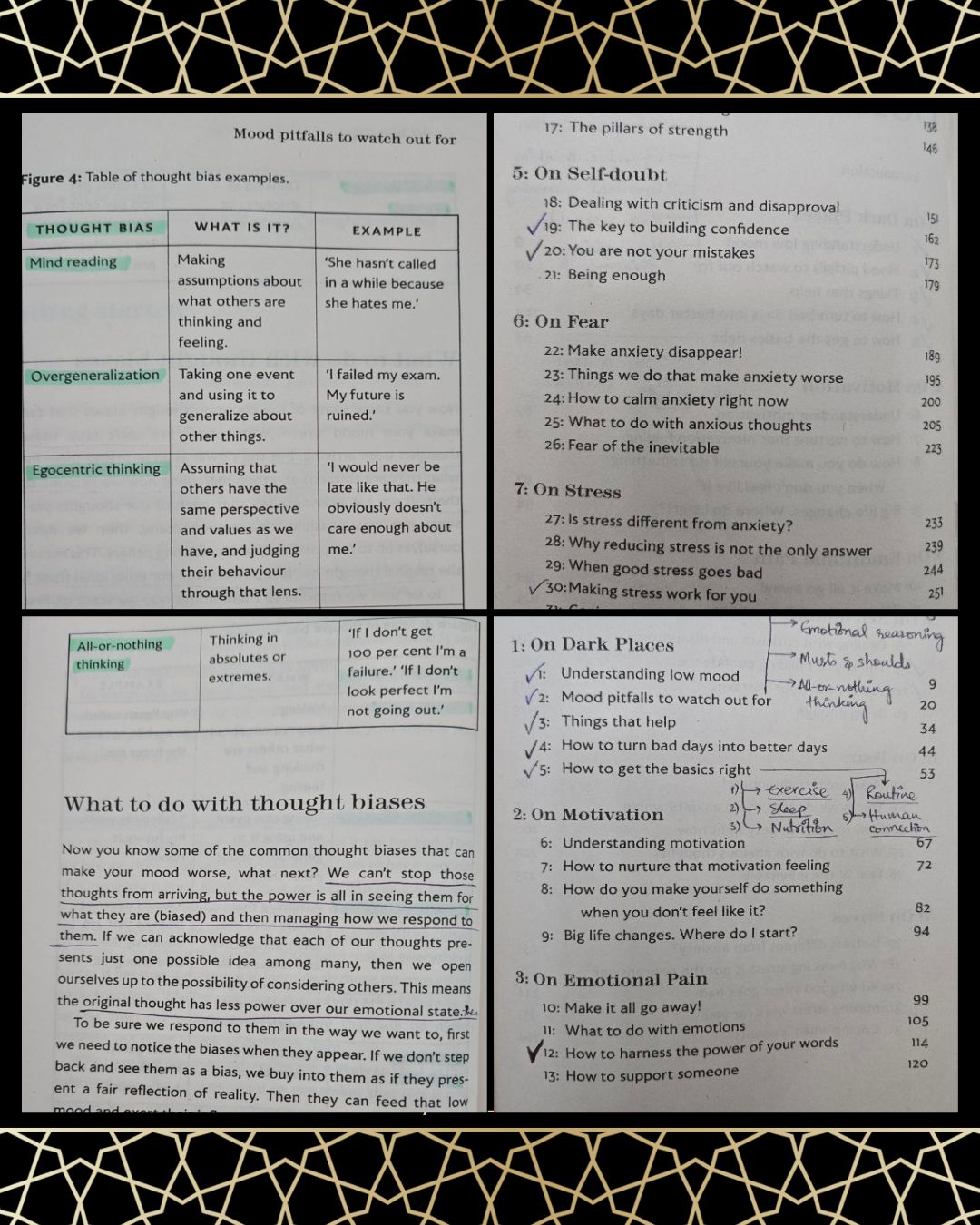
1) Why Has Nobody Told Me This Before? (by Dr. Julie Smith)
This book by Dr. Julie Smith is not a parenting book, but it became a super helpful book for me as a parent even though it didn’t tell me how to raise children. It teaches you how to manage yourself, and that alone can change the entire trajectory in your home. This is why we recommended this book as an extra resource for lesson 16 in our “Islamic Productivity Course”. The section on thought biases is something I think a lot about! How our thoughts shape our entire experience. We discussed it several times in our WhatsApp support group too – how it’s so hard to start thinking positive about ourselves when we’re not accustomed to that language (neither from our childhood nor from our adulthood (our loved ones may be highly critical)). But we can create a distance from our thoughts and how we perceive that thought. How we turn it into a belief. How we put that thought into action…How what we think about ourselves translates into what we think about children…As a parent, it stopped me from trying to “fix” every meltdown as the book constantly reminds you that emotions are not problems to be eliminated – they are just information/signals to be understood!
2) The 5 Love Languages (by Gary Chapman)
This is often spoken about as a marriage book but I realise that it’s a family-safety manual in disguise to be honest. Because when parents feel loved, seen, and safe with each other… the entire home transforms. Children subconsciously copy their parents’ relational habits. A peaceful marriage becomes an emotional shelter for children. They interpret the tension between parents as instability even if the conflict wasn’t about them. The main idea of the book is – Love must be communicated in the language the other person understands. Be it your spouse or your children. The 5 love languages are: Words of affirmation, Acts of service, Quality time, Physical touch, Gifts. They have a kids’-specific version too which translates adult‑oriented examples into age‑appropriate, child‑friendly practices ( for eg: bedtime stories, hugs, helping with homework, little surprises etc.) rather than romantic or partner‑style interactions. This book was recommended as an extra resource for lesson 9 in our “Islamic Productivity Course”.
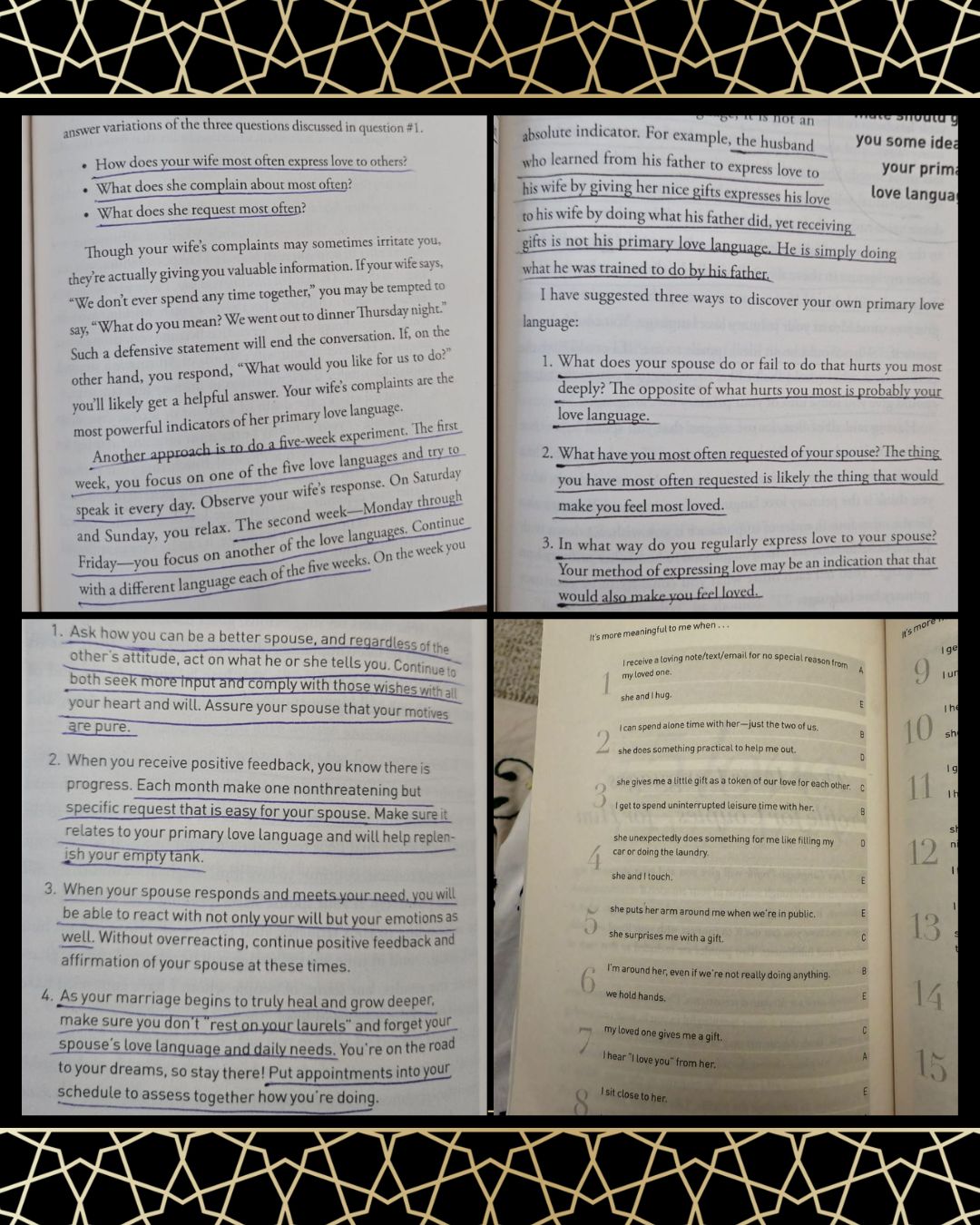
Pouring into your marriage IS pouring into your child because the marriage sets the emotional tone of the home. BUT note that those women who can NOT do anything about the situation (can’t leave a loveless/abusive marriage or so), think of Musa عليه السلام raised under one of the worst men in history (Firaun) by one of the best women in the history (Asiya). See how his foster father treated his wife vs how Musa عليه السلام treated the women he found in need of help among many other men. No other man rose up to the situation, but Musa عليه السلام did. He used his strengths without any expectations. So even though, fathers matter a lot, you alone can too if Allah wills. You do not need a “perfect” marriage for “perfect” kids 🌱
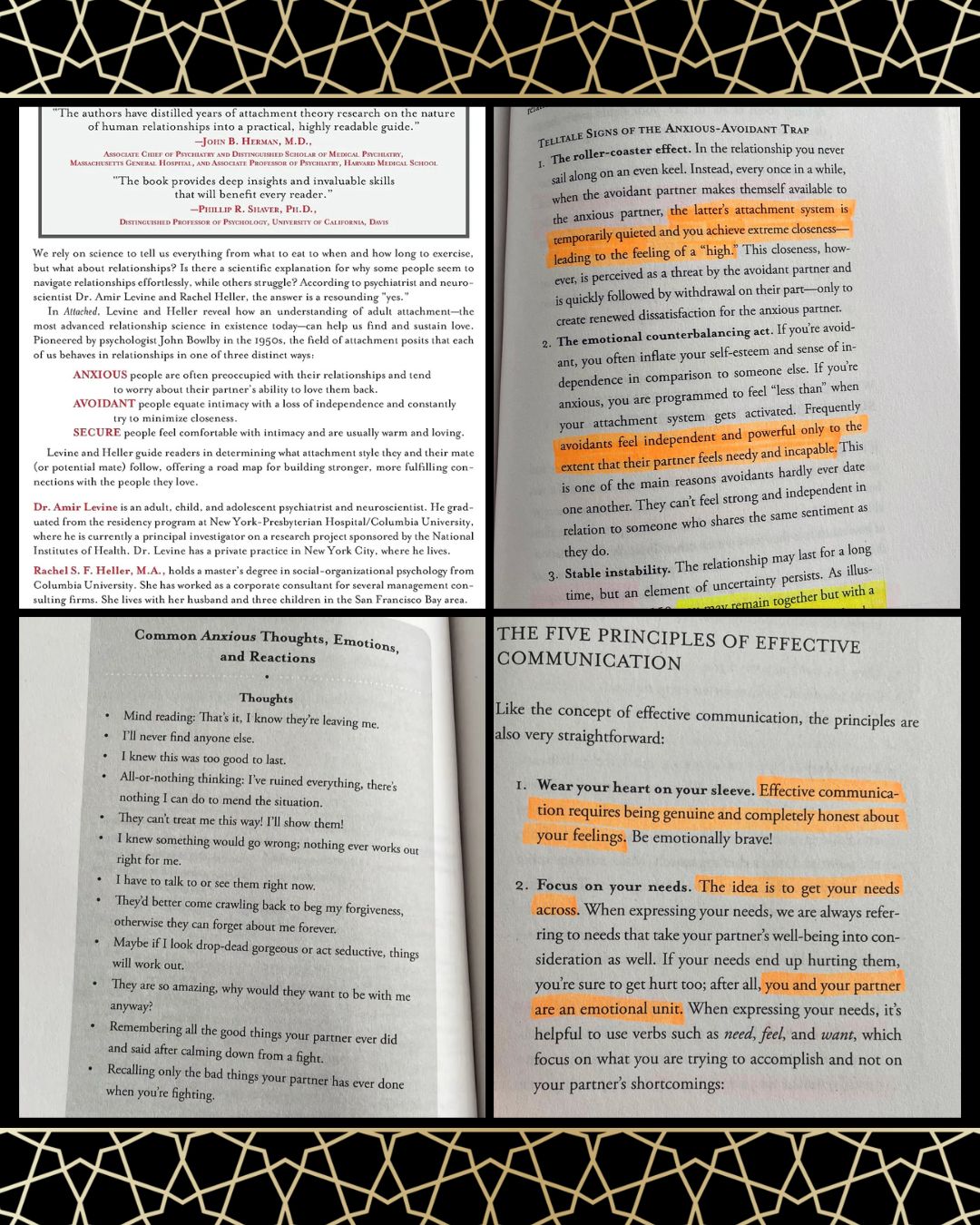
3) Attached (by Dr. Amir Levine & Rachel S.F.)
Although this book is about adults, but our attachment systems are formed in our childhood which affect all of our relationships as adults. Attachment theory teaches us that the patterns, fears, and relational strengths we carry today are reflections of how we were nurtured as children. By understanding our attachment styles, we not only gain insight into our current struggles but also learn how to heal and develop healthier relationships moving forward. The book indirectly highlights the immense responsibility of nurturing secure attachment in children. It reminds us that our words, behaviors, and emotional availability don’t just impact our child in the present moment but may also impact the next generation. Even though the book is written for adults to understand their relationships, it serves as a powerful lens for parents to reflect on the long-term impact of early attachment, encouraging both self-awareness and intentional parenting. This book was recommended as an extra resource for lesson 10 (Secure attachment with the kids) in our “Islamic Productivity Course”.
4) When The Body Says No (by Dr. Gabor Maté)
This book was recommended as an extra resource for lesson 6 (Self-awareness /Emotional intelligence) in our “Islamic Productivity Course”. It explores how hidden psychological stress and emotional suppression affect physical health and chronic illness. Learning about the connection of suppressed emotions with stress was a huge eye-opener! It taught me how to pause and process before reacting, how to name my emotions instead of suppressing, how to reduce overwhelm before it spills out onto my surroundings…Also, understanding “windows of tolerance” made me kinder to myself. Stress shrinks our coping ability so instead of blaming myself on difficult days AFTER losing it, I began to ask BEFOREHAND: Am I tired? Am I overwhelmed? Am I overstimulated? Am I experiencing sensory overload from being constantly touched and being in high-noise environment? This way, I was able to catch my frustration before it hit the 100% mark! Even catching yourself at 80% helps you in taking an intentional break. Without such awareness, we may go from 0 to 100 without even noticing (and then blow up when the last straw breaks the camel’s back). Healing myself heals the home…
5) Set Boundaries, Find Peace (by Nedra Tawwab)
This book was recommended as an extra resource for lesson 12 (Righteous company /support system) in our “Islamic Productivity Course” because it helps in learning about healthy clear communication and self-respect etc. It teaches how to identify needs, say “no”, and establish healthy limits in relationships. It helps us understand that being loving doesn’t mean saying yes to everything. We can be compassionate and respectful while still having clear expectations, limits, and consistency with our loved ones.
6) Atomic Habits (by James Clear)
This book was recommended as an extra resource for lesson 13 (S.M.A.R.T. goals) in our “Islamic Productivity Course” – pretty much what this course is all about! This book explores how small, consistent habits can lead to long-term changes. It helps us understand habit formation, overcome procrastination, and build systems that support our goals rather than relying on motivation and will power alone. Instead of expecting ourselves (or our loved ones) to develop good habits overnight, we can focus on small, manageable steps and consistent routines that will in shaa Allah lead to lasting change. Our everyday actions, repeated over time, shape our character and lifestyle. It also reminds us that children learn a great deal by observing the habits we model. Core ideas are Identity-based habits (Changing who you believe you are, and your actions follow. Each habit acts as a “vote” for that identity), Systems over goals (Focus on daily processes rather than just end results), and Compounding (Small daily changes add up over time).
7) The Whole Brain Child (by Daniel Siegel and Tina Bryson)
This book was recommended as an extra resource for lesson 15 (Growth mindset /neuroplasticity) in our “Islamic Productivity Course” because it helps in understanding how brain develops and grows. It teaches parents 12 strategies to integrate different parts of a child’s developing brain and build emotional resilience by understanding how a child’s brain develops and how different parts of the brain work together. It offers practical strategies for helping children manage big emotions and develop self-regulation. When children have emotional outbursts, instead of simply correcting their behaviour, we can first help them understand and regulate their emotions. It reminds us that children are still developing the neurological skills needed to manage their feelings, make decisions, and respond thoughtfully. Connection before correction! The core concepts explored in this book are: Left vs. Right Brain (The left brain handles logic, order, and language, while the right brain drives emotion, intuition, and nonverbal cues. Young children often lean heavily on the right brain during moments of stress), Downstairs vs. Upstairs Brain (The lower (“downstairs”) brain controls basic instincts and strong reactions, while the upper (“upstairs”) brain handles decision-making, empathy, and self-control—and continues maturing into the mid-twenties.), and Brain Integration (Healthy development happens when separate brain regions connect and work together rather than operating in isolation).
8) Raising Boys (by Steve Biddulph)
This book explores the developmental, emotional, and psychological needs of boys. It helps parents better understand how boys grow, learn, communicate, and navigate the different stages of childhood and adolescence. It encourages us to raise boys who are emotionally intelligent, compassionate, responsible, and secure in their identity. Rather than limiting boys to stereotypes about masculinity, we can nurture their emotional expression, empathy, confidence, and sense of responsibility. I loved how they highlighted the importance of father’s involvement in raising boys – especially from 7-14. Boys have an intense need for physical affection and the rough-and-tumble games with their fathers. Studies show that troublesome teenagers were often those who saw little of their fathers. So basically, they are mother’s boys from ages 0 to 6 or 7. From 6 or 7 to 14 they switch to Dad and crave his active involvement with them. At around 14, they have a need for outside mentors like sports teachers and imam at the masjid etc. The book explains how accomplishing housework raises a boy’s self esteem, and how caring for others can suppress a boy’s tendencies for violence and aggression.
There are some points which I do not agree with as a Muslim – for eg: normalising masturbation etc. But overall, it was a beneficial read on how to raise boys in a society that, at one end, idolise them and at another end, demonise them. The author also has a book called “Raising Girls” which outlines five stages of girlhood: security (0–2), exploration (2–5), getting along with others (5–10), finding one’s “spark” (10–14), and preparing for adulthood (14+). But since I haven’t finished reading that book yet, I have not included it in this list specifically.
9) How to Talk so Kids Can Learn at Home and In School (by Adele Faber & Elaine Mazlish)
This book was really beneficial when I first started homeschooling my children. It offers practical communication strategies to help children become more engaged, cooperative, and confident learners. It explores how our words, responses, and attitudes can either encourage children’s curiosity or discourage their willingness to learn. Instead of relying on criticism, pressure, or constant instructions, we can learn to communicate in ways that encourage cooperation and independence. It helps us replace power struggles with respectful conversations, acknowledge children’s feelings, and create an environment where they feel safe to ask questions, make mistakes, and learn. I loved the examples in book through illustrations. Concepts like giving descriptive praise and constructive feedback were really beneficial in terms of application – Describing specific effort or results rather than slapping labels (“smart,” “lazy,” “good”) on a child. Which frees a child from roles or rigid labels like “struggling reader” or “shy”.
10) Siblings without rivalry (also by Adele Faber & Elaine Mazlish)
This book is an exploration of how to nurture empathy, fairness, and emotional intelligence within the family – addressing the underlying needs for attention, validation, and love that drive rivalry. It helped me see rivalry not as a problem to be “fixed” but as a natural expression of children’s developing personalities. It emphasizes listening, acknowledging feelings, and reframing interactions in ways that promote cooperation and understanding rather than comparison or competition. How we handle conflict between our children today shapes their understanding of justice, empathy, and love – traits that carry into adulthood. It equips parents with tools to transform conflict into connection. From a tarbiyah perspective, the book reinforces the Qur’anic principle of fairness (adl). That we stand against injustice – even if it were our own people! We teach kids HOW to fight (for justice) instead of teaching them NOT to fight! My now-11-year-old has read it a couple of times too – So much so that she ended up making her own comics titled “BLOOD BESTIES” around siblings’ bitter-sweet relationship! lol.
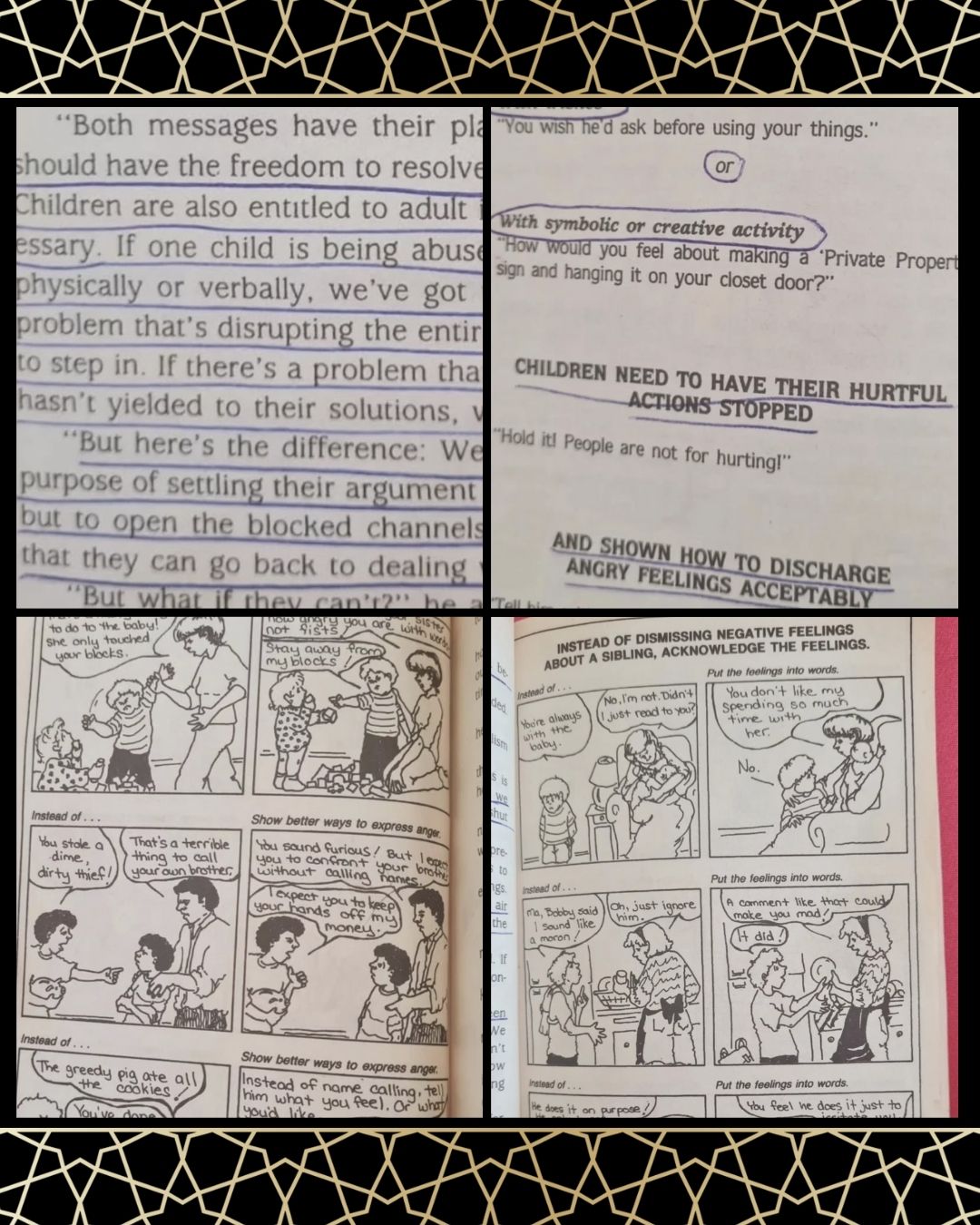
This book was recommended as an extra resource for lesson 11 (Relationship with blood ties) in our “Islamic Productivity Course” because it makes learning the art of conflict resolution and mediation so SO easy!