

Communist Anxiety And The Liberal Defanging Of Islam In Kerala
Kerala in Context: Postcolonial Secularism and Neo-Marxist Influence
Notwithstanding the diverse cultural and historical trajectories of modern societies, contemporary debates on religion and modernity frequently operate on the assumption that religious fervor must be restrained in order to achieve social progress and adapt to the changing demands of modern life. Although this assumption is commonly associated with Western liberalism, it is equally visible within the neo-colonial dynamics of postcolonial Kerala’s communist–secular project1.
Kerala, widely celebrated for its religious pluralism, high literacy, and cultural diversity, has in recent years become the subject of growing criticism from religious and cultural practitioners and leaders. Within the broader context of neoliberal and neo-colonial transformation, neo-Marxist forces have played a leading role in advancing what critics describe as dialectical reinforcements that erode religious and cultural identities, particularly those of Muslim communities. These ideological pressures have increasingly generated anxiety and discouragement among religious populations regarding the future of cultural and religious pluralism, as modernity and liberalism advance their marginalizing tendencies (Osella and Osella 2008)2.
The contemporary neo-Marxist influence in Kerala thus appears to reproduce patterns of cultural suppression reminiscent of colonial regimes. Drawing on theories of cultural alienation, ideological state apparatuses, and postcolonial critique, this article demonstrates how Kerala’s Marxist secularism operates within a distinct postcolonial and communist context while simultaneously mirroring this ideological formation’s objective of defanging Islam.
The Construction of the ‘Progressive Muslim’
Keep supporting MuslimMatters for the sake of Allah
Alhamdulillah, we’re at over 850 supporters. Help us get to 900 supporters this month. All it takes is a small gift from a reader like you to keep us going, for just $2 / month.
The Prophet (SAW) has taught us the best of deeds are those that done consistently, even if they are small.
Click here to support MuslimMatters with a monthly donation of $2 per month. Set it and collect blessings from Allah (swt) for the khayr you’re supporting without thinking about it.
This process of cultural degradation echoes the colonial disruption of the Orient analyzed by Edward Said in Orientalism, where the so-called “civilizing mission” of colonial powers functioned not as enlightenment but as a project of cultural suppression and the construction of new ideological apparatuses of identity. These tensions, which have intensified over years of political governance, are now deeply embedded in the everyday lived realities of Keralites.
The philosophical roots of this dynamic can be traced to Hegel’s assertion that the ultimate goal of the individual is the attainment of “human-consciousness,” a notion further developed by Francis Fukuyama through his concept of the “struggle for recognition” as a central motor of historical development. Within Kerala’s contemporary political culture, this pursuit has materialized in the construction of the figure of the “progressive Muslim,” whose religious identity is accepted only insofar as Islamic belief is rendered socially innocuous under the rhetoric of emancipation and rationality.
Liberalism, Marxism, and the Regulation of Religious Identity
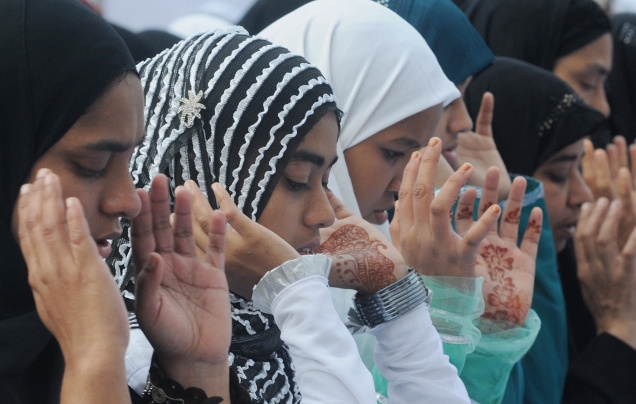
Visible practices of piety, such as hijab-wearing or the observance of traditional rituals, are often framed in public discourse as markers of ‘backwardness,’ whereas secular-liberal behaviors are celebrated as symbols of modernity. These representations, I argue, reflect not simply individual choice but the operation of ideological frameworks that subtly reshape Muslim subjectivity. Rather than promoting authentic religious freedom, such interventions can function as mechanisms for aligning community practices with secular-liberal and neo-Marxist norms. Carool Kersten, in Contemporary Thought in the Muslim World, referencing Abdolkarim Soroush, observes that when religion becomes ideology, it risks becoming a tool of oppression3. Yet this insight is frequently misappropriated in Marxist discourse to suggest that religious ideology itself is inherently oppressive, particularly in the case of Islam.
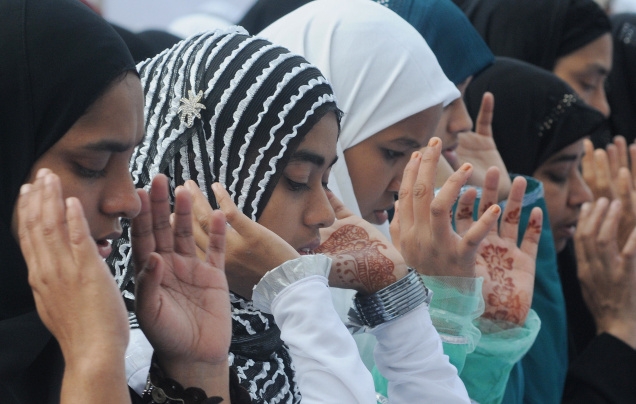
“Visible practices of piety, such as hijab-wearing or the observance of traditional rituals, are often framed in public discourse as markers of ‘backwardness,’ whereas secular-liberal behaviors are celebrated as symbols of modernity.”
While early Marxist critiques emerged from specific European conditions—notably the entanglement of church and state that necessitated their separation—contemporary Marxist politics in Kerala deploy this framework to justify the extraction of religious “passion” from Muslim consciousness. From within the rational framework of Islamic theology, however, Muslim resistance to such interventions is neither reactionary nor irrational. Moreover, Islamic disapproval of certain religious celebrations does not translate into hostility toward other faith communities, underscoring that theological commitment and social coexistence are not mutually exclusive.
The castration of religion is not necessary for religious harmony; rather, it depends on the internal rationality of the religious tradition itself. Certain interpretations of Islam, particularly as practiced within Kerala’s socio-political context, can be in tension with some liberal principles, such as secular-liberal educational norms or gender expectations. While liberalism historically negotiated its relationship with Christianity in the West, the engagement with Islam involves distinct theological, legal, and cultural considerations that resist straightforward assimilation into liberal frameworks. It is therefore clear that one does not become more “enlightened” or “progressive” as a Muslim by adopting the Marxists’ agenda and its conceited arguments. Instead, the absurdity of liberal logic has been deceiving its practitioners into distancing themselves from religion itself. As a socio-political theory, neo-Marxist secularism in Kerala is characterized by deep anxiety toward religion. Much of its cultural and political endeavor is governed by this anxiety rather than by a genuine commitment to social good. With the advent of this framework, it developed the myth of religious violence and oppression, which holds that religion—particularly Islam—is fundamentally backward, irrational, and exclusively responsible for emotional instability, social stagnation, and even violence if not strictly controlled. This assumption lies at the heart of this intellectual stance.
Education, Culture, and Ideological Intervention in Kerala
A concrete illustration of this process can be observed in recent educational and cultural interventions in Kerala. The introduction and enforcement of Zumba dance programs in schools, for instance, alongside the restructuring of academic schedules in ways that conflict with Madrasa education, have been promoted under the language of physical well-being and progressive pedagogy. Yet these measures remain largely inconspicuous to parents, students, teachers, and community members as instruments of ideological transformation. Public remarks by political figures, including Anil Kumar4, further reinforce this trajectory by framing such interventions as necessary components of liberation and modernization. In practice, however, these initiatives operate as mechanisms for the displacement of inherited religious and cultural values, replacing them with new normative frameworks aligned with contemporary Marxist ideology5.
This process extends beyond educational policy into the domains of media and public discourse, where selective narratives, the monopolization of major communication channels, and digital attention economies cultivate new habits of perception, evaluation, and expression. Through these means, the Ideological State Apparatus disseminates revised cultural forms that undermine religious traditions while normalizing secular-liberal values. The result is a systematic reshaping of subjectivity in which religious communities are encouraged to internalize ideological assumptions that erode their own cultural and moral foundations in the name of modernity and progress.
Defanging Islam: Secular Anxiety and its Consequences
Although the communist approach to the alleged “problem” of religion is presented as liberation and tolerance, it in fact serves as a project of neutralization. This ideology seeks to strip Islam of its moral force, transforming it into a defanged identity with no authority over behavior or values, rather than genuinely defending religious freedom. Religious sensibility is repeatedly violated in order to desensitize Muslim culture to its own ethical obligations, through media narratives, educational reforms, and social regulation of personal choices carried out in the name of liberation theology. The underlying assumption is that once religious passion and zeal are removed, religion can be controlled and rendered compatible with contemporary modern life.
However, this assumption rests on a fundamental error. Islam is a comprehensive moral and intellectual tradition, recognized as a complete way of life that integrates reason, rationality, spirituality, law, and social responsibility. This is clearly affirmed in the Qur’an itself, where human beings are described as vicegerents on earth. This reality stands in direct contrast to the claim that Islam is an irrational system of blind emotional imitation. Consequently, Muslim resistance to certain secular-liberal practices is not rooted in fanaticism or uncontrolled passion, but rather reflects a more nuanced, rational, and ethical position.
This dogma continues to serve as one of the central explanations for the ongoing regulation, mockery, and restructuring of Muslim life in Kerala, despite the absence of substantial historical or empirical evidence to support such claims. As Saʿad Yacoob argues, liberalism is not grounded in genuine rational inquiry but is instead an emotional reaction concealed beneath the language of reason and concern over religious passion. Likewise, Marxist discourse operates through emotional responses shaped by colonial modernity, producing a rigid binary in which secularism is portrayed as rational and progressive, while religion is framed as passion and regression. Within this framework, religious passion is assumed to be inherently prone to extremism and emotional outbursts, which are then collapsed into the single category of religious violence. This binary is thus constructed as the central challenge facing contemporary religious communities in Kerala.
Yet many religious individuals continue to support the Communist regime because it offers liberal ideologies that are presented as progressive and indispensable for the modern world. In reality, this support reflects a profound delusion generated by the irrationality of this ideological framework, through which religious individuals are persuaded to participate in the defanging of their own tradition, particularly Islam. In conclusion, when religious communities embrace the ideological positions promoted by the Communist movement, they actively weaken the seriousness and distinctiveness of their own religious heritage.
In sum, while neo-Marxists exalt liberal-secular lifestyles as symbols of enlightenment, they simultaneously promote the portrayal of religious practices—such as hijab-wearing, cultural and ritual observance, and ethical restraint—as backward and non-progressive. As a result, in the contemporary cultural climate, Muslims who seek to be regarded as “modern” or “progressive” increasingly find themselves under pressure to disengage from and dismantle their inherited religious traditions. Islam thus continues, ipso facto, to pose a serious challenge to Communist secular reasoning, which advances liberal ideas that seek to uproot religious passion from the believer. Muslims do not become enlightened by abandoning the coherence of their own heritage in favor of Marxist or other liberal ideologies; rather, they become dependent upon an ideology that requires them to surrender their cultural and spiritual agency—an agency originally formed in response to the very emotional anxieties toward religion that these ideologies themselves embody.
Related:
– Can India’s Financial System Make Room For Faith?
– Perpetual Outsiders: Accounts Of The History Of Islam In The Indian Subcontinent