
What’s for Iftar?! by Razeena Omar Gutta illustrated by Esraa Hedery – Islamic School Librarian
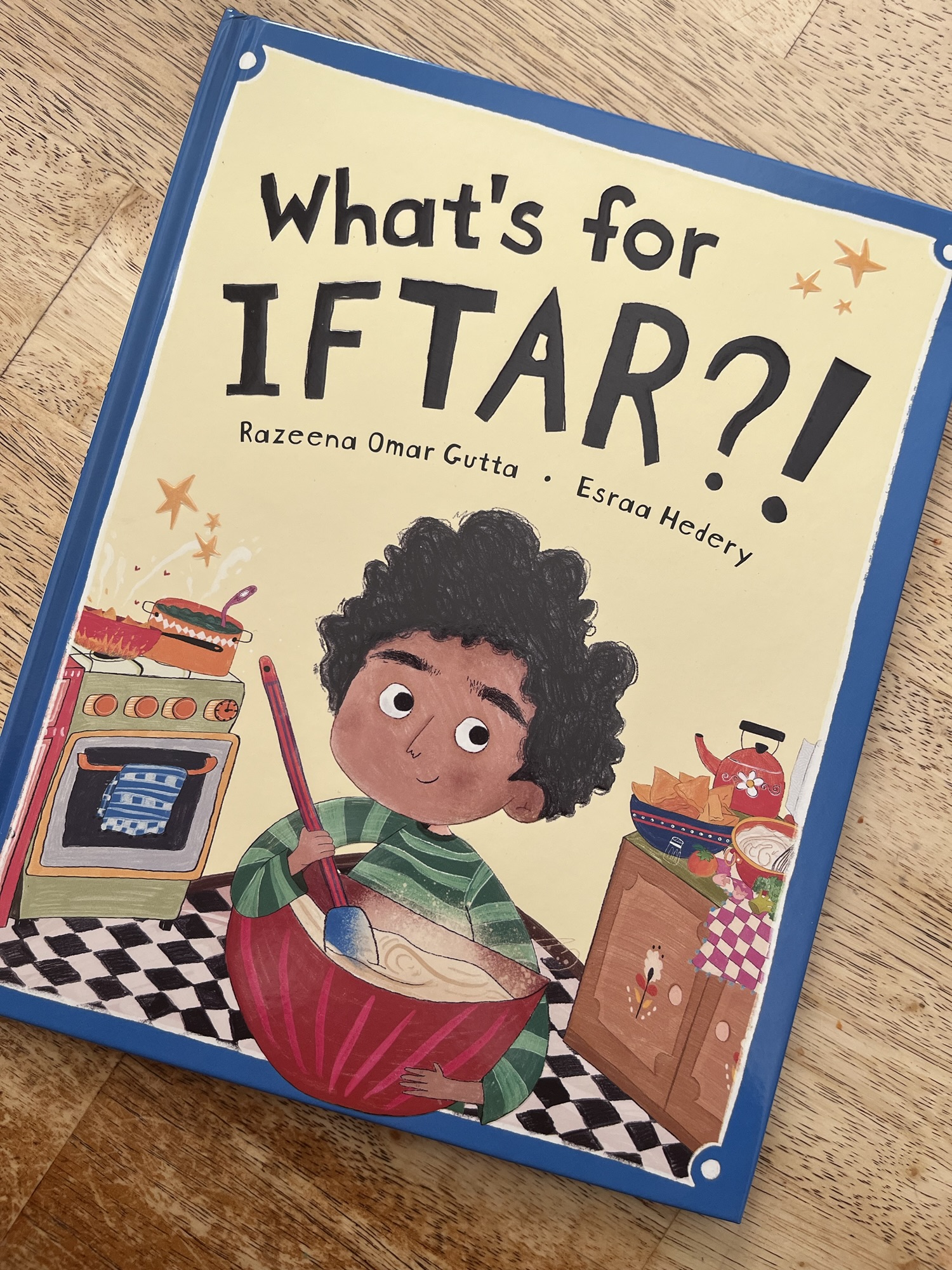
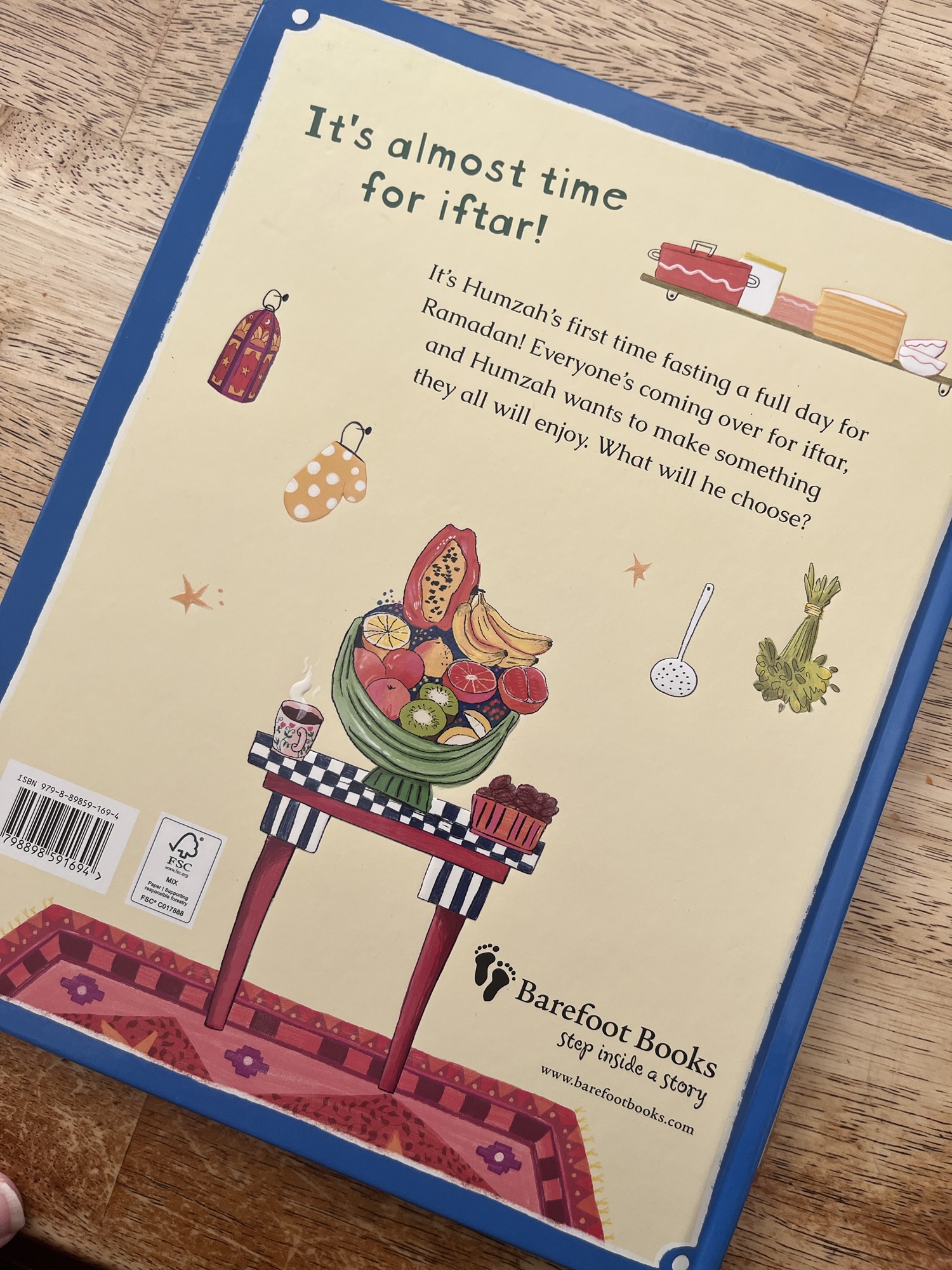
Collectively over the years my biggest genre gripe has probably been Ramadan first fast books, but oh the joy I feel, and relief, when a book gets it right and does it well. This 24 page picture book follows Humzah on his first fast. He knows what Ramadan is, when we fast, why we fast, and it might not even be the first day of Ramadan, but it is his first day to fast, and while it is challenging at times, the bigger conflict of the book is figuring out what he would like to make and share for Iftar. With religious practices woven in to keep from being preachy, and diversity of cultures and abilities celebrated on the pages, the book feels natural and flows well. I love that the dish he makes, no I will not spoil it, represents a beloved dish of most kids (and adults) and is not country or region specific. I’m not sure why the book is not the standard 32 pages, but the result is that some spreads appear more text heavy than they need be, and with the adorable illustrations, I wish we had a few more pages to enjoy.
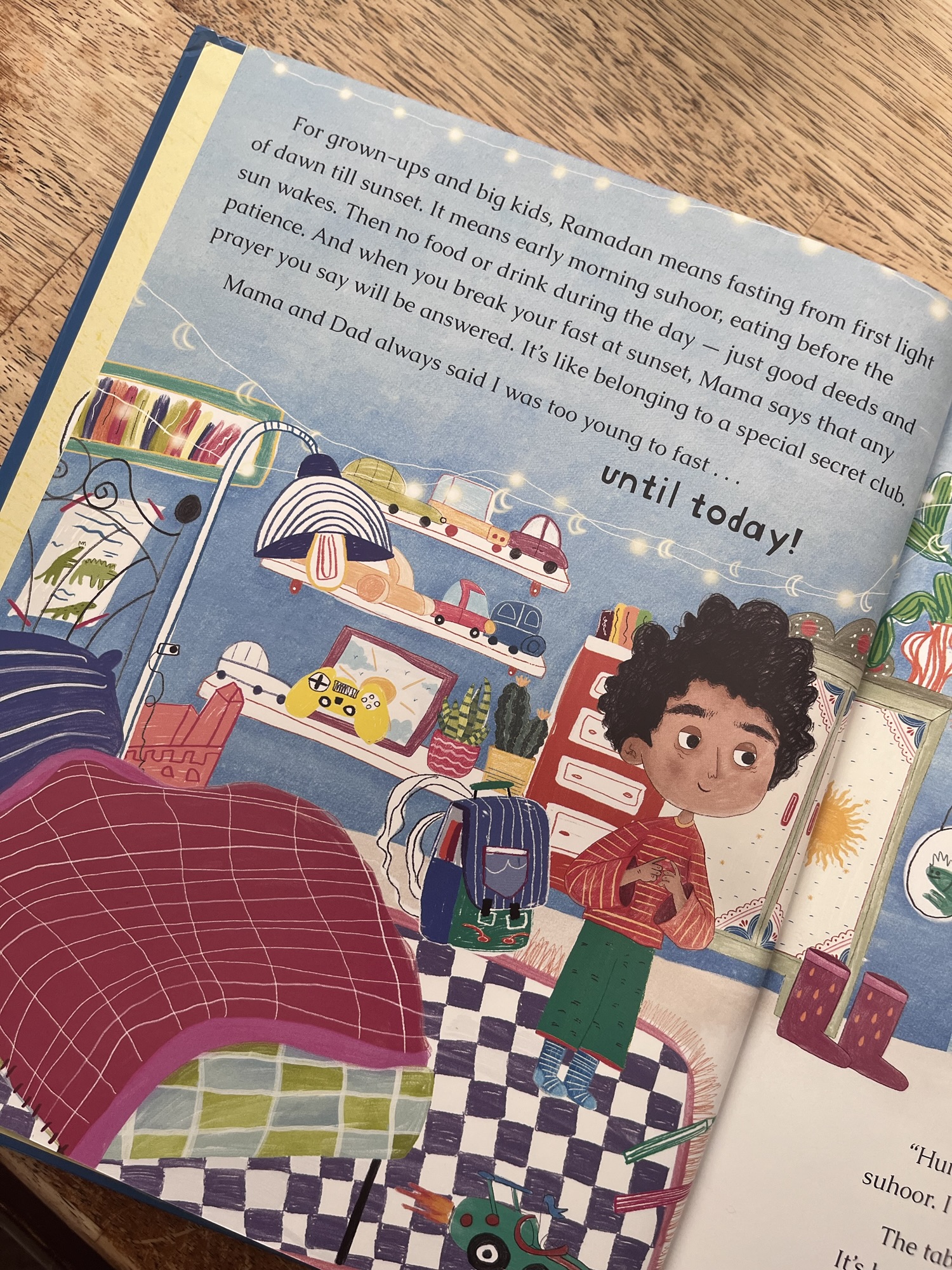
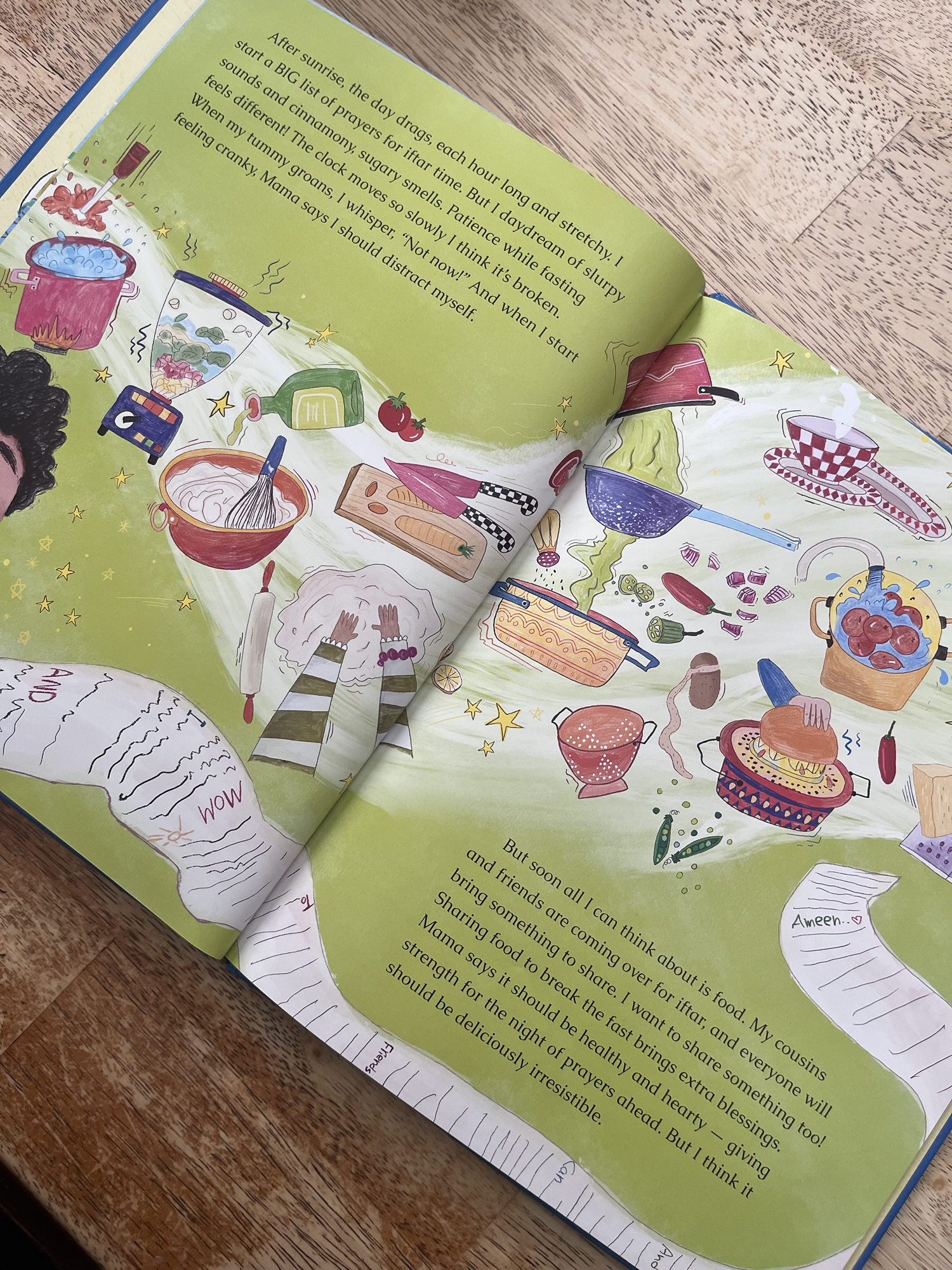
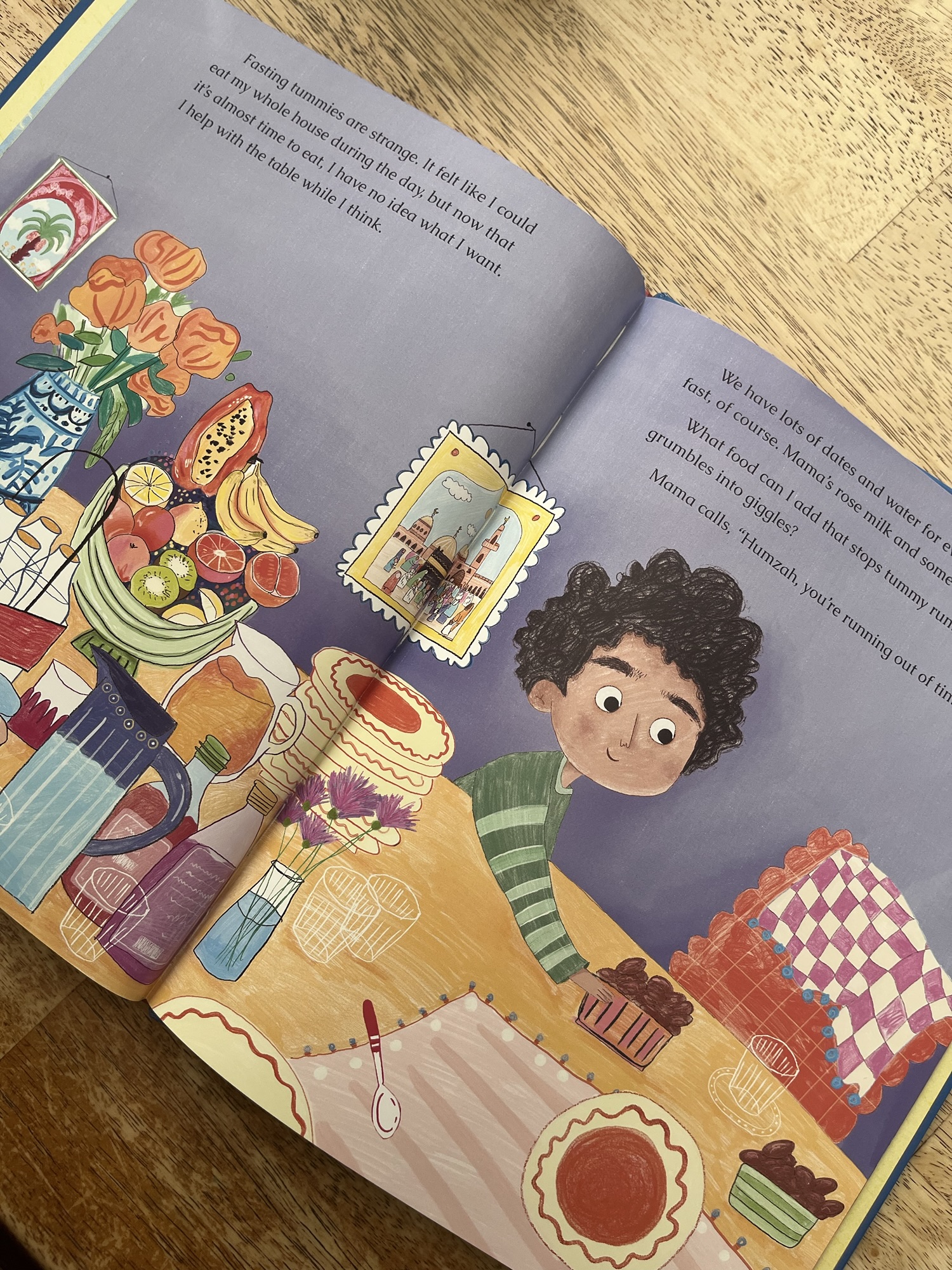
The book starts with a quick summary of Ramadan in the protagonist’s voice as he proudly proclaims that today is finally the day that his parents have deemed him old enough to fast. As the day stretches on and his prayer list grows he is advised to distract himself. Once the kitchen comes alive he is not sure what he wants to add to the iftar spread. Guests flow in with their dishes and at the last minute he figures it out. With Mama’s help, the athan is heard, prayers are made, the dish is ready, and Humzah is not so little anymore, he has fasted his first fast, alhumdulillah.
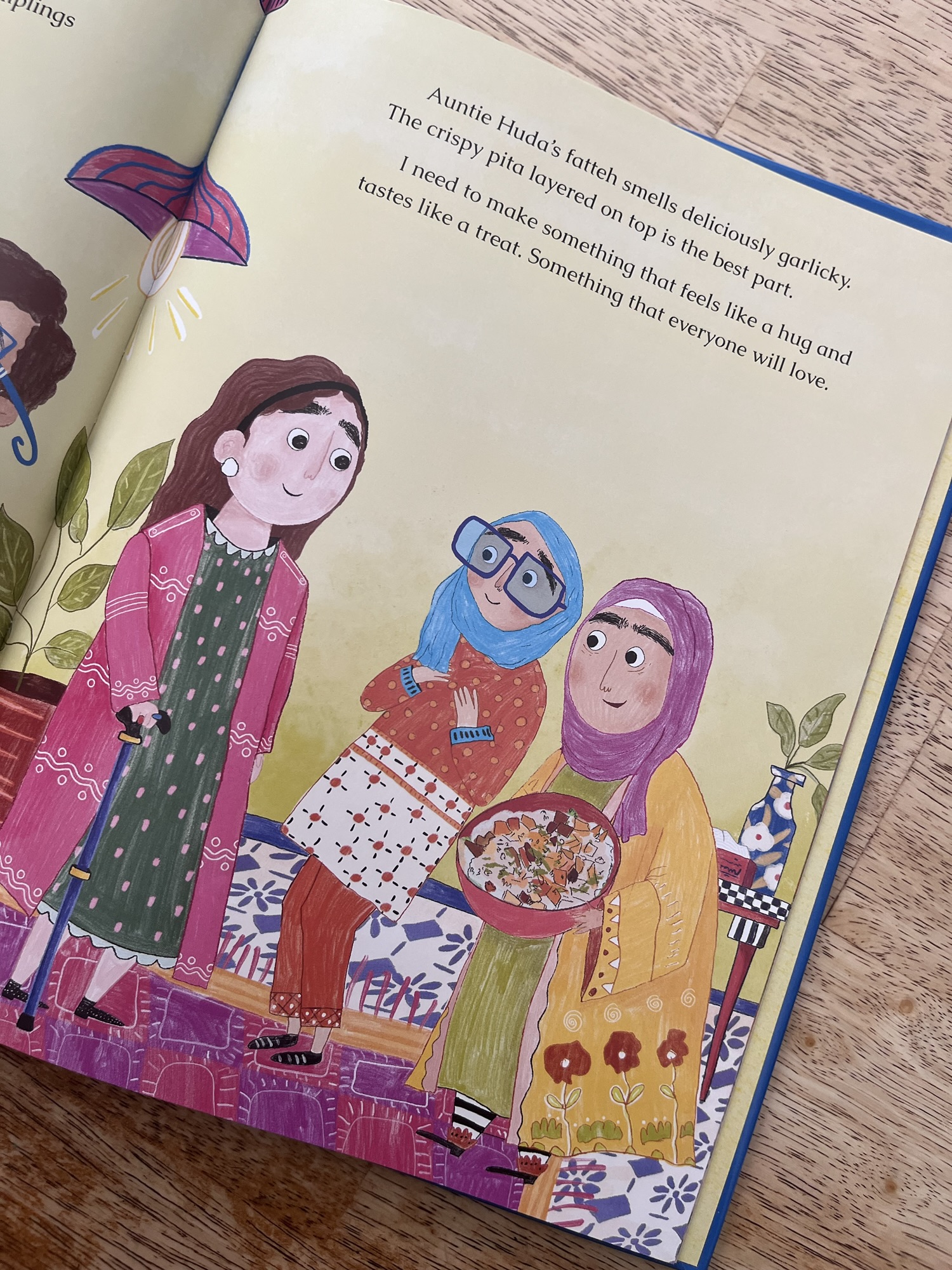
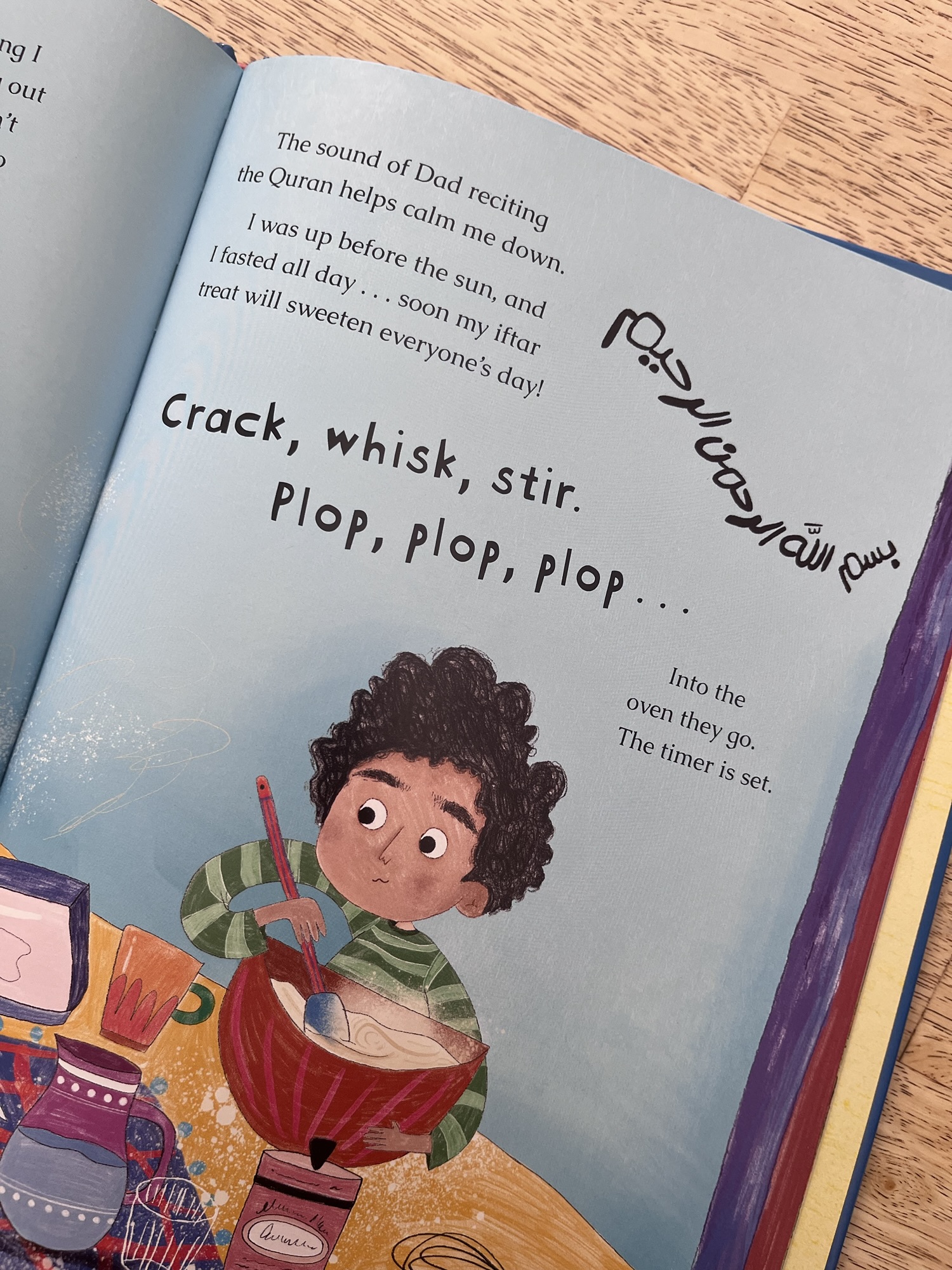
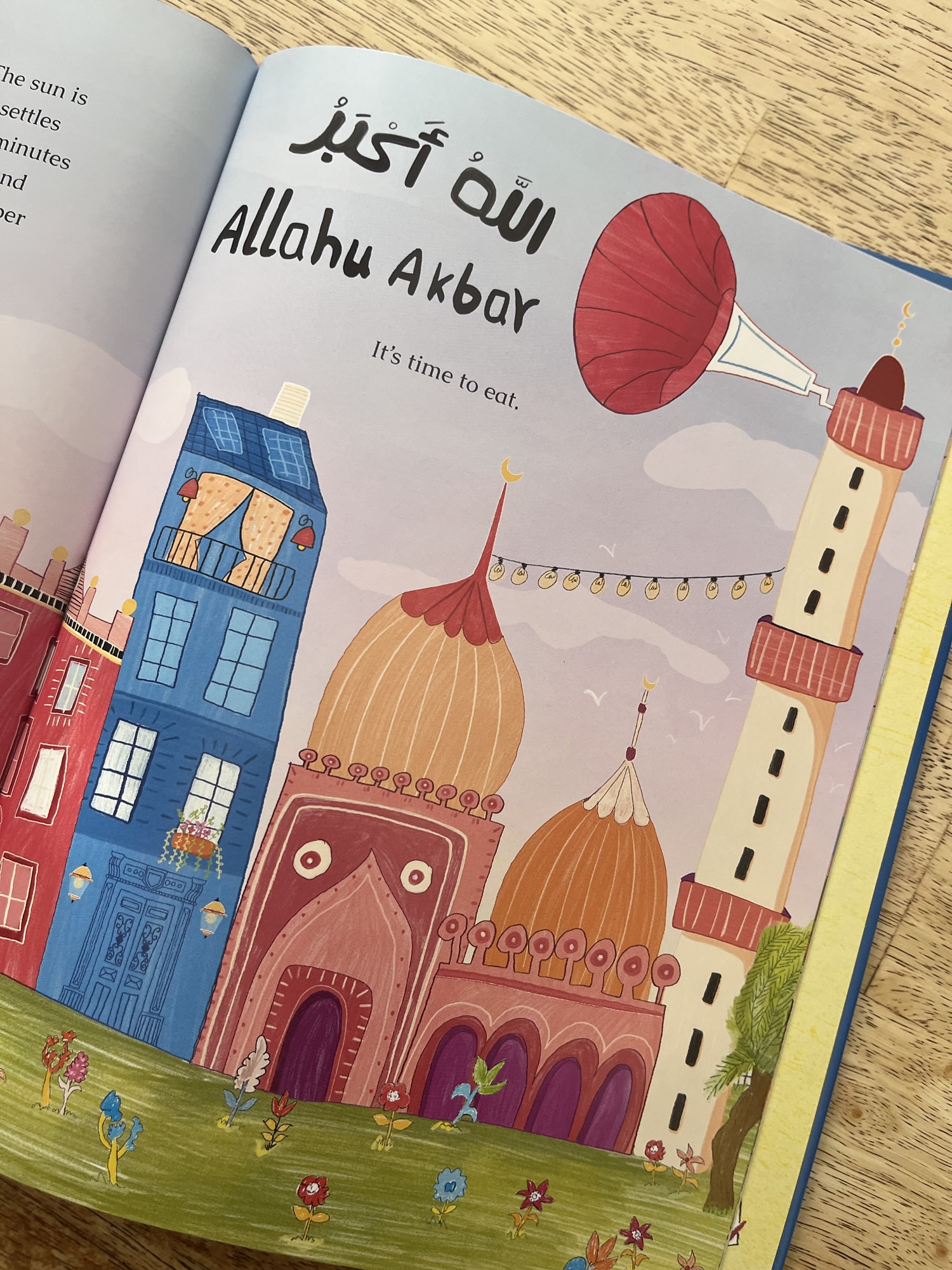
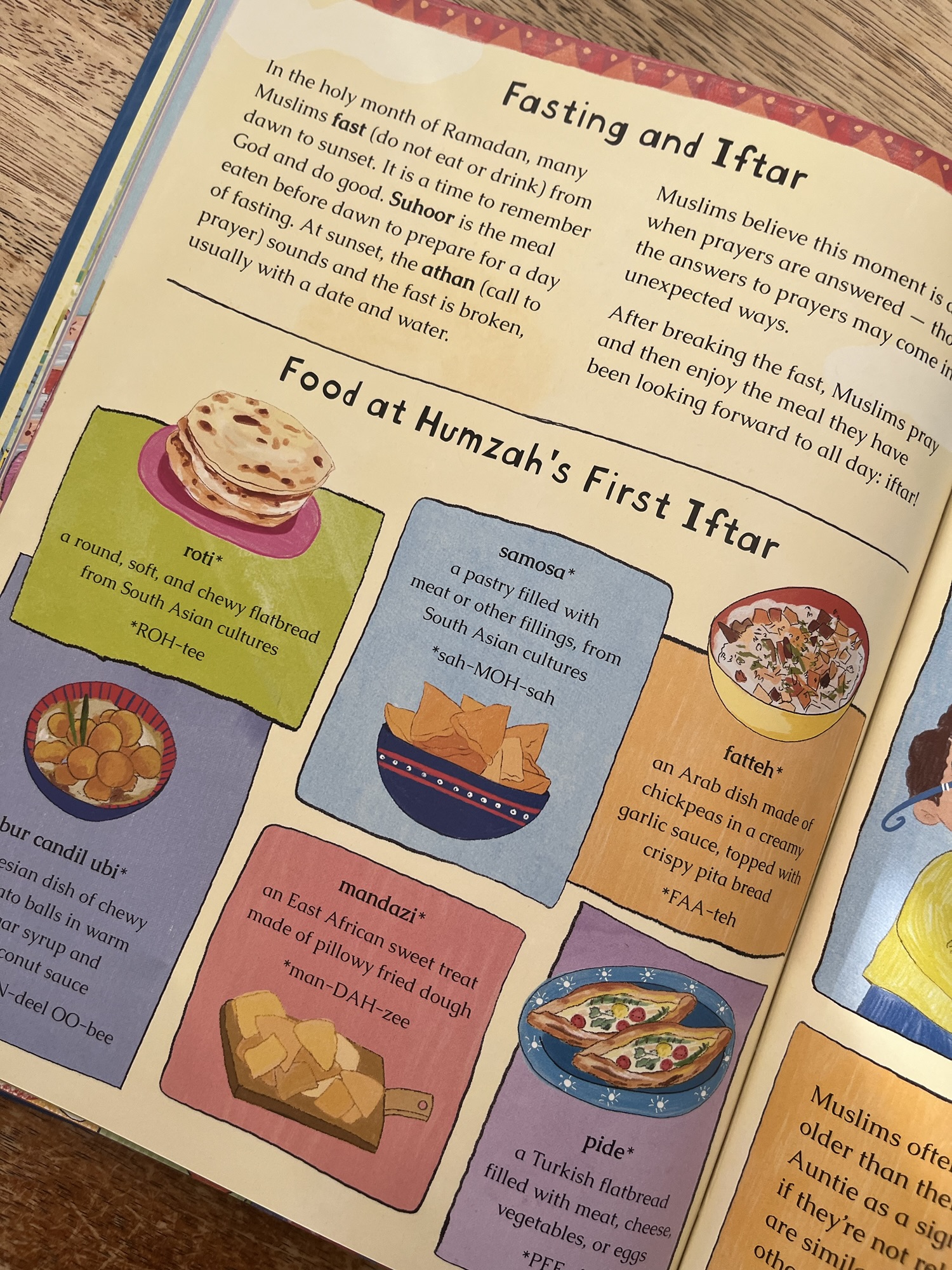
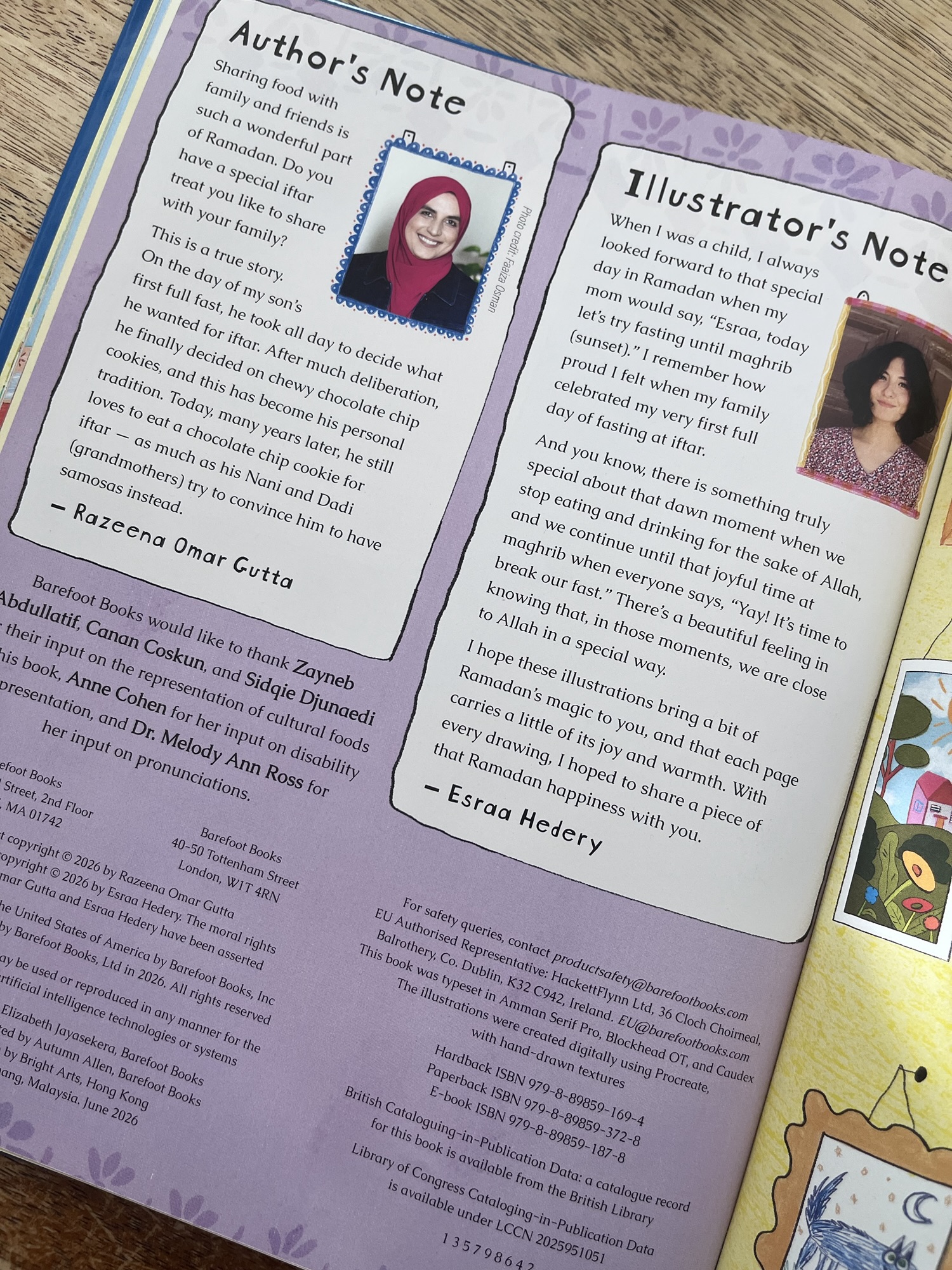
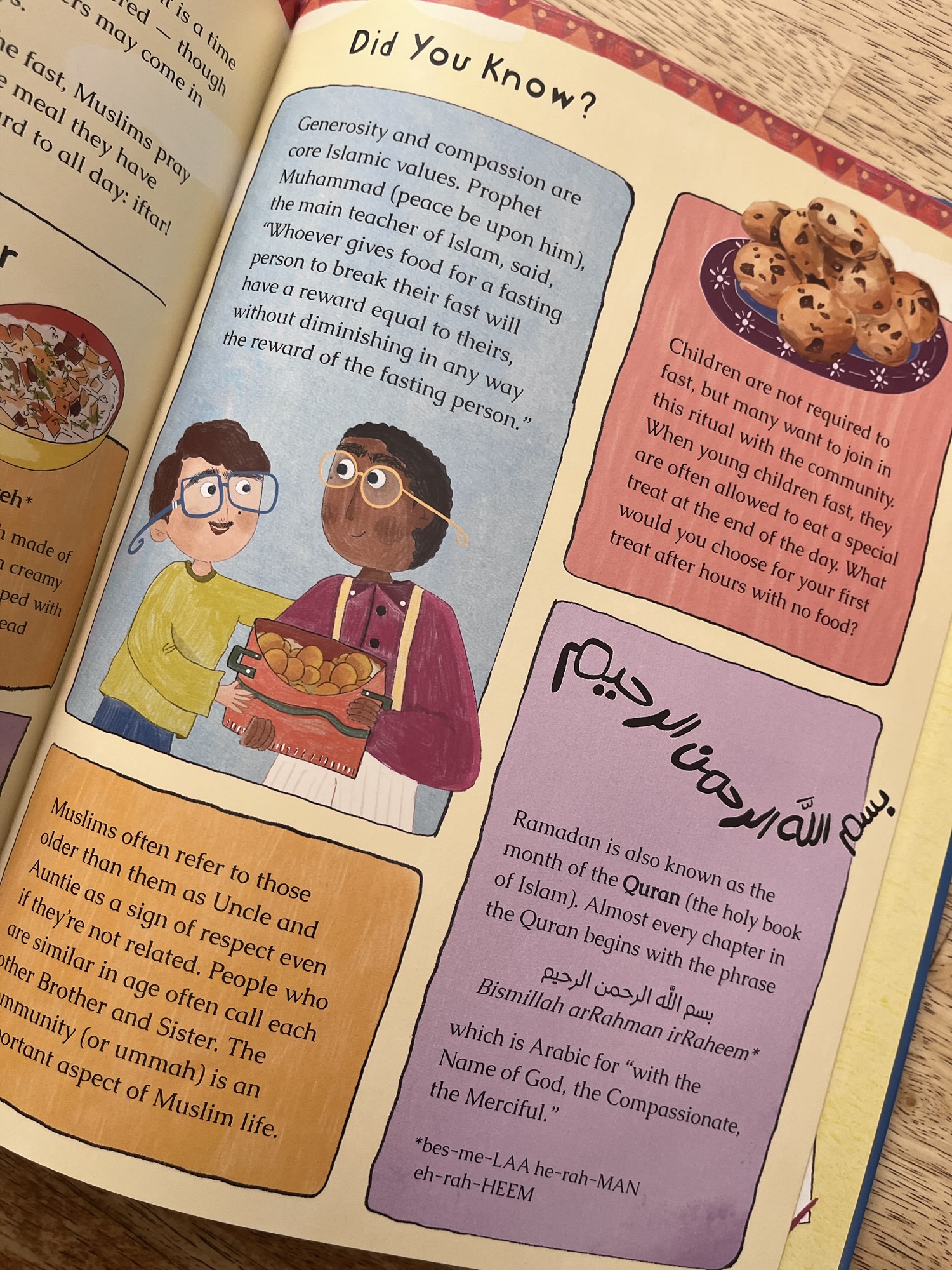
The back matter includes information on Fasting and Iftar, Food at Humzah’s First Iftar, a Did You Know? section and Notes by the Author and Illustrator. The outside help received regarding cultural foods, disability rep and pronunciations are named, thank you Barefoot Books for making this your standard.
The book is sweet and a nice addition to a shelf that often feels full. I think it would be a great choice to share in non Muslim and Muslim environments alike and be a great springboard for conversations about Ramadan, fasting, and that Islam is a religion not a culture, and that the foods we eat for Iftar can be fun and diverse. The wording that “many Muslims fast” in the end pages allows for discussion about those that are exempt, and the framing is good for understanding when fasting is required and when kids are ready to move from trying for a few hours to a whole day.